SHIRA ROUTE
7-Day Shira Route Guide, Price and Itinerary.
Price
$2200
Age
10-80
Duration
7 Days
SHIRA
SHIRA ROUTE AT A GLANCE
Pricing by route: for New Year and Christmas, the price is $200 more per person.
Duration
6–7 days
$2200 for 7 days.
Distance
~56 km (34.8 mi)
(ascent + descent)
Start gate
Shira Gate, 3,500 m (11,483 ft)
(accessed by 4WD)
Summit
Uhuru Peak, 5,895 m (19,341 ft)
Highest camp
Barafu Camp – 4,673 m (15,331 ft)
Difficulty
Moderate to challenging
Accommodation
Camping throughout
Success rate
Good (lower than Lemosho due to fast initial altitude gain)
Best season
January–March, June–October
Trail traffic
Low to moderate
Unique factor
High‑altitude traverse across the Shira Plateau
SHIRA
THE DEFINING CHARACTERISTIC OF THIS ROUTE
Shira begins at 3,500m (11,483 ft). You don’t hike there — you drive there. A 4WD vehicle takes you from Londorossi Gate up a steep track to Shira Gate, where you step out of the vehicle at an altitude that takes other routes two or three days to reach.
This is Shira’s appeal and its risk, simultaneously.
The appeal: you’re immediately on the plateau, in one of Kilimanjaro’s most dramatically open landscapes. The vast, windswept Shira caldera — an ancient volcanic crater — stretches in every direction. No gradual forest approach; you’re at altitude from the first footstep.
The risk: your body hasn’t walked into that altitude. It arrived by vehicle. The physiological adaptation hasn’t started yet. Climbers who arrive without prior altitude acclimatization can find the first hours on the Shira Plateau uncomfortable — headache, fatigue, nausea before the first camp.
We’ll tell you whether Shira is right for you based on your altitude history. For climbers with recent experience above 11,483 ft, it’s an excellent entry point to the mountain’s most dramatic terrain.
WHO THIS ROUTE IS FOR
Good fit:
- Climbers with prior experience above 11,483 ft who know how their body responds at altitude
- Those who specifically want to experience the Shira Plateau and western mountain landscape
- Trekkers who have acclimatized recently (within weeks) through hiking at altitude
Think carefully:
- First-time altitude climbers — the vehicle ascent to 3,500m removes the gradual acclimatization that protects you on Lemosho’s lower forest approach
- Those who experienced significant AMS on previous high-altitude trips
If you’re set on the Shira experience but haven’t been at altitude recently, the Lemosho route gives you the same plateau crossing with two days of forest acclimatization before you arrive there. That’s the safer version of the same landscape.
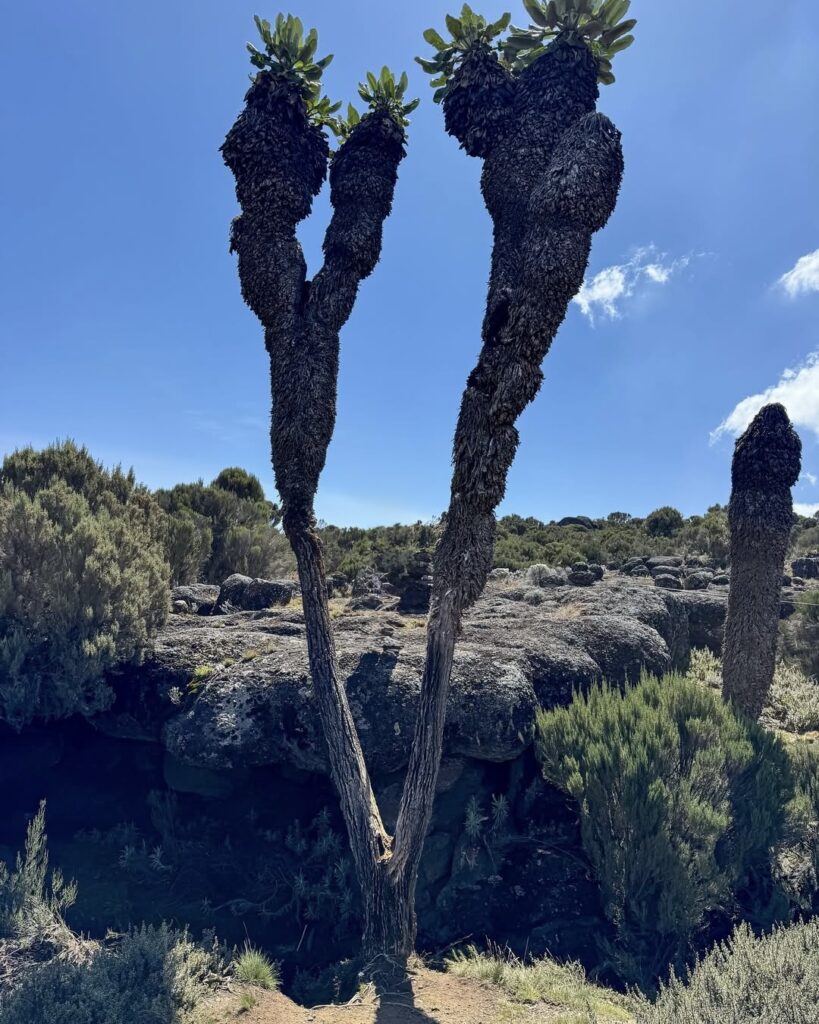
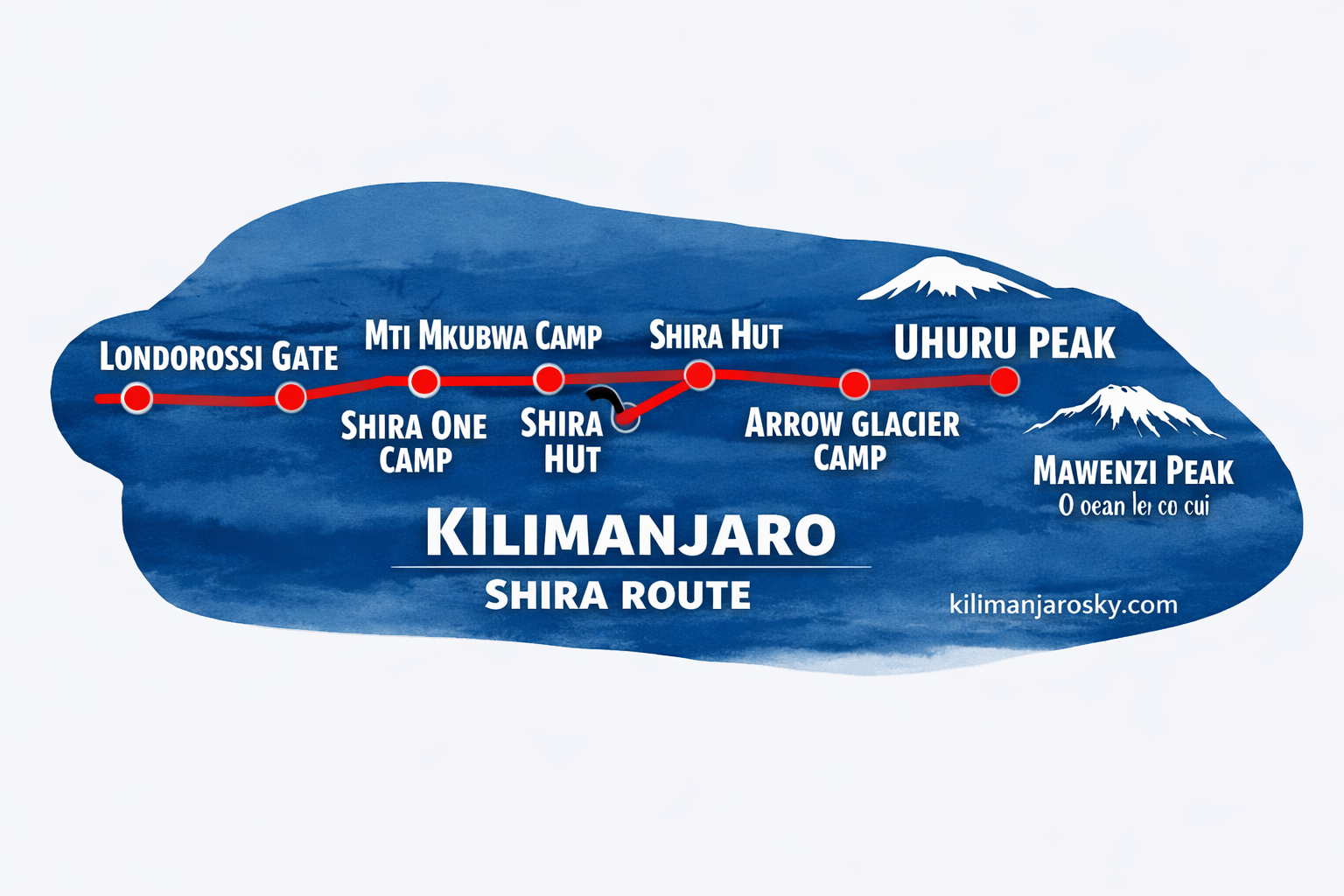
Shira Gate sits at 3,500m-11,483 ft — accessed from Londorossi Gate (2,360m-7,743 ft) by 4WD vehicle, approximately a 1-hour drive. From the gate, the trail moves immediately across the open Shira Plateau, one of Kilimanjaro’s three ancient volcanic peaks, now an elevated highland of heather, grasses, and extraordinary sky.
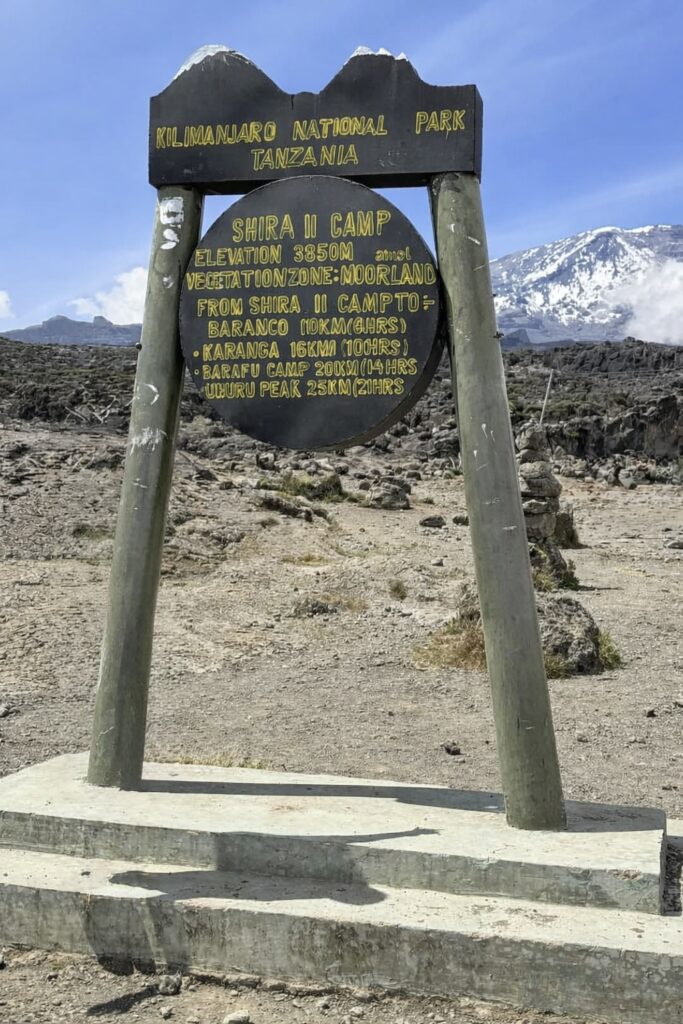
From Shira 2 Camp (3,840m), the route merges with the Machame and Lemosho trails — following the same corridor through Lava Tower for acclimatization, down to Barranco Camp, across Barranco Wall, through Karanga, and up to Barafu for the summit push. The summit night, descent, and exit at Mweka Gate are identical to Machame.
What’s distinct to Shira: the plateau crossing, the open landscape of the first days, and the unusually fast initial altitude gain.
9-DAY ITINERARY – Shira Route Kilimanjaro
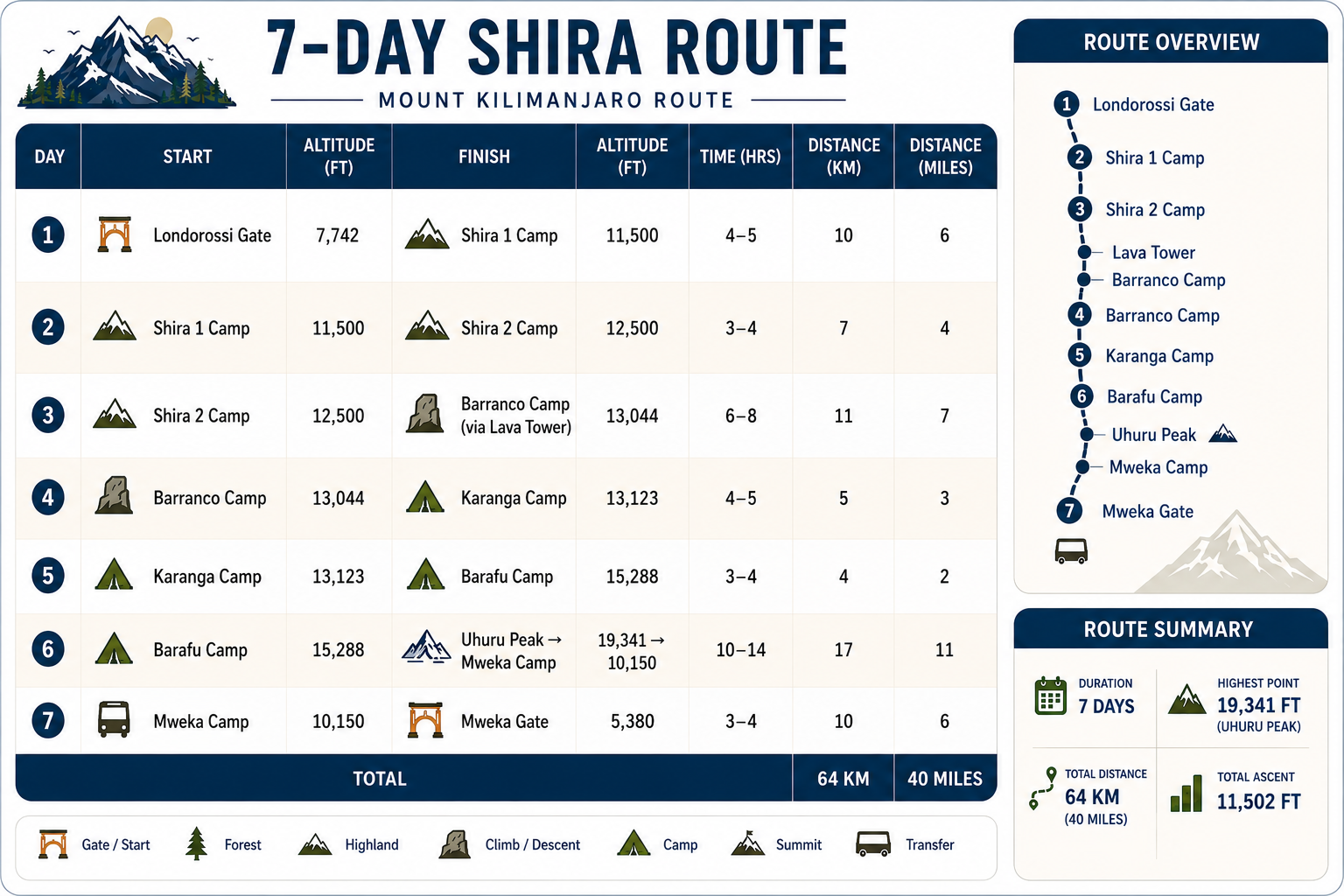
Day 1 — Shira Gate to Shira 1 Camp
Shira Gate (3,500 m / 11,483 ft) → Shira 1 Camp (3,500 m / 11,483 ft) | ~2–3 hours hiking | Minimal elevation change
You arrive by vehicle directly at altitude. At 3,500 m / 11,483 ft, the thin air is immediately noticeable. The opening walk is gentle across the open plateau, designed for adjustment rather than exertion. Shira 1 is a short hike from the gate, and the early arrival is intentional: the afternoon and evening are dedicated to rest, hydration, and acclimatization. Your guide will check oxygen levels upon arrival and again before sleep.
Day 2 — Shira 1 to Shira 2 Camp
Shira 1 Camp (3,500 m / 11,483 ft) → Shira 2 Camp (3,840 m / 12,598 ft) | ~4–5 hours | Elevation gain: ~340 m / 1,115 ft
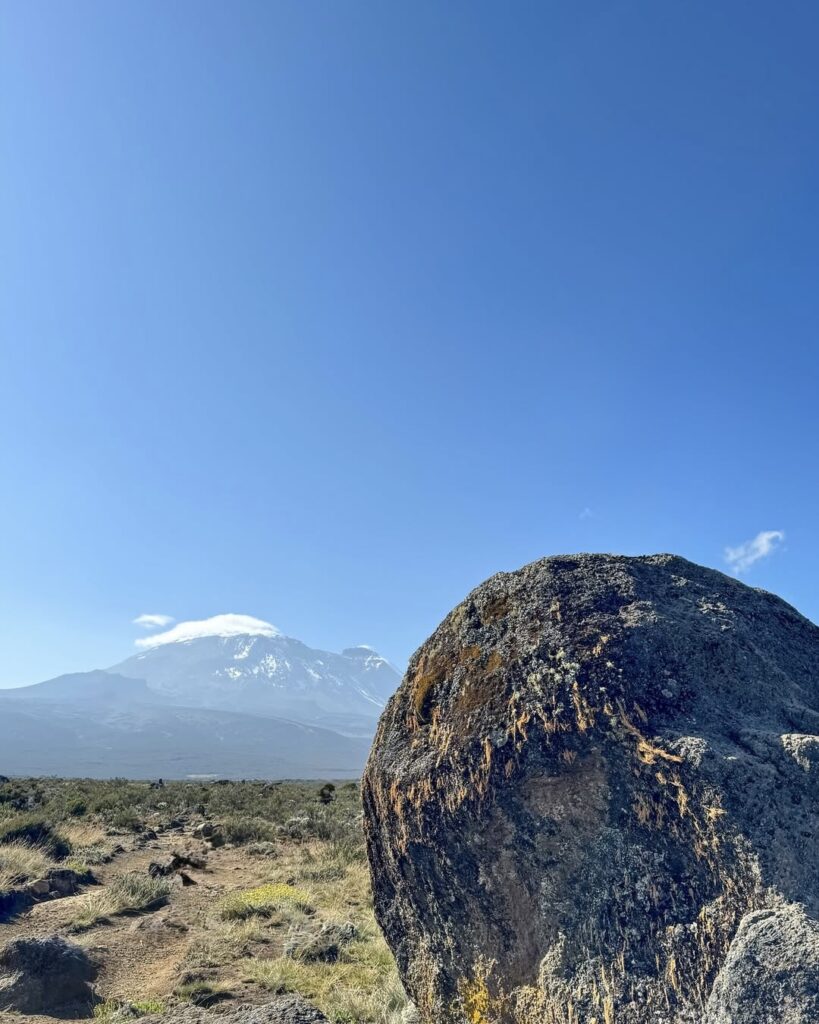
A gentle crossing of the Shira Plateau. Wide views in all directions: the volcanic remnants of Shira Peak to the west, the massive Kibo cone ahead to the east. The terrain is open moorland and grassland — no trees at this altitude. Shira 2 sits at the far edge of the plateau, the junction point with the Machame and Lemosho trails.
Day 3 — Shira 2 to Barranco Camp (via Lava Tower)
Shira 2 Camp (3,840 m / 12,598 ft) → Lava Tower (4,630 m / 15,190 ft) → Barranco Camp (3,960 m / 12,992 ft) | ~7–8 hours
The core acclimatization day, shared with Machame and Lemosho. The climb to Lava Tower at 4,630 m / 15,190 ft provides the altitude exposure your body needs; the descent to Barranco at 3,960 m / 12,992 ft is the recovery. The “climb high, sleep low” principle working exactly as designed.
Day 4 — Barranco Camp to Karanga Camp (via Barranco Wall)
Barranco Camp (3,960 m / 12,992 ft) → Karanga Camp (4,035 m / 13,238 ft) | ~4–5 hours
Barranco Wall — the scramble that most climbers remember as the most thrilling section of the route. Hands-on, exposed, and exciting. Your guide leads you safely through. Karanga Camp awaits in the afternoon, perched above the valley.
Day 5 — Karanga Camp to Barafu Camp
Karanga Camp (4,035 m / 13,238 ft) → Barafu Camp (4,673 m / 15,331 ft) | ~4–5 hours
Vegetation disappears as you enter the volcanic desert of the upper mountain. Barafu is the high camp, stark and windswept. The afternoon is for rest, hydration, and preparation for summit night.
Day 6 — Summit Day and Descent to Mweka Camp
Barafu Camp (4,673 m / 15,331 ft) → Stella Point (5,756 m / 18,885 ft) → Uhuru Peak (5,895 m / 19,341 ft) → Mweka Camp (3,100 m / 10,171 ft) | ~14–16 hours
Midnight departure. The slow, steady push to Stella Point, then the crater rim walk to Uhuru Peak — the highest point in Africa. After celebrating at 5,895 m / 19,341 ft, you descend all the way to Mweka Camp the same day. A long, demanding but unforgettable journey.
Day 7 — Mweka Camp to Mweka Gate
Mweka Camp (3,100 m / 10,171 ft) → Mweka Gate (1,640 m / 5,381 ft) | ~3–4 hours
A forest descent through lush greenery. At the gate, certificates are awarded — a tangible memory of your climb. Transfer back to Moshi for rest, celebration, and reflection.
Shira route ACCLIMATIZATION PROFILE
The Shira Route’s acclimatization profile is defined by its immediate high-altitude start. On Night 1, you sleep at Shira 1 Camp (3,500 m / 11,483 ft). By Night 2, you are already at Shira 2 Camp (3,840 m / 12,598 ft). These first two sleeping altitudes are higher than any other route’s opening nights — a distinction that sets Shira apart, for better or worse. Your body begins adjusting to altitude from day one, rather than gradually building toward it over two forest days.
From there, the progression continues: Barranco Camp (3,960 m / 12,992 ft) on Night 3, Karanga Camp (4,035 m / 13,238 ft) on Night 4, and Barafu Camp (4,673 m / 15,331 ft) on Night 5. Summit night pushes you to Uhuru Peak (5,895 m / 19,341 ft) before descending. Recovery follows at Mweka Camp (3,100 m / 10,171 ft) on Night 6.
This structure means you spend six consecutive nights above 3,500 m, including multiple nights above 4,000 m before the summit push. The acclimatization is aggressive: immediate exposure, steady progression, and deliberate “climb high, sleep low” built into the Lava Tower detour. It is both the strength and the risk of Shira — excellent preparation for those who tolerate altitude well, but potentially punishing for those who need a gentler ascent.
The Shira Plateau is one of the most distinctive landscapes on Kilimanjaro. It’s an ancient volcanic crater — Shira was once a peak in its own right, until it collapsed and eroded into the elevated plain you walk across today. At 3,500–3,840m, it’s a wide, open highland where you can see for extraordinary distances on clear days.
Most Kilimanjaro routes cross the plateau in a single day on their way east to the summit. On the Shira route, you begin here and spend two days on the plateau before turning toward the upper mountain. That time — unhurried, with nowhere else to be — is a specific kind of mountain experience.
HEALTH MONITORING ON SHIRA
Because the vehicle approach removes the gradual acclimatization that protects climbers on forest-start routes, we pay heightened attention on the first two days of Shira climbs:
- SpO2 checks on arrival at Shira Gate
- Additional afternoon check at Shira 1
- If any threshold readings appear (below 75% or significant drop from baseline), we adjust the pace of Day 2 accordingly
This is the same standard of monitoring as all routes — but the Shira-specific timing of checks in the first 24 hours reflects where the risk is higher on this trail.
WHAT’S INCLUDED
Every Kilimanjaro Sky Route climb includes:
- 1 lead guide + 1 assistant guide per 2 clients
- Quality, waterproof mountain sleeping tents
- Quality tents with table and chairs
- Cook and assistant cook
- 3–4 porters per client (20kg maximum, weighed at Londorossi Gate)
- All meals throughout the 7 days — breakfast, lunch, dinner, trail snacks
- Pulse oximeters, supplemental oxygen cylinders, full medical kit
- Camping equipment — tents, sleeping mats, dining tent, cooking equipment
- Emergency oxygen
- Clean drinking water
- TANAPA park fees and rescue levy
- Kilimanjaro Airport transfers
- Accommodation in Moshi on arrival and before departure
- Portable Toilet
- Londorossi Gate 4WD transfer (included)
- Certificate of completion
Not Included
- Flights
- Alcoholic and soft drinks
- Visa fees
- Travel insurance
CTA: Inquire about Shira route dates and pricing→ [Contact]
CTA2: Compare all routes → [Routes overview]
SHIRA ROUTE FAQ
Shira Route Frequently asked questions