Northern Circuit
9-Day Complete Route Guide, Price and Itinerary.
Price
$2900
Age
10-80
Duration
9 Days
NORTHERN CIRCUIT
NORTHERN CIRCUIT ROUTE AT A GLANCE
Pricing by route: for New Year and Christmas, the price is $200 more per person.
Duration
9-10 days
$2900 for 9 days.
Distance
~95km-59.1 miles. Total.
Start gate
Londorossi Gate, 2,360m | (7,742 ft)
Summit
Uhuru Peak, 5,895 m (19,341 ft)
Highest camp
School Hut, ~4,750m (15,584 ft)
Difficulty
Moderate (longest acclimatization = lower physiological stress)
Accommodation
Camping throughout
Success rate
Very high
Best season
January–March, June–October
Trail traffic
Very low — quietest route on the mountain
Unique factor
Full circumnavigation of Kilimanjaro’s northern slopes
NORHERN
WHO THIS ROUTE IS FOR
Northern Circuit is for climbers who want the most complete Kilimanjaro experience available. It combines the best acclimatization profile of any route, terrain that few Kilimanjaro trekkers ever see, and a level of solitude on the trail that is simply impossible on the southern approaches.
This is not a route for people in a hurry. At 9–10 days, Northern Circuit demands a genuine commitment of time. The payoff: the highest likelihood of reaching Uhuru Peak, the most varied landscape on the mountain, and a perspective on Kilimanjaro that the vast majority of its climbers never experience.
If you’ve been on Kilimanjaro before on a southern route and want to see the mountain completely — Northern Circuit is your answer. If this is your first attempt and you want to maximize every advantage available to you, this is also the right choice.
THE ROUTE: Northern Circuit begins identically to Lemosho — at Londorossi Gate, through western forest, across the Shira Plateau. The difference arrives at Shira 2, where Lemosho turns east and joins the main southern trail. Northern Circuit continues north. >>
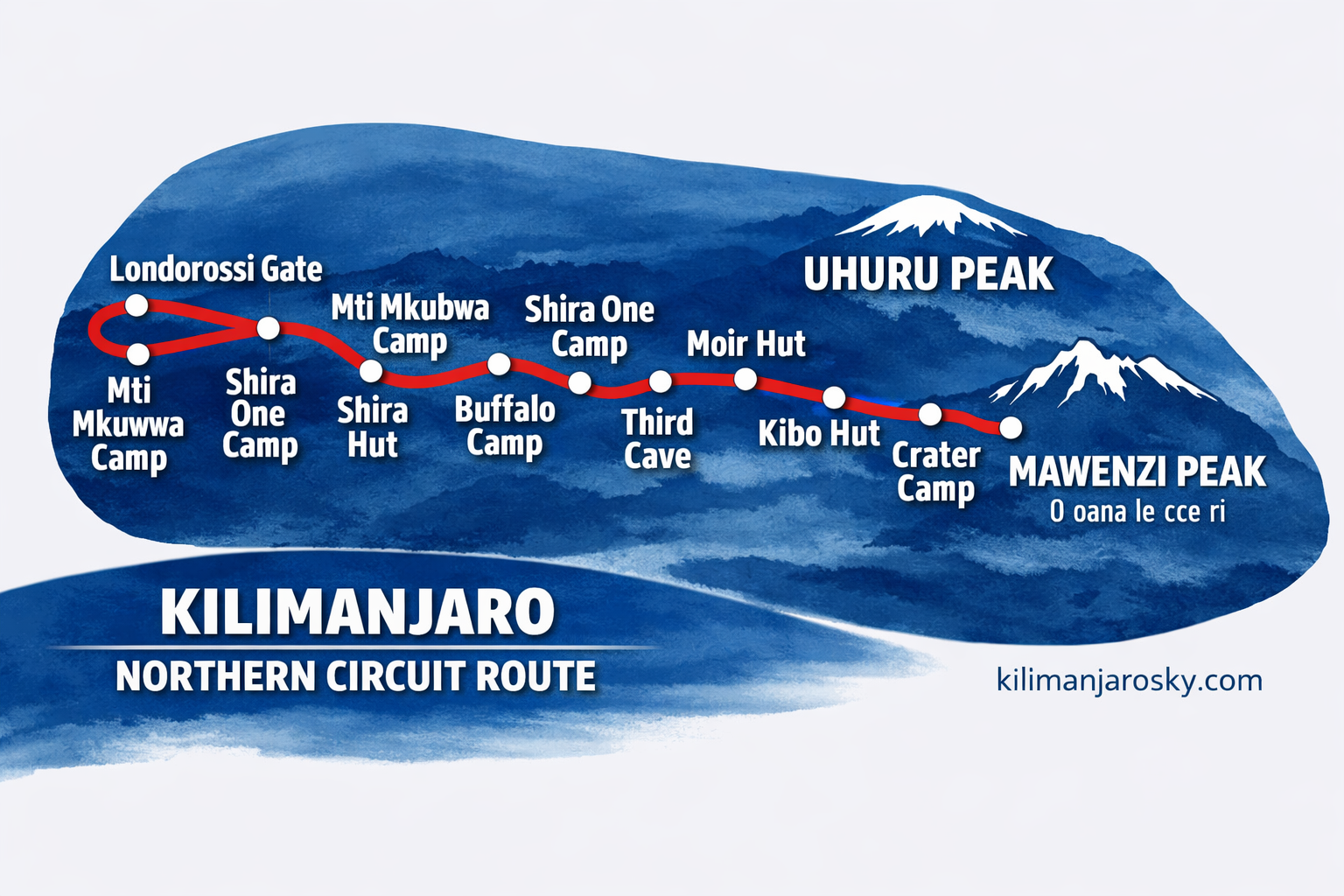
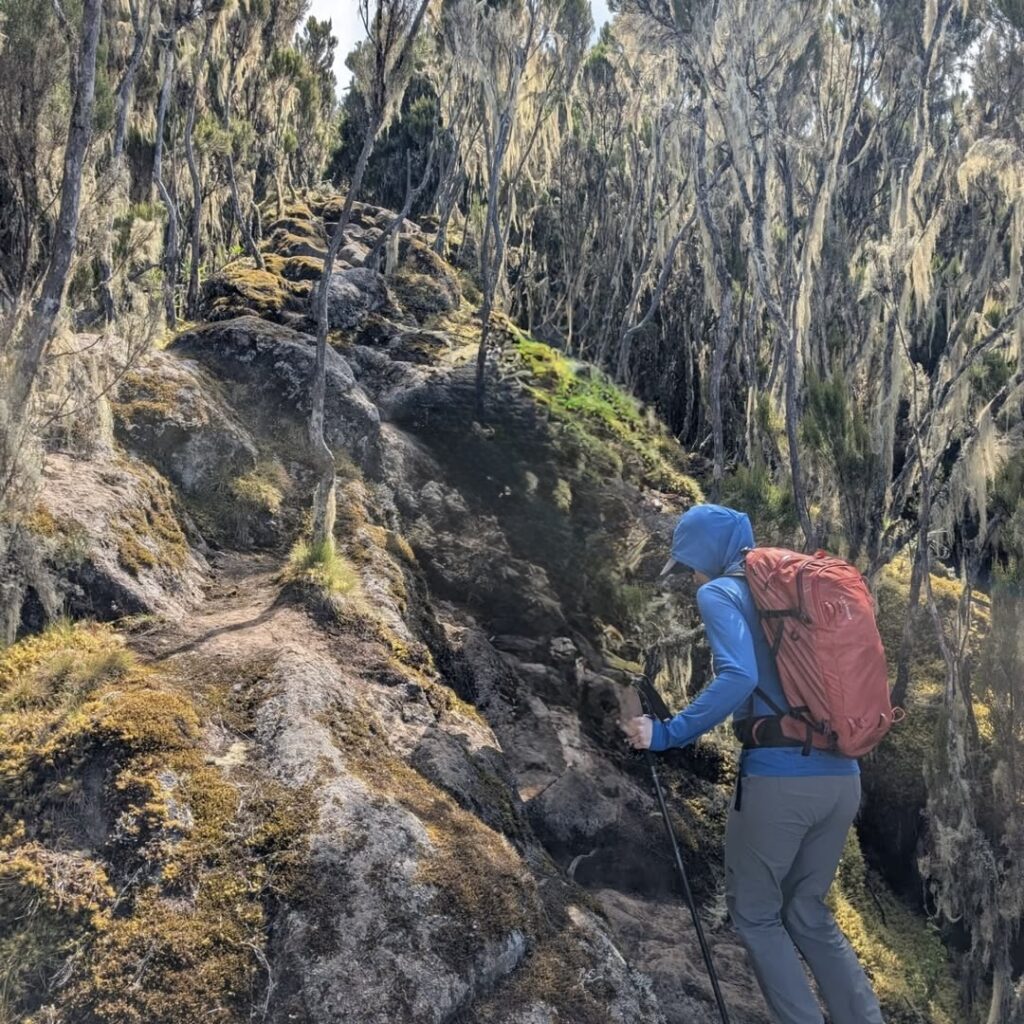
From Shira 2, Northern Circuit crosses into Kilimanjaro’s northern wilderness — terrain that receives only a small fraction of the mountain’s total annual trekkers. The trail traverses the Shira Ridge, descends to Moir Hut (a remote camp rarely visited), continues across the northern face past Buffalo Camp, and approaches the summit from the north via School Hut. This northern traversal covers the entire side of the mountain that remains hidden on every other route.
The summit approach from School Hut is via the Gilman’s Point route on the crater rim, then on to Uhuru Peak (5,895m). Descent follows the Marangu trail south through Horombo and Mandara, exiting at Marangu Gate.
By the time you descend, you will have encircled the entire mountain — summit to summit.
9-DAY ITINERARY – Northern Circuit Route Kilimanjaro
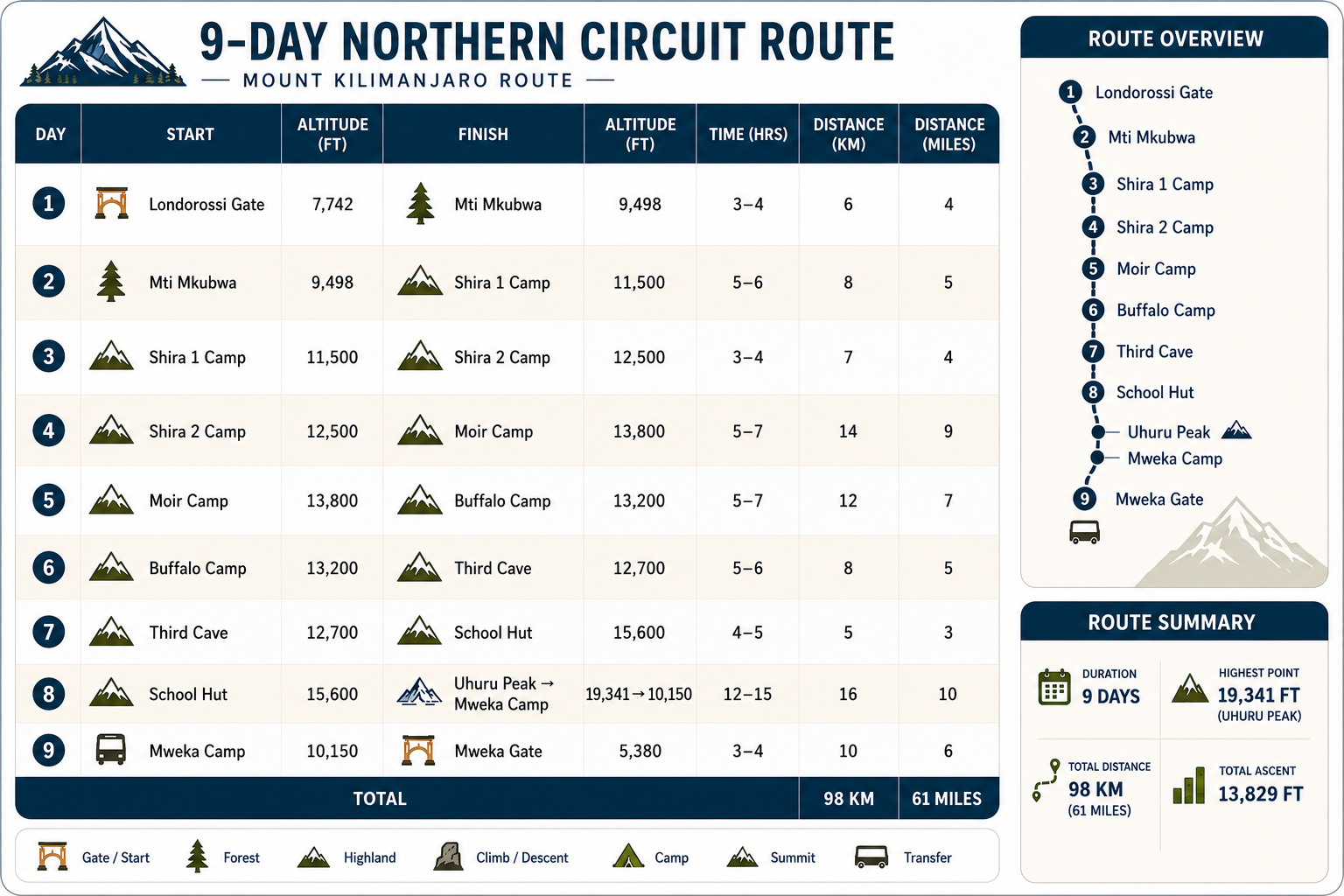
Day 1 — Londorossi Gate to Mti Mkubwa Camp
Londorossi Gate (2,360 m / 7,742 ft) → Mti Mkubwa Camp (2,650 m / 8,694 ft)
The western forest entrance. A deliberate short first day. The Lemosho approach through montane rainforest is as remote and pristine as Kilimanjaro gets at this altitude. Rest into it — the mountain has nine days ahead of you.
Day 2 — Mti Mkubwa to Shira 1 Camp
Mti Mkubwa Camp (2,650 m / 8,694 ft) → Shira 1 Camp (3,500 m / 11,483 ft) ~5–6 hours hiking | Elevation gain: ~850 m / 2,789 ft
Forest transitions to moorland, then to heather. Shira 1 sits at the plateau’s edge. Kibo cone appears in the east — your reference point for the days ahead.
Day 3 — Shira 1 to Shira 2 Camp
Shira 1 Camp (3,500 m / 11,483 ft) → Shira 2 Camp (3,840 m / 12,598 ft) ~4–5 hours hiking | Elevation gain: ~340 m / 1,115 ft
A measured day across the Shira Plateau. The extra time spent at this altitude — above 3,500 m / 11,483 ft, below 4,000 m / 13,123 ft — builds the physiological foundation that will serve you on the upper mountain. Three days of progressive acclimatization before the first major altitude push.
Day 4 — Shira 2 to Moir Hut (via Lava Tower)
Shira 2 Camp (3,840 m / 12,598 ft) → Lava Tower (4,630 m / 15,190 ft) → Moir Hut (4,200 m / 13,780 ft) ~7–8 hours hiking
This is where Northern Circuit diverges from Lemosho. You still climb to Lava Tower for the acclimatization benefit — the high-altitude exposure at 4,630m (15,190 ft) — but rather than descending to Barranco on the southern side, you continue north. Moir Hut sits in the remote Shira Ridge zone. You are now on the northern side of Kilimanjaro. Chance of seeing other trekkers: very low.
Day 5 — Moir Hut to Buffalo Camp
Moir Hut (4,200 m / 13,780 ft) → Buffalo Camp (4,020 m / 13,189 ft) ~4–5 hours hiking
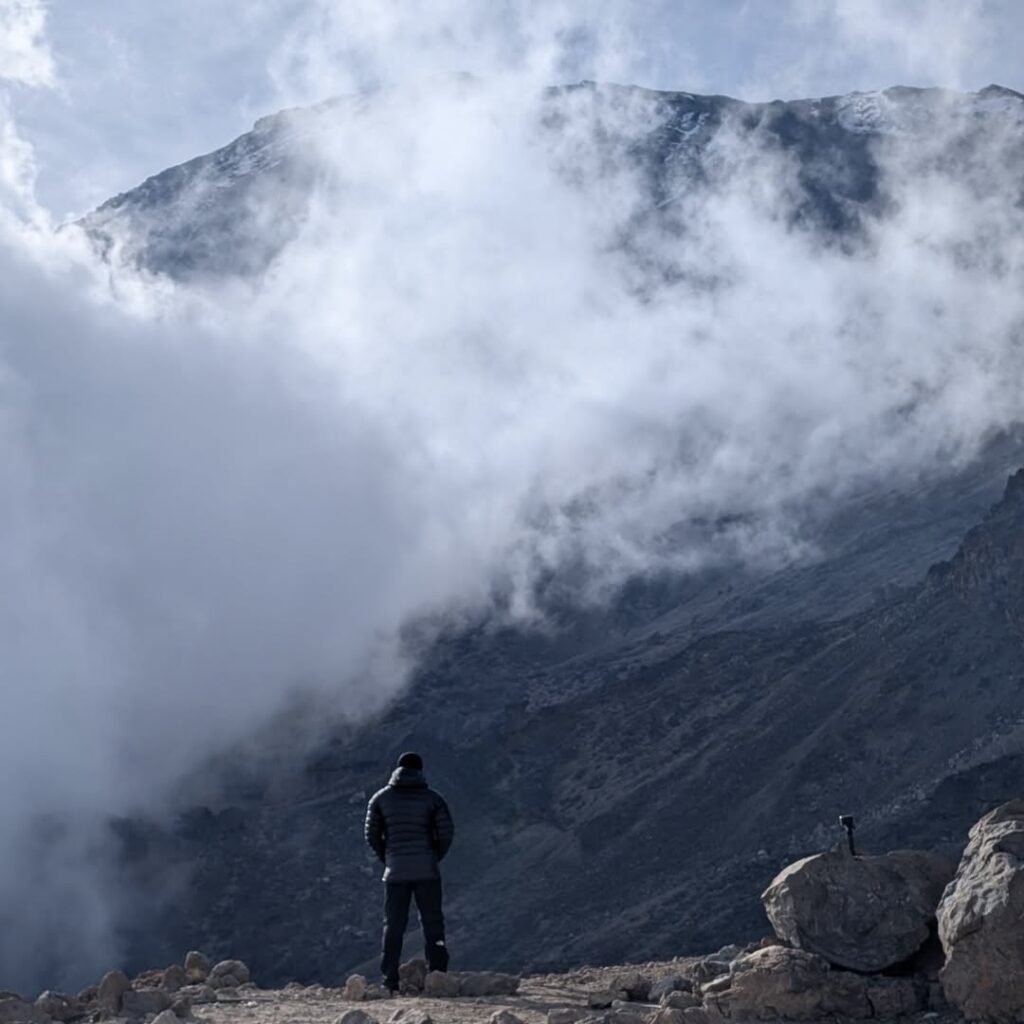
Traversal of the northern face. The landscape here is open, austere, and remarkable — alpine desert with wide views toward the Kenyan plains and Kilimanjaro’s northern glaciers. Buffalo Camp sits in the moraine below the mountain’s northern ice fields. The silence here is something most Kilimanjaro trekkers don’t experience.
Day 6 — Buffalo Camp to School Hut
Buffalo Camp (4,020 m / 13,189 ft) → School Hut (4,750 m / 15,584 ft) ~5–6 hours hiking | Elevation gain: ~730 m / 2,395 ft
The final camp before summit. School Hut sits below the northern summit approach. By this point you’ve spent six nights progressively acclimatizing — more nights at 4,000m+ than any other route allows. Your body has had time. Sleep early; wake at midnight.
Day 7 — Summit Day and Descent to Horombo Hut
School Hut (4,750 m / 15,584 ft) → Gilman’s Point (5,681 m / 18,638 ft) → Uhuru Peak (5,895 m / 19,341 ft) → Horombo Hut (3,720 m / 12,205 ft) ~14–16 hours hiking
Midnight departure up the northern face. The gradient is steep from School Hut but your acclimatization at this point is the best it can be on Kilimanjaro. Gilman’s Point on the crater rim arrives, then the walk along the rim to Uhuru Peak. The descent is via the Marangu trail, south through Kibo to Horombo.
Day 8 — Horombo Hut to Mandara Hut
Horombo Hut (3,720 m / 12,205 ft) → Mandara Hut (2,720 m / 8,924 ft)
Descending through the southern side’s vegetation zones — the contrast with the northern landscape you’ve been walking through is noticeable. Forest comes back below Mandara.
Day 9 — Mandara Hut to Marangu Gate
Mandara Hut (2,720 m / 8,924 ft) → Marangu Gate (1,860 m / 6,102 ft) ~2–3 hours hiking
A short final morning. Certificates at Marangu Gate. Transfer to Moshi. You’ve walked around an entire mountain.
Why the Northern Circuit has the best acclimatization
The acclimatization advantage of the Northern Circuit over every other Kilimanjaro route is structural, not incidental.
From the very first night, you begin sleeping progressively higher:
- Night 1 at Mti Mkubwa (2,650 m / 8,694 ft)
- Night 2 at Shira 1 (3,500 m / 11,483 ft)
- Night 3 at Shira 2 (3,840 m / 12,598 ft)
- Night 4 at Moir Hut (4,200 m / 13,780 ft)
- Night 5 at Buffalo Camp (4,020 m / 13,189 ft)
- Night 6 at School Hut (4,750 m / 15,584 ft)
- Summit night: Uhuru Peak (5,895 m / 19,341 ft) followed by descent
- Night 7 at Horombo Hut (3,720 m / 12,205 ft)
- Night 8 at Mandara Hut (2,720 m / 8,924 ft)
By summit night, you will have slept six consecutive nights above 2,650 m / 8,694 ft, including two nights above 4,000 m / 13,123 ft. No other route matches this gradual and deliberate progression.
This extended exposure allows your body’s red blood cell count to rise steadily, improving oxygen transport and building the physiological foundation needed for the upper mountain. The Northern Circuit embodies the principle of climb high, sleep low, giving you maximum time to adapt before the final push.
In short, the Northern Circuit is designed to give climbers the highest chance of success: more days, more gradual altitude gain, and the most complete acclimatization profile available on Kilimanjaro.
THE SOLITUDE FACTOR
On Machame and Lemosho, you’ll share camps with trekkers from multiple operators. At Barafu high camp, you’re one of potentially hundreds of tents. The southern routes are genuinely beautiful — but they’re busy in a way that changes the experience.
Northern Circuit’s traversal of the mountain’s northern face is different. The Moir Hut and Buffalo Camp sections see very few teams. In a week of walking, you may encounter no other groups at all. This isn’t a minor detail — for many clients who choose Northern Circuit, the solitude is the point.
DIFFICULTY & FITNESS
The same fitness benchmark applies: running 10km in an hour, three times a week, represents the aerobic base this route requires. The daily hiking distances are longer than Lemosho, but the extended duration means the physical load is distributed over more days. Some clients find Northern Circuit less taxing per day precisely because the route has fewer compressed-altitude sections.
Summit night from School Hut is the most demanding day on any Kilimanjaro route — but by Day 7 on Northern Circuit, your body is in the best position it can be.
WHAT’S INCLUDED
Every Kilimanjaro Sky Route climb includes:
- 1 lead guide + 1 assistant guide per 2 clients
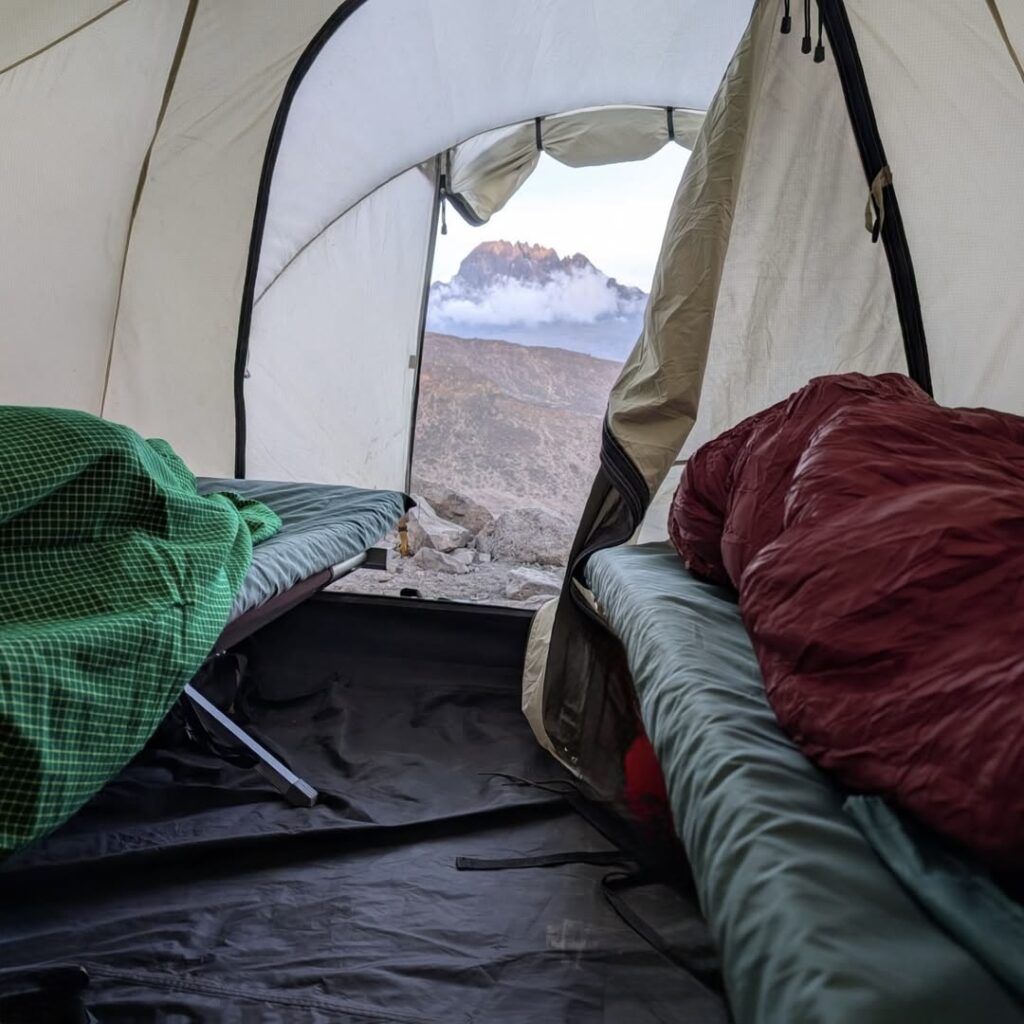
- Quality, waterproof mountain sleeping tents
- Quality Tents
- Cook and assistant cook
- 3–4 porters per client (20kg maximum, weighed at Londorossi Gate)
- All meals throughout the 8 days — breakfast, lunch, dinner, trail snacks
- Pulse oximeters, supplemental oxygen cylinders, full medical kit
- Camping equipment — tents, sleeping mats, dining tent, cooking equipment
- Emergency oxygen
- Clean drinking water
- TANAPA park fees and rescue levy
- Kilimanjaro Airport transfers
- Accommodation in Moshi on arrival and before departure
- Portable Toilet
- Londorossi Gate 4WD transfer (included)
- Certificate of completion
Not Included
- Flights
- Alcoholic and soft drinks
- Visa fees
- Travel insurance
CTA: Inquire about Northern Circuit dates and pricing→ [Contact]
CTA2: Compare all routes → [Routes overview]
NORTHERN CIRCUIT ROUTE FAQ
Northern Circuit Route Frequently asked questions