Mount Kilimanjaro is in Tanzania. Every part of it — every ridge, every glacier, every climbing route, every camp, every gate — lies within the borders of Tanzania in East Africa. It’s not split between two countries. It’s not shared with Kenya. The closest point of the Kenyan border is roughly 50 kilometres to the north, and while some Kilimanjaro routes approach from near that border, they are still firmly on the Tanzanian side.
So why does the confusion exist? Three reasons, and they’re worth understanding if you’re planning a trip.
Why People Think Kilimanjaro Is in Kenya
The short answer: because the most iconic photographs of the mountain are taken from Kenya.
The Amboseli View
The most famous Kilimanjaro images in the world — the ones you see on postcards, in magazines, in wildlife documentaries — are shot from Amboseli National Park in southern Kenya, about 35 kilometres north of the mountain. From Amboseli, you see the entire mountain from base to summit, usually with elephants, giraffes, or acacia trees in the foreground. It’s one of the most perfectly composed natural views on the planet.
Kenya has been photographed showing off Kilimanjaro so consistently that the mountain and the Kenyan savannah have become visually inseparable in popular imagination. That’s a quirk of geography — Amboseli happens to be the best viewpoint — and a quirk of tourism marketing, because Kenya has historically leaned harder on wildlife tourism than Tanzania has.
The irony is that you cannot actually climb Kilimanjaro from Kenya. To set foot on the mountain, you have to cross into Tanzania.
The Border Proximity
Kilimanjaro sits in the northeastern corner of Tanzania, with the Kenyan border running roughly 50 kilometres to the north. On a map, the mountain looks like it’s right on the border — and in a regional sense, it is. But the actual political boundary runs north of the mountain’s base, not across its slopes.
The border’s current location is the result of a 19th-century colonial agreement. Tanzania (then German East Africa) and Kenya (then British East Africa) were both European colonies, and the border between them was drawn up between Britain and Germany in a series of treaties between 1886 and 1890. The story goes — and this is the version most commonly repeated — that Queen Victoria gifted Kilimanjaro to her grandson, Kaiser Wilhelm II, as a birthday present, bending the border southward to include the mountain in German territory.
Whether that’s literally true or a later embellishment is debated among historians. What’s not debated is that the border was deliberately drawn to place Kilimanjaro firmly in German East Africa, and it has stayed that way through Tanzanian independence in 1961.
The Name Recognition
“Kilimanjaro” is one of the most recognisable place names in the world — but “Tanzania” is, by comparison, less recognised globally than “Kenya.” Kenya has decades of international brand recognition from safari tourism, Karen Blixen’s Out of Africa, and a long list of famous books and films set on its plains. Tanzania’s international profile has grown significantly in the last two decades, but historically many travellers’ first exposure to East Africa was through Kenya.
The result: when people think of the most famous mountain in East Africa, they associate it with the country they associate with East Africa — which, for many people, is Kenya rather than Tanzania.
What’s Actually in Kenya, and What’s in Tanzania
To be clear on the geography:
In Tanzania:
- The entire mountain — every slope, cone, and glacier
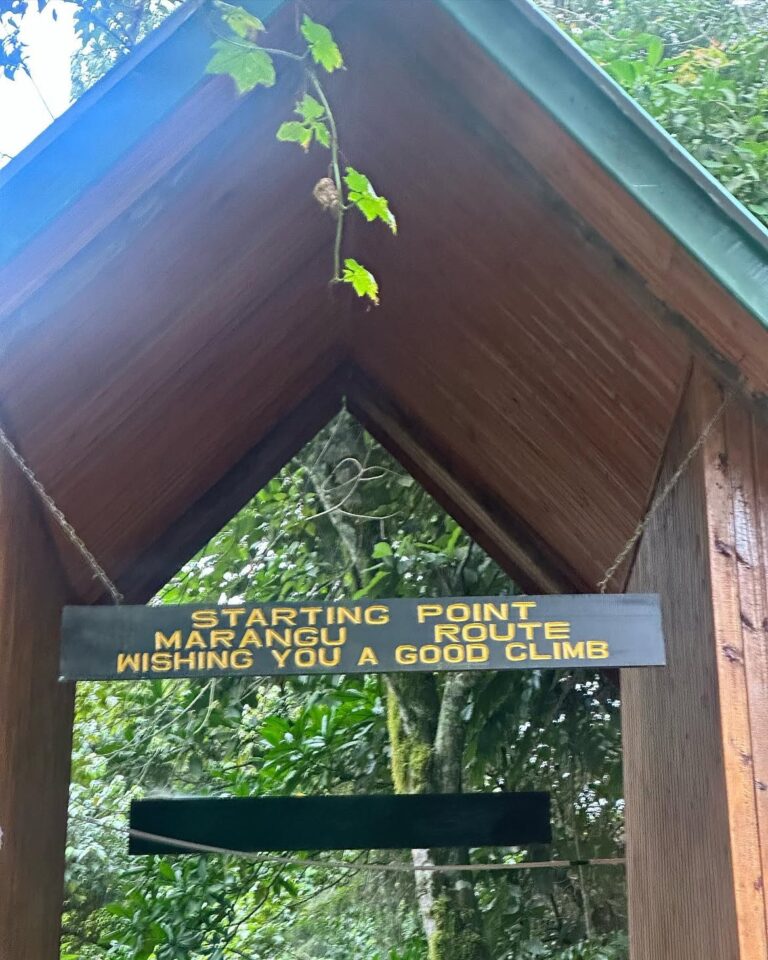
- All seven climbing routes: Machame, Lemosho, Marangu, Rongai, Shira, Northern Circuit, Umbwe
- Kilimanjaro National Park (1,688 km²), administered by Tanzania National Parks (TANAPA)
- All climbing gates, camps, huts, and trail infrastructure
- Moshi, the base town where climbs begin and end
- Kilimanjaro International Airport (JRO)
In Kenya:
- The best viewpoints of the mountain — Amboseli National Park, in particular
- A portion of the foothills north of the international border
- Safari destinations that often combine with Kilimanjaro climbs, though less commonly than Tanzanian ones
Our post on where Kilimanjaro is covers the precise location, coordinates, and logistics in more detail.
The Rongai Route — the “Kenya Side” Approach
There’s one source of confusion worth addressing directly: the Rongai Route is sometimes called “the Kenya side” approach to Kilimanjaro, and some operators describe it as “approaching from Kenya.” That’s misleading.
Rongai approaches Kilimanjaro from the north, which is the side of the mountain facing Kenya. But the trailhead, Rongai Gate, is in Tanzania. The route is entirely within Tanzanian territory. The “Kenya side” label refers to the direction of approach, not the country — and it can confuse first-time climbers who then wonder if they need a Kenyan visa.
You don’t. Rongai is a Tanzanian route like every other. If you’re interested, our Rongai Route page covers it in detail, and our routes overview compares it against the other six options.
What This Means for Planning Your Trip
A few practical implications:
Visa and immigration. You need a Tanzanian visa to climb Kilimanjaro. US and UK passport holders can obtain a visa on arrival at Kilimanjaro International Airport ($100 for US citizens, $50 for UK citizens at time of writing) or apply online in advance through Tanzania’s eVisa system. You do not need a Kenyan visa unless you’re flying into or through Kenya.
Flights. Most climbers fly into Kilimanjaro International Airport (JRO) in Tanzania. Some fly into Nairobi (NBO) in Kenya and transfer to Kilimanjaro by shuttle or short connecting flight — this can be cheaper but adds half a day to each end of the trip. If you choose this routing, be aware that you’ll pass through Kenyan immigration, then Tanzanian immigration at the border crossing, so you may need a Kenyan transit visa depending on your nationality.
Combined trips. Many climbers pair Kilimanjaro with safari. The most common pairing is with Tanzanian parks — Serengeti, Ngorongoro Crater, Tarangire, Lake Manyara — all within a few hours’ drive of Moshi. A Kenyan safari (Amboseli, Maasai Mara) is geographically close but adds border crossings and visa complexity. We arrange Tanzanian safari add-ons directly; Kenyan extensions are possible but less common.
The Bottom Line
Kilimanjaro is in Tanzania. Entirely, unambiguously, on every map that has ever been drawn. The confusion comes from the fact that the most famous view of the mountain is from Kenya, and that “Kenya” has stronger international name recognition than “Tanzania” in many markets.
If you want to climb Kilimanjaro, you’re coming to Tanzania. You’re flying into Kilimanjaro International Airport, staying in Moshi, and climbing with a Tanzanian-licensed operator. The view from Kenya will still be there if you want to add it — but the climb itself is firmly Tanzanian.
Ready to plan your climb? Our packages and routes cover the details, or contact us to start the conversation.