Most days on Kilimanjaro involve 4 to 7 hours of actual walking. Summit day is the outlier — it runs 12 to 14 hours, sometimes more, from the midnight start to the descent to a lower camp.
That’s the headline answer. The useful answer, if you’re training or trying to understand what a week on the mountain actually demands of your body, is more nuanced. Here’s the day-by-day breakdown — by route — with the real numbers.
The General Pattern
On every route, the pattern follows roughly the same shape:
- Day 1: Short. 3–5 hours. Park gate to first camp.
- Days 2 through summit day eve: Medium. 4–7 hours. Progressive altitude gain, pole pole pace.
- Summit day: Long. 12–14 hours total — midnight start to summit around sunrise, then descent back to a lower camp.
- Final descent day: Medium. 4–6 hours from a mid-camp back to the park gate.
What makes the hours harder than they sound at sea level:
- Altitude. Even “easy” walking hours at 3,500m demand more than the same hours at home. Heart rate is higher. Recovery between steps is slower.
- Pace. Our guides walk pole pole — slowly, slowly. Faster than this, acclimatisation suffers. This means distances covered are modest (typically 5–12km/day) but hours on trail are longer than those kilometres suggest.
- Weight. You carry a day pack of 5–8kg: water, snacks, rain layer, camera, hat, extra layer. Porters carry the rest.
- Terrain. Scree, wet rock, forest roots, glacier-adjacent rubble. Some of the hours are real work even when the pace is gentle.
For the broader physical picture, see our how fit do you need to be to climb Kilimanjaro guide.
By Route
Machame Route (7 days)
The Machame Route — our most popular option — runs seven days with this approximate hour-by-day profile:
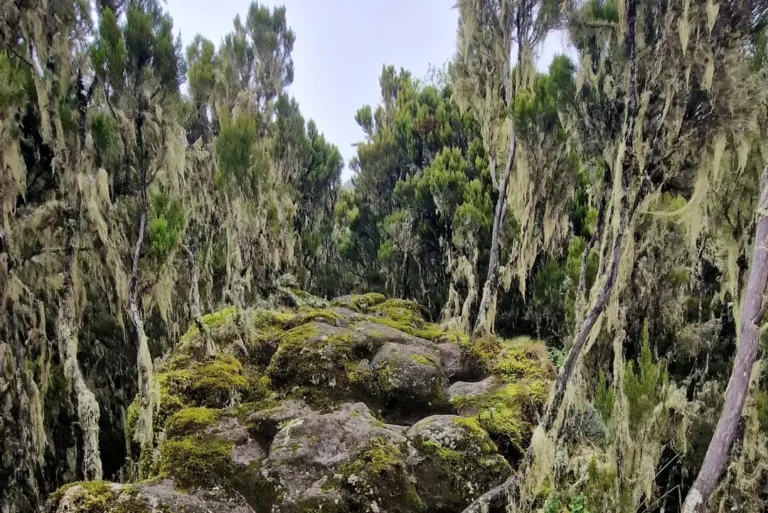
- Day 1 — Machame Gate (1,800m) to Machame Camp (3,000m): 5–7 hours. Forested, steady climb. Day starts late after park registration.
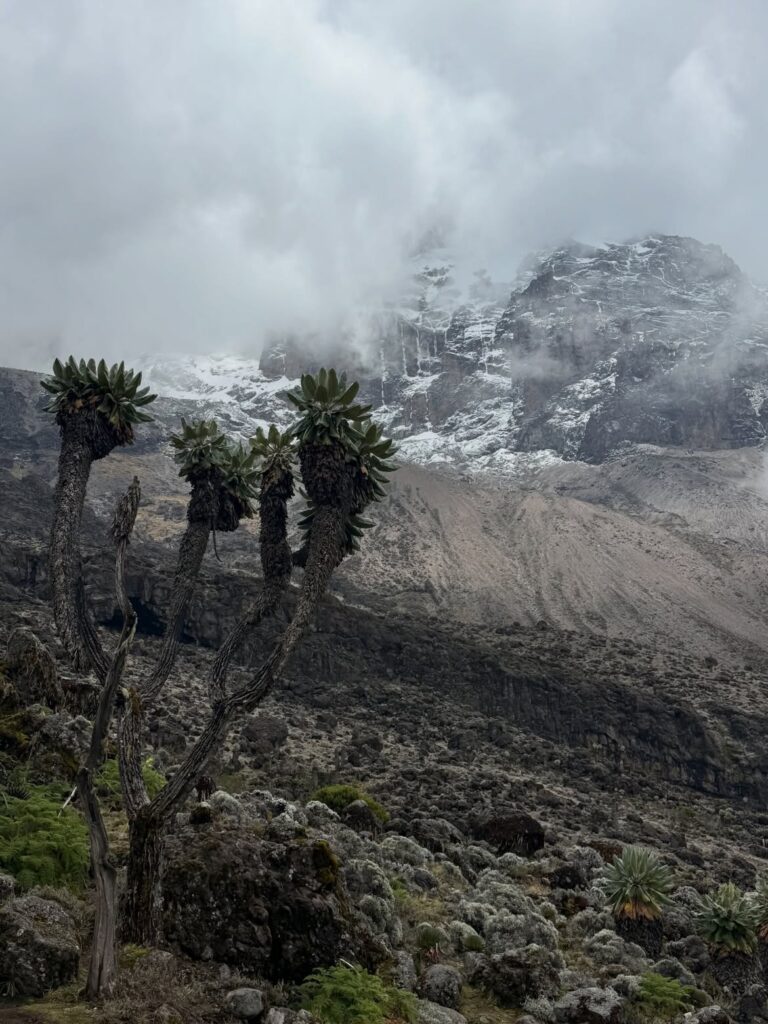
- Day 2 — Machame Camp (3,000m) to Shira 2 (3,840m): 4–6 hours. Emerging from the rainforest into the moorland.
- Day 3 — Shira 2 (3,840m) to Lava Tower (4,630m) to Barranco (3,960m): 6–8 hours. The acclimatisation day — walk high, sleep low. One of the longer days by hours on trail.
- Day 4 — Barranco (3,960m) to Karanga (4,035m): 4–5 hours. Includes the Barranco Wall scramble — short but attention-demanding.
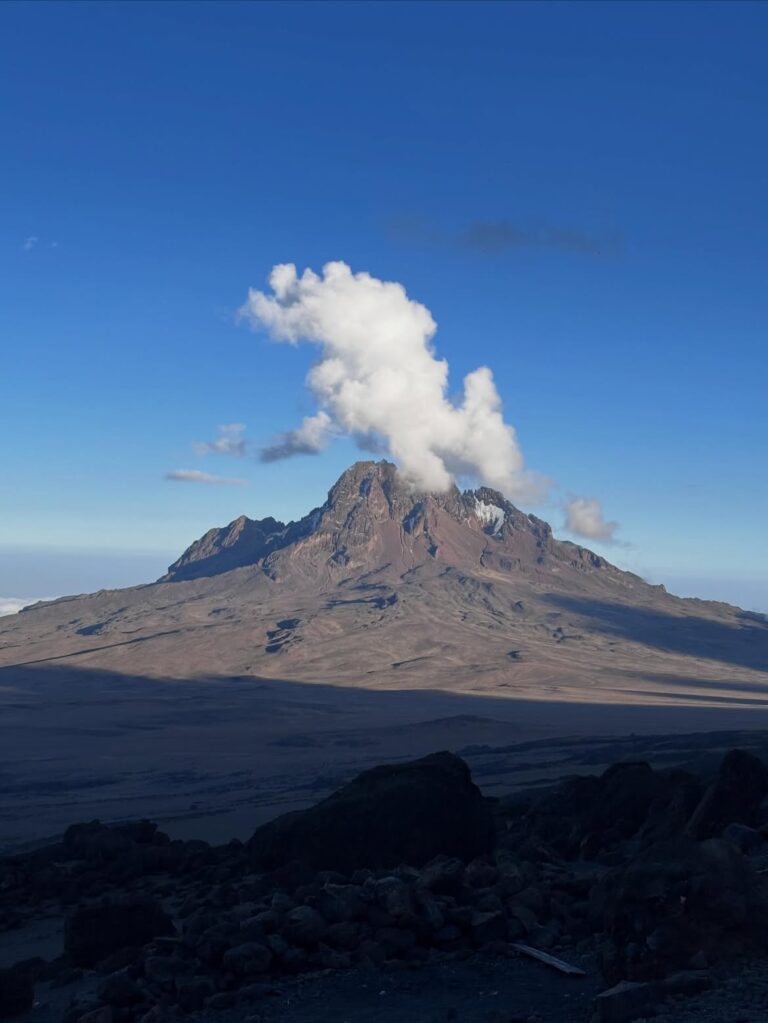
- Day 5 — Karanga (4,035m) to Barafu (4,640m): 3–4 hours. Deliberately short to conserve energy for summit night.
- Day 6 — Barafu (4,640m) → Uhuru Peak (5,895m) → Mweka Camp (3,100m): 12–14 hours total. Midnight start, summit around sunrise, long descent.
- Day 7 — Mweka Camp (3,100m) to Mweka Gate (1,640m): 3–4 hours. Steep, mostly downhill through forest.
Lemosho Route (8 days)
The Lemosho Route adds a day at the start for better acclimatisation — and a higher summit success rate. Hour-by-day:
- Day 1 — Londorossi Gate (2,100m) to Mti Mkubwa (2,780m): 3–4 hours. Gentle forest walk.
- Day 2 — Mti Mkubwa (2,780m) to Shira 1 (3,500m): 5–7 hours. Climbing into the moorland.
- Day 3 — Shira 1 (3,500m) to Shira 2 (3,840m): 4–6 hours. Acclimatisation-focused day.
- Day 4 — Shira 2 (3,840m) to Lava Tower (4,630m) to Barranco (3,960m): 6–8 hours. Same as Machame Day 3.
- Days 5–8: Same as Machame Days 4–7 above.
Marangu Route (5 days)
The shortest route. Fewer days means fewer climbing hours total, but also less acclimatisation — the lowest success rate of the main routes. Hour-by-day:
- Day 1 — Marangu Gate (1,860m) to Mandara Hut (2,720m): 4–5 hours.
- Day 2 — Mandara (2,720m) to Horombo (3,720m): 6–8 hours.
- Day 3 — Horombo (3,720m) to Kibo Hut (4,720m): 6–7 hours.
- Day 4 — Kibo (4,720m) → Uhuru Peak (5,895m) → Horombo (3,720m): 12–14 hours. Summit night.
- Day 5 — Horombo (3,720m) to Marangu Gate (1,860m): 5–7 hours.
If you’re comparing routes, the Marangu Route page goes into why Marangu gets lower summit rates despite fewer daily hours — the issue isn’t hours, it’s acclimatisation time.
Rongai Route (6 days)
The northern-approach Rongai Route is quieter, drier, and generally gentler on daily hours until summit night.
- Day 1 — Nalemoru Gate (1,950m) to Simba Camp (2,625m): 3–4 hours.
- Day 2 — Simba Camp (2,625m) to Second Cave (3,450m): 5–6 hours.
- Day 3 — Second Cave (3,450m) to Kikelewa (3,679m): 4–5 hours.
- Day 4 — Kikelewa (3,679m) to Mawenzi Tarn (4,315m): 3–4 hours.
- Day 5 — Mawenzi Tarn (4,315m) to School Hut (4,750m): 4–5 hours.
- Day 6 — School Hut → Uhuru Peak → Mweka: 12–14 hours.
- Day 7 — Mweka to Mweka Gate: 3–4 hours.
Northern Circuit (9–10 days)
The longest route, and the one with the most camping-hours total but gentlest daily demands until summit night. The Northern Circuit runs 9 days of 4–6 hours typical, with the standard 12–14 hour summit day near the end.
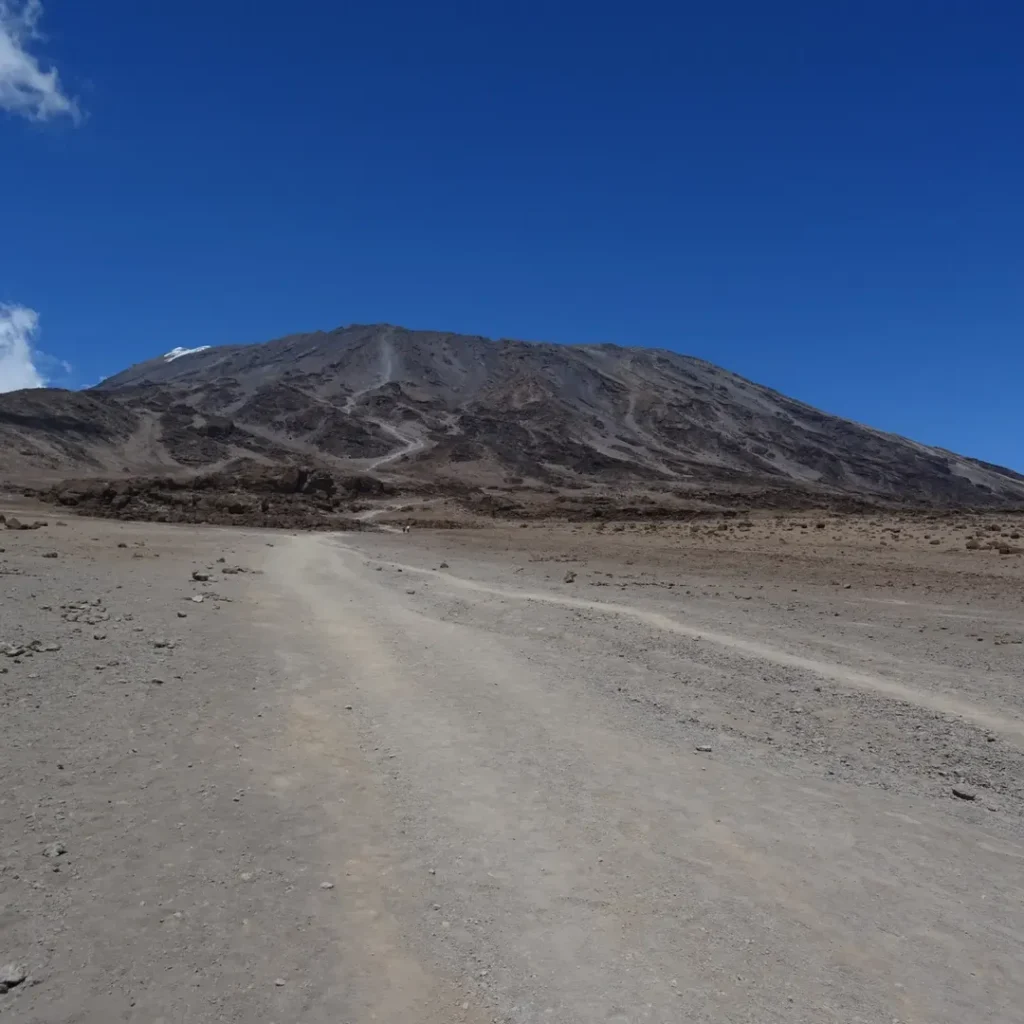
Why Summit Day Is So Much Longer
The 12–14 hour summit day catches most first-time Kilimanjaro climbers by surprise, even when they’ve been told the numbers. Two things make it uniquely demanding.
It’s front-loaded with altitude. Your body goes from 4,640m (Barafu) to 5,895m (Uhuru) in 5–7 hours. That’s more vertical altitude gain in a single push than almost any other day of the climb.
The descent is also part of summit day. After summit, you don’t rest at Barafu and sleep. You pack up camp and descend another 1,500m to Mweka (or equivalent) before the day is over. Your legs have already done 5–7 hours uphill before they begin the hardest descent of the trip.
The practical consequence: by the time you reach Mweka Camp late afternoon on summit day, you have been moving — with breaks — for 14+ hours. You will be tired. You will also be euphoric if you summited. Sleep comes easily that night.
For the fuller picture of what summit night actually feels like, see our Kilimanjaro summit night guide and our summit sunrise post.
How to Train for the Hours
The fitness benchmark we give clients is: able to run 10km in 1 hour, three times per week, comfortably. If you can do that six weeks before your climb, you’re in the zone.
But running is not the full story. The specific training that matches Kilimanjaro is:
- Long hiking days. Every 1–2 weeks in the 8 weeks before the climb, do a 5–7 hour hike with elevation gain and a day pack. This is not optional if your usual training is gym-based. Your body needs to know what sustained time on feet feels like.
- One back-to-back weekend. Saturday: 5–6 hours with 500m elevation gain. Sunday: 4–5 hours with 500m elevation gain, same day pack weight. This simulates how Kilimanjaro days feel — a fresh day on tired legs.
- Stair climbs or step-ups. Repetitive uphill motion with a pack. Translates well to what’s demanded on summit night.
- Simulated summit day once. In the final three weeks, do a 10–12 hour day if you can — with a 4am start, continuous movement, and a descent at the end. This trains your body and mind for the one day that’s actually hard.
Our beginner’s guide to climbing Kilimanjaro goes deeper on the 12-week training structure we recommend.
How Guides Manage the Hours
One thing worth naming: the hours above are trail hours — they don’t include breaks. On climbing days, we build in:
- Mid-morning snack stop: 15–20 minutes.
- Lunch: 45–60 minutes at a sheltered spot, usually with hot soup or a proper prepared lunch carried up by the crew.
- Short pauses every 60–90 minutes for water and breath.
The cumulative result is that a “6-hour trail day” is really 7–7.5 hours between leaving camp and arriving at the next one. This matters for pacing your own energy — don’t assume 6 hours of continuous effort.
Our guides lead with pole pole — slowly, slowly — which is the single biggest factor in our 95–98% summit success rate across Machame and Lemosho. Going too fast early burns acclimatisation capacity that you need later. If you’ve trained well and you feel like you could push harder on day two, trust the pace anyway. The guides are watching where you’ll need your reserves.
A Realistic Summary
On a 7–9 day climb, you’ll walk roughly 40–55 hours across the whole trip, with one unusually long day (summit day) at the end. That’s less than a standard work week in hours, but compressed, at altitude, on terrain that demands attention. It’s genuinely achievable for anyone in decent fitness, willing to train sensibly, and willing to walk pole pole when the guide says pole pole.
If you’re working out which route best matches your schedule, stamina, and acclimatisation tolerance, our routes page and packages go into the trade-offs. Any specifics on daily mileage for your particular route — reach us directly through our team, or find the common questions covered on the FAQs page.