A Kilimanjaro climb takes between 5 and 10 days on the mountain itself, depending on which route you choose. Most climbers spend 6 or 7 days; the highest-success-rate routes run 8 to 10 days.
That’s the short answer. The longer answer matters, because the number of days you spend on the mountain is the single biggest factor in whether you reach Uhuru Peak — more important than fitness, age, or prior trekking experience, assuming you’re climbing with a responsible operator. More days means better acclimatization. Better acclimatization means higher summit success and a meaningfully better experience.
This post walks through the time each route takes, why the math of duration works the way it does, and how to think about the right length for your situation.
Summary: Duration by Route
| Route | Typical length | Summit success |
|---|---|---|
| Marangu | 5 days (can be 6) | 65–75% |
| Machame | 6 or 7 days | 75–90% |
| Umbwe | 6 or 7 days | Variable; demanding route |
| Rongai | 6 or 7 days | 80–90% |
| Shira | 6 or 7 days | 75–85% |
| Lemosho | 7 or 8 days | 85–95% |
| Northern Circuit | 9 or 10 days | 95%+ |
A full trip to Tanzania for a Kilimanjaro climb adds travel days and buffer on either end — total trip length is typically 10–14 days, or 14–21 days with a safari add-on.
Why Duration Matters So Much
Altitude is the reason. Kilimanjaro’s summit is 5,895 m — high enough that roughly 75% of your oxygen availability is gone compared to sea level. The human body adapts to this, but the adaptation takes time.
The adaptation process — acclimatization — is the main reason some routes have 95% summit success while others have 65%. It’s not that the shorter routes are “easier” in terrain terms. They’re just too fast for most people’s bodies to adjust.
The practical rule: every additional day on the mountain below 4,500 m adds 5–10 percentage points to your summit success, up to a point. After about 10 days, the marginal benefit flattens. Before 6 days, you’re often racing the physiology.
The acclimatization principle most guides use is “climb high, sleep low” — spend time at higher altitudes during the day to stimulate adaptation, then sleep lower to recover. Routes that allow this pattern (Lemosho, Northern Circuit, Machame with the Karanga day) have higher success rates than routes that force a more linear ascent (5-day Marangu).
Our Kilimanjaro altitude sickness guide goes deeper on the physiology.
Route-by-Route Breakdown
Marangu — 5 days (can be extended to 6)
Marangu is the only route with hut accommodation rather than camping. It’s sometimes called the “Coca-Cola route” because of the relative comfort.
- Day 1: Marangu Gate (1,860 m) to Mandara Hut (2,700 m). 4 hours of trekking, roughly 8 km.
- Day 2: Mandara Hut to Horombo Hut (3,720 m). 6 hours, 12 km.
- Day 3: Horombo Hut to Kibo Hut (4,700 m). 6–7 hours, 9 km.
- Day 4: Summit night (midnight start) to Uhuru Peak (5,895 m) and back down to Horombo Hut. 12–14 hours of walking total.
- Day 5: Horombo Hut down to Marangu Gate. 6 hours.
Honest read: 5-day Marangu has the lowest summit success of the major routes because the acclimatization profile is aggressive. If you’re fit, have prior altitude experience, and want the hut comfort, 6-day Marangu with an extra day at Horombo meaningfully improves the math. If you’re a first-time altitude trekker on a budget, Rongai or 7-day Machame is a better use of the money.
Machame — 6 or 7 days
The most-climbed route on Kilimanjaro. Camping throughout.
6-day Machame:
- Day 1: Machame Gate (1,640 m) to Machame Camp (3,010 m). 6 hours.
- Day 2: Machame Camp to Shira Camp (3,840 m). 5 hours.
- Day 3: Shira Camp to Barranco Camp (3,960 m) via Lava Tower (4,630 m). 7 hours.
- Day 4: Barranco Camp to Barafu Camp (4,673 m). 6–7 hours (via Karanga).
- Day 5: Summit night, Barafu to Uhuru Peak, descent to Mweka Camp. 14–16 hours.
- Day 6: Mweka Camp to Mweka Gate. 4 hours.
7-day Machame: Adds a dedicated acclimatization day at Karanga Camp (3,995 m) between days 4 and 5 of the 6-day itinerary. This is often the difference between reaching the summit and turning back at Stella Point.
Honest read: if you’re climbing Machame, do the 7-day. The extra day is our single most-requested upgrade in the pre-climb briefing, and the summit-success difference is in the range of 10 percentage points.
Lemosho — 7 or 8 days
Starts on the western side of the mountain, joins the main southern circuit at Shira 2 Camp, and takes the same final approach as Machame. Longer on the front end, quieter on opening days.
8-day Lemosho:
- Day 1: Londorossi Gate (2,100 m) to Big Tree Camp (2,780 m). 4 hours.
- Day 2: Big Tree Camp to Shira 1 Camp (3,505 m). 7 hours.
- Day 3: Shira 1 to Shira 2 Camp (3,840 m). 5 hours.
- Day 4: Shira 2 to Barranco Camp via Lava Tower. 7 hours.
- Day 5: Barranco to Karanga Camp (3,995 m). 4–5 hours.
- Day 6: Karanga to Barafu Camp (4,673 m). 4–5 hours.
- Day 7: Summit night, Barafu to Uhuru Peak and down to Mweka Camp. 14–16 hours.
- Day 8: Mweka Camp to Mweka Gate. 4 hours.
Honest read: our most-recommended route for first-time Kilimanjaro climbers. Highest standard-route success rate on the mountain, strong acclimatization, quieter opening days. Worth the extra cost over 7-day Machame for most climbers.
Rongai — 6 or 7 days
The only route approaching from the north (Kenyan border side). Drier, quieter, with a different summit approach via Gilman’s Point.
7-day Rongai:
- Day 1: Nalemoru Gate (1,950 m) to Simba Camp (2,650 m). 4 hours.
- Day 2: Simba Camp to Second Cave (3,450 m). 5 hours.
- Day 3: Second Cave to Kikelewa Caves (3,600 m). 5 hours.
- Day 4: Kikelewa to Mawenzi Tarn (4,330 m). 5 hours.
- Day 5: Mawenzi Tarn to Kibo Hut (4,700 m). 5 hours.
- Day 6: Summit night via Gilman’s Point to Uhuru Peak, descent to Horombo Hut. 14–16 hours.
- Day 7: Horombo Hut to Marangu Gate. 6 hours.
Honest read: Rongai is an excellent choice if you want a quieter route or are climbing during the short rains (November) or long rains (April–May), when the northern approach stays drier. Success rate on 7-day Rongai is on par with 7-day Machame.
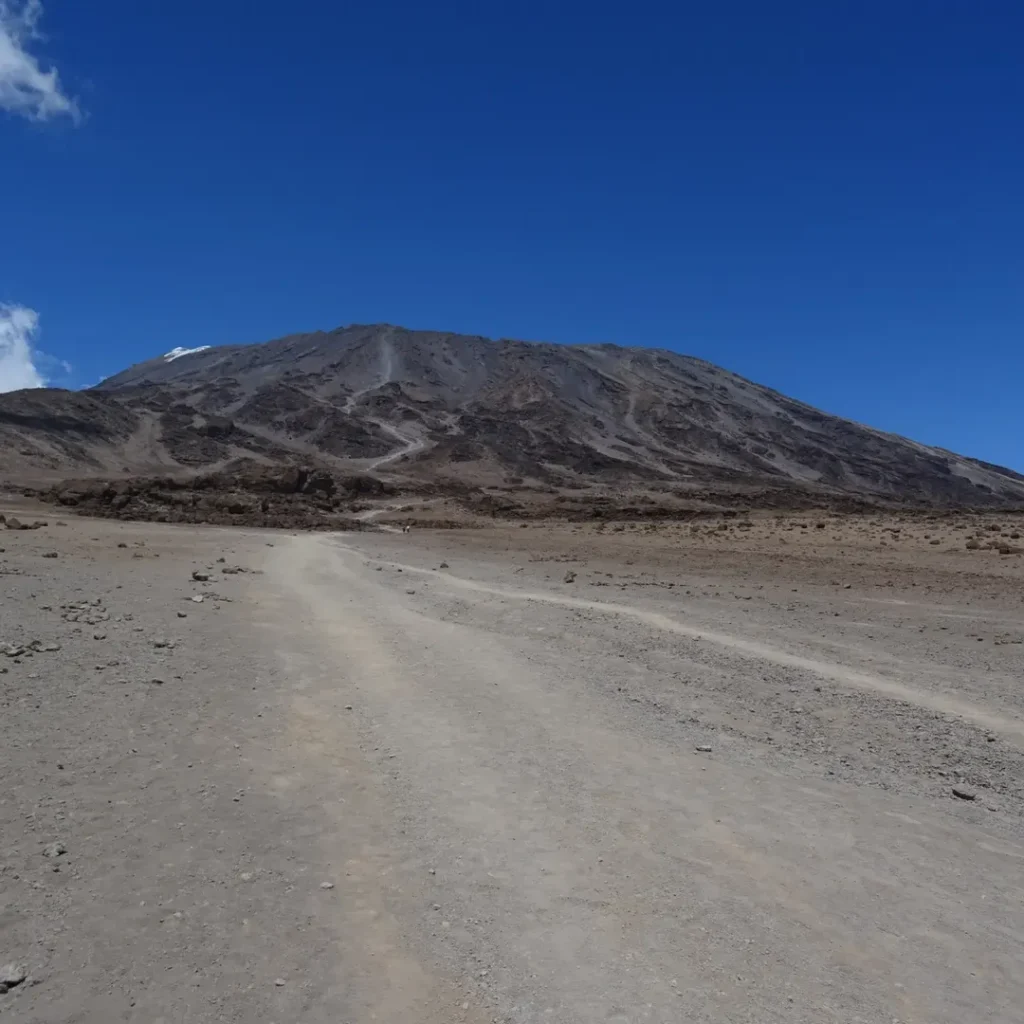
Northern Circuit — 9 or 10 days
The longest route, circumnavigating the northern side of Kilimanjaro. The best acclimatization profile available.
- Days 1–3: Western approach (Lemosho opening).
- Days 4–6: Northern Circuit traverse — Moir Hut, Buffalo Camp, Pofu Camp, Third Cave.
- Day 7: Pofu Camp to School Hut.
- Day 8: School Hut to Kibo (or direct summit push).
- Day 9: Descent.
- Day 10: Descent to gate.
Honest read: the quietest route on Kilimanjaro and the highest success rate. The trade-off is cost (more park fees, more crew days) and time (two extra days of vacation). For climbers with schedule flexibility and the budget, Northern Circuit is a strong choice.
Shira and Umbwe
Shira (6–7 days): starts at high altitude on the Shira Plateau via vehicle. The driving start skips some of the forest-zone acclimatization, which is a weakness; climbers with prior altitude experience often handle this well, but first-time trekkers tend to struggle.
Umbwe (6–7 days): the steepest and most direct route. Very quiet but physically demanding and with a less favourable acclimatization profile than Machame or Lemosho. For experienced trekkers only.
How Long It Takes in Total Trip Time
The days on the mountain are only part of the picture. Typical total trip length:
- Days 1–2: Travel to Tanzania, arrival at Kilimanjaro International Airport (JRO), transfer to Moshi, briefing, gear check.
- Days 3–X: Climb (5 to 10 days).
- X+1 or +2: Rest and recovery day in Moshi after descent.
- X+2 to X+3: Return travel.
Minimum total trip length for a 7-day climb: 10 days. Comfortable: 12 days. With a 3–5 day safari: 14–18 days.
Don’t skimp on the rest day after descent. A day in Moshi between the climb and the return flight meaningfully improves your sleep, recovery, and general sense of having completed the trip. Our post on how long it takes to recover from climbing Kilimanjaro covers the physical reality of the days after.
How to Choose the Right Duration
Choose 5–6 days if…
- You’ve climbed at altitude above 4,500 m before and know how your body responds.
- You have limited vacation time and no flexibility.
- Budget is tight and the difference between 5- and 7-day pricing matters more than summit success probability.
Choose 7 days if…
- It’s your first time above 4,000 m.
- You want a strong balance of success rate, cost, and time.
- You’re climbing Machame or Rongai.
Choose 8 days if…
- Summit success is a high priority.
- You want the strongest available standard-route acclimatization.
- You’re on Lemosho.
Choose 9–10 days if…
- You want the quietest route on the mountain.
- Summit success matters enough to pay for the longest itinerary.
- You have flexibility in schedule and budget.
- You’re on Northern Circuit.
A Note on Summit Night
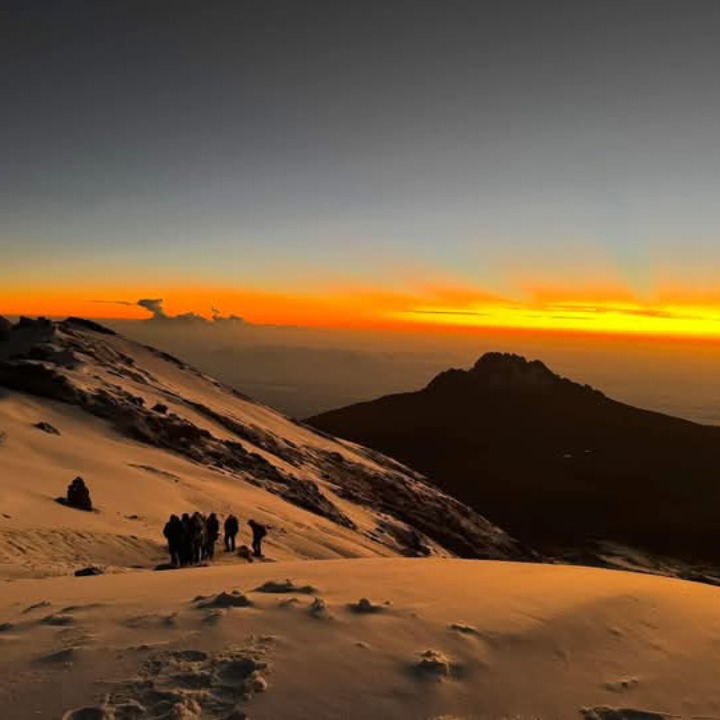
Regardless of which route you choose, summit night itself is typically 12–16 hours on your feet. Start time is usually between 10:30 p.m. and midnight from your highest camp (Barafu, Kibo, or Kosovo). You reach Stella Point on the crater rim after 5–7 hours, then Uhuru Peak another 45 minutes later.
After photos and a brief rest, you descend all the way back to camp, eat, rest for 2–3 hours, and then descend further to a lower camp — usually Mweka on the southern routes, Horombo on Rongai.
This is the longest single day of the climb on any route. The duration of the overall trek doesn’t change the length of summit night — it just changes how well-acclimated and energised you’ll be when you start.
Our Kilimanjaro summit night post covers the full experience.
Our Honest Take
The length of your Kilimanjaro climb is one of the few variables you fully control, and it has a direct, measurable effect on whether you summit. The climbers who reach Uhuru Peak and have a good experience doing it are disproportionately the ones who chose 7, 8, or 9 days — not the ones who chose 5 or 6 to save money or time.
If you’re torn between 6-day Machame and 7-day Machame, pick the 7. If you’re torn between 7-day Machame and 8-day Lemosho, pick the 8. If schedule allows, Northern Circuit is the premium option.
We run all lengths — we’ll tell you honestly which one fits your situation, and we’ll tell you when a shorter climb is the wrong call for your first summit attempt. Get in touch with our team in Moshi when you’re ready to talk specifics, or see our routes overview for side-by-side comparisons.