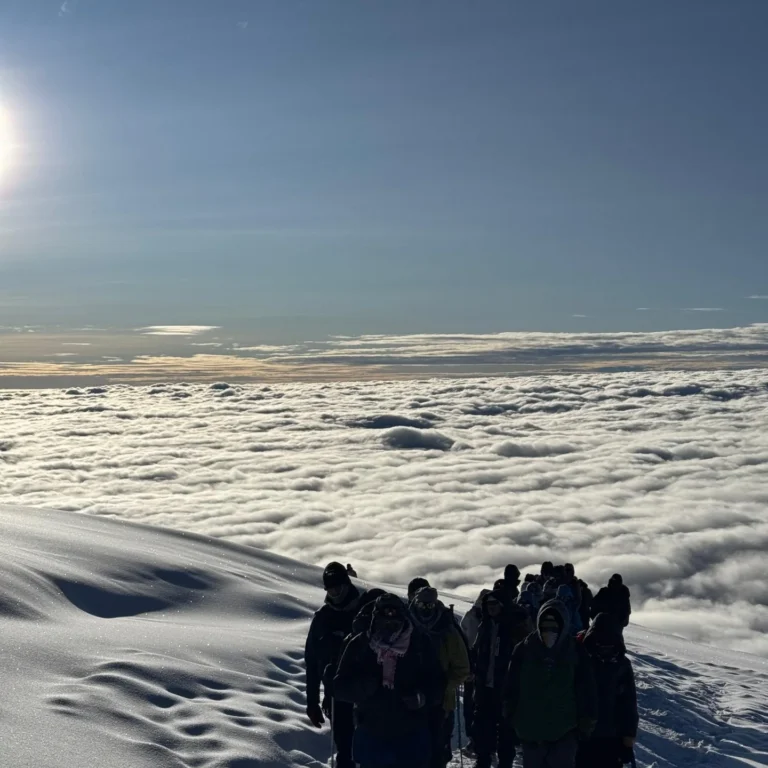
Mount Kilimanjaro stands 5,895 metres — 19,341 feet — above sea level. That’s the official height of Uhuru Peak, the highest point of the mountain and the summit climbers are aiming for. It makes Kilimanjaro the tallest mountain in Africa, one of the Seven Summits, and the tallest freestanding mountain in the world.
Numbers on their own, though, don’t tell you much. 5,895 metres/19,341 feet feels abstract until you start comparing it to things you already know — and more importantly, until you understand what that altitude actually does to your body. This guide covers both.
The Height, in Context
A few useful reference points:
- Mount Everest: 8,849 metres (29,032 ft) — about 50% taller than Kilimanjaro
- Mont Blanc (highest in the Alps): 4,809 metres (15,778 ft) — about 1,000 metres shorter
- Denali (highest in North America): 6,190 metres (20,310 ft) — slightly taller
- Aconcagua (highest in South America): 6,961 metres (22,838 ft) — noticeably taller
- Mount Elbrus (highest in Europe): 5,642 metres (18,510 ft) — slightly shorter
- Cruising altitude of a 747: around 11,000 metres (36,089 ft) — the summit is about half as high as your flight in
Kilimanjaro is tall enough that commercial aircraft clear it easily but low enough that oxygen levels at the summit, while reduced, are still survivable without supplementary oxygen for healthy climbers. At 5,895 metres, the air contains roughly 49% of the oxygen available at sea level. That reduction is the defining challenge of the climb.
The Three Summits of Kilimanjaro
Kilimanjaro isn’t a single peak. It’s a dormant volcano with three volcanic cones, and each has its own summit:
- Kibo — the youngest and tallest cone, and the one climbers ascend. Uhuru Peak, at 5,895 metres, sits on Kibo’s crater rim.
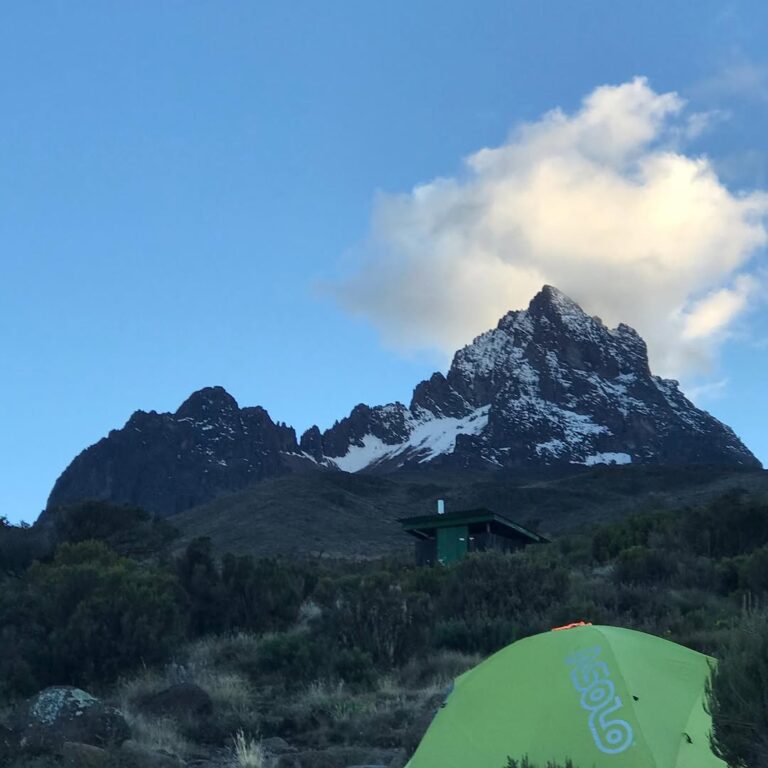
- Mawenzi — a rugged, jagged peak rising to 5,149 metres (16,893 ft). Mawenzi is technically demanding and not part of standard climbing routes.
- Shira — the oldest cone, now collapsed into the Shira Plateau, with its highest remaining point at about 3,962 metres (12,998 ft).
When people say they’ve “climbed Kilimanjaro,” they almost always mean they’ve reached Uhuru Peak on Kibo. We cover the full volcanic history in our post on Kilimanjaro’s geology.
There are other named points on Kibo itself:
- Gilman’s Point — 5,681 metres (18,638 ft), reached on the Marangu and Rongai routes before the final traverse to Uhuru
- Stella Point — 5,756 metres (18,885 ft), reached on the Machame, Lemosho, and Shira routes before the final push
- Uhuru Peak — 5,895 metres (19,341 ft), the actual summit
Gilman’s and Stella are both points on Kibo’s crater rim. From either one, it’s another 45 minutes to an hour of walking along the rim to Uhuru. Your certificate issued by Tanzania National Parks distinguishes between reaching the crater rim and reaching Uhuru — so the extra effort is worth it if you’re physically able.
What the Altitude Actually Feels Like
Tall numbers on a page don’t translate into body experience until you’re at altitude. Here’s what climbers typically notice:
Below 3,000 metres/9,842 ft: Most people feel normal. Some mild shortness of breath on steep sections. Sleep is largely unaffected.
3,000 to 4,000 metres/9,842 ft to 13,123 ft: Breathing becomes noticeable on any incline. Sleep starts to feel lighter. Mild headaches and loss of appetite are common. This is where pacing — the Swahili pole pole, “slowly slowly” — starts to matter.
4,000 to 5,000 metres/13,123 ft to 16,404 ft: You’re now in alpine desert and approaching the altitude where most people feel altitude sickness symptoms if they’re going to. Walking feels harder for the same gradient. Sleep is often broken. Headaches more common.
Above 5,000 metres/16,404 ft (summit night and summit): The air contains roughly half the oxygen of sea level. Every step takes conscious effort. Thinking slows. Emotional responses can become muted or unusually strong. The cold at the summit can drop to -20°C or colder before wind chill, as we cover in our post on how cold the summit of Kilimanjaro is.
This is why altitude sickness, not fitness, is the biggest factor in whether climbers reach the summit. Our team monitors oxygen saturation morning and evening with pulse oximeters, with readings below 75% or drops of more than 5% from the previous reading triggering closer evaluation. More on this in our safety protocols.
How Long Does It Take to Climb 5,895 Metres?
You don’t ascend 5,895 metres/19,341 feet vertically. You start from a trailhead at roughly 1,800 to 2,400 metres (depending on route), so your actual vertical gain is around 3,500 to 4,100 metres. The climb takes 5 to 9 days, depending on route:
- Marangu: 5–6 days
- Machame, Rongai, Shira, Umbwe: 6–7 days
- Lemosho: 7–8 days
- Northern Circuit: 9–10 days
Longer routes produce higher summit success rates because they give your body more time to acclimatise to the altitude. Our guide to Kilimanjaro’s routes walks through each option in detail.
Is Kilimanjaro’s Height Changing?
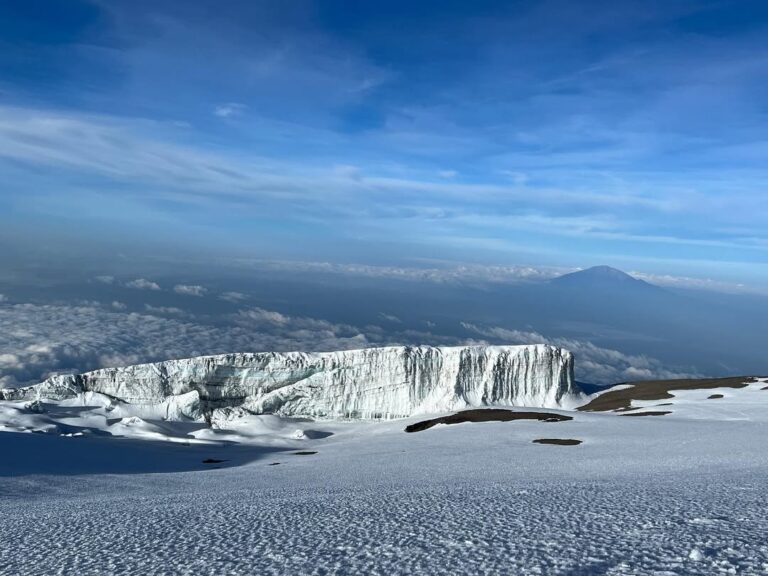
Marginally. The mountain itself isn’t actively growing — Kibo last erupted roughly 150,000 to 200,000 years ago, though fumarolic activity still exists in the crater. But the glaciers on Kilimanjaro have been retreating significantly since records began in the late 19th century. The ice cap that was present when the mountain was first summited by Hans Meyer and Ludwig Purtscheller in 1889 has lost an estimated 80% of its mass.
This doesn’t change the summit altitude in any meaningful way — the rock below the ice is what defines the peak’s height — but it’s changing what the summit looks like. Climbers today still walk past glaciers near Uhuru, but the ice is a fraction of what photographs from the 1920s show.
Has the Official Height Ever Changed?
Yes. The height of Uhuru Peak has been revised as measurement technology improved. Early estimates in the late 1800s put the mountain at around 6,000 metres. 20th-century measurements settled around 5,895 metres (19,341 ft). A 2008 GPS survey reconfirmed the current figure. The difference across measurements is small — on the order of tens of metres — but the 5,895-metre/19,341 ft figure is the one Tanzania National Parks uses officially, and it’s the one you’ll see on your summit certificate.
The Bottom Line
Kilimanjaro is 5,895 metres — 19,341 feet — tall. That makes it the highest mountain in Africa, one of the Seven Summits, and the tallest freestanding mountain on the planet. But the number is only part of what matters. The altitude dictates how the climb actually goes: how slowly you walk, how well you sleep, how much your body can carry, and, ultimately, whether you reach the summit.
If you’re ready to plan your climb, our packages cover every route and duration. Or get in touch to talk through which option fits you.