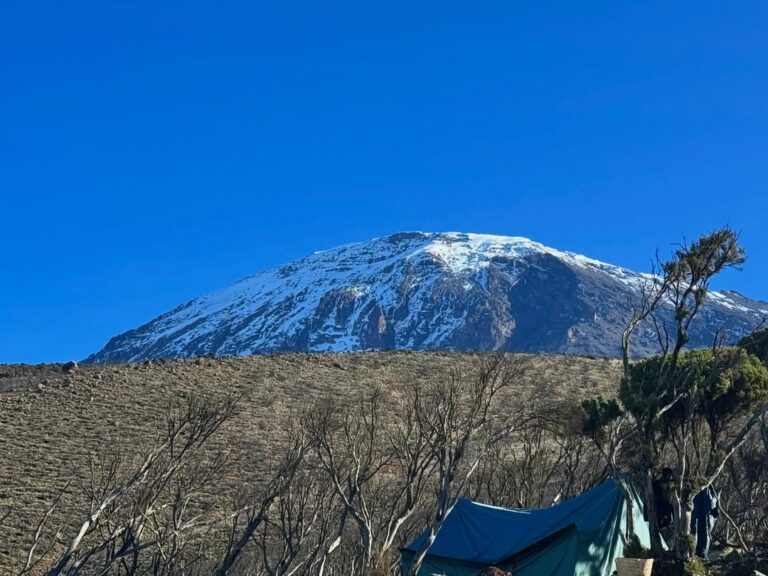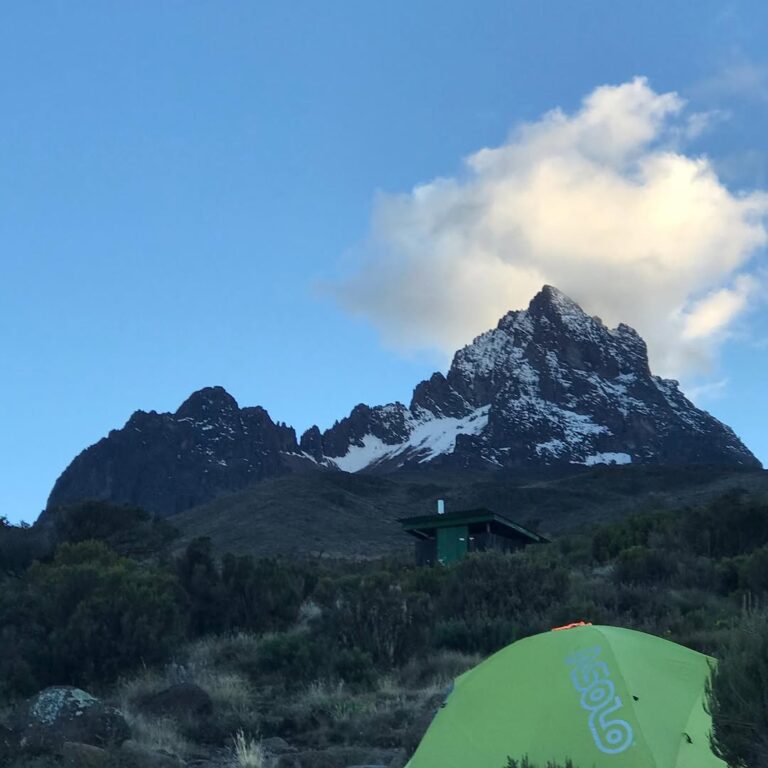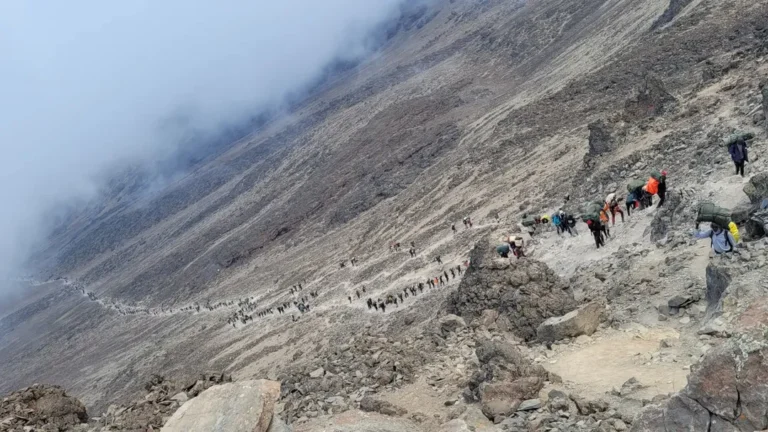
You’ve decided to climb Kilimanjaro. The first real logistical question is how to get there. Tanzania is a long way from most of the world, and there’s no single obvious answer — different origins, budgets, and preferences lead to different routing choices.
This guide walks through the whole journey: the airports, the airlines, the alternative routes, the overland options, and the practical steps to actually get from your front door to the trailhead. It’s written for travellers from the US, UK, and Europe, which is where most Kilimanjaro Sky clients come from.
Start With the Destination: Where You’re Actually Going
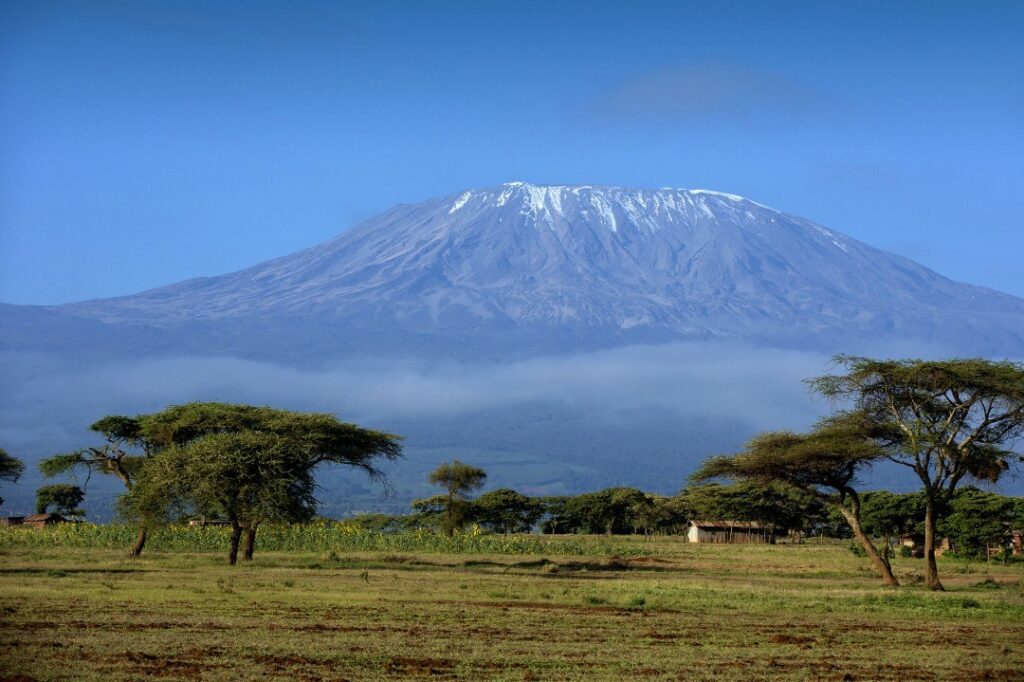
Kilimanjaro is a mountain in northern Tanzania. The town at its base — where your climb will start and end — is Moshi. This is where your hotel is, where your pre-climb briefing happens, where you eat your celebratory post-descent meal. Some clients also stay in Arusha, a larger city about an hour west of Moshi, which is the traditional base for safari operators.
Both Moshi and Arusha are served by the same main airport: Kilimanjaro International Airport (JRO), roughly 45 minutes from Moshi and an hour from Arusha.
So the practical question is: how do you get to JRO?
The Direct Answer: Fly Into JRO
For the majority of climbers, the cleanest route is a flight directly to JRO. No extra domestic flights, no land crossings, no transit countries. You step off the plane at JRO, transfer 45 minutes to your hotel in Moshi, and you’re in position.
Direct international flights into JRO are currently operated by a limited list of carriers:
- KLM (Amsterdam — AMS)
- Turkish Airlines (Istanbul — IST)
- Qatar Airways (Doha — DOH)
- Ethiopian Airlines (Addis Ababa — ADD)
- Kenya Airways (Nairobi — NBO)
- RwandAir (Kigali — KGL)
No US or UK airline flies direct to JRO. Every route from the US or UK involves at least one connection through one of the hubs above. The Kilimanjaro Airport guide goes into airport-specific detail; this guide focuses on choosing the routing.
From the United States
There’s no direct flight from anywhere in North America to JRO. You will connect through a European or Middle Eastern hub. The realistic options:
KLM via Amsterdam (AMS)
The most common US-to-JRO routing. Fly US → Amsterdam → JRO. KLM runs a daily or near-daily service Amsterdam to JRO, timed to connect with KLM and Delta services from major US cities (JFK, Boston, Detroit, Atlanta, Minneapolis, Seattle, San Francisco, LAX, Washington-Dulles, Houston).
Total journey time (West Coast): roughly 22–26 hours.
Total journey time (East Coast): roughly 17–20 hours.
Common fare range: $1,200–$2,200 round-trip in economy, higher in shoulder or peak season.
This is the routing we recommend most often for US clients. It’s efficient, reliable, and the Amsterdam connection is straightforward.
Turkish Airlines via Istanbul (IST)
Turkish has built a wide US network — JFK, EWR, BOS, ORD, IAD, MIA, ATL, LAX, SFO, IAH — and runs direct Istanbul to JRO service. Often price-competitive with KLM.
Pros: Frequently cheaper than KLM. Good service. Istanbul is a decent layover airport.
Cons: Longer overall journey time; connections can be less forgiving.
Qatar Airways via Doha (DOH)
Qatar serves many US cities and offers service to JRO via Doha.
Pros: Excellent onboard product. Competitive pricing.
Cons: Longer total journey time. Doha is a long layover from the US.
Ethiopian Airlines via Addis Ababa (ADD)
Ethiopian flies from select US cities (IAD, ORD, JFK, Newark, LAX) to Addis, with frequent onward connections to JRO.
Pros: Often the most price-competitive option. African-based carrier familiar with the region.
Cons: Longer total journey time. Yellow fever certificate required if connection in Addis exceeds 12 hours.
Via Nairobi (Kenya Airways or others)
You can fly into Nairobi on various carriers (Kenya Airways, Delta to JFK-NBO, British Airways via LHR, etc.) and then connect either by short flight (NBO to JRO, 1 hour) or surface transport.
Pros: Nairobi has frequent international service.
Cons: Extra connection segment, yellow fever certificate required if layover is over 12 hours.
From the United Kingdom
UK travellers have more routing options because JRO connects through multiple one-stop hubs from London.
KLM via Amsterdam
LHR/LGW/MAN/EDI → AMS → JRO. Short hop to Amsterdam, then the direct KLM flight to JRO. Most common option. Reliable and straightforward.
Total journey time: 12–15 hours.
Turkish Airlines via Istanbul
LHR → IST → JRO. Often price-competitive, especially in off-season.
Total journey time: 13–16 hours.
Qatar Airways via Doha
LHR/LGW/MAN → DOH → JRO. Premium product, middle-of-the-pack pricing.
Total journey time: 14–17 hours.
Ethiopian Airlines via Addis Ababa
LHR → ADD → JRO. Often the cheapest option from the UK. Reliable if you’re comfortable with an African hub experience.
Total journey time: 14–18 hours.
Kenya Airways via Nairobi
LHR → NBO → JRO. Reliable routing, often priced competitively.
Common UK fare range: £700–£1,400 round-trip in economy depending on season and routing.
From Continental Europe
If you’re flying from Paris, Frankfurt, Brussels, Munich, Zurich, Rome, Madrid, or similar — you have straightforward access to Amsterdam, Istanbul, Doha, and Addis as hubs. KLM’s Amsterdam hub is usually the smoothest for most European departure points. Turkish also has deep European coverage via Istanbul.
Direct service to JRO from European cities outside of Amsterdam is limited. You will almost always connect.
From Other Regions
Australia/NZ: Typically via Doha (Qatar), Dubai (Emirates to Dar or Nairobi onward), or Singapore (then to Doha or Nairobi). Multi-stop journeys of 24–35 hours.
South Africa: Kenya Airways via Nairobi, or direct flights from Johannesburg to Dar es Salaam with a JRO connection.
Middle East: Qatar (Doha), Emirates (via Nairobi), Turkish (via Istanbul). Often short overall journeys.
Asia: Typically via Doha, Addis Ababa, or Dubai. Qatar and Ethiopian have strong Asian networks.
When to Book Flights
For Kilimanjaro’s main climbing seasons — January–early March, and June–October — flights to JRO fill up months in advance. Book 5–8 months ahead for the best combination of price and schedule. Peak months (August, September, early October) see prices rise significantly in the final weeks.
The 2026 climb dates and prices guide covers timing alongside climb pricing.
Shoulder seasons (April–May, November) have fewer tourists and often cheaper flights, but trail conditions and weather are less favourable. The best time to climb Kilimanjaro post goes into these trade-offs.
Overland and Alternative Routes
Flying Into Nairobi and Crossing the Border
A common budget strategy: fly into Nairobi on a cheaper ticket, then cross the border to Tanzania overland.
Options:
- Shuttle bus (Nairobi to Moshi). Several operators run daily services via the Namanga or Taveta border crossings. 7–9 hours including border formalities. Roughly $30–50 USD.
- Private transfer. A chartered vehicle from Nairobi to Moshi is roughly $250–400 USD depending on operator and vehicle.
- Domestic flight. A Nairobi-JRO flight on Kenya Airways, Precision Air, or other regional carriers is 1 hour and $150–300 USD one-way.
Our honest view: Surface transport from Nairobi is cheap but tiring, and the border crossing adds unpredictability. After a long-haul flight, many climbers arrive at their Moshi hotel exhausted before the climb has even started. For most people it’s not worth saving a couple of hundred dollars on the flight. If you’re already going to be in Nairobi for other reasons, fine — otherwise fly directly.
Flying Into Dar es Salaam
Similar logic. DAR has more international flights, but the connection from Dar to JRO is another 1.5-hour domestic flight, and the logistical cost usually outweighs any ticket savings.
Climbing Kilimanjaro as Part of a Wider Africa Trip
If you’re already travelling in the region — Kenya, Uganda, Rwanda, Zanzibar — overland and regional flight options open up. The short flights from Nairobi, Zanzibar, Kigali, or Kilimanjaro via domestic carriers (Coastal Aviation, Precision Air, RwandAir, Kenya Airways, Auric Air) are efficient. From Zanzibar it’s a 1-hour flight to JRO.
The Full Journey, Step by Step
Assuming you’re flying into JRO, here’s what a complete trip looks like.
Step 1: Book the Flight
As above. 5–8 months ahead for peak season, less lead time for shoulder periods.
Step 2: Book the Climb
Confirm your climb dates and operator. Your operator will typically book your airport transfer and pre/post-climb hotel. (For Kilimanjaro Sky, transfers and Moshi hotel are part of the package.)
Step 3: Sort Your Visa
Tanzania requires a tourist visa for most Western nationalities. Options:
- E-visa in advance through the official Tanzania government portal (recommended, takes a few weeks).
- Visa on arrival at JRO ($50 for most nationalities, $100 for US citizens, USD cash required).
Check current requirements for your specific passport.
Step 4: Medical Preparation
- Routine vaccines up to date.
- Yellow fever vaccine if you’re connecting via a yellow-fever-endemic country for over 12 hours (relevant for Addis or Nairobi long layovers).
- Malaria prophylaxis — discuss with your travel doctor. (Relevant mainly for pre/post climb time and Zanzibar or safari extensions.)
- Travel insurance with high-altitude coverage — mandatory for a serious climb. The Kilimanjaro travel insurance guide covers what to look for. Make sure it covers 6,000m+ and helicopter evacuation.
Step 5: Pack
The Kilimanjaro packing list covers what to bring. Pack your critical climb items in carry-on where possible — duffels and checked bags occasionally delay.
Step 6: Fly
Long travel day. Sleep if you can on the plane. Stay hydrated. Don’t drink alcohol before a summit push.
Step 7: Arrive at JRO
Immigration, yellow fever check if applicable, baggage, meet your driver. Transfer to Moshi. Rest.
Step 8: Acclimatisation Day
Most responsible operators build in a full day in Moshi before the climb starts. Pre-climb briefing, gear check, rental if needed, any gear you need to rent in Moshi, sleep.
Step 9: Climb
The mountain. Depending on route, 5–9 days. The routes overview covers options.
Step 10: Return
Post-climb night in Moshi. Transfer to JRO. Fly home, or connect to Zanzibar or safari. If you’re extending the trip, the what to do after Kilimanjaro guide covers the options.
Budget Considerations
Rough budget ranges for a Kilimanjaro trip from the US or UK:
- Flights: $1,000–$2,500 from the US; £700–£1,500 from the UK.
- Climb: $2,500–$5,000+ depending on route, duration, and operator tier. See the climbing Kilimanjaro cost guide for detail.
- Hotel nights in Moshi: $40–200 per night depending on standard.
- Visa: $50–100 USD.
- Insurance: $50–200.
- Pre/post tips and incidentals: Variable.
- Safari extension: $400–1,500+ per day.
- Zanzibar extension: $100–500+ per night.
For climbers watching budget, the climbing Kilimanjaro on a budget guide covers how to balance costs without sacrificing safety.
When to Fly In vs When to Start the Climb
The golden rule: arrive at least one full day before your climb begins. Ideally two if you can spare them.
Travelling long-haul is physically demanding. Jet lag, poor aeroplane sleep, time zone shift, and the stress of travel all add up. Starting a 5–9 day high-altitude climb the morning after you land is a recipe for a poor first day and unnecessary fatigue.
What “a full day” means:
- Land afternoon day 1.
- Full rest day in Moshi on day 2 (pre-climb briefing, gear check, final prep).
- Climb starts morning of day 3.
If you land in the morning of what would be day 1, you can compress this to one day, but it’s tight.
The Short Version
For almost all climbers from the US and UK:
- Book a flight to JRO via Amsterdam (KLM) or Istanbul (Turkish) — most common, reliable, efficient.
- Arrive 1–2 days before your climb starts.
- Use the JRO transfer included in your climb package (or arrange a taxi directly).
- Moshi is your base. Start and end your climb there.
- If you’re extending — safari or Zanzibar — plan the extension on the back end, not the front.
The logistics of getting to Kilimanjaro aren’t hard, but they reward thinking ahead. Book early, sort your visa properly, arrive rested, and you’ll start the climb in the right shape. The rest is the mountain.
If you’d rather hand the whole journey over to one team — flights, transfers, hotel, climb, safari, beach — we coordinate it all under the Kilimanjaro Sky packages. Otherwise, the steps above cover what you need to do on your own.