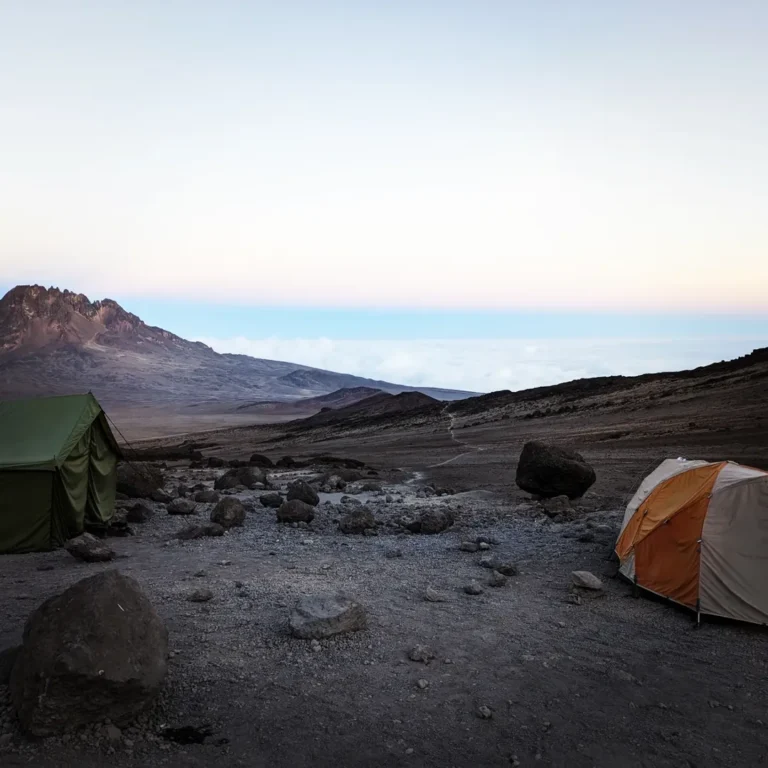
Kilimanjaro sits just over three degrees south of the equator, which gives it a different seasonal rhythm than the mountains most people are used to thinking about. There’s no winter closure, no summer shutdown, no snow season in the conventional sense. Instead, the mountain cycles through two wet seasons and two dry windows — and which window you climb in has real consequences for what you experience.
The good news: Kilimanjaro is a year-round mountain. The question isn’t whether you can climb in a given month — it’s what conditions you’ll face and how to use season to your advantage. This guide walks through the entire calendar honestly, including the months most travel blogs gloss over.
The Short Version (If You’re Deciding Now)
If you have complete flexibility: January–March or September–October are the sweet spots — good conditions, lower crowds than peak season, better availability.
If you’re locked into a specific window: there’s a workable approach for most months. The route you choose can do a lot to offset seasonal conditions. Get in touch with us in Moshi and we’ll talk through it.
The Two Main Climbing Seasons
Season 1: January to March
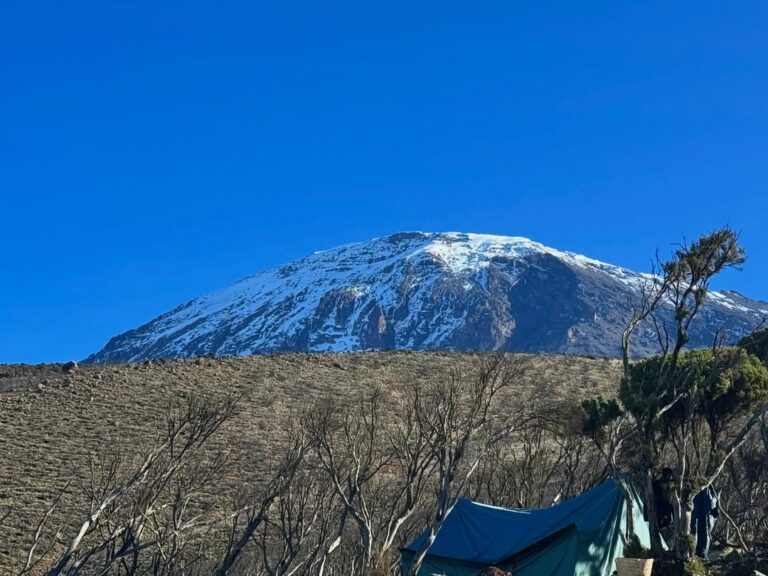
January, February, and early March are among the best months to climb Kilimanjaro. This window is often overlooked in favour of the better-known June–October season, but conditions are excellent — dry air, clear skies, cold but manageable nights at altitude. The summit zone sits above most weather systems during this period, and summit nights are often crisp and clear.
Crowds are meaningfully lower than the July–August peak. On the Machame Route, one of the busiest trails on the mountain, January and February feel distinctly quieter than the peak season rush. Booking lead times are more relaxed, though Kilimanjaro Sky groups are small by design — four to ten clients — so there’s always a capacity ceiling regardless of season.
Temperature-wise, January and February offer the warmer daytime climbing conditions of any dry window, which makes the lower and mid-mountain sections physically easier. The summit temperatures are comparable year-round (always cold at nearly 5,900 metres), but the approach days feel kinder.
Mid-March marks the start of the transition toward the long rains. The last two weeks of March can still be good, but it’s increasingly variable. If you’re considering March, lean toward earlier in the month.
Season 2: June to October
The long dry season — late June through October — is the most popular climbing window, and it earns that status. Conditions are reliable: dry trails, good visibility, predictable weather patterns. July and August are the peak months, with the highest traffic on the mountain.
A few things worth knowing about this window:
July and August are busy. On the Machame Route at peak season, camps are full and popular departure dates book months in advance. If summit success and a personal experience matter to you, the July–August density is worth factoring in. Most operators run larger groups during peak season; at Kilimanjaro Sky, our group size stays the same.
September and October are underrated. The conditions in September and October are nearly identical to August, with noticeably fewer climbers on the trail. If your schedule allows flexibility within this window, September and October are often our guides’ personal preference — excellent conditions, real quiet on the mountain.
Cold at altitude is year-round. It’s easy to assume the “dry season” means warmer conditions. The summit zone doesn’t work like that. Uhuru Peak at midnight is between -10°C and -20°C with wind chill regardless of what month you climb. Your packing list needs to reflect this; season doesn’t change what you wear for summit night.
The Months That Require More Thought
April and May (Long Rains)
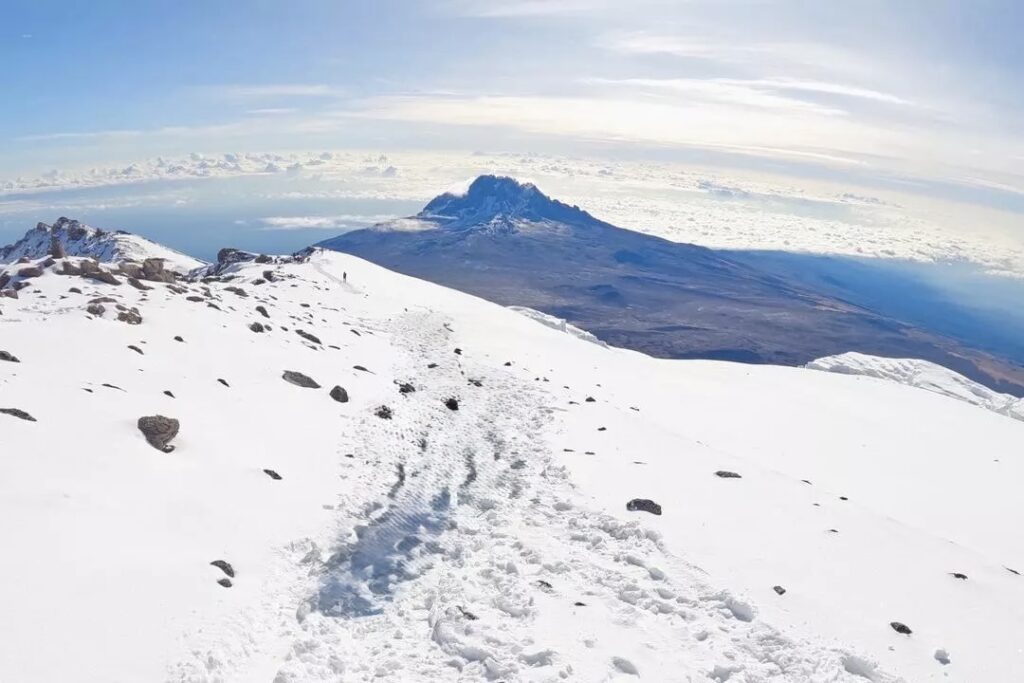
April and May are the heart of the long rains, the heavier of the two wet seasons. The lower mountain slopes — particularly on the southern approaches like Machame and Lemosho — receive significant rainfall. Trails become muddy and slippery, visibility can drop substantially, and summit-night cloud cover is more frequent.
This doesn’t make April and May impossible. Some climbers specifically want a quieter, rawer mountain experience and accept the conditions as part of the deal. Prices are typically lower during this window.
The practical workaround: if your schedule puts you in April or May, the Rongai Route is worth serious consideration. Rongai approaches from the north, from the Kenyan border side, and sits in the mountain’s natural rain shadow. It receives significantly less rainfall than the southern routes during the long rains — a meaningful difference in comfort and trail conditions. You’ll read more about it in our route comparison guide.
November (Short Rains)
November brings the short rains, which are lighter and less predictable than April-May. The first two weeks of November are typically the worst of it — afternoon showers, some cloud cover, trail mud on the lower sections. By late November, conditions begin clearing toward the December dry window.
Climbing in early to mid-November is possible but not ideal. Late November is often fine and represents a quieter entry point before December prices pick up.
December
December has a reputation that doesn’t fully match reality. The short rains typically clear by mid-December, and from around the 10th onward, conditions are often genuinely good. The second half of December is a popular time for climbers who want to mark the year-end with something significant — and the conditions generally support it.
The mountain is quieter in December than the June–October peak, with good conditions from mid-month. We run December climbs regularly; it’s one of the more underappreciated windows on the calendar.
What “Dry Season” Actually Means on a 5,895-Metre Mountain
A point worth understanding before you plan around season: Kilimanjaro generates its own weather. The mountain is large enough, and high enough, to create localised cloud systems regardless of what the seasonal calendar says.
Even in the driest months, the summit zone can produce afternoon cloud, and summit nights can see wind and snowfall regardless of conditions on the lower slopes. When guides talk about “dry season,” they’re describing the statistical probability of rain at lower elevations and overall weather stability — not a guarantee of clear summit nights on any given date.
The summit push starts around midnight specifically to reach the summit before the afternoon cloud that builds on most days, year-round. Your guides have accounted for this pattern. Trust the process.
Temperature: What to Actually Expect at Each Altitude
Most people think about summit temperatures — which are always cold — but the temperature range across a full Kilimanjaro climb is more dramatic than most first-timers anticipate.
Moshi / Gate (850–1,800m): Warm year-round. Daytime highs of 25–30°C. Shorts and a t-shirt at the trailhead.
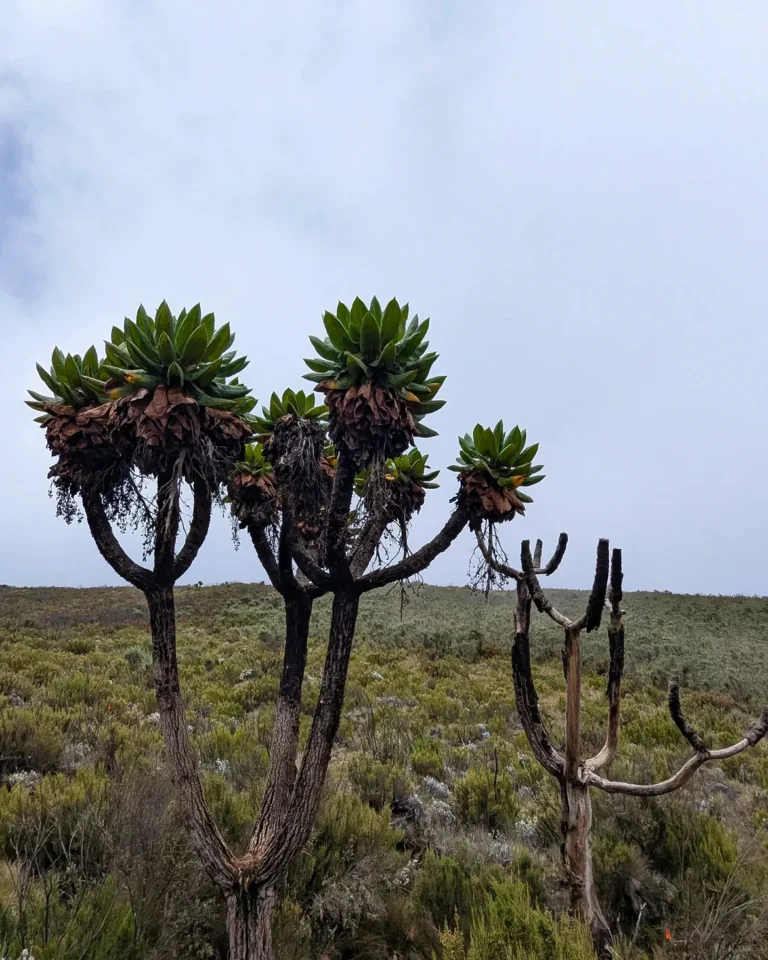
Rainforest and heath zones (1,800–3,500m): Cool to warm during the day, dropping to 10–15°C at night. Comfortable hiking in light layers.
Moorland and alpine desert (3,500–4,500m): Cool days (10–15°C), genuinely cold nights (0°C to -5°C). A proper fleece and wind layer needed at camp by evening.
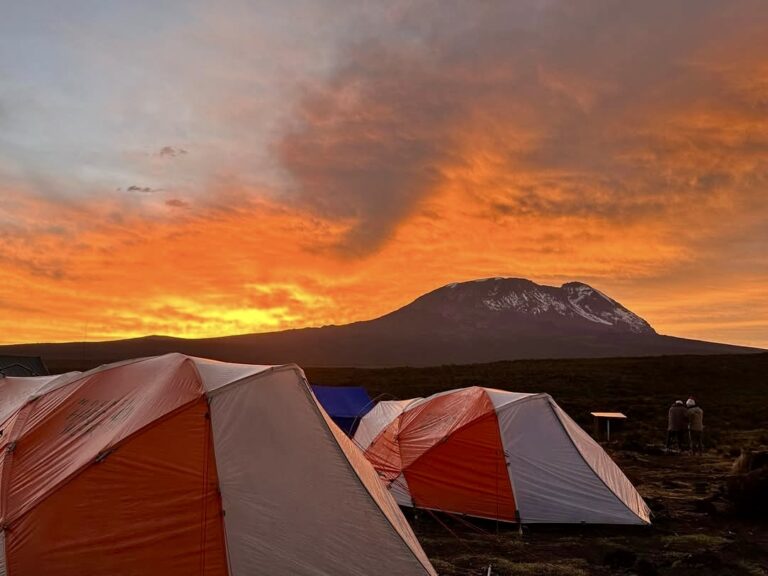
High camps (Barafu, Kibo — 4,600–4,800m): Cold days, very cold nights. Pre-summit staging happens at these camps; you’ll be up at midnight with temperatures around -10°C to -15°C before wind chill.
Summit zone (4,800–5,895m): -10°C to -20°C with wind chill, regardless of season. Down jacket, insulated trousers, balaclava, serious gloves. This is where gear choices matter most.
Your packing list should be built around this range, not just the summit statistics. The layering system that gets you through the thermal swing from Moshi to Uhuru Peak and back is what you need to think about.
Crowds, Availability, and Booking Timelines
July and August: Book four to six months ahead for preferred departure dates. Peak season on a popular route like Machame fills quickly.
January to March: Booking two to three months ahead is usually sufficient, though flexibility helps.
September and October: Booking two to three months ahead generally works. Some clients find shorter lead times possible, but it depends on route and group configuration.
April, May, November, December: More flexible. Prices are often lower and availability higher, reflecting the lower demand.
Kilimanjaro Sky groups run at four to ten clients regardless of season. We don’t expand group sizes in peak season — the guide-to-client ratio stays at one lead guide and one assistant for every two to three climbers, which is part of why our success rates hold steady across the calendar.
Climbing Kilimanjaro on a Full Moon
One of the most searched-for but least-documented timing variables on Kilimanjaro is summit night moon phase. It matters more than most people realise.
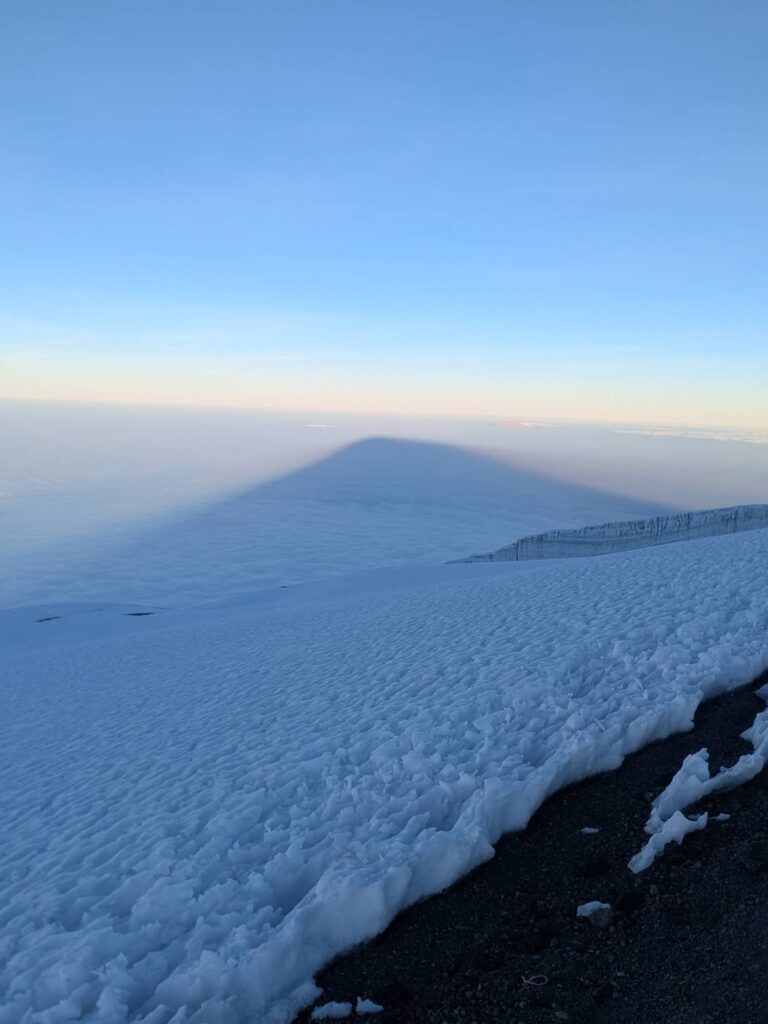
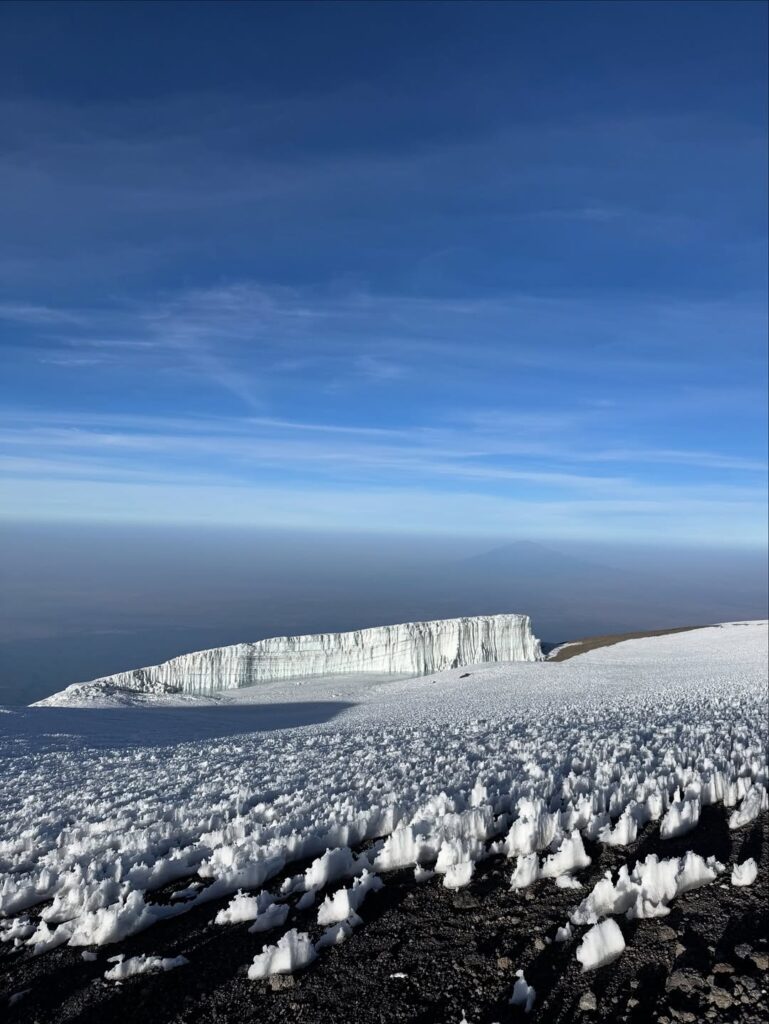
Summit night starts around midnight. You’re moving in complete darkness for three to five hours, headlamp on, navigating loose scree and packed volcanic rock at altitude. A full moon — particularly in the upper alpine desert above 4,500 metres where there’s no tree cover — illuminates the entire route. The crater rim at Stella Point catches the light. The ice fields at the summit reflect it. Climbers who have experienced both conditions consistently describe a full moon summit as categorically different from a moonless one.
The practical advantage isn’t just aesthetic. The trail is visible, your depth perception improves, and the psychological weight of moving through absolute darkness is lifted. Summit nights are hard by definition. Full moon summit nights are the version where the mountain shows you something back.
Full Moon Dates in the Kilimanjaro Climbing Windows (2025–2026)
These dates fall within or near the two main climbing seasons. Plan your booking so the full moon aligns with your summit night — typically days 5–7 of a standard Machame or Lemosho itinerary.
2025 — Season 1 (January–March):
- 13 January 2025
- 12 February 2025
- 14 March 2025
2025 — Season 2 (June–October):
- 11 June 2025
- 10 July 2025
- 9 August 2025
- 7 September 2025
- 7 October 2025
2026 — Season 1 (January–March):
- 3 January 2026
- 1 February 2026
- 3 March 2026
2026 — Season 2 (June–October):
- 30 June 2026
- 29 July 2026
- 28 August 2026
- 27 September 2026
- 26 October 2026
How to Use These Dates
On a 7-day Machame climb, summit night is typically night 5 or 6. On an 8-day Lemosho, it’s usually night 6 or 7. Work backwards from the full moon date to find a departure date that puts you at Barafu Camp on or within 24–48 hours of the full moon.
A few honest caveats: this is an optimisation, not a guarantee. Cloud cover can obscure the moon entirely regardless of phase, and summit weather is always variable. If your schedule doesn’t flex easily around moon phases, don’t sacrifice a better climbing window for the sake of a lunar calendar. The conditions advantage of a January or September climb outweighs the moon phase advantage of a July full moon in poor conditions.
If you’d like help working out which departure date aligns with a full moon for your preferred route and season, reach out before you book — it’s a quick calculation that’s worth doing.
Route Choice as a Seasonal Variable
Season and route interact. A few patterns worth knowing:
The Machame Route is excellent in the dry seasons and manageable in the short rains. The lower slopes can be slippery in April–May but are passable for experienced guides and a well-prepared group.
The Lemosho Route starts in a section of dense forest that collects significant moisture during the long rains. The first day or two in April–May can be genuinely wet. But its long duration and excellent acclimatisation profile make it our top recommendation across most of the calendar.
The Rongai Route is the most rain-resistant option, approaching from the north and avoiding the heaviest rainfall zones. It’s the clearest choice for April–May climbers.
The Northern Circuit (9–10 days) is viable year-round and offers the mountain’s best acclimatisation profile regardless of season — though the long duration means more exposure to weather variability.
For a full comparison of all seven routes and which seasons suit each, see our route comparison guide.
The Question That Matters More Than Season
People often frame the timing question as: “What month gives me the best chance of summiting?”
The honest answer: route duration is a stronger predictor of summit success than month. An eight-day Lemosho in March, with seven nights of progressive acclimatisation, will almost always outperform a five-day Marangu in July, regardless of conditions.
That said, dry-season conditions give your guides better visibility, more predictable weather for summit-night timing, and fewer wet trail complications. Given a real choice, the dry windows are better.
The full picture of what affects your summit odds is in our altitude sickness guide — which is really a guide to the acclimatisation process, and why route choice and duration are the most consequential variables you control.
If you’re ready to think through timing and route together for your specific dates, reach out. We’d rather help you think this through before you book than have you arrive with the wrong plan.
Further reading: Kilimanjaro routes compared · How hard is it to climb Kilimanjaro? · Kilimanjaro altitude sickness
External sources: TANAPA — Tanzania National Parks · Tanzania Tourism Board