If you’re flying in to climb Kilimanjaro, there’s a high chance you’re flying into Kilimanjaro International Airport — known to the aviation world as JRO, and to everyone else as “the Kilimanjaro airport.” It’s about 45 minutes from Moshi, an hour from Arusha, and, on a clear day, has one of the best views of the mountain you’ll see from sea level.
This guide covers what you need to know about JRO before you arrive — the practical details that most travel articles skim over. What to expect on arrival. How to handle the visa and yellow fever checks. What the transfer to Moshi or Arusha actually looks like. When you might want to use a different airport instead.
The Basics
Full name: Kilimanjaro International Airport
IATA code: JRO
ICAO code: HTKJ
Location: Between Arusha and Moshi, in northern Tanzania. Roughly 45 minutes drive to Moshi (east) and 50 minutes to Arusha (west).
Altitude: ~894m (2,933 feet) above sea level.
JRO is one of Tanzania’s three international airports, along with Julius Nyerere International in Dar es Salaam (DAR) and Abeid Amani Karume in Zanzibar (ZNZ). It’s the smallest of the three but the busiest tourist airport in the north of the country — it’s how most climbers and safari visitors enter Tanzania.
The airport is modest but functional. One main terminal, a small fleet of airlines, minimal retail, efficient immigration when the queues behave, and a clear road out to Moshi or Arusha. Don’t expect the scale of Nairobi or Addis. Expect a small regional airport that does its job.
Airlines Flying to JRO
Direct international flights into JRO come from a handful of key carriers. At time of writing, the major operators include:
From Europe (and onward connections from North America):
- KLM — Daily or near-daily direct flight from Amsterdam. Long-standing, reliable, the most common routing for US and UK climbers.
- Turkish Airlines — Direct flight from Istanbul. Good option for connections from the UK, Europe, and parts of Asia.
- Qatar Airways — Direct flight from Doha. Strong option for travellers from the UK and Asia with Qatar hub connections.
- Ethiopian Airlines — Direct from Addis Ababa. Useful from North America via Addis, and from wider African cities.
- Kenya Airways — Regular flights from Nairobi (JKIA). Short hop; commonly used as a connector.
- RwandAir — Via Kigali.
Regional / African:
- Precision Air — Tanzanian carrier, strong domestic network including Dar, Zanzibar, Mwanza.
- Coastal Aviation / Auric Air — Smaller domestic carriers, useful for safari transfers and Zanzibar connections.
No direct flights from: The US, the UK, or most of the Americas. All travellers from these regions connect through an intermediate hub — typically Amsterdam (KLM), Istanbul (Turkish), Doha (Qatar), Addis Ababa (Ethiopian), or Nairobi (Kenya Airways).
For more on the big-picture routing question, the how to get to Kilimanjaro guide covers the different hub options and their trade-offs.
Arrival Process at JRO
What actually happens when you step off the plane at JRO, in order.
Step 1: Disembark and Walk to the Terminal
JRO uses ground disembarkation most of the time — you’ll walk from the plane across the tarmac to the terminal. This is normal and takes a few minutes. On a clear day, you can see Kilimanjaro from the tarmac. This is often people’s first view of the mountain. Take the moment; most climbers do.
Step 2: Visa on Arrival (if applicable)
Most US, UK, EU, and Commonwealth travellers are eligible for a Tanzania tourist visa on arrival. The cost is currently $50 USD (or $100 USD for US citizens, who get a longer validity).
Important: You can also get a Tanzania e-visa in advance through the official government portal. The e-visa process takes a few weeks but avoids the on-arrival queue and eliminates one variable on a long travel day. Many climbers prefer this. Check current requirements for your nationality before you travel.
If you’re doing visa on arrival, the process is typically: fill out the form at the desk, pay in USD cash (bring clean, unmarked bills — worn notes are sometimes rejected), wait for processing, receive your passport back.
Bring: passport valid for at least 6 months beyond your intended exit, at least one blank page, return ticket or onward travel proof, proof of accommodation.
Step 3: Yellow Fever Check
Yellow fever vaccination is required if you are arriving from (or transiting through for more than 12 hours) a yellow-fever-endemic country. If you’re flying directly from Europe, North America, or most of Asia without African transit, you typically won’t need it.
But: if you’re flying via Nairobi (Kenya) or Addis Ababa (Ethiopia) and stopping for more than 12 hours, yellow fever proof is required. Bring your yellow card regardless — the cost of being turned around here is enormous relative to the cost of the vaccination.
Step 4: Immigration
Normal passport control. Fingerprinting, photo, stamp. Queues can be long on busy days, especially when two flights arrive simultaneously. Be patient.
Step 5: Baggage Claim and Customs
Small baggage hall, single belt. Wait for your bag. Grab a trolley if needed. Customs is usually straightforward — a walk-through, occasionally a question about the contents of duffels and camera bags.
Step 6: Arrivals Hall and Transfer
Exit into the arrivals hall. If you’ve booked an operator transfer, your name will be on a sign. Taxis are available but more expensive than pre-arranged transfers. The best approach for climbers: arrange your transfer through your operator in advance so someone is waiting for you with your name on a sign.
For Kilimanjaro Sky climbers, a complimentary airport pickup is part of the standard package — you’ll be met in arrivals by a named driver and taken directly to your hotel in Moshi.
The Drive From JRO to Moshi
The drive to Moshi takes roughly 45 minutes. You’ll come out of the airport, cross open savanna and farmland on a good paved road, pass through a few small villages, and arrive in Moshi — a town of roughly 200,000 people at the foot of the mountain.
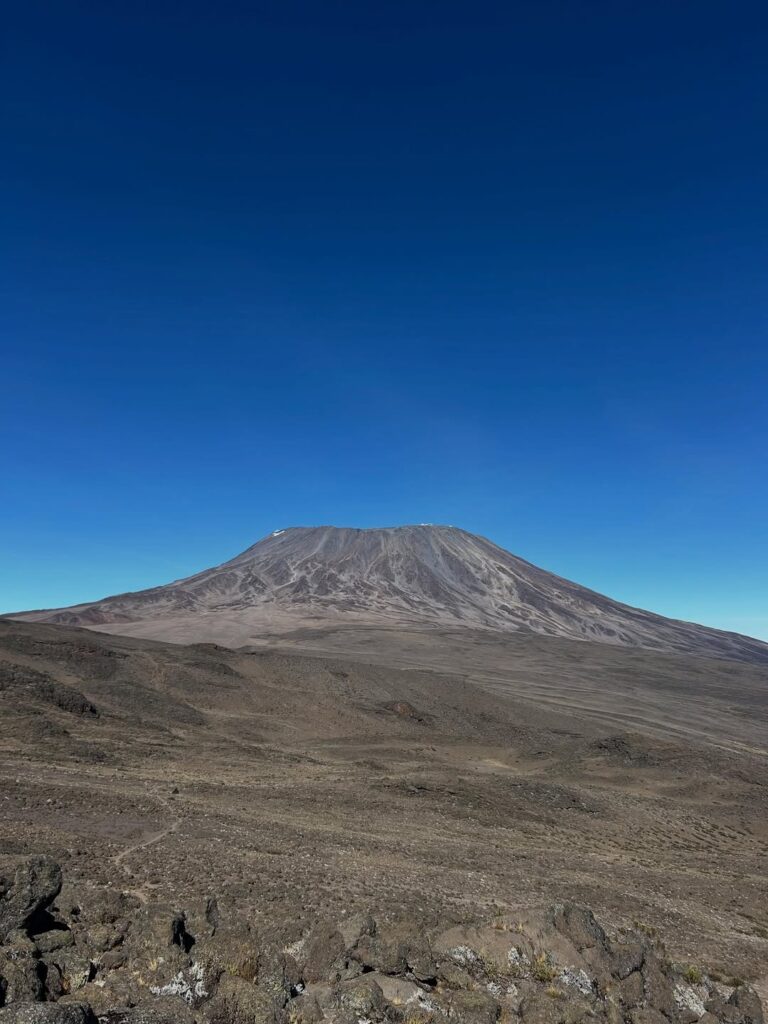
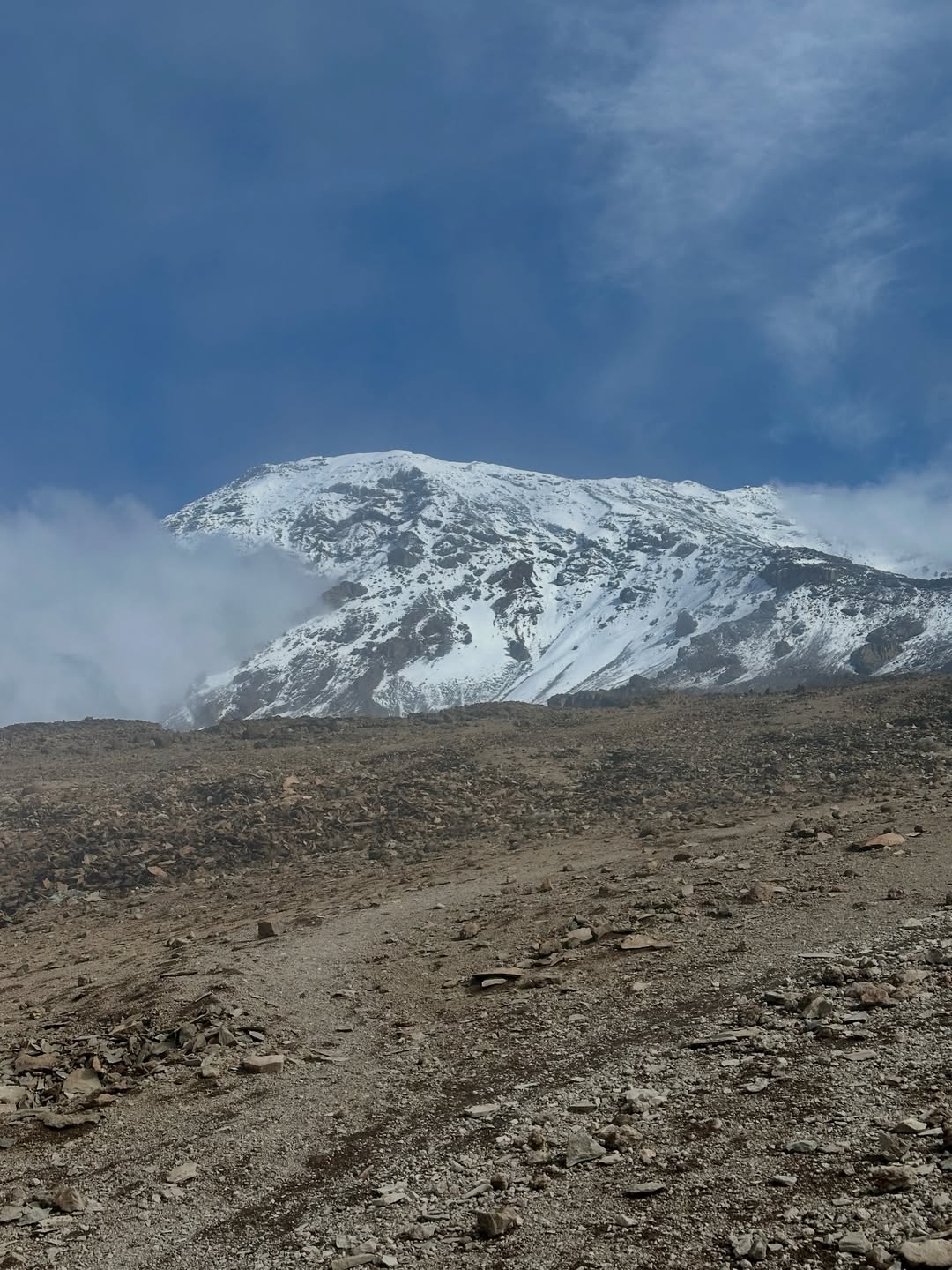
On clear days, Kilimanjaro dominates the horizon for most of this drive. You’ll see the snow cap if there’s one that day. First-time climbers often spend the entire transfer looking out the left window.
The drive to Arusha (west, toward the safari regions) takes a similar time — about 50–60 minutes — on another good paved road.
The Drive From JRO to Arusha
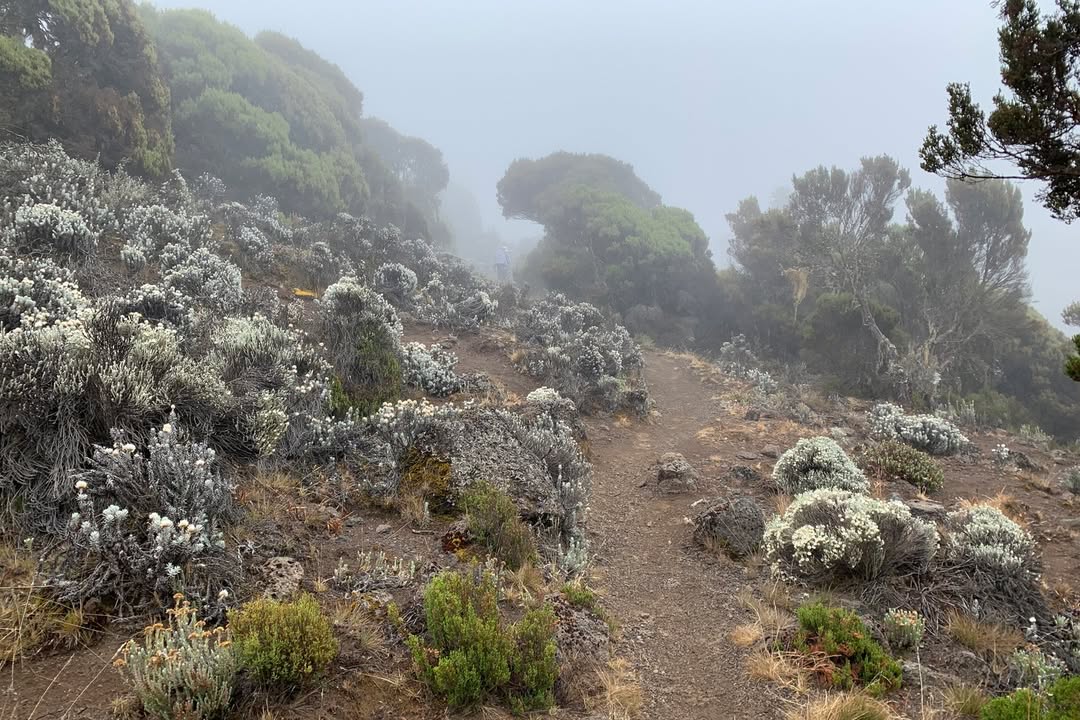
Some clients stay in Arusha rather than Moshi, particularly if they’re combining the climb with a safari that departs from the Arusha-based safari operators or the Kilimanjaro Sky safari extension. The drive to Arusha takes roughly 50–60 minutes on a paved road.
If you’re climbing Kilimanjaro first, Moshi is the more natural base — it’s closer to all major trailheads and keeps you focused on the mountain.
Alternatives to JRO
JRO is the obvious choice for Kilimanjaro climbers, but it’s not the only option. A few alternatives worth knowing about.
Nairobi (NBO), Kenya
Kenya’s Jomo Kenyatta International Airport is a major East African hub with more international flight options, often cheaper fares, and better connectivity. You can fly into Nairobi and then take either a short flight to JRO, a bus or shuttle across the border (roughly 6–7 hours, including the border crossing), or a chartered transfer.
Pros: More flight options, potentially cheaper, a bigger airport with more flight connections.
Cons: Extra travel day to get to Kilimanjaro. Border crossing at Namanga or Taveta adds complexity. Many climbers who try this regret it.
Most operators, including Kilimanjaro Sky, recommend flying directly to JRO when possible. The time cost of going via Nairobi is usually not worth the ticket savings.
Dar es Salaam (DAR)
Tanzania’s primary international airport is in the capital, Dar es Salaam, on the coast. Lots of international flights, but it’s nowhere near Kilimanjaro. A domestic flight from DAR to JRO adds another 1.5 hours plus airport time.
Pros: More flight options from Asia, the Middle East, and some African hubs.
Cons: Significant extra travel time compared to direct-to-JRO routing.
Zanzibar (ZNZ)
A minor alternative. You could fly into Zanzibar and connect to JRO via a short domestic flight. Makes sense only if Zanzibar is the outbound half of your trip and you want to land there first (we recommend the reverse — climb first, then Zanzibar).
Facilities at JRO
Be prepared for a modest airport. The facilities at JRO are:
- Duty free: Small. Don’t count on significant shopping.
- Food and drink: Limited. A small café or two. Not much selection.
- ATMs: Present but not reliable — working machines can be scarce. Arrive with some USD cash for visa fees and early expenses. Don’t rely on ATMs.
- Currency exchange: Available but rates are often poor. Exchange more in Moshi if you need Tanzanian shillings.
- SIM cards: Can be purchased at the airport, but prices are better in Moshi. If you need immediate connectivity, buy one here — otherwise wait.
- Wi-Fi: Available in the main terminal, sometimes spotty.
- Toilets: Basic but functional.
Plan accordingly. Don’t rely on JRO for anything except getting you off the plane and on your way.
Departure From JRO
The departure experience at JRO is similar — small-airport, generally efficient when not crowded, occasionally long queues when two flights are departing close together.
Key departure considerations:
- Arrive early. International flights: 3 hours before departure is reasonable. Domestic: 1.5 hours.
- Departure tax. Included in most modern airline tickets, but check.
- Security. Thorough but standard. Large backpacks, climbing gear, and duffels fit through the X-ray machines without issues.
- Gate holding. The gate areas are small. Expect to queue during boarding rather than wait comfortably.
If you’re flying out after a climb, your Kilimanjaro Sky transfer can collect you from your hotel and deliver you to JRO in time. Don’t cut this close — traffic around Moshi and Arusha is unpredictable.
Can You See Kilimanjaro From the Airport?
Yes. On a clear day — which is most days in the dry season — Kilimanjaro is visible from JRO’s runway and terminal. The view is to the east.
Best visibility: early morning and late afternoon. Mid-day cloud usually builds around the mountain, obscuring the summit. If you fly into JRO in the early morning, you’ll often get a clear summit view on the approach.
This is a small thing but for many climbers it’s memorable. Kilimanjaro’s mass, from the lowlands, is unusual — it doesn’t look like a mountain so much as a continent rising out of the plain.
Packing Considerations for JRO Arrival
A few small practical points:
- Dress in layers. JRO is at 894m and warm, but the approach from altitude (if you fly via Addis or some Kenyan routes) can be chilly. Layer accordingly.
- Keep essentials in carry-on. At a minimum: your climb gear that you can’t replace, prescription medication, a change of clothes, documents. Baggage occasionally gets delayed. See the Kilimanjaro packing list for what’s worth carrying on.
- USD cash for visa fees. Clean, unmarked bills. $50 for most nationalities; $100 for US citizens.
- Printed documents. Visa confirmation, hotel booking, climb booking. Paper copies are occasionally requested at immigration.
A Practical Summary
For most US/UK climbers, the optimal routing to Kilimanjaro is:
- Fly to JRO via Amsterdam (KLM), Istanbul (Turkish), Doha (Qatar), or Addis Ababa (Ethiopian).
- Arrive at JRO in the afternoon.
- Transfer 45 minutes to your hotel in Moshi.
- Rest one full day before the climb begins.
- After descent, a similar process in reverse.
Simple, direct, and the way nearly all serious operators structure the logistics. JRO is not a glamorous airport, but it does the job well. Arrive prepared — visa sorted, cash ready, transfer booked — and the rest takes care of itself.
If you’d like us to handle the entire logistics chain — transfers, hotel, pre-climb briefing, the climb itself, and any extension — the Kilimanjaro Sky packages wrap it into one coordinated trip. That’s the easiest path from “I booked a flight” to “I’m on the mountain.”