This comparison comes up constantly, usually from climbers who want to do both or who are trying to decide which one to start with. The honest answer surprises people:
Mont Blanc is harder technically. Kilimanjaro is harder physically.
Neither is the “easier” mountain in any meaningful sense. They test different things, and a climber who breezes through one can fail on the other. Mont Blanc is shorter, lower, and requires a fraction of the endurance — but it requires real alpine skills and carries genuine objective risk. Kilimanjaro is taller, colder at the top, and a much longer effort — but it doesn’t require ropes, crampons, or technical skills.
This post explains exactly what each mountain demands, where each one is harder, and how to think about which one fits you.
The Headline Numbers
| Metric | Mont Blanc | Kilimanjaro (Machame/Lemosho) |
|---|---|---|
| Summit altitude | 4,808m (15,774 ft) | 5,895m (19,340 ft) |
| Difference from home altitude | ~4,800m/15,748 ft (often from valley towns at low elevation) | ~5,895m (19,340 ft) (sea level) |
| Typical duration | 2–3 days of actual climbing | 6–9 days of climbing |
| Technical difficulty | PD / PD+ (Peu Difficile — alpine grade) | Walk / F (Facile) |
| Required skills | Crampons, ice axe, rope work, crevasse rescue awareness | Walking, staying warm, managing altitude |
| Objective risk | Crevasses, seracs, rockfall, weather | Altitude sickness, weather, cold |
| Success rate (experienced guided parties) | 60–75% | 85–97% depending on route and itinerary |
| Cost (guided) | $1,500–$4,000 | $2,000–$4,500 |
Both are iconic. Both are “summit” climbs rather than base-camp approaches. But they are different mountains.
Mont Blanc: The Short, Technical Alpine Climb
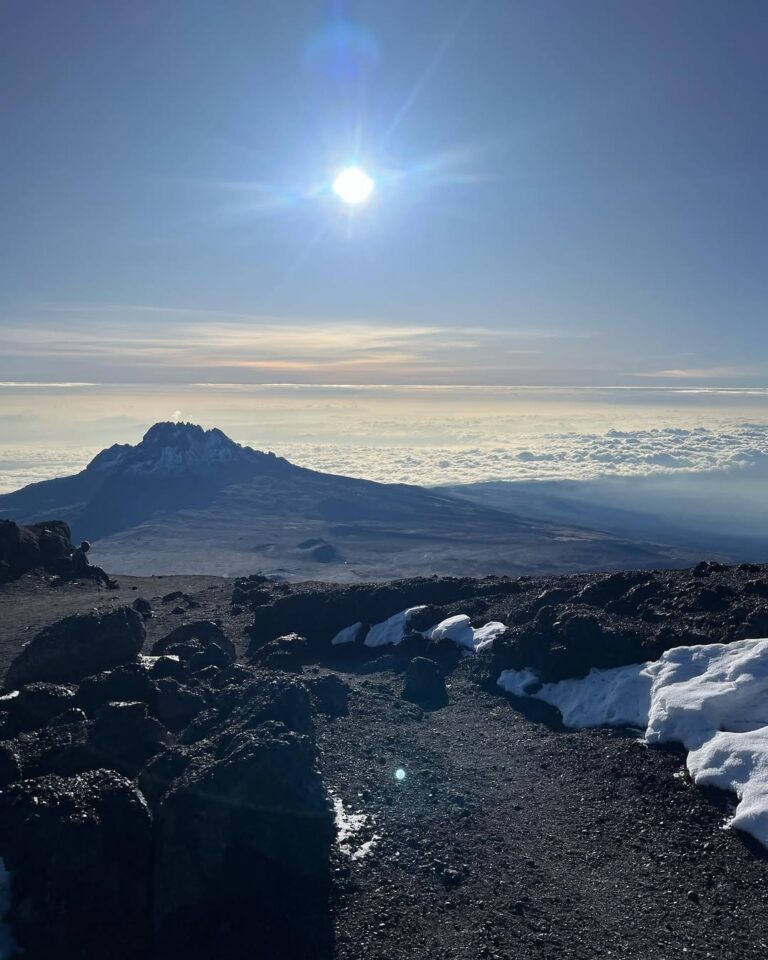
Mont Blanc is the highest peak in the Alps at 4,808m (15,774 ft), straddling the French-Italian border. The standard route — the Goûter Route — is a two-day effort from Chamonix:
- Day 1: Tramway to the Nid d’Aigle (2,372m/7,782 ft), then climb to the Goûter Refuge (3,815m/12,516 ft). 4–6 hours. Includes the infamous Grand Couloir crossing — a gully regularly swept by rockfall, where climbers must move fast and hope.
- Day 2: Alpine start (1am to 3am) from the Goûter Refuge. Climb the Dôme du Goûter (4,304m) and the Bosses Ridge to the summit (4,808m/15,774 ft). 4–6 hours to summit. Then descend back to the valley. 8–12 hours total on day 2.
What makes Mont Blanc hard:
Technical skills required. You need to move confidently on glaciers wearing crampons, know how to self-arrest with an ice axe, and ideally know how to rescue a partner from a crevasse. Most guided Mont Blanc climbs include a 1–2 day skills refresher in the valley before attempting the mountain. You cannot climb Mont Blanc competently without these skills.
Objective hazards. The Grand Couloir rockfall zone kills or injures climbers every season. The Goûter Refuge itself sits on a loose ridge where stonefall is a regular concern. Crevasses on the Dôme du Goûter and the Bosses Ridge require rope and route-finding skills. Weather can deteriorate fast — lightning, whiteout, high wind — and an unexpected storm on the summit ridge is a genuine emergency.
Speed matters. Unlike Kilimanjaro, where slow is always better, Mont Blanc rewards moving efficiently. You must cross the rockfall couloir quickly, ascend through daylight, and descend before afternoon weather builds. Climbers who are too slow get caught out.
Very short acclimatization window. Most Mont Blanc climbers go from a European city to 4,808m (15,774 ft) in three or four days. Altitude symptoms are common. Summit failure from altitude alone is surprisingly frequent.
Kilimanjaro: The Long, High-Altitude Trek
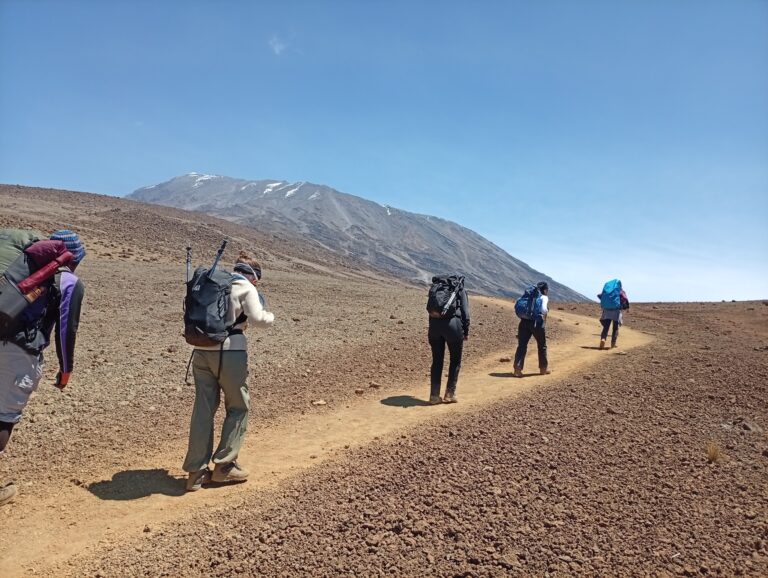
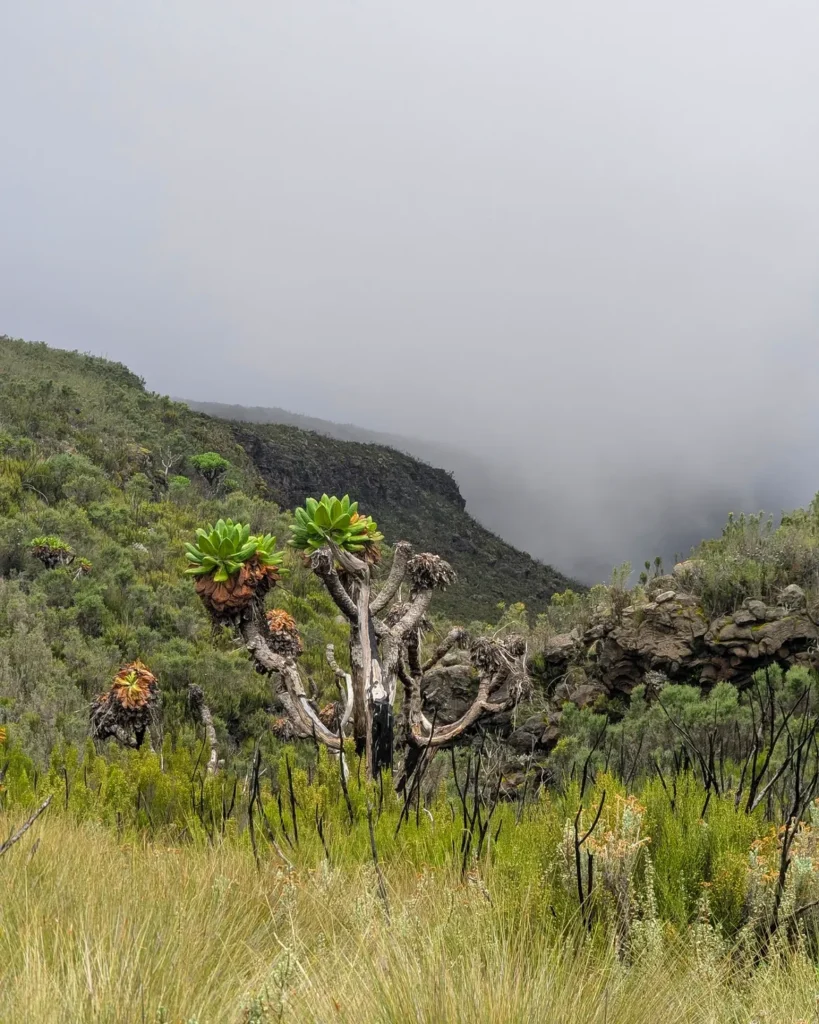
Kilimanjaro at 5,895m (19,341ft) is the tallest peak on the African continent and the tallest free-standing mountain in the world. It is a volcanic massif approached by six established trekking routes. The standard Machame or Lemosho itinerary runs 7–8 days from gate to summit to descent.
What makes Kilimanjaro hard:
Altitude. Uhuru Peak is more than 1,000 metres (3,280 ft) higher than Mont Blanc’s summit. At Uhuru, you’re breathing air with roughly 49% of sea-level oxygen. Acute Mountain Sickness is common. The longer itineraries (8-day Lemosho, 9-day Northern Circuit) build in acclimatization days; the shorter ones don’t.
Duration. Six to nine days of walking, every day, at increasing altitude. Even if no individual day is as hard as Mont Blanc’s summit day, the cumulative effect of eight consecutive days of trekking at altitude is significant. Legs fatigue. Sleep quality drops. Appetite fails.
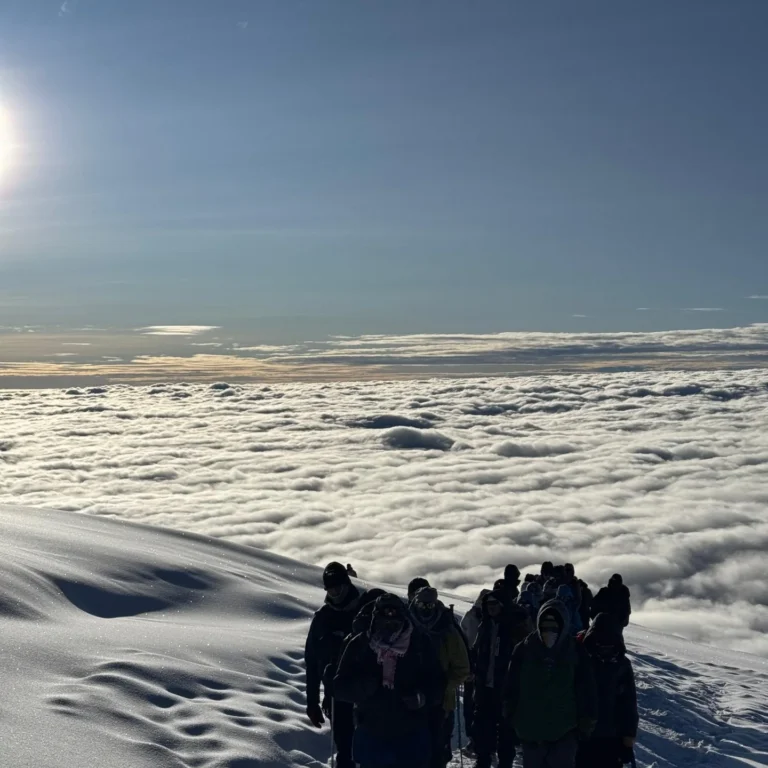
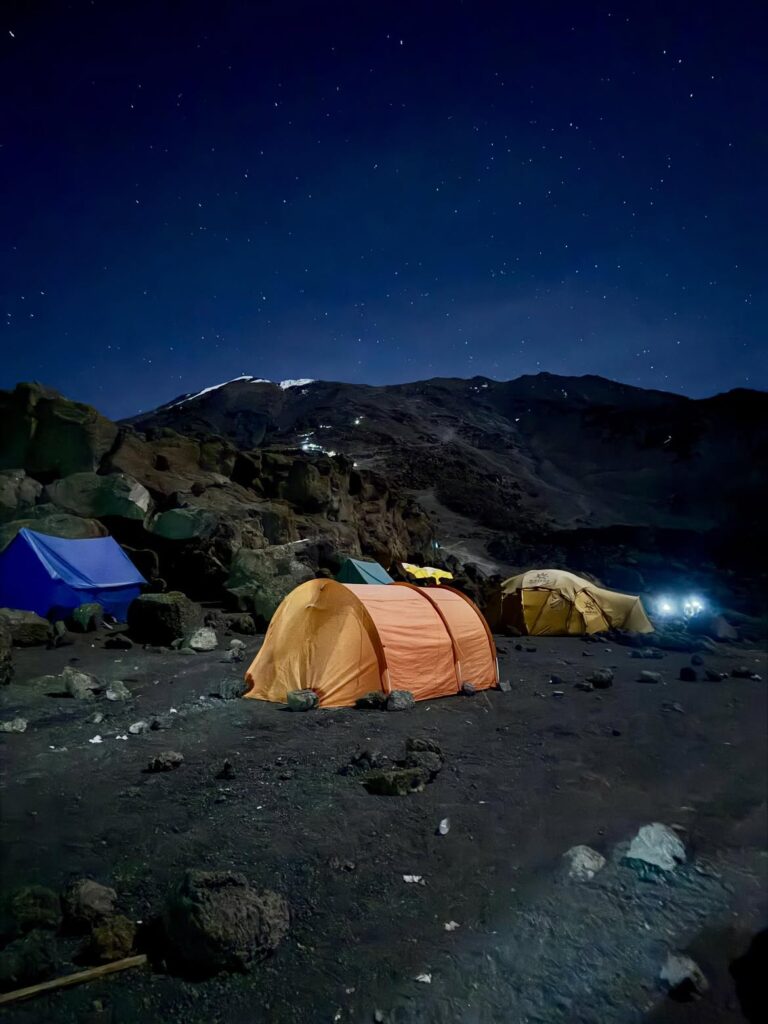
Summit day. From Barafu Camp at 4,673m (15,331 ft), summit night starts at midnight. Climbers ascend 1,200m to Uhuru and then descend 2,800m (9,186 ft) to Mweka Camp in the same day. 12 to 16 hours of movement. Cold temperatures (-10°C to -20°C on summit). Darkness for the first 6 hours. Altitude effects compounding exhaustion. For most climbers, this is the single hardest physical day of their life to date.
Cold. Kilimanjaro’s summit is colder than Mont Blanc’s summit on most days, despite being closer to the equator. The combination of high altitude, wind exposure, and the late-night timing of summit push means summit temperatures routinely hit -15°C to -25°C. This catches climbers off-guard more than altitude does.
What Kilimanjaro does NOT require:
No technical skills. No ropes, no crampons, no ice axe, no climbing. It’s walking. Very hard walking at altitude, but walking.
No technical risk. The main risks are altitude-related and cold-related. There are no crevasses on the standard trekking routes. There is almost no rockfall risk. Fatal accidents are rare (typically around 6–10 per year across 50,000 climbers — a 0.015% fatality rate, mostly from AMS and pre-existing cardiac conditions).
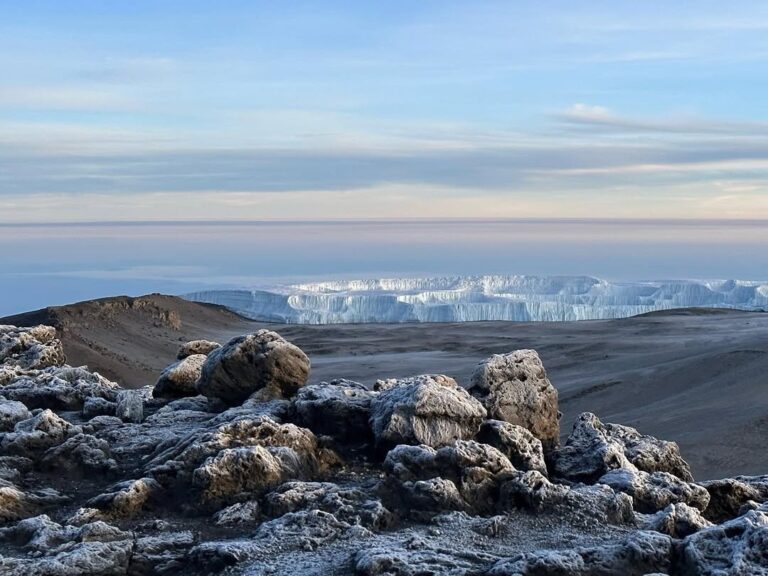
No glacier travel. Routes pass close to glaciers but don’t cross them. You are not roped up at any point on a standard itinerary.
This is why Kilimanjaro is often the entry point for people who want a “big mountain” but don’t yet have technical skills. And why, despite being taller, it is the more accessible of the two.
Where Each Mountain Is Harder
Mont Blanc is harder at:
- Technical skills (crampons, rope work, self-arrest, crevasse awareness)
- Objective risk (rockfall, crevasses, weather exposure)
- Speed requirements (you must move fast; slowness kills)
- Required experience (most reputable guides won’t take first-time alpinists up Mont Blanc without a skills course)
- Alpine decision-making (when to turn around, reading weather, route finding)
Kilimanjaro is harder at:
- Altitude (1,087m (3,566 ft) higher summit, sustained time at 5,000m+/16,404 ft)
- Duration (6–9 days of effort vs 2 days)
- Summit day length (12–16 hours vs 6–8 hours)
- Cumulative fatigue (sleep deprivation, appetite loss, altitude-related exhaustion across a week)
- Cold exposure on summit night (longer time in severe cold than Mont Blanc typically requires)
Similar difficulty:
- Total vertical gain on summit day (Mont Blanc summit day ~1,000m/3,280 ft gain; Kilimanjaro summit day ~1,200m/3,937 ft gain)
- Cost range (both sit in the $1,500–$4,500 range for guided climbs)
- Need for fitness (both require 10km-in-1-hour-level cardiovascular base at minimum)
Who Should Do Which First?
Do Mont Blanc first if:
- You already have mountaineering experience (crampon use, rope work, basic self-arrest)
- You have limited time for the trip (5–7 days total travel)
- You want a technical climbing experience, not a trek
- You live in Europe and can extend the trip with skills training in Chamonix
- You’re comfortable with objective risk and want to test yourself against it
Do Kilimanjaro first if:
- You’re a strong walker / runner with no technical climbing skills
- You want a true summit, not just a base camp
- You have 2 weeks for the trip
- You’re drawn to East Africa, want to combine with Tanzanian safari or Zanzibar
- You want a more gradual challenge where success depends on pace, hydration, and acclimatization rather than skills
The order many climbers pick: Kilimanjaro first to build altitude experience and confidence, then a skills course in the Alps, then Mont Blanc. This sequence makes sense for most people.
What Mont Blanc Teaches You That Kilimanjaro Doesn’t
If your goal is eventual technical alpinism, Mont Blanc is the better training mountain. It teaches:
- Moving in crampons on ice and snow
- Self-arrest with an ice axe
- Being roped up on a glacier
- Reading alpine weather and making turn-around decisions
- Operating at the edge of objective risk
Kilimanjaro does not teach any of these. A climber who has only done Kilimanjaro knows nothing about alpinism. They know they can handle altitude. That’s worth something, but it doesn’t transfer to glacier travel, technical routes, or winter alpine climbing.
What Kilimanjaro Teaches You That Mont Blanc Doesn’t
If your goal is eventual high-altitude trekking — Everest Base Camp, Aconcagua, bigger Himalayan treks — Kilimanjaro is the better training mountain. It teaches:
- Your body’s altitude response over multiple days
- How to eat and hydrate at altitude
- How to manage sleep deprivation and poor rest
- What 5,000m+ (16,404 ft+) actually feels like over sustained time
- Pacing over a multi-day effort where daily recovery matters
Mont Blanc’s two-day structure doesn’t test any of these. A climber who has only done Mont Blanc has no idea how their body handles a week at altitude. They may handle it well. They may not.
Which Is “Safer”?
Both mountains can kill climbers. The cause of death is different:
Mont Blanc fatalities are primarily from falls, rockfall, avalanches, and weather-related exposure. Roughly 100 climbers die on Mont Blanc each year — about twice the Everest rate in absolute numbers despite being much more accessible. Most fatalities are avoidable with better skills, better route choices, and better weather assessment.
Kilimanjaro fatalities are primarily from Acute Mountain Sickness (HACE and HAPE), pre-existing cardiac conditions exposed by exertion at altitude, and hypothermia. Roughly 6–10 fatalities per year among 50,000+ climbers — a low rate proportionally, but not zero.
A reasonable summary: Mont Blanc is more dangerous per climber. Kilimanjaro is safer per climber but is not risk-free, and the risks are different (medical rather than mechanical).
This is why Kilimanjaro Sky’s safety protocols are oriented around altitude monitoring and decisive descent calls. Pulse oximetry checks morning and evening. SpO2 thresholds that trigger reassessment. Guide authority to call descent with no pressure to push on. Supplemental oxygen carried on every climb.
A Note on “Training Value”
Some climbers use both mountains as steps toward bigger objectives. If you’re eyeing the Seven Summits, Denali, or the 8,000m/26,246 ft peaks, a sequence like:
- Kilimanjaro (altitude experience, summit discipline)
- Mont Blanc + skills course (technical alpinism foundation)
- Aconcagua (altitude + self-sufficiency at 6,000m+/19,685 ft)
- Denali or similar (expedition-style high-altitude alpinism)
…is a reasonable progression. Kilimanjaro at step 1 is not wasted time even though it’s not technical. The altitude experience it gives you is useful for every later step.
The Bottom Line
Neither mountain is “easy.” Both have killed competent climbers. Neither should be treated casually. Their difficulties just live in different places:
Mont Blanc is a technical alpine climb with real objective risk and skill requirements, executed over 2–3 intense days.
Kilimanjaro is a high-altitude trek with real altitude risk and endurance requirements, executed over 6–9 gruelling days.
If you want ropes and crampons, go to Chamonix. If you want altitude, length, and a specific summit on the African continent, come to Moshi.
For Kilimanjaro specifically, we’d suggest starting with the routes overview to compare options. The Machame and Lemosho routes have the highest success rates on the mountain, and the packages page covers what’s included. If you’d like to talk through fit, get in touch — we run small groups with two guides per 2–3 climbers and will give you an honest read on the right itinerary for where your fitness actually is.