Most people who have never slept at altitude underestimate how different it is from camping at home. Sleeping on Kilimanjaro isn’t difficult because the tents are bad or the bags are thin — ours aren’t. It’s difficult because your body, when you first arrive at 3,500m (11,482 ft) or 4,000m (13,123 ft), does not entirely agree with the idea of sleep. It wants to keep breathing. It wants to keep adjusting.
Clients who knew this in advance handle it well. Clients who didn’t can find the first night at altitude genuinely unsettling. So here’s the honest picture — the tents, the bags, the cold, the insomnia, and the things that actually help.
The Tents You’ll Actually Sleep In
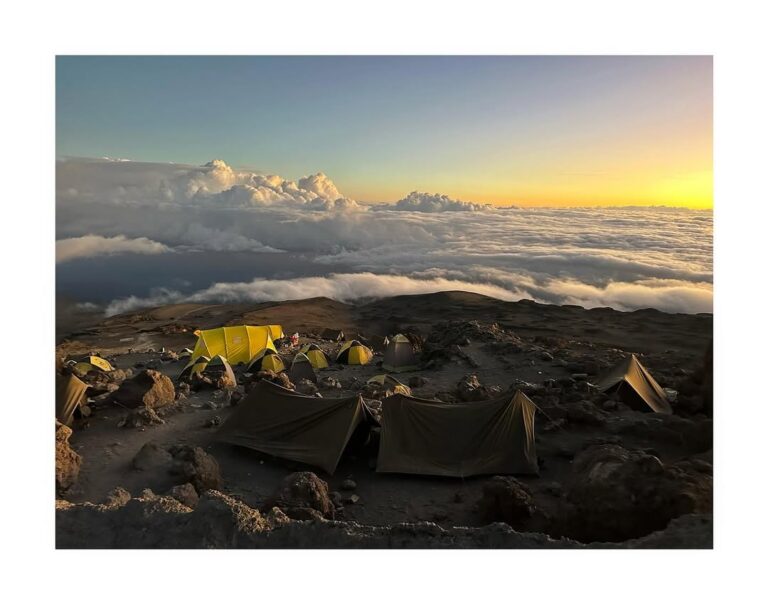
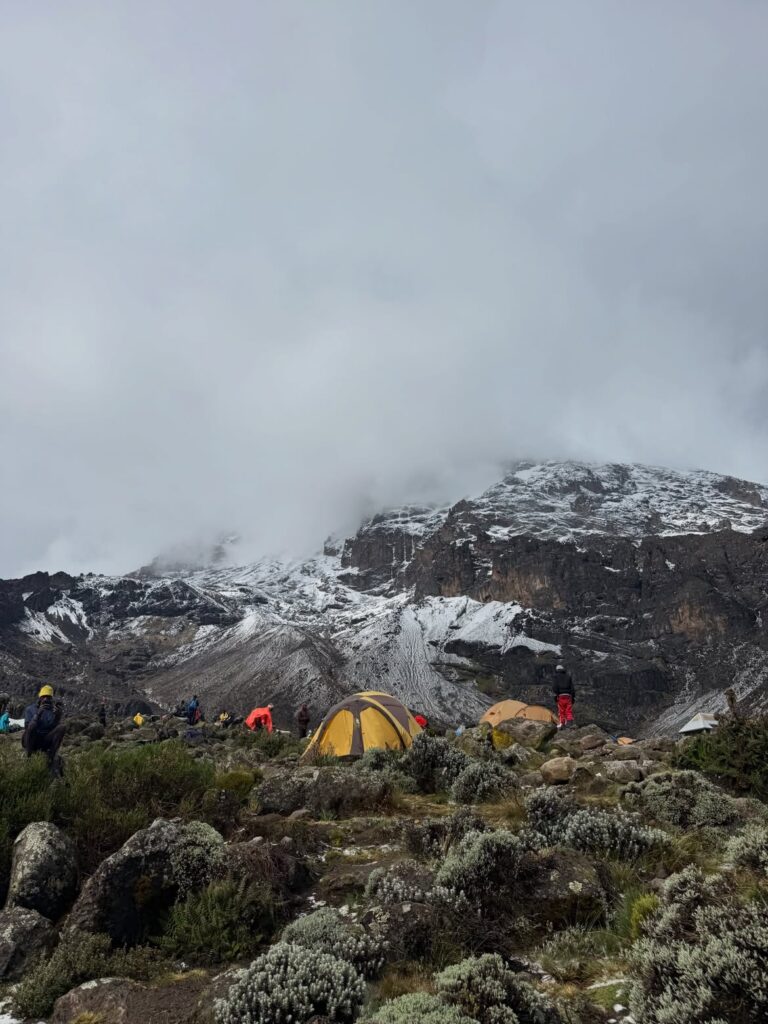
On every route except Marangu, you sleep in tents for the entire climb. Our camping routes — Machame, Lemosho, Rongai, Shira, and the Northern Circuit — all use four-season mountain tents designed for the conditions the mountain actually produces: cold, wind, and periodic heavy rain or snow above 4,000m (13,123 ft).
Standard package: Four-season dome tents shared between two climbers. Good insulation, reliable in wind, proven in conditions well below what Kilimanjaro typically produces.
Luxury package: Upgraded dome tents with more interior space, thicker floor insulation, and easier entry — meaningful when you’re layered in down at 4,600m (15,091 ft) and need to get in without kneeling in the dirt. Still shared between two unless you’ve requested single-supplement.
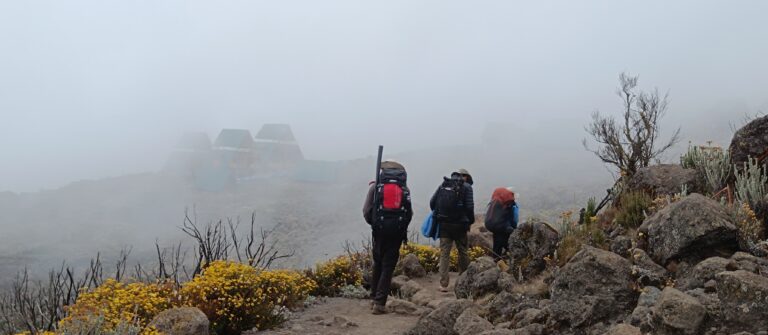
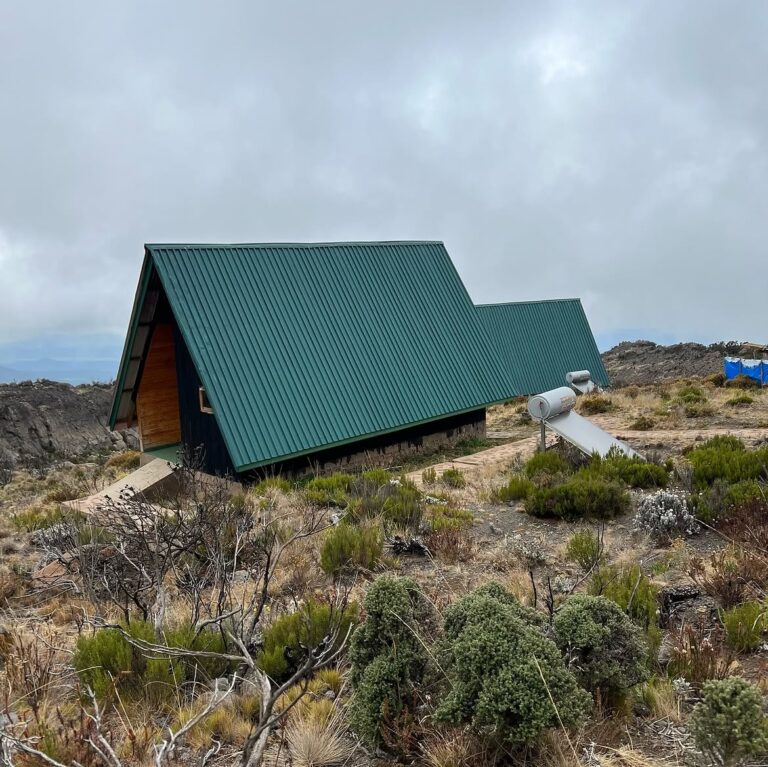
On the Marangu route, you sleep in wooden huts built and maintained by TANAPA. These are dormitory-style — bunks with mattresses, multiple climbers per hut, shared space. Warmer than tents in some ways (you’re out of the wind), but also less private and more dependent on your hut-mates for quiet. The Marangu hut experience is one of the reasons we generally recommend the camping routes over Marangu for first-time climbers.
Either way, what you’re sleeping in is designed for the conditions. The real challenge isn’t the accommodation.
The Sleeping Bag That Matters
The single piece of gear that most affects your sleep quality on Kilimanjaro is your sleeping bag.
A bag rated to -10°C or -15°C (comfort rating, not survival rating) is the minimum for this climb. A bag rated to -20°C comfort is better, and significantly more comfortable on nights four through six at Barafu or Karanga camps.
Down fill is warmer per gram than synthetic, compresses smaller, and performs better at altitude — provided it stays dry. On Kilimanjaro, sleeping bags are transported in waterproof duffels or kitbags, and the climate above 3,000m (9,842 ft) is dry enough that down works well. We provide or can rent quality cold-rated bags for clients who don’t want to buy one for a single climb.
For more detail on what to look for, our sleeping bag guide for Kilimanjaro covers temperature ratings, rental versus purchase, and what actually works on summit-night-adjacent camps.
The additions that matter:
- A sleeping bag liner (silk or thermolite) adds 3–5°C of warmth and extends the usable range of a mid-grade bag. Inexpensive and highly worth it.
- A sleeping mat — Thermarest-style inflatable or high-density foam — is what keeps ground cold from stealing your body heat. Without a mat, even a -20°C bag will feel inadequate. Our crew provides these on every climb.
- A dry base layer set worn only for sleeping. Not the base layer you hiked in. You want clean, dry, non-sweaty fabric next to skin.
Why Altitude Disrupts Sleep
Here’s the physiological reality. When you sleep at sea level, your breathing slows to around 12–16 breaths per minute. Your oxygen intake drops slightly below daytime levels — not a problem, because there’s plenty of oxygen available in the air.
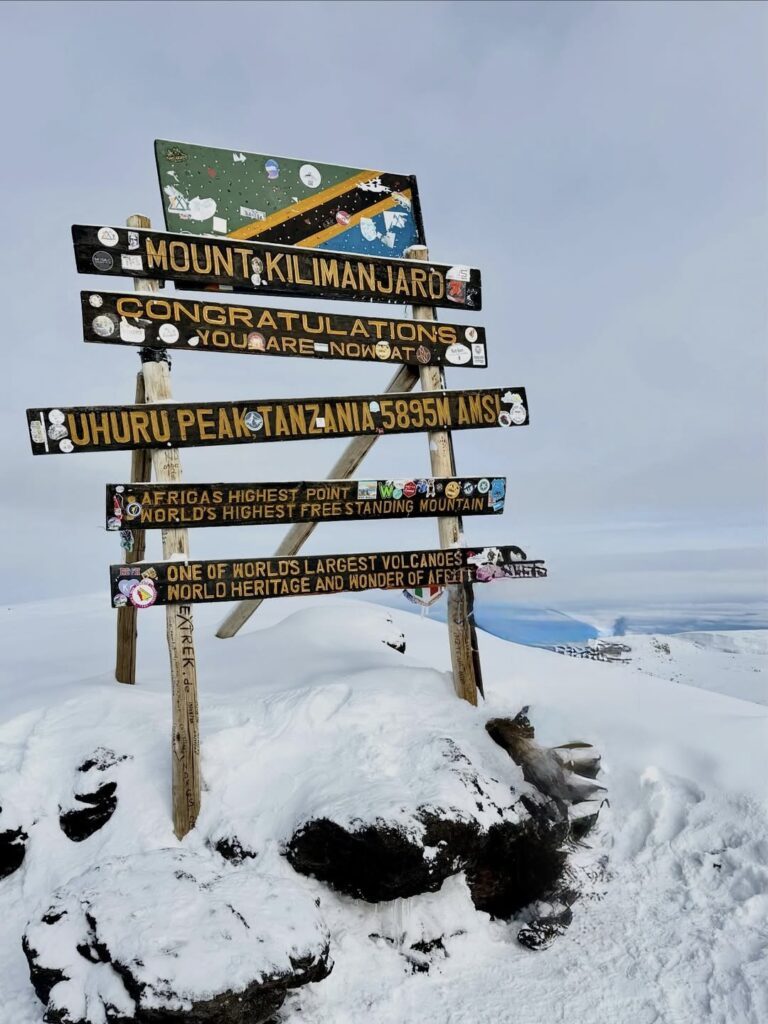
At 3,500m (11,482 ft), the air holds about 65% of the oxygen available at sea level. At 4,600m (15,091 ft) (Barafu Camp), it’s closer to 57%. At 5,895m (the summit), it’s about 49%.
Your body notices this, especially at night. Without the effort of walking to drive deep breathing, your respiration falls — and oxygen saturation dips. In response, your body goes through a cycle called periodic breathing, which looks roughly like this: breathe normally for 30–90 seconds, stop breathing for 5–15 seconds, gasp awake or take a few deep recovery breaths, breathe normally again. Cycle repeats.
This is not dangerous. It’s your body’s normal response to altitude and it’s one reason acclimatisation works — your system is training itself to handle lower oxygen. But it means your sleep is fragmented. You wake up multiple times a night. You might feel like you’ve barely slept when you’ve actually had 5–6 hours of usable rest, just not consolidated the way you’d sleep at home.
Our guides check SpO2 every morning and every evening using pulse oximeters. Readings below 75%, or drops greater than 5% from the previous reading, trigger reassessment and increased monitoring. This isn’t about waking you up in the night — it’s about catching the difference between normal altitude disruption and the early signs of AMS that need action. More on this in our Kilimanjaro safety protocols.
What the Cold Actually Feels Like
The nights on Kilimanjaro get cold. Specifically:
- Machame Camp / Shira 1 (~3,000m/9,842 ft): nighttime lows around 0°C to -3°C. Chilly but not punishing.
- Shira 2 / Barranco / Moir (~3,900–4,200m/12,795-13,779 ft): lows of -3°C to -8°C. Proper cold.
- Karanga / Barafu / Kibo Hut (~4,000–4,700m/13,123-15,419 ft): lows of -7°C to -15°C, occasionally lower in a cold snap or during the dry winter months.
- Summit (Uhuru Peak, 5,895m/19,340 ft): -10°C to -25°C, with windchill often taking it below -30°C. You won’t be sleeping there.
Inside a properly rated bag, with a liner, a good mat, and dry base layers, you are warm. Properly warm. The problem clients most often report is not inadequate bag warmth — it’s poorly prepared sleep clothing (damp from the day, too few layers), or condensation on the tent wall dripping onto the bag, or failing to use the liner they packed.
Things that help cold nights:
- Boil water before bed, fill a Nalgene-style hard bottle, wrap it in a sock, and put it in the foot of your sleeping bag. Gives you a warm bottle of drinking water in the morning that hasn’t frozen, and 30 minutes of proper warmth as you fall asleep.
- Wool socks for sleeping. A dry pair that never get worn hiking. Change into them in the tent.
- Hat or hood up. You lose significant body heat through your head and neck. A wool beanie on the pillow, pulled down when it gets cold.
- Hand warmers if you run cold. A single chemical hand warmer in the foot of the bag helps sleepers who struggle with cold feet.
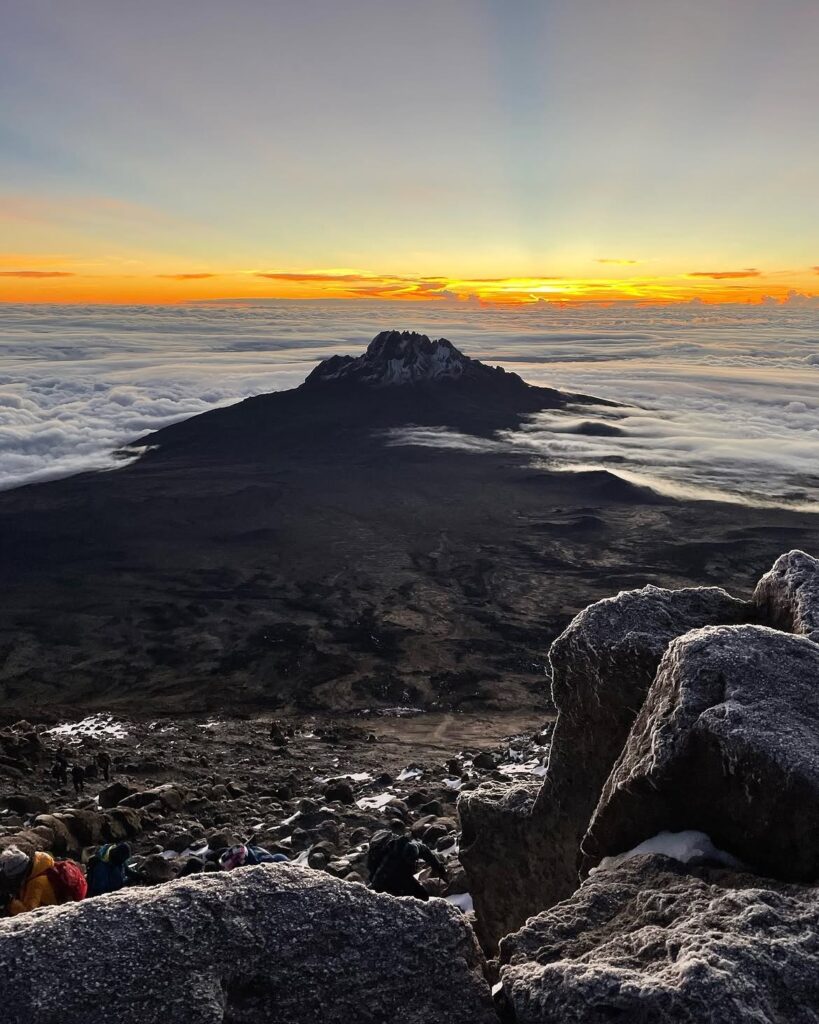
Sleep Strategies That Actually Work at Altitude
Most first-time high-altitude trekkers expect they’ll either sleep or not sleep — a binary. The reality is more like 60–70% of normal sleep quality the first two or three nights, stabilising to 70–80% by mid-trek, then dropping again on the eve of summit night.
Hydrate hard during the day. Dehydration at altitude makes sleep worse and headaches more likely. Drink 3–4 litres of water throughout the climbing day. Stop drinking heavily about 90 minutes before bed to avoid needing to leave the tent multiple times at night. Our drinking water on Kilimanjaro guide goes deeper on this.
Eat dinner even if you’re not hungry. Altitude suppresses appetite. You need the calories and the warm food helps body temperature regulation before sleep. Our cook crew prepares soup plus a carb-heavy main at every dinner — eat as much as you can.
Go to bed earlier than you would at home. The body rests better if you’re down by 9pm on the mountain. First light is around 6:15am. You’re not losing sleep by going to bed early — you’re giving yourself more hours in the bag to accumulate rest across a broken night.
Don’t panic if you’re awake at 2am. Almost every climber has at least one night where they lie awake for a long stretch, convinced they haven’t slept and won’t sleep. In most cases they have slept more than they realise and will sleep again. Lying still, warm, and hydrated is restorative even if you’re not unconscious. Reading a Kindle or similar for 20 minutes often does more than trying to force sleep.
Avoid alcohol entirely on the mountain. It disrupts sleep architecture, worsens altitude symptoms, and compounds dehydration. This is not a religious position — it’s a physiological one.
What About Sleeping Pills?
Zolpidem (Ambien) and similar strong sedatives are generally not recommended above 3,000m. They suppress the body’s respiratory drive, which at altitude — where your body needs to breathe harder than normal — can produce lower oxygen saturation overnight and worsen altitude sickness risk.
Diamox (acetazolamide), by contrast, is frequently useful. It increases ventilation, improves oxygen saturation, and often significantly reduces the periodic breathing that fragments sleep at altitude. It’s not a sleep aid in the sedative sense — it’s an acclimatisation aid that happens to improve sleep quality as a side effect. Our Diamox on Kilimanjaro guide covers the dosing, timing, and side effects in detail.
Talk to your doctor before travel. Don’t experiment with prescription medications on the mountain for the first time.
Summit Night Is Different
The eve of summit night is the one night where you genuinely are not going to sleep much, and the advice above partially breaks down.
Dinner is early (around 5pm). Bed is early (6–7pm). Alarm is set for 10:30 or 11pm. In that four or five hour window, you might get two or three hours of light sleep. Many clients get less. That’s normal and it’s fine — adrenaline and the cold will carry you through the midnight start, and the two nights before summit night are when the real rest banking happens.
For the full picture of what summit night actually looks like, see our Kilimanjaro summit night guide. The short version: you will be tired. Everyone is tired. It doesn’t stop people reaching the top.
A Realistic Summary
You will sleep less well on Kilimanjaro than you do at home. You will not sleep badly enough to derail the climb. By day three, the routine is established, the bag feels familiar, and your body has adjusted enough that sleep gets notably easier than the first night.
The things under your control — good bag, good mat, dry sleep layers, hydration, early bedtime, no alcohol, careful use of Diamox if your doctor approves it — matter a lot. The things not under your control — periodic breathing, initial altitude adjustment, a noisy tent neighbour — matter less than you think.
If you have questions about specific camps on your route, or whether to rent or buy a sleeping bag, our team in Moshi is happy to walk you through it. Our packages page explains what’s included in Standard versus Luxury, and our FAQs cover the most common sleep-related questions clients send us. Pole pole on the mountain, in sleep as in walking.