For most people who seriously consider it: yes. We’re not going to pretend otherwise — we run this operation in Moshi, and we believe in what we do. But “worth it” deserves an honest answer, not a sales pitch.
Kilimanjaro costs between $2,000 and $5,000+ depending on operator and package. It takes 7–10 days on the mountain plus travel. It requires months of training, a physical grind, sleep disruption, real cold, real tiredness, and a summit night that tests most people’s mental reserves. The reward is an experience that most clients describe as one of the most meaningful things they’ve done.
For the right person, at the right time, for the right reasons, this is one of the best uses of time and money in modern travel. For the wrong person, at the wrong time, it can be a disappointment.
Here’s the honest breakdown.
The Reasons It’s Usually Worth It
A Meaningful Physical Achievement
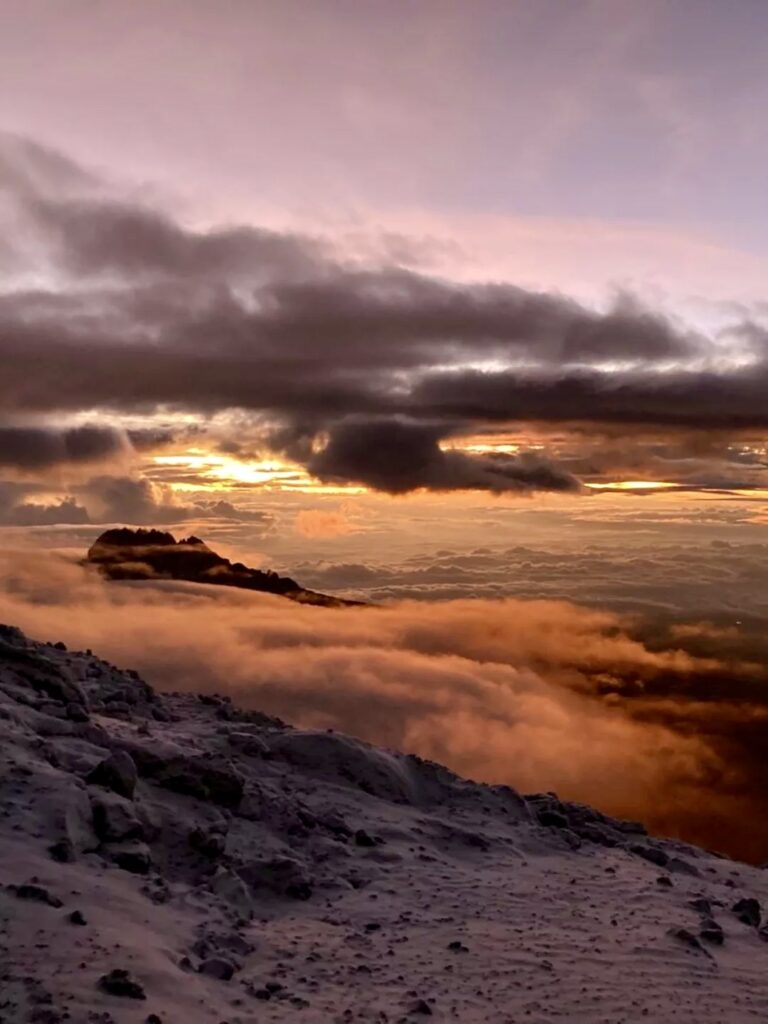
Kilimanjaro is the highest point in Africa and the tallest freestanding mountain in the world, at 5,895 metres. For most people, it’s the highest altitude they will ever visit. That matters emotionally in a way that’s hard to articulate until you stand at Uhuru Peak at dawn and watch the sun come up over the Tanzanian plains.
Unlike technical mountaineering objectives, Kilimanjaro is achievable for ordinary fit adults without specialised skills. That’s what makes it meaningful — it’s a genuine physical challenge that most people can actually complete with good preparation and the right operator. It’s a real summit, not a simulation.
A Genuine Test Without Manufactured Drama
Most modern travel is curated comfort. Cruises, resorts, guided bus tours through Europe. They’re enjoyable, but they don’t ask anything of you. Kilimanjaro asks something. It asks you to walk for eight days, to sleep in a tent, to be cold, to be tired, to keep going when you want to stop.
There’s something clarifying about that. Clients describe returning from the mountain with a clearer sense of what they’re capable of, what they value, and what they were avoiding at home. The experience earns its meaning through effort, which is rare in modern travel.
The Country, Not Just the Mountain
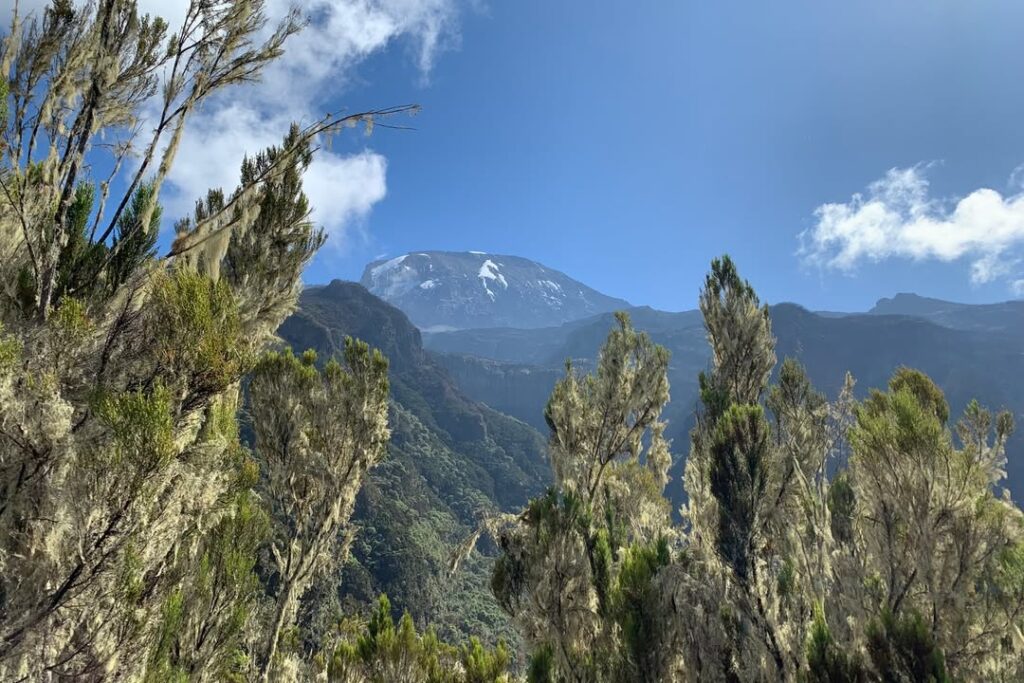
Tanzania is remarkable. The climb is part of a trip that usually includes a Northern Tanzania safari — Serengeti, Ngorongoro Crater — and sometimes Zanzibar. It includes Moshi itself: a working Tanzanian town, not a tourist bubble. It includes cultural experiences like Ekanubi Underground, a deeply local look at the ingenuity of the Chagga people who have lived on Kilimanjaro’s slopes for centuries. It includes coffee tours at the foothills of the mountain, the kind where you pick, roast, and grind your own beans.
If you go for the mountain alone, you get a mountain. If you go for the country, you get a trip you’ll talk about for years.
Time and Perspective
Eight days with no phone service, no email, no news feed. This is now an unusual experience. For many clients, the most lasting effect of the climb isn’t the summit — it’s the week of forced disconnection.
You walk, you eat, you sleep, you walk. The days compress into a rhythm that most people haven’t felt since childhood. Several clients have told us the week on the mountain was the first time in years they felt their nervous system genuinely reset.
A Specific Kind of Reward System
Completing Kilimanjaro is not a good social-media post. That’s a feature, not a bug. A summit photo doesn’t capture the days of walking, the cold night, the moment you decided to keep going. The reward is interior. You know what you did. Most other things in life that feel impressive don’t actually feel like anything once they’re done — this one does.
The Reasons It Might Not Be Worth It
If You Don’t Like Discomfort
Kilimanjaro is uncomfortable for a week. You sleep in a tent. You don’t shower (see our piece on whether you shower on Kilimanjaro). You eat institutional food prepared by a cook working from a tent kitchen at 4,000 metres. You’re cold. Your feet hurt.
If your preferred vacation is a hotel, a pool, and a cocktail, Kilimanjaro is a wildly bad match. Not because there’s anything wrong with that preference, but because the experience is designed around physical effort and roughing it. No amount of luxury upgrade changes the fundamentals — the luxury package helps with sleep quality and private toilet access, but it’s still a tent at altitude.
If You’re Doing It Only for the Photo
We’ve guided clients who booked Kilimanjaro because it looked impressive on Instagram. They usually don’t have a great time, and several have turned back early because the reality didn’t match the expectation.
The mountain rewards effort and intention. If the motivation is external — looking impressive to others — it runs out around day four when the novelty wears off and the work begins. Internal motivations (personal challenge, a milestone, grief, recovery, long-held aspiration) hold up better.
If You Can’t Commit to Training
Kilimanjaro without preparation is miserable. We’ve seen people who didn’t train, white-knuckle their way through the climb, summit, and privately tell us they wouldn’t do it again. That’s an expensive way to learn about preparation.
If you can’t commit to 4–6 months of consistent training, wait. The mountain will still be here. Our fitness guide lays out what the training actually looks like.
If the Timing Is Wrong
Big life decisions need bandwidth. If you’re in the middle of a divorce, a new job, a new baby, or recovering from serious illness, Kilimanjaro can wait. It benefits from a year where you can train, plan, and arrive with your head in the right place. Squeezed into a difficult period, it becomes another stressor.
What “Worth It” Actually Means in Dollars and Days
Let’s make the cost honest:
- Money: $2,000–$5,000+ for the climb depending on operator and package. Add flights, visas, insurance, gear, safari, tips — total trip usually lands between $4,000 and $8,000+ for most US and UK clients. We break this down in our piece on the cost of climbing Kilimanjaro.
- Time: 7–10 days on the mountain, 2 days minimum for travel on each end, 4–6 months of training. Add safari days if you’re combining.
- Physical load: Real training, not theoretical. Sustained running, loaded hiking, leg strength.
- Emotional load: Some weeks will be hard training weeks where you don’t want to go. Push through anyway.
Is that worth it? For the right person, yes. For the wrong person, no. The honest question is which side you’re on.
How to Know It’s Worth It For You
A few questions we’d ask:
Have you wanted this for more than a year? Impulse bookings rarely hold up. Sustained interest over time is a good signal.
Are you doing this for yourself or for someone else? Honest answer. Climbs done for internal reasons go better than climbs done to impress a spouse, a friend group, or an ex.
Is there meaning attached? Milestone birthdays, post-cancer climbs, fundraising, grieving, long-deferred dreams — these climbs go well. Climbs with no particular meaning sometimes feel empty even after summiting.
Are you willing to train? If yes, fitness isn’t the question. If no, reschedule.
Can you tolerate discomfort? Not as an abstract concept — in your actual life. If you avoid long walks, cold weather, and rustic travel normally, the mountain is going to be a hard sell.
What Our Clients Say After
We haven’t published full testimonials yet (we’re a boutique operation still in build phase), but the patterns across feedback after climbs are consistent:
- The summit morning is described as emotional, usually with some version of “I’ve never experienced anything like that.”
- The week without phones is named as one of the most important takeaways.
- Many clients describe the first few days back home as clarifying — decisions that felt hard before the climb feel easier after.
- A surprising number book return trips within 2–3 years — either a second Kilimanjaro route or a Tanzania safari.
The honest outlier: clients who didn’t train well or had unrealistic expectations sometimes describe the experience as harder than they hoped, even if they summited. The training piece matters for how you remember the climb, not just whether you finish it.
The One Thing We Want You to Know
The people who have the best experience on Kilimanjaro are the ones who treat it seriously — physically, logistically, and emotionally. They train. They pick a longer route for better acclimatization (usually Lemosho or Machame). They pick an operator who cares about the crew and the safety protocols, not just the price point. They arrive a day or two early to rest. They go into the climb with some sense of why they’re there.
If that sounds like you, yes, it’s worth it. Most of our clients in the three months after their climb tell us the same thing: they wish they’d done it earlier.
We’re in Moshi. When you’re ready to plan it, we’re here.