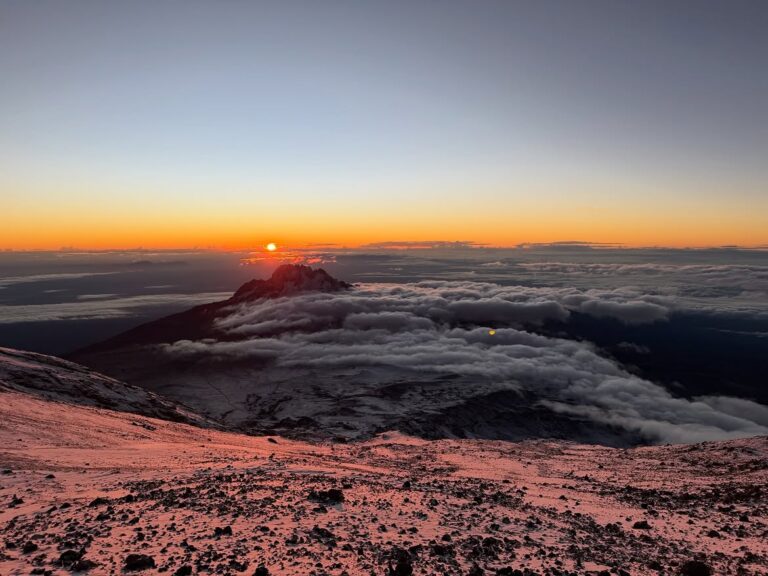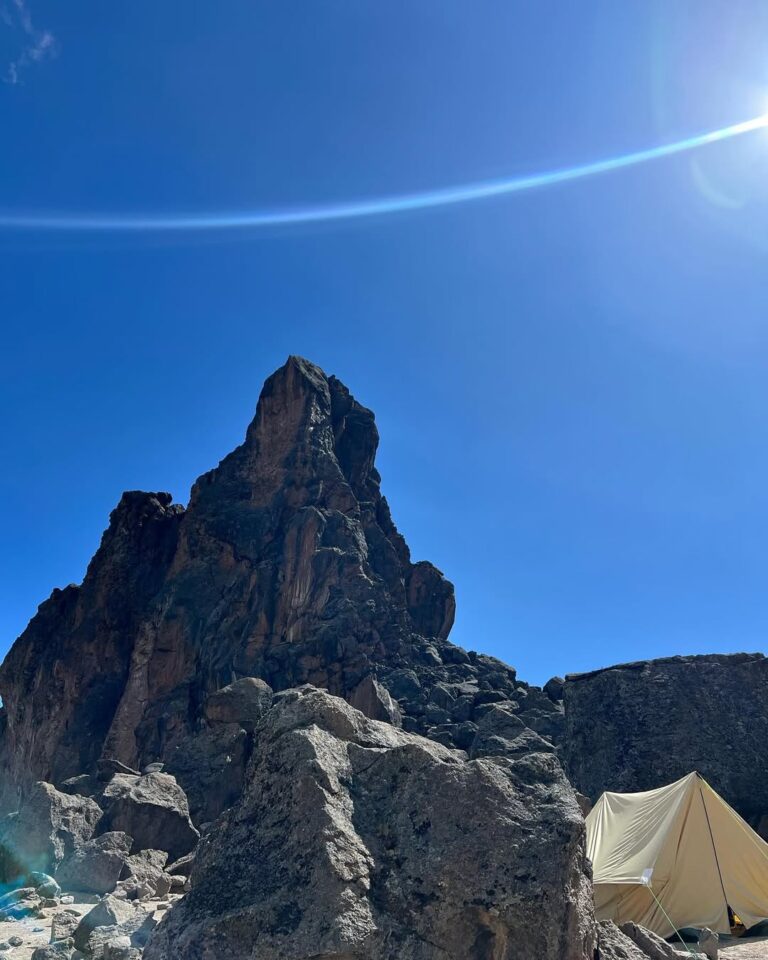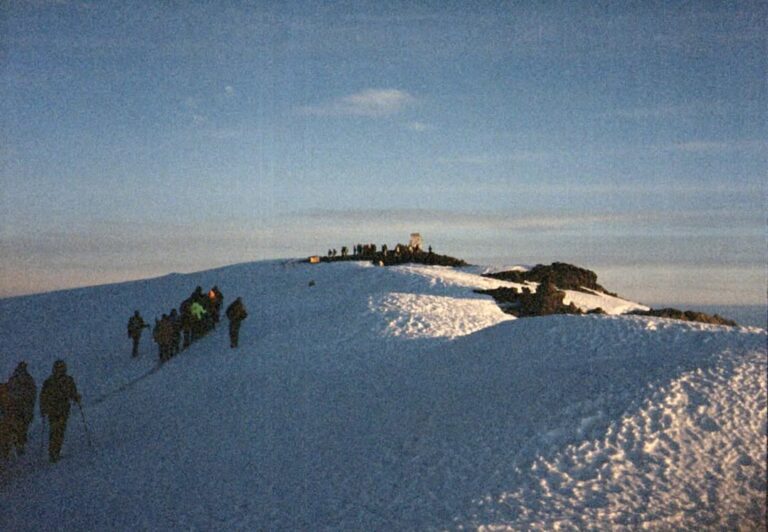
If you’ve spent a week on the mountain with a crew who carried your gear through rain and altitude, cooked hot meals at 4,600 metres (15,091 ft), and checked on you every morning before you’d had coffee — the tipping ceremony at the end of your descent isn’t awkward. It’s something most climbers say was one of their favourite moments of the whole experience.
But before you get there, it helps to know how it works: what the recommended amounts are, who gets what, how it’s distributed, and why — given that your crew is paid a daily wage — tips still matter as much as they do.
Why Tips Matter on Kilimanjaro
Before we get to the numbers, here’s the context: porters, assistant guides, and cooks on Kilimanjaro earn a daily wage from the operator. A responsible operator pays a fair one. At Kilimanjaro Sky, porters earn $10–12 USD per day, paid directly and in cash immediately after descent. That’s a real wage — not the exploitative rates that unfortunately still exist with some operators — but it’s still a wage built around the seasonal nature of the work.
Tips are not a gratuity on top of adequate compensation. They’re a meaningful part of annual income for your crew. The climbing season runs roughly February–March and June–October, with quieter months in between. A strong tip from a well-supported group can meaningfully change what a guide or porter is able to do in the off-season.
This isn’t a guilt trip — it’s just useful context before you decide what “the right amount” is.
Recommended Tipping Amounts
The following ranges are based on widely used industry guidelines, adjusted for the current cost of living context in Tanzania and the expectations of crews working with international clients. Amounts are per climber per day, then multiplied by your climbing days.
Lead guide: $20–25 USD per climber per day
Your lead guide is responsible for the entire operation — route management, pace decisions, oxygen saturation monitoring, medical assessment, and the final call on summit attempts. A 7-day Machame climb with one lead guide and four clients might yield $140–175 per client in guide tips — roughly $560–700 total for the lead guide.
Assistant guide: $15–18 USD per climber per day
Assistant guides are experienced mountaineers carrying the climb alongside the lead guide. On multi-day routes with larger groups, there may be more than one. The assistant guide watches the rear of the group, helps with gear, and is often the first to notice when someone is struggling. They earn less in base pay than the lead guide — a solid tip acknowledges that gap.
Cook: $12–15 USD per climber per day
At 4,600 metres, in a tent, a good cook is doing something remarkable. Hot porridge before 6am. Soup on summit day. A three-course dinner when you’ve barely got the energy to eat. Tips for cooks are often underthought — don’t let that happen.
Porters: $8–10 USD per climber per day
Porter tips are often pooled and distributed among the team after the descent ceremony. If you had 4 porters for a 7-day climb, you’re looking at $56–70 per climber directed to the porter pool. That pool gets divided among the team, and every person in it has carried 20kg of your equipment up and down a 5,895-metre (19,340 ft) mountain.
Total Budget: What to Expect
Here’s a worked example. A solo climber on a 7-day Lemosho route with a typical crew:
| Role | Rate/day | Days | Total |
|---|---|---|---|
| Lead guide | $22 | 8 | $176 |
| Assistant guide | $16 | 8 | $128 |
| Cook | $13 | 8 | $104 |
| Porters (pooled) | $9 | 8 | $72 |
| Total | $480 |
For a group of four, the lead guide receives roughly $700+. That’s a meaningful sum in context, and most guides and crew who work with clients who tip well will tell you it shows — in motivation, in care, in the small things that don’t appear in any itinerary.
Budget for tips as a real cost when you’re planning your climb. Not as a surprise at the end, but as part of what it costs to do this properly. You can read more about the full cost breakdown of climbing Kilimanjaro if you want to plan your full budget in advance.
Bringing the Money: Practical Logistics
Currency: USD is preferred by most crew members, as it’s stable and exchangeable. Tanzanian Shillings are also accepted. Bring clean, undamaged bills — older or torn USD notes are often refused at exchange bureaux.
Denominations: Bring a mix of small bills ($5, $10, $20) so you can apportion tips accurately. Large bills ($50, $100) are harder to use for splitting.
Cash only: Tips are always cash. This is not an area where card payments or bank transfers work practically. Bring the cash from home, or withdraw it from an ATM in Moshi before your climb begins (ATMs in Moshi are generally reliable for international cards, but don’t leave this to the last minute).
Envelopes: Some climbers like to organise tips in labelled envelopes by role before departure day. This makes the ceremony smoother and removes any last-minute arithmetic. You can prepare envelopes at your hotel the evening before your descent day.
The Tipping Ceremony
The ceremony happens at the descent gate — Mweka Gate on Machame and Lemosho routes, Marangu Gate on the Marangu route, Rongai Gate on the Rongai route. Your vehicle is typically waiting there to take you back to Moshi.
The crew assembles. They sing — each operator’s crew has their own Kilimanjaro songs, and the tradition is a joyful, genuine send-off. It’s not a performance for tourists. It’s what crews do, and it reflects something real about the culture of the mountain.
Tips are typically handed directly to the lead guide, who distributes them to the crew according to role and agreement. In some groups, climbers prefer to hand individual envelopes directly to each person. Both approaches work — the important thing is that every person who worked your climb receives their share.
At Kilimanjaro Sky, we’re transparent with clients about the crew distribution. If you have questions about how tips are split, ask your lead guide on the mountain. There’s nothing opaque about it.
A Note on Porter Welfare Beyond Tips
Tips matter — but they’re one part of how a well-run operator treats its crew. The baseline conditions also matter: whether porters are paid their daily wage reliably and directly; whether their weight limit is enforced (TANAPA requires 20kg maximum, and we weigh loads at the gate); whether sleeping bags and weatherproof kitbags are provided; whether they eat three meals a day and sleep in proper tents.
At Kilimanjaro Sky, our porters receive $10–12 USD per day, paid directly in cash after descent — not through the operator as a deduction, directly to each porter. They’re provided with a sleeping bag and waterproof kitbag. Our lead guide monitors porter wellbeing throughout the trek, not just client health.
Tips acknowledge the work. Base conditions acknowledge the person. Both matter.
You can read more about what porter welfare standards look like and how to evaluate an operator’s practices before booking.
After the Ceremony
Most climbers describe the tipping ceremony as one of the genuinely moving moments of the whole experience. You’ve spent a week with these people in conditions that strip away most social pretence — cold mornings, altitude headaches, summit night at 2am. What you’re left with is something simple: gratitude, on both sides.
Tip generously. It’s a few hundred dollars to you. It’s several months of income for some of the people standing in front of you.
If you’re still in the planning stages, here’s more about what the crew structure looks like, our approach to safety, and which route might suit you best. We’re also happy to answer specific questions before you book — contact us and we’ll talk through it.
Quick Reference
| Role | Recommended tip per climber per day |
|---|---|
| Lead guide | $20–25 USD |
| Assistant guide | $15–18 USD |
| Cook | $12–15 USD |
| Porters (pooled) | $8–10 USD |
Bring USD cash. Bring small bills. Budget as a real cost. Don’t skip the ceremony.