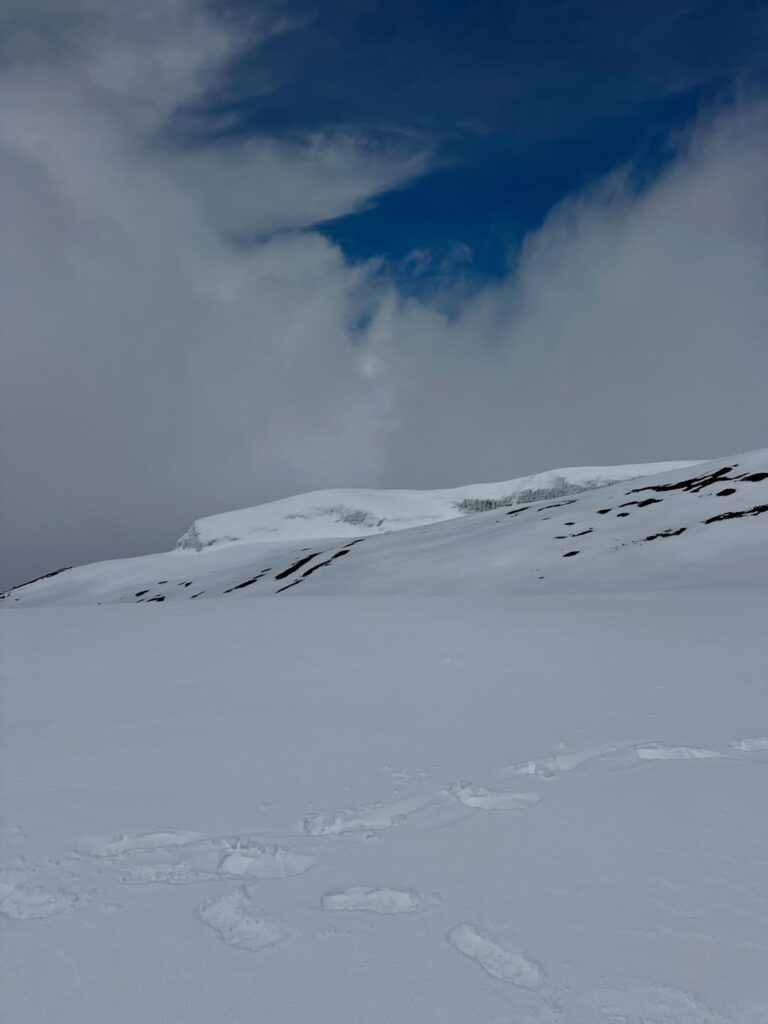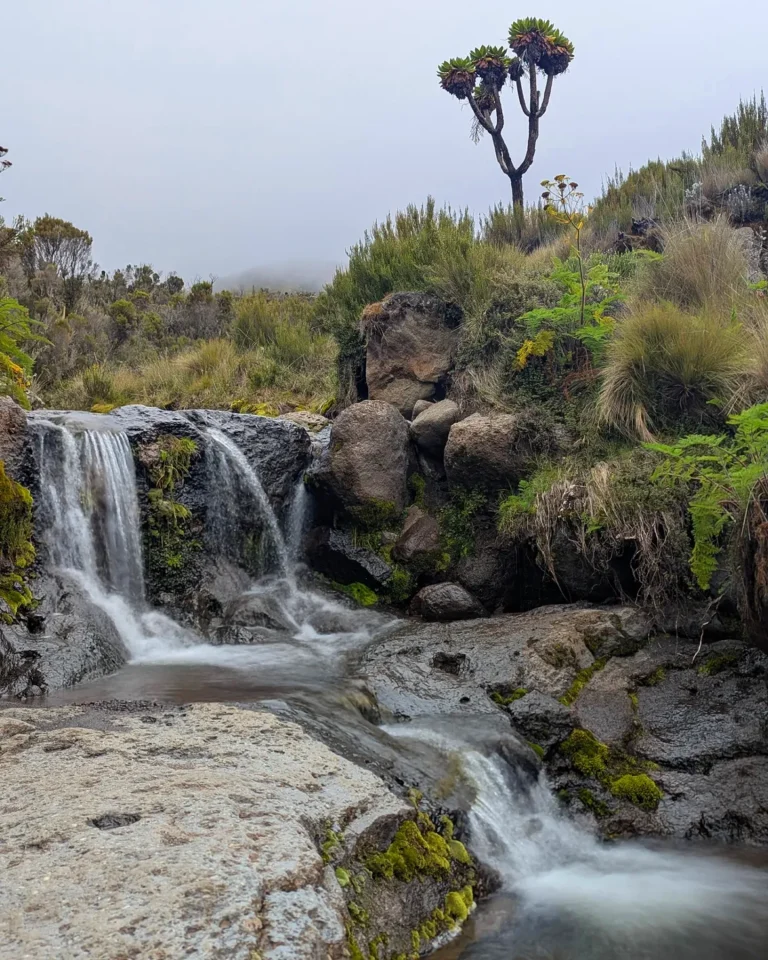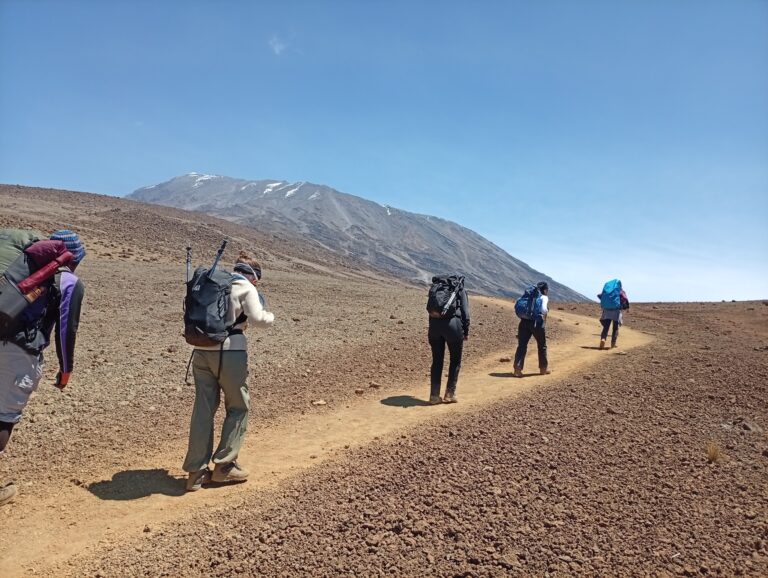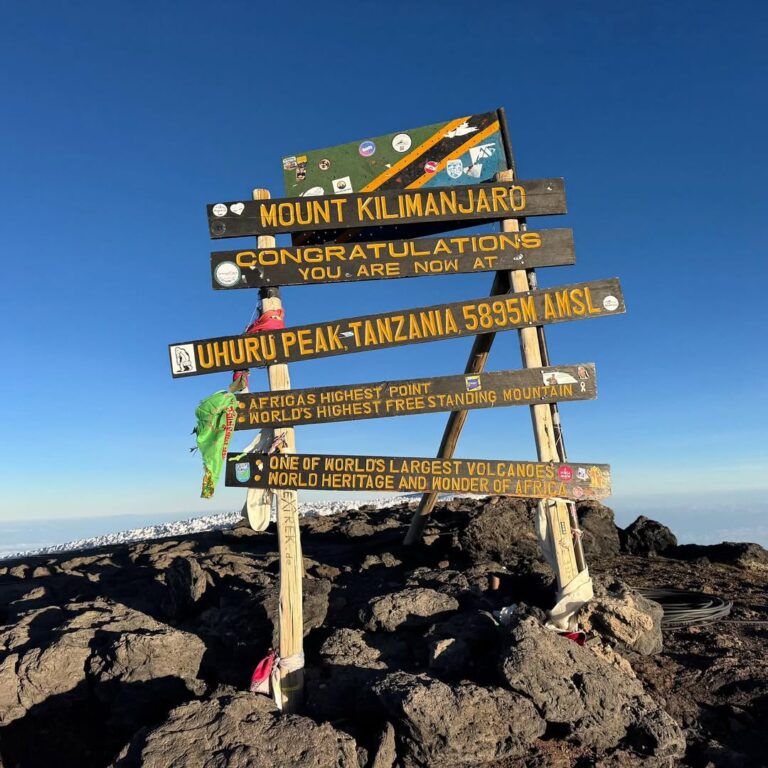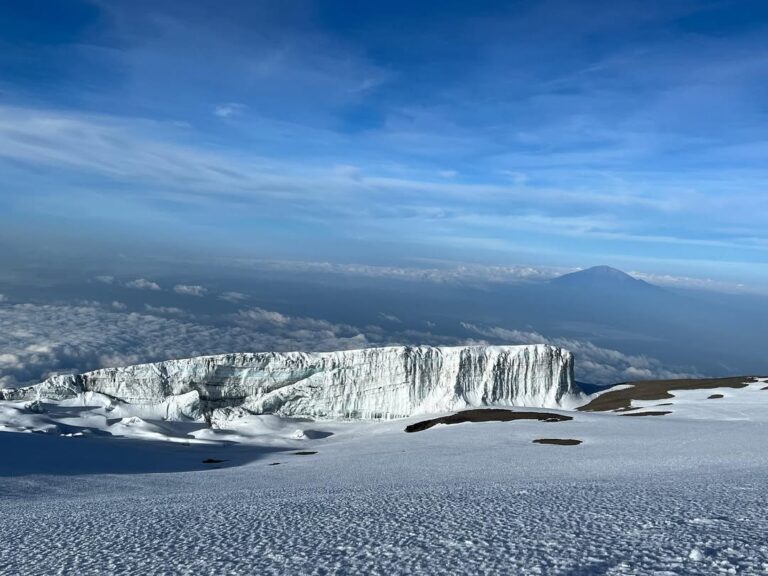
Cold enough that your water bottle will freeze. Cold enough that an underdressed climber will be shivering uncontrollably within 10 minutes of arriving at Uhuru Peak. But also cold in a way that prepared climbers manage fine, stand at the summit, take the photos, and descend without any actual cold injury.
The numbers most people want:
Ambient temperature at Uhuru Peak (5,895m): -10°C to -25°C, depending on season, weather, and time of day. Typical summit-night conditions run -15°C to -20°C.
Wind chill: Frequently drops apparent temperature to -25°C to -35°C. Wind at the summit ranges from calm to 30–50 km/h. On a bad day, 70+ km/h.
Temperature at Barafu (summit night camp, 4,640m): -7°C to -15°C at midnight start.
Temperature back at Mweka Camp (3,100m) in the afternoon: 8–15°C. The descent warms fast.
Now the detail — because a number is useful; knowing how it behaves on you, through your layers, over a 6-hour summit push, is more useful.
Why Numbers Alone Don’t Tell the Story
A “real-feel” temperature depends on four things:
- Ambient air temperature — the thermometer reading.
- Wind speed — wind strips heat from exposed skin and through insulation layers.
- Humidity — Kilimanjaro’s summit air is dry, which is actually better for cold tolerance than humid cold.
- Exposure duration — 10 minutes at -20°C is manageable; 3 hours at -20°C demands better layering.
At Uhuru Peak, you’re typically there for 10–30 minutes: summit photos, catching your breath, the emotional moment, and then you’re moving again. That short window makes the cold survivable even in minimal-sun-exposure conditions, provided you came up layered correctly.
The cold that hurts more than summit cold is the cold of the 4–5 hours between leaving Barafu at midnight and arriving at the summit — because the ambient temperature drops through the night as you climb higher, and your pace is slow enough that you don’t generate as much body heat as you would walking faster at lower altitudes.
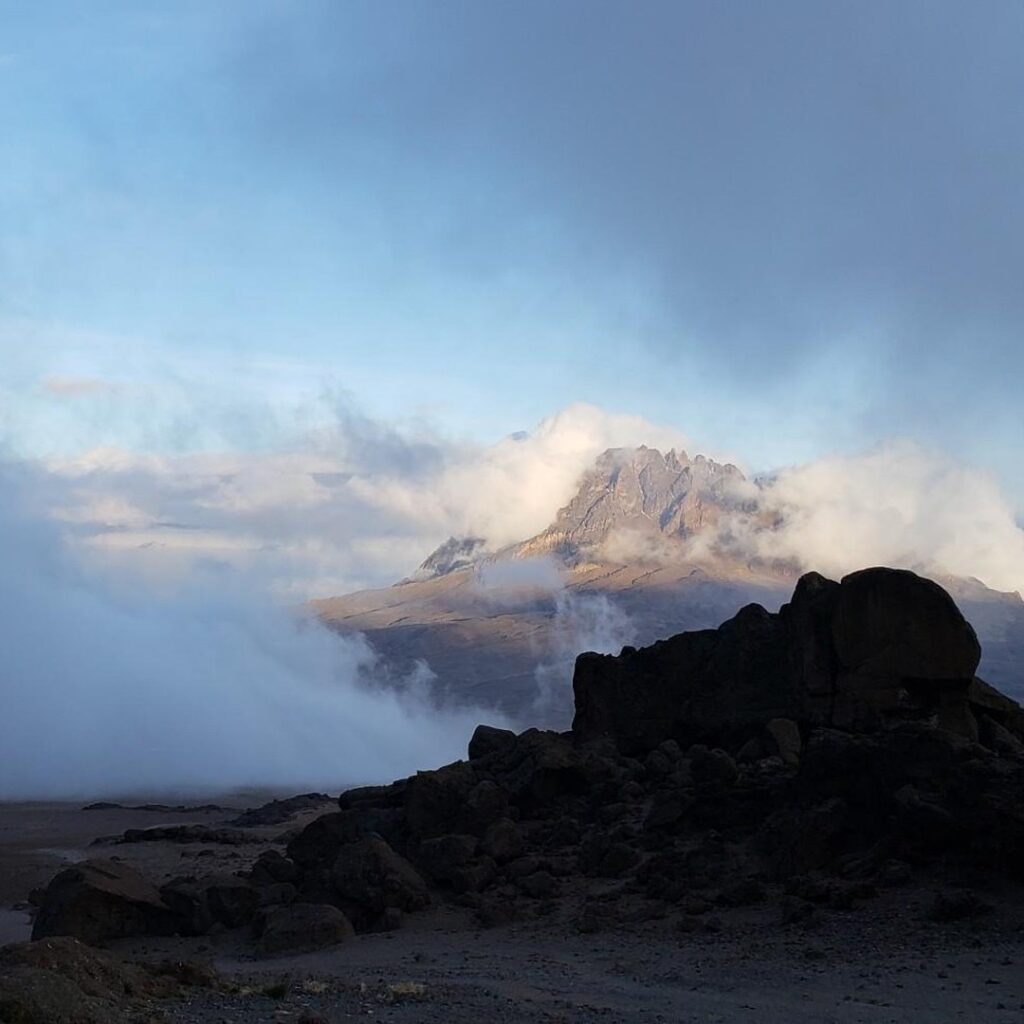
Temperature by Altitude on the Mountain
Giving you a mental map of what the temperatures look like as you climb:
- Park gates (~1,800m): 15–25°C, tropical climate. T-shirt weather.
- Lower forest camps (~2,700–3,000m): 10–18°C daytime, 0–8°C overnight.
- Shira / Barranco / Karanga (~3,500–4,200m): 5–15°C daytime, -3°C to -8°C overnight.
- Barafu / School Hut / Kibo Hut (~4,640–4,750m): 0–10°C daytime, -7°C to -15°C overnight.
- Summit ascent (Barafu to Stella Point to Uhuru, 4,640–5,895m, midnight to dawn): -10°C to -25°C, with wind chill often -25°C to -35°C.
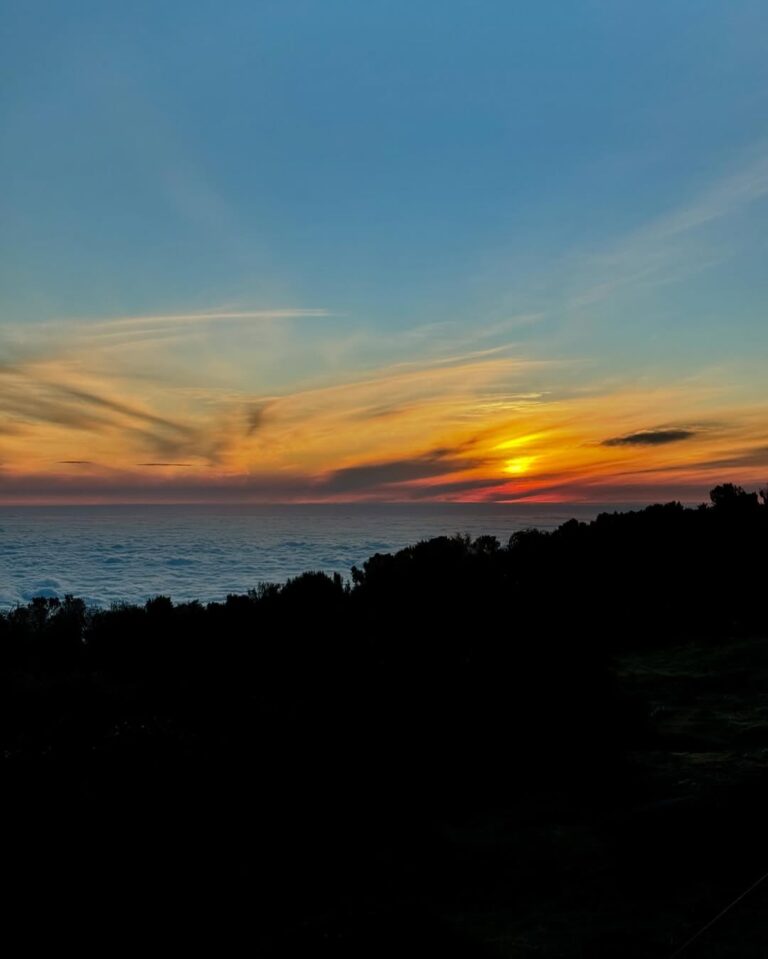
- Uhuru Peak (5,895m) at sunrise: -10°C to -25°C. The sun’s first light at the summit raises apparent temperature fast — one reason we time the summit for sunrise.
- Descent from summit to Barafu (morning): -5°C to -15°C, warming through the morning.
For the full weather picture including wet season versus dry season variations, see our Kilimanjaro weather guide.
Seasonal Variation at the Summit
Dry season, short (January–mid March): Warmer. Summit temps often -10°C to -15°C. Less wind. Best conditions of the year.
Dry season, long (June–October): Colder. Summit temps -15°C to -25°C. July and August can be particularly cold, especially in the pre-dawn hours.
Wet seasons (April–May, November–early December): Variable. Less consistently cold but much more likely to have snow, ice, and reduced visibility at altitude. The summit can be warmer on some days and significantly worse on others. Our best time to climb Kilimanjaro guide goes deeper on seasonal trade-offs.
The coldest summits we see in any given year tend to be: late June to early August, summit night with clear skies (radiative cooling to space drops temperatures), and winds over 30km/h. A summit around -25°C with wind chill of -35°C is not unusual for this window.
What the Cold Feels Like Through Good Layers
The short version: if you’ve layered correctly, cold doesn’t stop you enjoying summit night — it colours it. You’ll be aware of the cold. You’ll know your face and fingertips are the points of exposure. You will not be shivering, your core will be warm, and your morale will hold.
If you’ve layered incorrectly — too much cotton, too few down insulation layers, too few base layers, cheap socks — the cold takes over and becomes the only thing you’re thinking about. This is how most summit-night withdrawals happen. Not altitude alone. Cold plus altitude plus fatigue, compounding.
The layer system that works for our clients, top down:
Base layer (next to skin): Merino wool or synthetic. Not cotton. Long sleeve top and long johns.
Mid layer: Fleece or light down vest plus a fleece jacket or light down jacket.
Insulation layer: A proper down jacket rated for the conditions — 650+ fill power, with enough volume of down that it compresses visibly when you squeeze the sleeve.
Outer shell: Waterproof, windproof Gore-Tex or equivalent. Hard shell jacket and hard shell pants.
Head: Thin beanie under a thicker beanie or balaclava. Buff or neck gaiter for face and neck.
Hands: Thin liner gloves (allows phone/camera use without full exposure) and thick insulated mitts or gloves over the top.
Feet: Thin liner sock and thick merino hiking sock inside waterproof insulated mountaineering boots.
See our detailed what to wear on summit night post for the full summit-night layer system, and what gloves to wear on Kilimanjaro for the hand-specific details — cold hands are the single most common complaint on summit night.
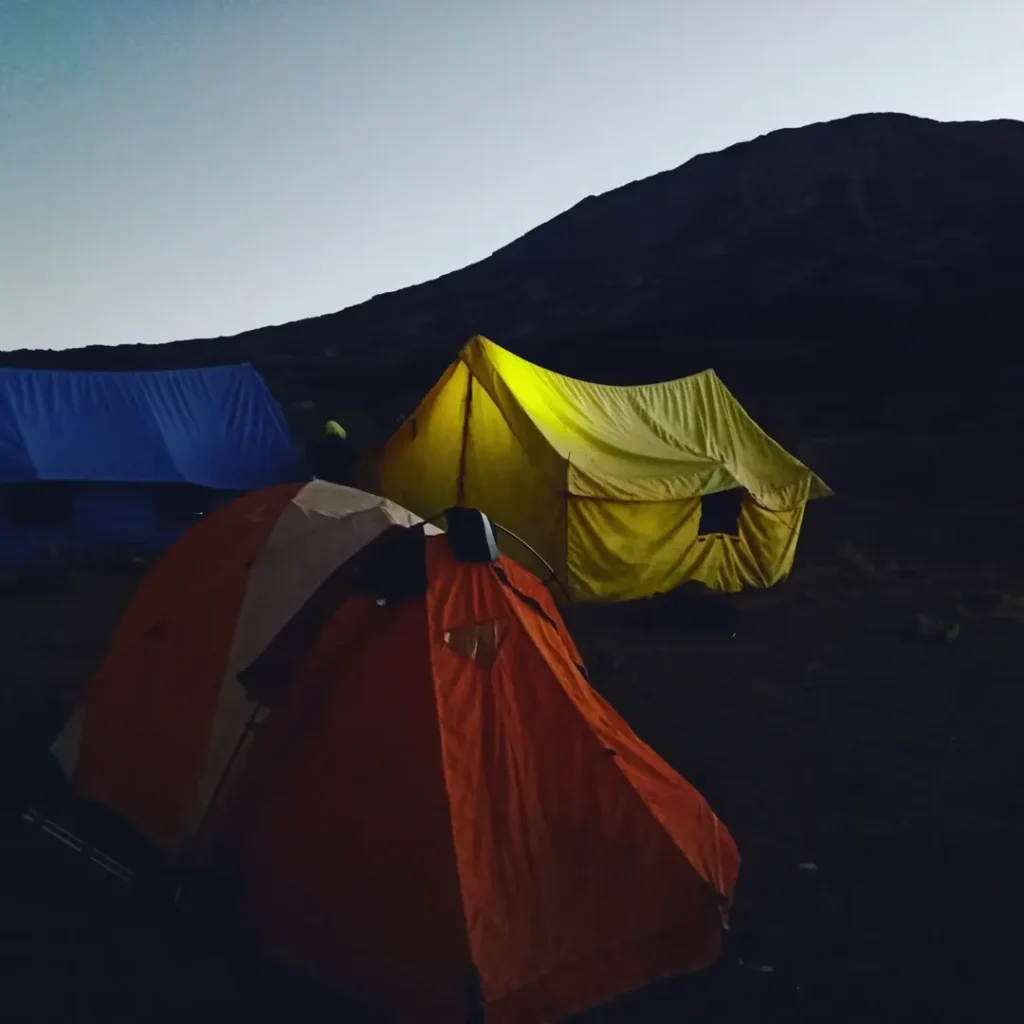
Things That Freeze at Summit Temperatures
It helps to know what the cold actually does to your equipment, because these are the small failures that become big ones on summit night.
Water bottles: A standard Nalgene filled with water will freeze within 2–3 hours of leaving Barafu. Fill with warm water (not boiling — too hot damages the plastic seal), wrap in a sock or neoprene sleeve, carry inside the backpack against your back or chest. Some climbers use insulated flasks instead. A hydration bladder tube freezes fast unless tucked under jacket layers — we generally recommend bottles for summit night.
Phones: Lithium-ion batteries drop to 20–40% of capacity at -20°C. A fully charged phone left in a jacket outer pocket will be dead by the time you want to photograph the summit. Keep phones in inner pockets, close to body heat, until the moment of use. See our mobile phones on Kilimanjaro guide for battery management detail.
Camera batteries: Same physics. Bring a spare, keep it warm.
Sunscreen and lip balm: Tube sunscreen can turn solid. Keep a small amount in an inner pocket; apply at Stella Point rather than at the summit if temperatures have dropped that far.
Your snacks: Chocolate bars go rock-hard. Energy gels turn to sludge that resists squeezing. Solid food you can break in your mitted hand — dried fruit, firm biscuits, jerky — works better at summit temperatures than anything melty or sticky.
How Long You Actually Stand at the Summit
Clients imagine the summit as a long, lingering moment. The reality is usually 15–25 minutes of active summit time.
- Arrival and the immediate emotional response: 2–3 minutes.
- Summit sign photograph with your group: 5–10 minutes, depending on how many climbers are there.
- A few individual photos: 3–5 minutes.
- A short look around at the glaciers, the sunrise, the view: 3–5 minutes.
- Your guide signals the start of the descent: you move.
Anyone who tries to stay at the summit longer than 30 minutes finds the cold and the altitude fatigue start to dominate. The standard advice — and what our guides follow — is: celebrate, photograph, take a long look, descend. The euphoria lasts. The cold doesn’t let you linger.
The Descent Is Warmer — But Watch the First 2 Hours
Once you leave Uhuru Peak, you start losing altitude fast. The descent from summit to Barafu takes 2–3 hours via the scree slope — roughly 1,250m lost in altitude, which means roughly 8–10°C gained in ambient temperature.
The first 30–60 minutes of descent still feel cold because you’re still above 5,500m and you’re moving quickly on scree which does not demand much body heat generation. Keep the down jacket on. Don’t shed layers at the summit itself — the cold on descent bites harder than people expect.
By the time you reach Barafu for a short rest and pack-up (you don’t sleep there — descent continues to Mweka), apparent temperature is 0°C to -5°C, the sun is well up, and the danger window is over.
Summary: The Summit Cold Is Manageable
Three things determine whether summit cold is a serious problem or a background detail:
- Your layer system. Built correctly, tested at home, worn in order — the cold stays outside your clothing. Built wrong or skipped, the cold takes over.
- Your altitude state. If you’re struggling with AMS, the body’s ability to regulate temperature drops. Our guides monitor SpO2 morning and evening throughout the climb, see our safety page for the full protocol — the altitude factor is the multiplier that makes cold problems serious when they happen.
- Your pace and energy state. Fatigue lowers heat production. Eating and drinking consistently on summit night keeps the internal heater running. Our guides carry hot tea in flasks for the breaks.
Properly prepared, the summit temperatures are memorable, vivid, and part of the experience. That moment at -20°C on top of Africa with the sun coming up over the Indian Ocean is what the climb is about. The cold is the price and the proof. Most clients afterwards say they were colder than they’d expected at moments, warmer than they’d expected overall, and glad they had every single layer they brought.
If you have specific questions about summit-night layering for your climb — especially if you’re climbing in July/August (the coldest window) — reach out to us directly. Our packages page covers what’s included in terms of equipment, and our gear rental in Moshi guide has the rental options if you’d rather not buy a -20°C down jacket for a single climb.