Kilimanjaro is one of the most famous mountains on the planet, but a lot of what people know about it is superficial. “It’s tall.” “It has snow at the equator.” “People climb it.” Those are the basics. The genuinely interesting facts — the ones that change how you see the mountain — tend to be buried deeper.
Here are 25 of them, drawn from the history, geology, culture, and our own experience running climbs from Moshi. Some are well-known. Some aren’t.
The Mountain Itself
1. Kilimanjaro is 5,895 metres (19,341 feet) tall — Africa’s highest point and the tallest freestanding mountain in the world. We cover the context of this height in our dedicated post on how tall Kilimanjaro is.
2. It isn’t part of a mountain range. Most tall mountains are part of ranges (the Himalayas, the Andes, the Rockies). Kilimanjaro rises alone from the surrounding plains of northern Tanzania. This is why it’s called “freestanding” and why the view from Amboseli in Kenya is so iconic.
3. The mountain is a dormant, not extinct, volcano. Kibo, the summit cone, last had a major eruption 150,000 to 200,000 years ago, but fumarolic activity continues in the Reusch Crater today. You can still smell sulphur near the Ash Pit. More on this in our post on Kilimanjaro’s geology.
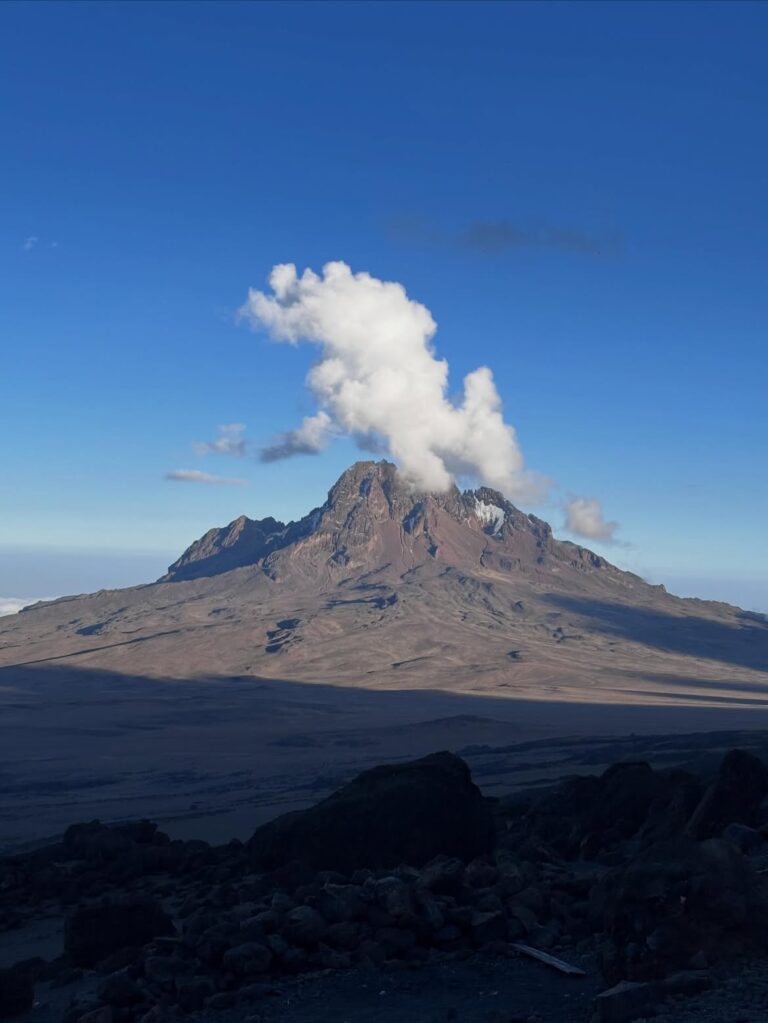
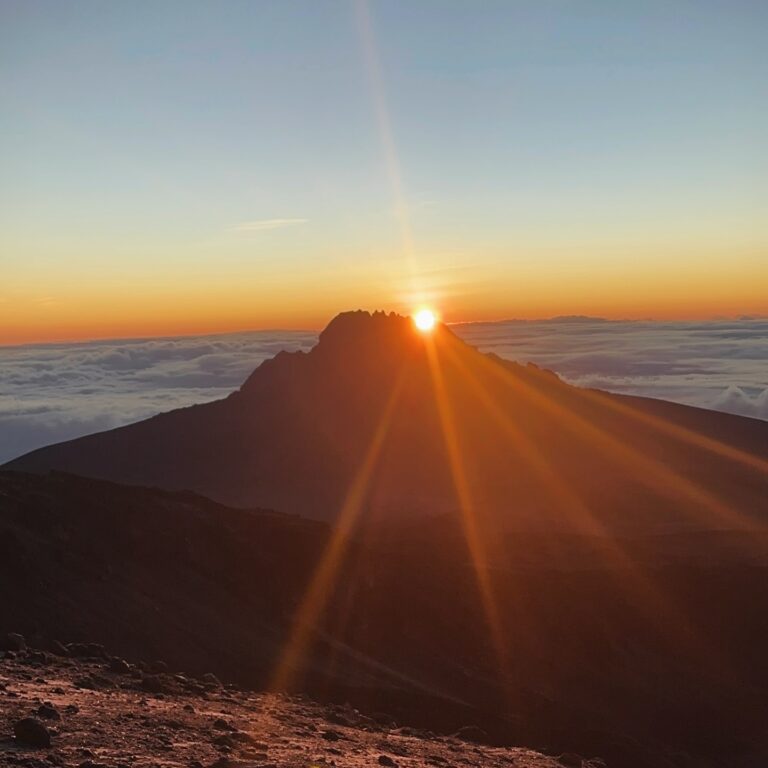
4. Kilimanjaro has three volcanic cones, not one. Kibo (the one we climb), Mawenzi (rugged, technical, 5,149m), and Shira (now a collapsed caldera at around 3,962m). You walk across parts of all three on the longer routes.
5. The mountain sits on the East African Rift. Kilimanjaro is one of many volcanoes in East Africa formed by the same tectonic forces that are, very slowly, pulling the African plate apart.
The Glaciers
6. Kilimanjaro has glaciers three degrees south of the equator. This is geographically unusual and a major reason the mountain is so famous. The ice exists because altitude, not latitude, creates the cold conditions required.
7. The glaciers have lost about 80% of their mass since 1912, and may disappear entirely within a few decades if current trends continue. Climbers today see a fraction of the ice that was present when the mountain was first summited.
8. The Furtwängler Glacier is named after a man who skied down the mountain in 1912. Walter Furtwängler, a German mountaineer, made the first ski descent of Kilimanjaro. There’s a glacier named after him at the summit, though what remains of it is a shadow of the ice he skied on.
First Ascents and Record-Setters
9. The first documented summit was in 1889. German geographer Hans Meyer and Austrian mountaineer Ludwig Purtscheller reached the top on 6 October 1889. They named the summit Kaiser-Wilhelm-Spitze.
10. The summit was renamed Uhuru Peak in 1964, when Tanzania gained independence. “Uhuru” means “freedom” in Swahili. Our post on what Kilimanjaro means covers the linguistic history in detail.
11. The youngest person to summit is Coaltan Tanner, who was six years old, reaching Uhuru in 2018. The minimum age allowed under Tanzania National Parks rules is 10, though special exemptions have been granted in rare cases.
12. The oldest person to summit is Anne Lorimor from the United States, who reached Uhuru at age 89 in 2019. She had previously set the record at 85.
13. The fastest recorded ascent and descent is 6 hours 42 minutes, set by Swiss runner Karl Egloff in 2014. For context, a standard climb takes 6 to 9 days. Do not try this at home.
14. The first woman to summit was Sheila MacDonald in 1927, an English climber who also made the first female ascent of Mont Blanc.
Who Climbs, and How Many
15. Approximately 35,000 to 50,000 people attempt Kilimanjaro each year, and roughly 65 to 75% successfully reach Uhuru Peak. Success rates vary significantly by route — longer routes produce higher success rates because they allow better acclimatisation. Our routes overview walks through the differences.
16. There are seven official climbing routes: Machame, Lemosho, Marangu, Rongai, Shira, Northern Circuit, and Umbwe. Each has a different character, duration, and success rate.
17. Kilimanjaro is technically a trek, not a climb. No rope work, no technical mountaineering, no crampons required on the standard routes. This is part of why it attracts 50,000 people a year — it’s the only mountain of this height that’s accessible to committed hikers without technical training.
18. That accessibility doesn’t make it easy. Roughly 25 to 35% of people who attempt the summit don’t make it, usually because of altitude sickness. Our post on how hard Kilimanjaro is to climb addresses this honestly.
Environment and Wildlife
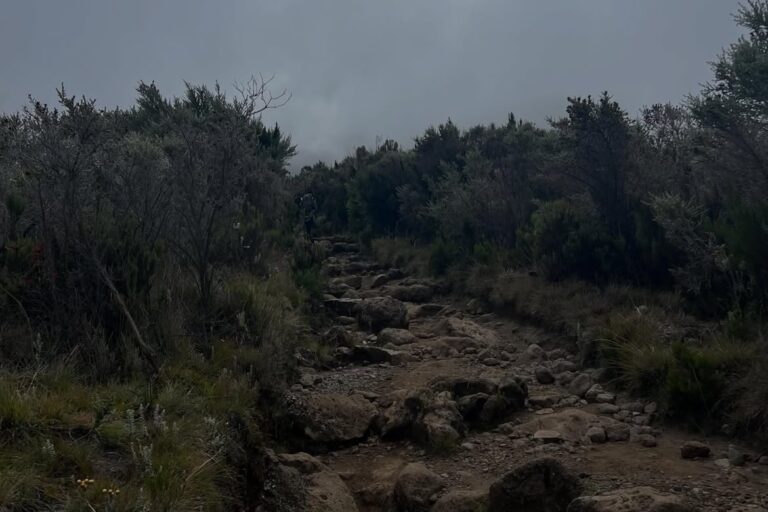
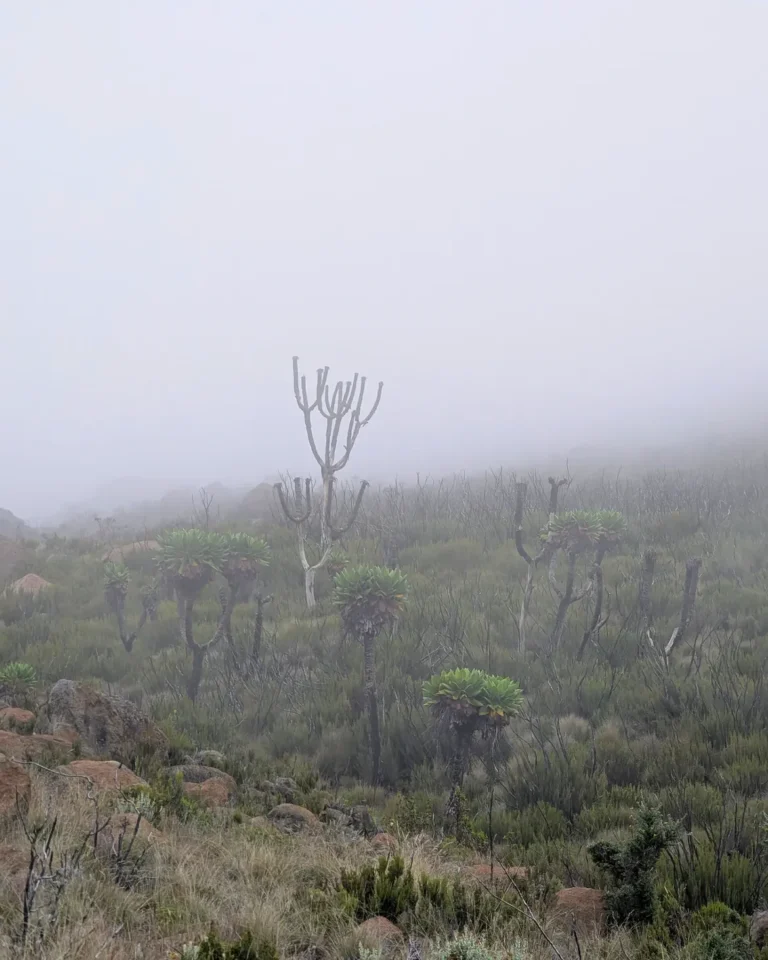
19. Kilimanjaro has five distinct climate zones, from tropical farmland to arctic summit, stacked on a single mountain. You can walk through the equivalent of a journey from the equator to the Arctic Circle in under a week. See our climate zones guide for what each zone feels like.
20. The montane rainforest is home to colobus monkeys, elephants, and leopards. You’re more likely to see the monkeys than the larger mammals — elephants and leopards are present but elusive. Elephants occasionally wander onto the Lemosho and Shira routes.
21. A frozen leopard was found near the summit in 1926. Reverend Richard Reusch discovered its frozen body at approximately 5,600 metres. Why the leopard was there is still unexplained — the altitude is well beyond its normal range. Ernest Hemingway referenced it in his 1936 short story “The Snows of Kilimanjaro.”
Culture and Naming
22. The Chagga people have lived on Kilimanjaro’s slopes for centuries. Chagga farmers grow some of Tanzania’s best coffee between 1,000 and 1,800 metres on the southern slopes. Moshi, the town at the base of the mountain, is the heart of Chagga country.
23. Kilimanjaro’s name may come from three different languages. Leading theories combine Swahili (“kilima” = hill), Chagga (“njaro” = whiteness or a spirit), and Maasai references. The meaning is contested and probably layered rather than singular.
24. The summit sign at Uhuru Peak has been photographed more than almost any other single object on the continent. Your photograph with that sign is one of the lasting artefacts of the climb.
Kilimanjaro National Park
25. Kilimanjaro National Park was established in 1973 and designated a UNESCO World Heritage Site in 1987. The park protects 1,688 square kilometres of mountain and surrounding ecosystem, administered by Tanzania National Parks (TANAPA). Park entry fees are a significant portion of the cost of climbing — see our Kilimanjaro National Park fees guide for the current rates.
Two Bonus Facts
Kilimanjaro’s peak temperature can drop below -25°C on summit night, with wind chill sometimes making it feel even colder. The cold is one of the defining experiences of summit night — we address it in detail in our post on how cold the summit of Kilimanjaro is.
A typical climb uses a crew of roughly 3 to 4 porters per climber, plus a lead guide, assistant guide, and cook. That means a small group of four climbers can have a support team of 15 to 20 people. Porter welfare — wages, weight limits, gear — is one of the things that quietly distinguishes good operators from bad. Ours is covered in our post on Kilimanjaro guides and porters.
The Takeaway
Kilimanjaro isn’t just a tall mountain with snow at the equator. It’s a dormant volcano with three cones, five climate zones, centuries of Chagga farming on its slopes, a contested name rooted in multiple African languages, a summit renamed to mark Tanzanian independence, and an active fumarole field still venting sulphur 200 years after the last eruption.
Knowing a few of these things before you climb changes what you notice on the trail. Ready to see it for yourself? Browse our routes or get in touch to start planning.