When you book a Kilimanjaro climb, a significant portion of what you pay isn’t paid to your operator — it’s passed directly to Tanzania National Parks (TANAPA) as mandatory park fees. These fees are set by the Tanzanian government, apply to every climber on the mountain, and typically account for 30 to 40% of the total cost of the trip.
Understanding these fees matters for two reasons. First, they explain why Kilimanjaro climbs cost what they do — any operator advertising a price below roughly $1,500 is either cutting corners on crew pay, gear, and safety, or quietly charging extra at the gate. Second, the fees are non-negotiable. They apply whether you climb with a budget operator or a premium one. What varies between operators is what happens on top of the fees.
This guide walks through the current fee structure, line by line, so you know what you’re paying for before you book.
What TANAPA Fees Include
Every climber pays four or five categories of fee depending on route:
- Conservation fee (park entry) — daily
- Camping fee OR hut fee (Marangu only) — per night
- Rescue fee — one-time, per climb
- Crew entry fees (guides and porters) — bundled into your package price
- VAT — 18%, applied on top of all fees
Everything below is per climber unless noted. Rates are in USD (TANAPA quotes in dollars, and your operator typically pays TANAPA directly on your behalf at the gate). Rates quoted are TANAPA’s published schedule for non-East African residents — the figures most international climbers will pay.
Note: TANAPA reviews fees periodically. The figures below reflect the standard structure in place for climbs in 2025–2026, but always confirm current rates with your operator at the time of booking.
Conservation Fee
- Rate: $70 per adult per day
- Youth rate (ages 5–15): $20 per day
- East African residents: approximately 10,000 TZS per day
The conservation fee is the daily park entry fee. It applies for every calendar day any part of which you spend inside Kilimanjaro National Park. A 7-day climb pays 7 days of conservation fees ($490 per adult).
What it funds: trail maintenance, ranger stations, anti-poaching operations (less relevant on Kilimanjaro than on Tanzania’s wildlife parks but still present), park infrastructure, and the broader TANAPA system that protects Kilimanjaro alongside the Serengeti, Ngorongoro, and other national parks.
Camping Fee (All Routes Except Marangu)
- Rate: $60 per adult per night
- Youth rate (5–15): $10 per night
Charged for every night you sleep at a camp inside the park. On a 7-day Machame climb, you’ll pay 6 nights of camping fees ($360 per adult). On an 8-day Lemosho, 7 nights ($420). On a 9-day Northern Circuit, 8 nights ($480).
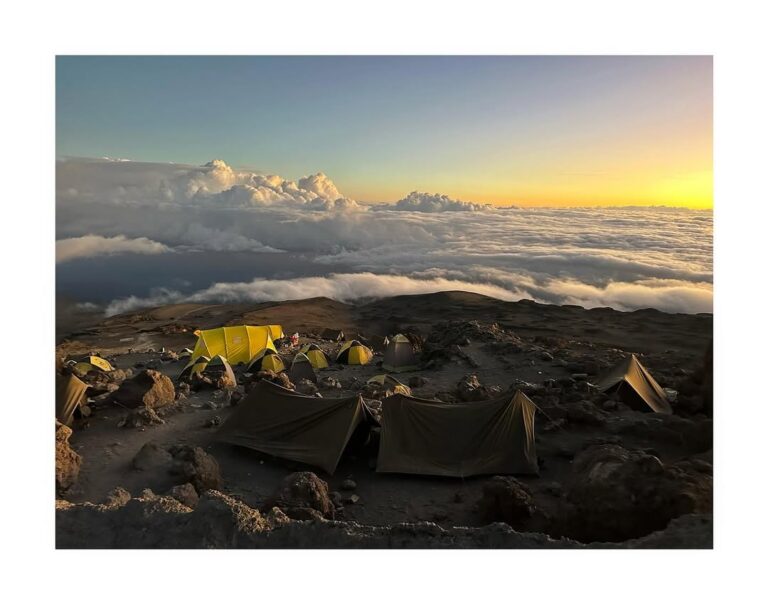
Camping fees apply at designated campsites only — the park doesn’t allow random camping outside marked zones. The fee covers basic site infrastructure (ranger presence, pit latrines, designated tent areas) and conservation of the camp environment.
Hut Fee (Marangu Only)
- Rate: $60 per adult per night
- Youth rate (5–15): $10 per night
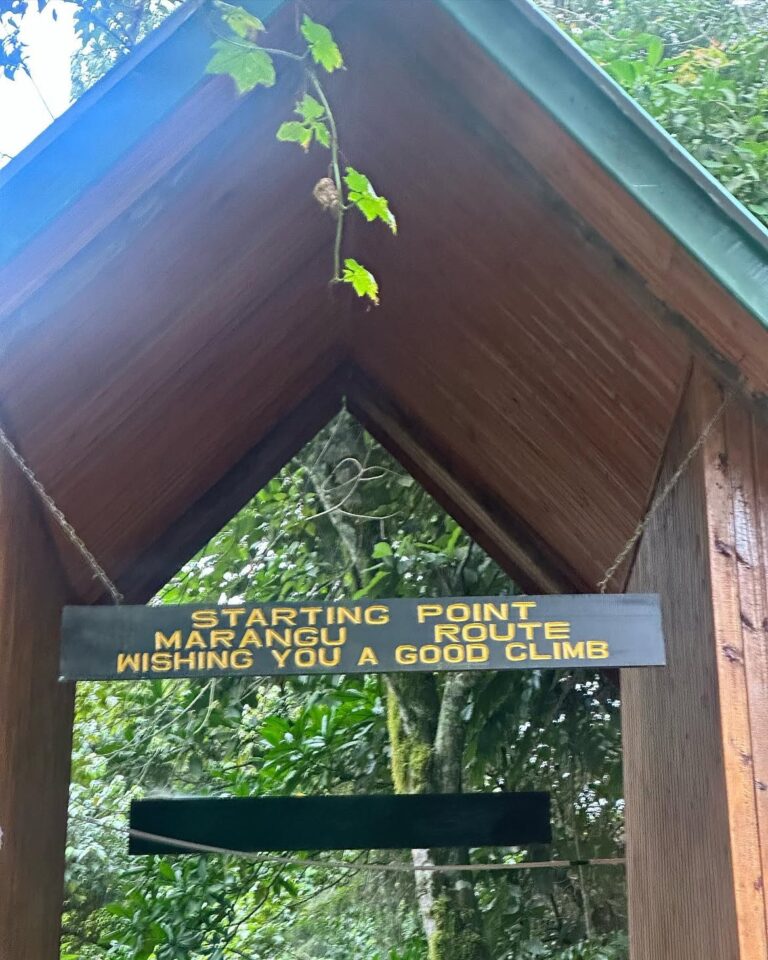
The Marangu Route is the only route with permanent hut accommodation rather than camping. Climbers stay in bunk huts at Mandara, Horombo, and Kibo. The hut fee is charged instead of the camping fee — not in addition to it.
On a 5-day Marangu climb, you’ll pay 4 hut nights ($240 per adult). On the 6-day Marangu variant (with an acclimatisation day at Horombo), 5 hut nights ($300).
Rescue Fee
- Rate: $20 per climber per trip (fixed, one-time)
The rescue fee is a one-time charge regardless of route or duration. It funds TANAPA’s mountain rescue infrastructure — the ranger response teams, basic medical supplies at ranger stations, and coordination of evacuations to the park gates.
The fee is mandatory even if you never require rescue services. It is not a substitute for travel insurance. If you require helicopter evacuation (the fourth tier of our safety protocol, covered on our safety page), those costs run to thousands of dollars and are either paid by your altitude-covered insurance policy or out of pocket. The $20 TANAPA rescue fee covers the coordination and rangers’ response — not the aircraft.
Guide and Porter Entry Fees
These are paid by your operator, not directly by you, but they’re built into the package price:
- Guide fee: approximately $20 per guide per day
- Assistant guide fee: approximately $15 per day
- Porter fee: approximately $10 per porter per day
A typical climb crew for a small group includes 1 lead guide + 1 assistant guide + 1 cook + 3–4 porters per climber. For a single climber on a 7-day Machame climb, that’s a crew of roughly 6–8 people, generating crew fees in the $700–$1,000 range — all paid directly to TANAPA at the gate, on top of your personal fees.
This is one reason small groups on short routes cost more per person than large groups on longer routes — the crew entry fees don’t scale down to a single climber, so they spread across fewer people.
Our post on Kilimanjaro guides and porters covers the full crew structure, and our post on Kilimanjaro porters covers the ethical porter practices we follow on top of TANAPA requirements.
VAT
- Rate: 18% on all fees
Tanzania applies an 18% Value Added Tax on TANAPA fees. This is calculated on top of every line item above. For a single climber, VAT alone adds roughly $150–$300 to the total fee bill.
Sample Fee Calculations
Here’s what a single adult climber would pay in TANAPA fees for common route lengths, at published 2025/2026 rates and before crew fees:
7-Day Machame Route
- Conservation fee: 7 × $70 = $490
- Camping fee: 6 × $60 = $360
- Rescue fee: $20
- Subtotal: $870
- VAT (18%): $156.60
- Total (climber-side fees): ~$1,026
8-Day Lemosho Route
- Conservation fee: 8 × $70 = $560
- Camping fee: 7 × $60 = $420
- Rescue fee: $20
- Subtotal: $1,000
- VAT (18%): $180
- Total: ~$1,180
6-Day Marangu Route
- Conservation fee: 6 × $70 = $420
- Hut fee: 5 × $60 = $300
- Rescue fee: $20
- Subtotal: $740
- VAT (18%): $133
- Total: ~$873
9-Day Northern Circuit
- Conservation fee: 9 × $70 = $630
- Camping fee: 8 × $60 = $480
- Rescue fee: $20
- Subtotal: $1,130
- VAT (18%): $203
- Total: ~$1,333
These figures are the personal portion only. Crew fees (paid through your operator) add hundreds more per trip. On a fully-costed basis, TANAPA fees alone for a standard climb come to $1,500 to $2,500 per person once crew fees are included.
Why These Fees Matter When Comparing Operators
TANAPA fees are the same for every operator. A budget operator cannot charge less than the cost of the fees. So when you see a Kilimanjaro climb advertised at, say, $1,200 all-in, a quick calculation tells you something is wrong — either the fees aren’t actually included and you’ll be hit with them at the gate, or the operator is underpaying crew, cutting corners on food and equipment, or both.
Our cost of climbing Kilimanjaro post breaks down the full price structure beyond park fees — crew wages, food, gear, transport, insurance, guide training, and operator margin. Park fees are the floor. What gets built on top of them is where operators differ.
What the Fees Don’t Cover
TANAPA fees cover what happens inside the park boundary. They do not cover:
- Your operator’s service — guiding, cooking, porter management, camp setup
- Food and gear — all meals, tents, sleeping mats, cooking equipment
- Transfers — airport pickup, hotel, drive to and from the gate
- Crew tips — a separate expectation, around $250–$350 per climber split across the team; see our Kilimanjaro tipping guide for details
- Hotel nights in Moshi — before and after the climb
- Travel insurance — mandatory for any climb and must include high-altitude (6,000m+) coverage
- Helicopter evacuation — coordinated by TANAPA and the operator but charged to insurance or climber
- Visas and flights
Paying the Fees
You don’t pay TANAPA directly. Your operator pays park fees on your behalf at the gate on the first day of your climb, using the climb package funds you’ve paid in advance. This means:
- Your operator must be properly licensed and in good standing with TANAPA
- Park fees paid at the gate are receipted and tracked against your climber registration
- If you book with an operator that hasn’t paid fees in advance, your climb doesn’t start
When you book with us, park fees are included in your package price — no gate surprises, no additional payments at the trailhead.
The Takeaway
Kilimanjaro National Park fees are the mandatory, non-negotiable foundation of every climb on the mountain. They run $870 to $1,330 per climber for the personal portion of a typical route, before crew fees and VAT, and they fund the park infrastructure, ranger stations, and rescue coordination that make climbing possible.
When comparing climb prices, start by checking that all park fees are included. If the answer isn’t a clear yes, keep looking. Our packages include all TANAPA fees as standard — the price you see is the price you pay at the gate, too.
Questions about fees or what’s included in a specific climb? Contact us directly and we’ll walk through the math on your chosen route.