Lava Tower sits at 4,630 metres (15,190 feet) on the southwestern slopes of Kilimanjaro — a 300-foot-tall volcanic plug poking out of a rocky, wind-scoured high-altitude moorland. Most climbers on the Machame, Lemosho, Shira, and Umbwe routes pass through Lava Tower on their third or fourth day, stop for lunch in its wind shadow, and then descend 650 metres to Barranco Camp for the night.
This “climb high, sleep low” architecture is the single most important acclimatization move on the southern-approach routes. Your body gets a few hours of real exposure to altitude — enough for the physiological adjustments that matter — without having to sleep at that altitude. Most climbers feel mild altitude symptoms at Lava Tower for the first time. Most of them feel meaningfully better by the time they reach Barranco.
This post covers what Lava Tower actually is, what the approach feels like, why the stop matters for summit success, and what to do if you’re one of the people who feels bad there.
Where Lava Tower Sits on Kilimanjaro
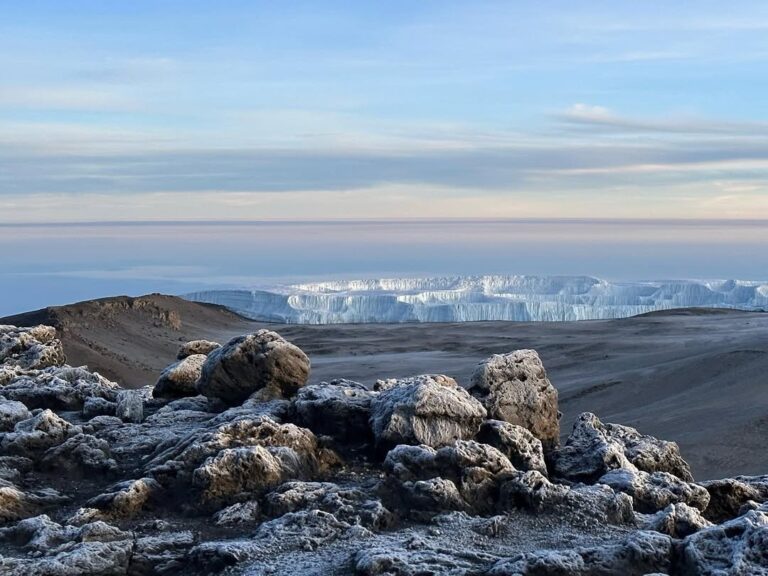
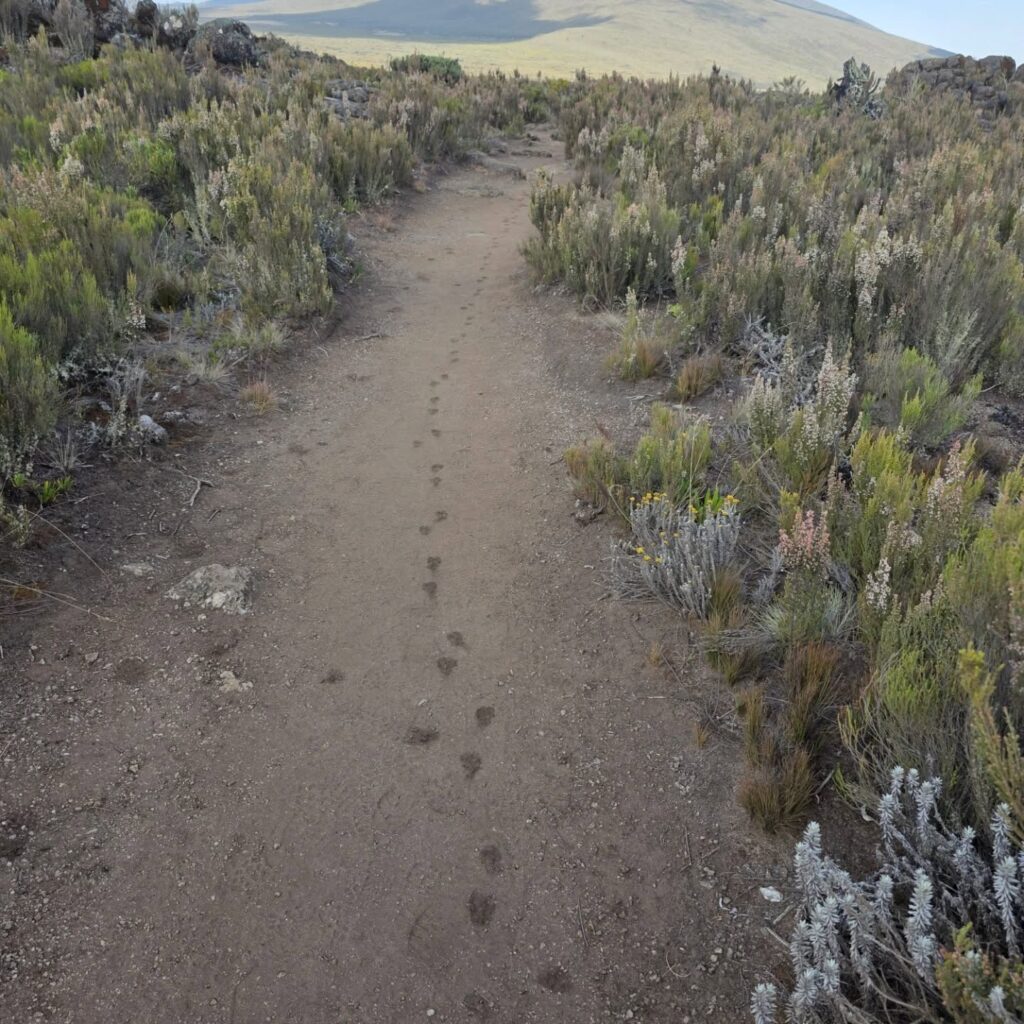
Kilimanjaro’s upper slopes rise out of a wide high-altitude moorland — the alpine desert zone where lobelias and giant groundsels (Dendrosenecio kilimanjari) mark the last plant life before the scree fields closer to the summit. Lava Tower is a striking feature in this landscape: a nearly vertical 90-metre-tall pillar of dark volcanic rock, the remnant of a lava plug from the mountain’s active era, now weathered and isolated in the middle of an otherwise open, rocky plain.
The tower itself has been climbed technically — it’s a rock-climbing objective with proper gear — but for trekkers, it’s a landmark and a meal stop, not a climb. The “camp” at Lava Tower is a small designated area where climbing groups can pitch tents if their itinerary includes an overnight there. On most itineraries, you don’t sleep here; you eat lunch in the wind and move down.
The ground at Lava Tower is loose volcanic rock and gravel. There is almost no vegetation. There is almost always wind. On most days, the cloud rolls up from below and you spend your lunch break inside a moving grey mist that occasionally opens to reveal the tower above you.
Who Passes Through Lava Tower
Four of Kilimanjaro’s seven routes use Lava Tower as an acclimatization waypoint:
- 7-day Machame Route — Day 3. Climb from Shira Camp (3,840m) up to Lava Tower, lunch, then descend to Barranco Camp.
- 8-day Lemosho Route — Day 4 or 5 depending on exact itinerary. Same climb-and-descend pattern.
- 7-day Shira Route — similar profile, different approach.
- Umbwe Route — a steeper, more direct ascent that reaches Lava Tower earlier in the climb.
The Northern Circuit takes a different line around the mountain’s northern slopes and doesn’t use Lava Tower. The Marangu and Rongai routes ascend the eastern side and also don’t visit Lava Tower.
Shorter itineraries (6-day Machame in particular) skip an overnight at Lava Tower but still pass through for lunch. Longer itineraries sometimes camp here, though this is less common because sleeping at 4,630m is harder on most climbers than sleeping at 3,976m (13,024 ft) in Barranco.
The Approach: Shira Camp to Lava Tower
On a standard 7-day Machame itinerary, the day looks like this:
Breakfast at Shira Camp, 3,840m (12,598 ft). A briefing from your guide. You start walking at a slow, deliberate pace through open moorland, heading east and slightly south. The vegetation thins as you climb. The terrain transitions from low scrub to almost pure rock and gravel. The air noticeably thins.
You gain roughly 790 vertical metres over about 4–5 hours of walking. By the time Lava Tower comes into view, you’re in the alpine desert zone proper. The tower rises out of the plain ahead of you, and from a distance it looks much shorter than it is — the scale of the mountain distorts perspective here.
Your guides will have a lunch spot prepared near the base of the tower, usually in the wind shadow of a large rock formation. Most climbers arrive hungry and cold. Most don’t eat as much as they’d planned to. This is expected.
Why Most Climbers Feel Worse at Lava Tower Than Anywhere Else So Far
Lava Tower at 4,630m (15,190 ft) is where your body first encounters serious altitude in a sustained way. For context:
- At sea level, air pressure is 760 mmHg. Your blood oxygen saturation runs 97–99%.
- At 3,000m/9,842 ft (around Moshi-to-Shira transition), air pressure is about 525 mmHg. Oxygen saturation drops to 92–94%.
- At 4,630m/15,190 ft (Lava Tower), air pressure is about 430 mmHg. Oxygen saturation on a healthy climber drops to 80–88%.
The body responds to this over hours and days — faster breathing, higher heart rate, more red blood cell production, a cascade of adjustments that collectively are called acclimatization. But acclimatization isn’t instant, and the first sustained exposure to a new altitude band almost always produces symptoms.
What climbers feel at Lava Tower, typically:
- Headache — dull, pressing, often behind the eyes. The most common symptom.
- Nausea or loss of appetite — food doesn’t appeal. Forcing it down helps.
- Fatigue — a heaviness in the legs and head that isn’t normal trail tiredness.
- Mild shortness of breath at rest — you notice your breathing even when sitting.
- Sleep disturbance that evening (if you overnight here) — broken sleep, strange dreams, the Cheyne-Stokes breathing pattern that’s common at altitude.
These are mild AMS symptoms (Acute Mountain Sickness). They are expected. They are not dangerous in most cases. What’s critical is how they progress — and the “climb high, sleep low” descent to Barranco is designed specifically to prevent that progression.
Dangerous symptoms at Lava Tower would be: confusion, ataxia (unsteady gait, unable to walk in a straight line), persistent breathlessness at rest, a wet-sounding cough, or a significant SpO2 reading drop. Guides check pulse oximetry at breaks and respond to these specifically. Mild symptoms are monitored. Severe symptoms trigger descent.
At Kilimanjaro Sky, guides carry pulse oximeters and check morning, evening, and on demand. SpO2 readings below 75% or drops greater than 5% from the previous reading trigger reassessment. Our guides have full authority to make descent calls — no pressure from the office, no push to maintain a schedule if someone’s body is telling us to turn around.
Why the Descent to Barranco Matters
The walk from Lava Tower to Barranco Camp is about 650 metres of descent over 2–3 hours. It sounds like a simple downhill walk. It’s more than that.
Your body is under mild hypoxic stress at 4,630m. Over the next 3 hours, as you drop to 3,976m, your blood oxygen saturation climbs back into the low 90s. Your heart rate drops. Your headache often fades before you reach camp. The nausea usually lifts by dinner.
What you’ve done physiologically is: spent several hours at 4,630m (15,190 ft) triggering the acclimatization response, then dropped 650m (2,132 ft) so your body can recover overnight at a more manageable altitude. The next day you’ll climb the Barranco Wall and continue up-mountain, with your body meaningfully better adjusted than it was 24 hours earlier.
This pattern — ascend high, descend to sleep — is the textbook model for mountain acclimatization. The Machame and Lemosho routes’ strong summit success rates (95–98% on longer itineraries) are in large part because they build this pattern into the trek. Shorter routes that skip this move have measurably lower success.
What to Do If You Feel Bad at Lava Tower
A few practical things that help:
Eat lunch even if you don’t feel like it. Carbohydrates, warm drinks, salted food. Most people who feel bad at Lava Tower feel better 40 minutes after eating than they thought they would.
Drink more than feels natural. Altitude dehydrates. Aim for 3–4 litres total across the day. Dehydration amplifies AMS symptoms significantly.
Move slowly but keep moving. The longer you sit in the cold at 4,630m, the worse you’ll feel. Steady movement downhill will warm you up and lower your altitude.
Tell your guide exactly what you feel. Vague answers (“I’m okay”) make it harder to help you. Specific descriptions (“my head is pressing behind my left eye and I feel nauseous”) let the guide calibrate.
Don’t push pace on the descent. Coming off Lava Tower too fast can cause knee pain and worsen headaches. The descent to Barranco is a place to move deliberately, drink, and recover.
If you’ve read about Diamox on Kilimanjaro and are considering it, Lava Tower is often where climbers decide to start or continue the prescription. That’s a conversation with your guide and your doctor — not something to decide under the tower itself.
Lava Tower in the Rhythm of a Kilimanjaro Climb
If you’re climbing via Machame or Lemosho, Lava Tower will probably be the hardest day of the approach weeks. You’ll feel the altitude for the first time in a way that isn’t subtle. You’ll eat lunch in the wind and not enjoy it. You’ll descend to Barranco feeling tired, and you’ll sleep better that night than you expect.
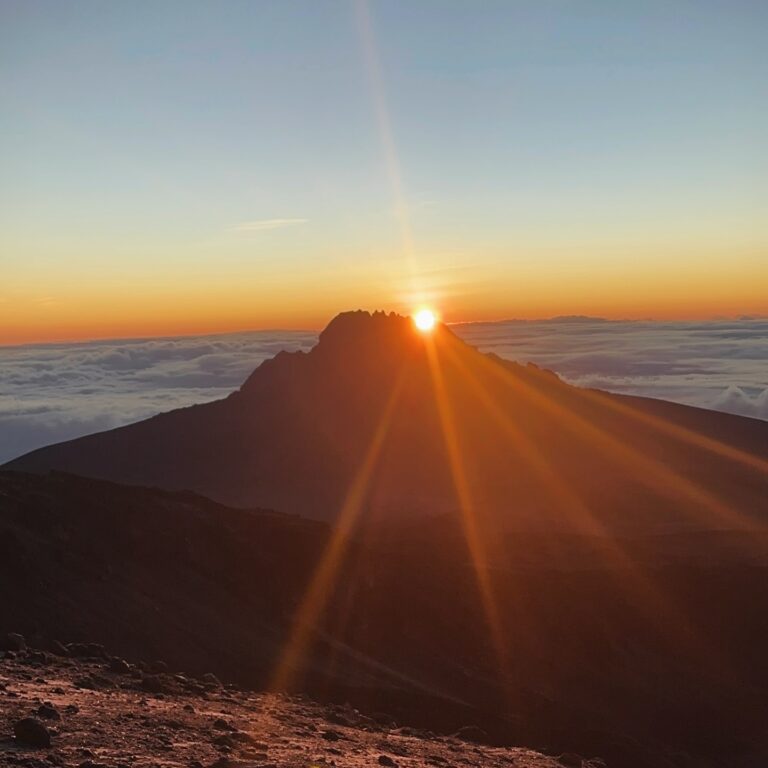
The morning after, climbing the Barranco Wall above camp with the sun coming up over the clouds, most climbers realize they feel noticeably better than they did at lunch the day before. That’s Lava Tower doing its job. The mountain is still hard — Barafu Camp and summit night are still ahead — but the first big altitude adjustment is done.
If you want to talk through which route gives you the best acclimatization profile for your timeline, get in touch with our Moshi team. We run small groups (4–10 climbers) with 1 lead guide and 1 assistant guide per 2–3 climbers, which means someone is paying close attention to every climber going up and down from Lava Tower. For more on how we approach climbs, see the safety page and the packages page.