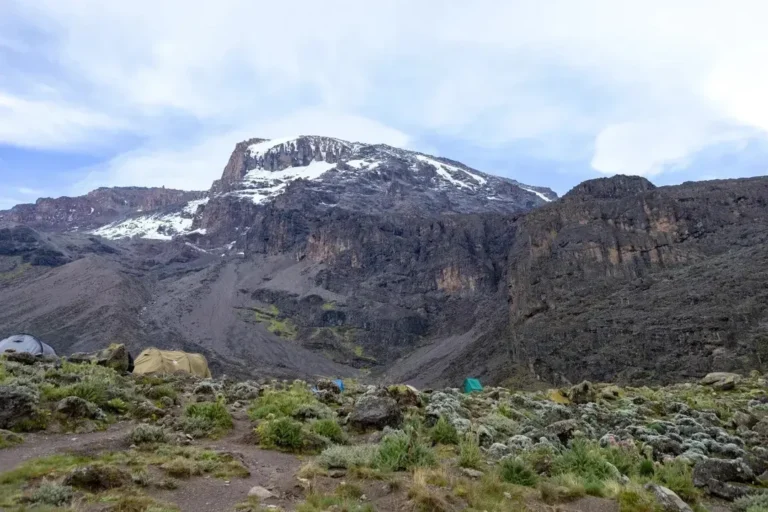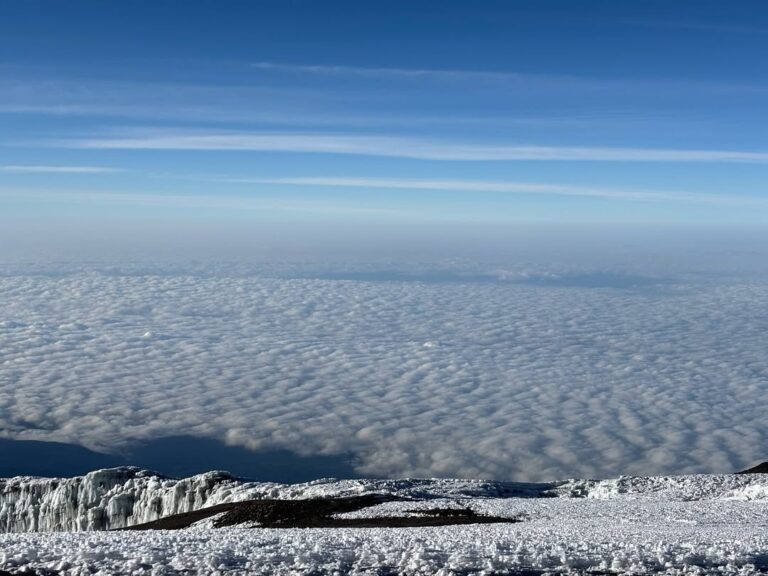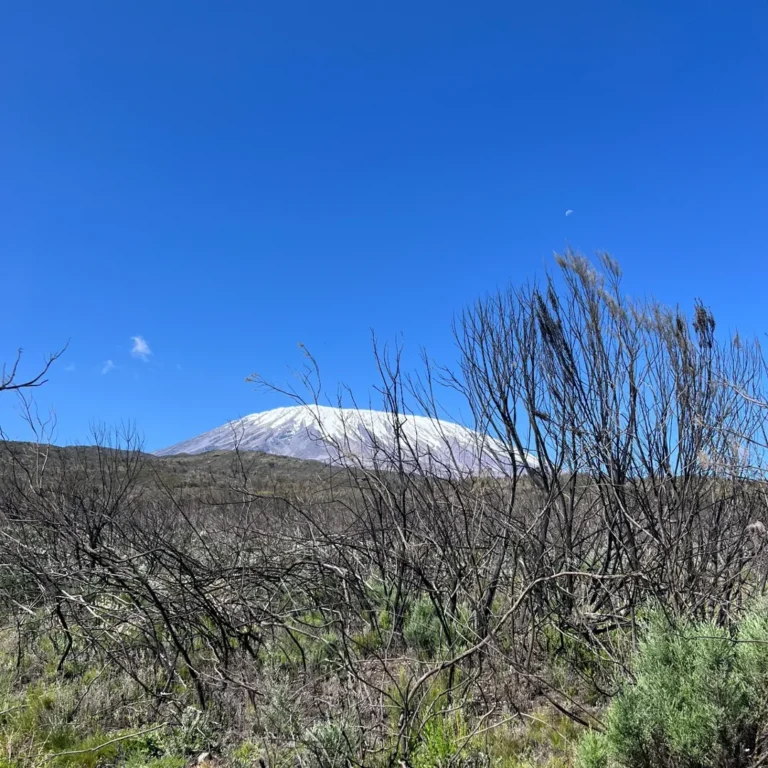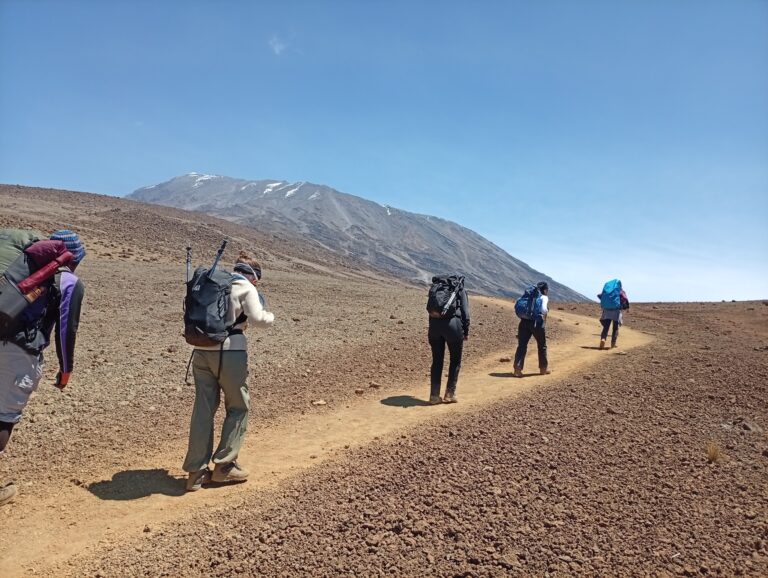
Machame Gate sits at 1,800 metres (5,905 feet) on the southern slope of Kilimanjaro, at the edge of the mountain’s rainforest belt. It’s the trailhead for the Machame Route — the most popular climbing route on the mountain — and the morning most climbers spend here is equal parts administrative, logistical, and ritual. Permits are checked, porters are weighed, duffel bags are distributed, lunches are eaten, and climbers walk out of the gate into the rainforest to begin what will be a 6 or 7 day climb to the summit.
This post covers what Machame Gate actually is, what happens there on your first morning, how long the drive from Moshi takes, and why the first hour of walking out of the gate sets the tone for everything that follows.
Where Machame Gate Sits on the Mountain
Machame Gate is one of several official entrance points to Kilimanjaro National Park managed by TANAPA (Tanzania National Parks Authority). Each major route has its own gate:
- Machame Gate — southern slope, for the Machame Route
- Lemosho Gate — western slope, for the Lemosho Route
- Marangu Gate — southeastern slope, for the Marangu Route
- Londorossi Gate — western, used for both Lemosho and Shira
- Nalemuru (Rongai) Gate — northern slope near the Kenyan border, for the Rongai Route
- Umbwe Gate — southern, for the steep Umbwe Route
Machame Gate is the busiest of these by climber volume. The gate itself is a small complex of administrative buildings — a ranger office, a climber registration point, a porter weighing station, basic toilet facilities, and open ground for crew and climbers to assemble before heading up. The surrounding area is still rainforest, though thinner and more disturbed than what you’ll walk into once the climb begins.
The gate is on the edge of Machame village, a small Chagga settlement on the southern slopes of the mountain. The drive in takes you through banana plantations, coffee farms, and small roadside markets — a reminder that Kilimanjaro is a working mountain with working communities around its base, not a wilderness preserve.
The Drive from Moshi
Most climbers stay in Moshi the night before their climb. Moshi sits at about 900m on the southern plain beneath Kilimanjaro, and on a clear morning the mountain fills the horizon to the north from any rooftop in town.
The drive from Moshi to Machame Gate takes roughly 1–1.5 hours, depending on traffic and road conditions. The route runs west through the outskirts of Moshi, then north and slightly west through a series of Chagga villages on the lower slopes. The final section of road — the approach to the gate itself — is often unpaved and can be slow in wet weather.
At Kilimanjaro Sky, transport is included and the team picks you up from your hotel in a 4WD vehicle with your crew and your climbing gear. Most groups leave Moshi around 8:00–8:30 in the morning, which puts arrival at the gate around 9:30–10:00. This matters because the gate process — registration, briefing, porter weighing, lunch — takes 1.5 to 2 hours. A mid-morning departure from Moshi results in walking out of the gate around noon, which is the standard Machame day-one schedule.
What Happens at the Gate: The Full Process
The morning at Machame Gate is busier than it sounds on paper. A rough breakdown of what happens between arrival and departure:
Registration (30–45 minutes). Your lead guide takes your passport and climbing permit documents to the TANAPA ranger office. Each climber is registered, permit paperwork is cross-checked, and the official climb entry is logged. This is mostly out of your hands — your guide handles it — but expect to have your passport briefly in use.
Porter weighing (45–60 minutes). Every porter’s load is weighed at the gate. TANAPA enforces a 20-kilogram maximum per porter, strictly. This is one of the more important moments on the mountain, and not just ceremonially. Weight limits exist to protect porters from injury and exploitation, and they’re taken seriously by reputable operators. Kilimanjaro Sky’s approach to porter welfare is documented specifically — 10–12 USD per day paid directly to each porter after descent, sleeping bags and waterproof kitbags provided to every porter, proper sleeping tents at each camp, 3 meals a day, and lead guide monitoring of porter health throughout the trek. None of that is abstract at the gate; you’ll see porters lining up their loads to be weighed, and you’ll see operators who’ve packed within the limits versus operators who’ve overpacked and are frantically redistributing.
Climber orientation. Your lead guide walks you through the first-day plan, the basics of pole pole pacing, what to have in your daypack, and what to leave for porters to carry. If you haven’t already been through it, this is your first real conversation about altitude, water, and safety. The Kilimanjaro Sky safety protocols — pulse oximetry checks, SpO2 thresholds, guide authority to call a descent, the 4-tier evacuation system — are explained here.
Lunch. Most operators serve a packed lunch at the gate before the climb begins. Sandwiches, fruit, a piece of chicken or similar, juice. Eat it. You’ve got 3–4 hours of walking ahead and it’s your last proper food source until dinner at Machame Camp.
Toilet stop. The gate has basic toilet facilities. Use them. The next toilets are at Machame Camp.
Gear distribution. You’ll see your climbing gear divided into what porters will carry up ahead (in duffel bags) and what you’ll carry yourself (daypack). Make sure anything you’ll want on the trail today — rain jacket, water, snacks, camera, sunscreen — is in your daypack.
Head to the trail. Boots on, daypack on, trekking poles extended. Your lead guide gives a final check, and you walk through the gate to start climbing.
The First Hour of Walking
The trail out of Machame Gate leads into the rainforest — dense, wet, alive. A few things define the first hour:
The grade is gentle. Unlike some routes that start steeply, Machame’s initial kilometres are a steady, moderate climb through forest. This is intentional — it gives your legs a chance to warm up and your body a chance to find rhythm before the grade steepens higher up.
The forest is loud. Birdsong, insect noise, occasionally the calls of colobus or blue monkeys in the canopy. If you’re quiet and pay attention, you’ll often see wildlife within the first 30 minutes.
You may get rained on. The southern slope of Kilimanjaro is the wetter side. The rainforest gets rain regularly, often in brief afternoon showers. A waterproof jacket and pack cover should be accessible, not buried in your duffel.
Pace is set by your guide. The temptation on the first day is to walk fast — fresh legs, low altitude, enthusiasm. Your guide will slow you down. Pole pole. The pace may feel too slow. It isn’t. This is the pace for the whole mountain, and the climbers who pace well on day one are the climbers who summit a week later.
The walk from Machame Gate to Machame Camp is about 11 kilometres with 1,200m of elevation gain. Most groups arrive at camp in the mid-to-late afternoon, roughly 5–7 hours after leaving the gate, depending on pace and weather.
What Climbers Underestimate About Day One
A few things first-time Machame climbers tend to underestimate:
The distance. 11 kilometres is a proper day’s walking, especially with 1,200m (3,937 ft) of elevation gain. Most climbers are honestly tired by the end. That’s normal. The fatigue is functional, not a sign of something wrong.
The humidity. You’re climbing through active rainforest. Humidity is often 80%+. You’ll sweat more than you expect. Water intake has to match that.
The rain. Even in “dry season” months (January–March, June–October), the rainforest band can produce afternoon showers. Being properly layered and ready to put a rain jacket on quickly matters.
The mental shift. Day one is the day the mountain becomes real. You’ve been talking about this climb for months (or years). Now you’re walking it. Many climbers describe day one afterwards as emotionally larger than they expected — a mix of excitement, nervousness, and a slow realization of what they’ve signed up for.
The pace. You will want to walk faster than your guide lets you. Don’t. The pace is correct.
The Gate as a Checkpoint for Climb Quality
Machame Gate is, in a quiet way, a checkpoint where you can see what kind of operator you’ve chosen.
A few things to watch for:
How porter loads are handled. Reputable operators pack within the 20kg limit, and the weighing goes smoothly. Operators that overpack are visible at the gate — porters standing around while loads are redistributed, sometimes containers dumped out and rebalanced. This is a leading indicator of how the whole climb will be run.
How long paperwork takes. Operators with good systems have registration done quickly; the gate process runs 1.5–2 hours total. Operators with disorganized systems can take much longer. You can lose an hour of climbing daylight at the gate if your operator isn’t organized.
The guide’s demeanor. A calm, patient, specific lead guide at the gate is a good sign. A lead guide snapping at porters, rushing clients, or visibly stressed at the start of the climb usually means a stressful climb ahead.
How climbers from other groups are being briefed. You’ll see other groups at the gate. You can hear their briefings. How other operators talk about summit expectations, pace, and safety tells you a lot about the broader industry on the mountain.
Kilimanjaro Sky is a boutique operator: small groups (4–10 climbers), 1 lead guide + 1 assistant guide per 2–3 clients, direct porter payment, documented safety protocols. The gate morning is the first place you’ll see that on the ground.
Practical Notes for Gate Morning
Dress for the climb, not the drive. You’ll want to walk out of the gate in your full climbing outfit — boots, trekking layers, hiking socks. Don’t plan to change at the gate; the facilities aren’t really suited to it.
Secure your passport. After registration, your passport goes back in your care. Keep it safe — you’ll need it at the other end of the climb too, and throughout your time in Tanzania.
Apply sunscreen before you leave the gate. The southern slope gets strong UV exposure even under cloud cover. Applying sunscreen at camp on day one when you’re already sunburned is too late.
Eat lunch properly. Lunch at the gate is the meal that fuels the afternoon climb. Eat it even if you’re not hungry.
Take a photograph at the gate sign. It’s a small thing. The sign marking “Machame Gate — Kilimanjaro National Park” is the “before” to the summit “after.” Many climbers regret not having the photo later.
Why the Gate Matters
Machame Gate is not dramatic in the way the high camps or the summit are. It’s a bureaucratic checkpoint at the edge of a forest. But it’s where the climb becomes real — where your permits are logged, your porters are weighed, and you walk from the world you know into a week that will probably change how you think about what your body can do.
The climb itself is about what happens between the gate and the summit. But the tone is set here. The guide’s calm, the porters’ welfare, the operator’s logistics — all of it is legible at the gate, and all of it carries up the mountain.
If you’re planning a Machame climb and want to walk through what the full itinerary looks like, read the route page or get in touch with our team in Moshi. We’ll be straight with you about what your climb will involve, including the first morning at the gate.