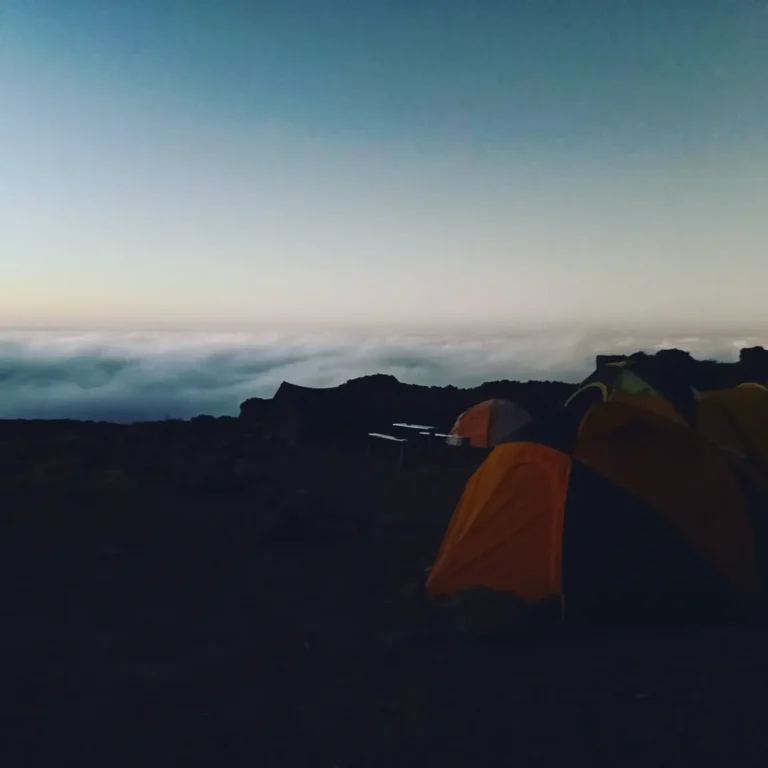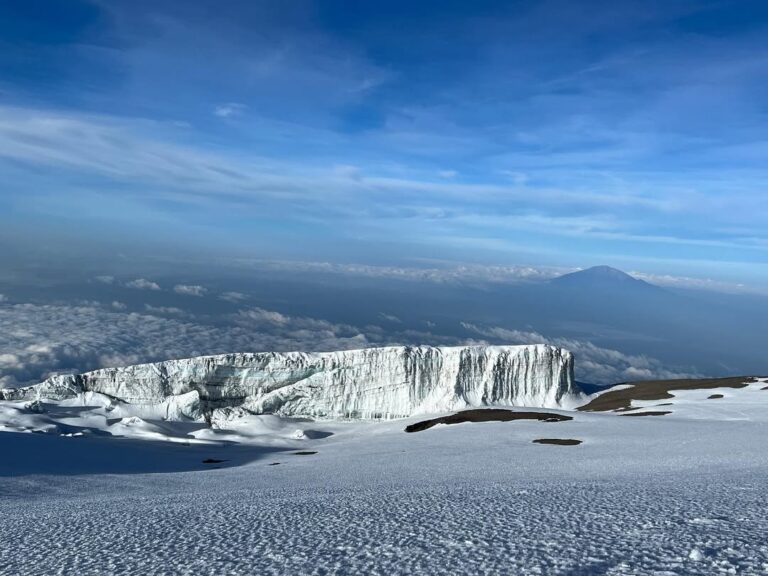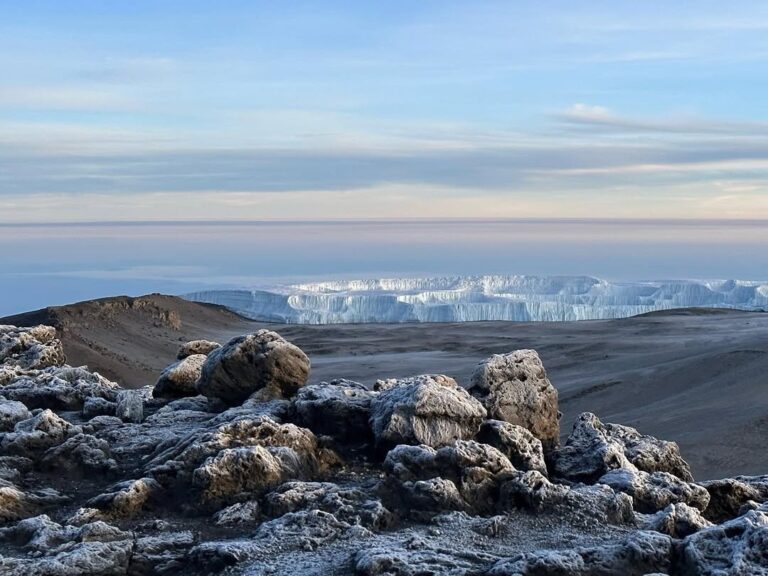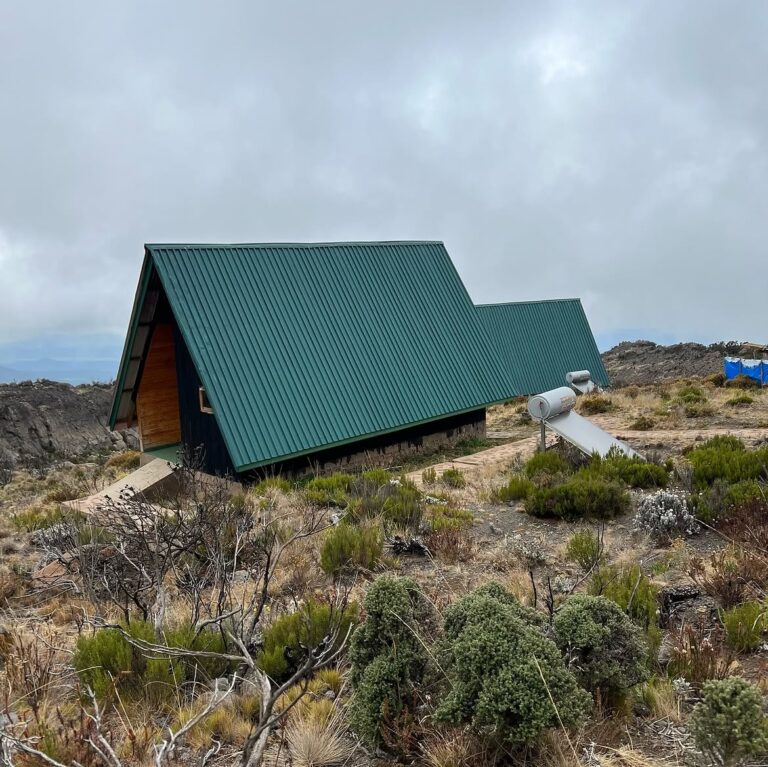
Anyone researching an East African climbing trip runs into this comparison within the first few hours. Kilimanjaro is the more famous of the two — taller, more iconic, the defining image of the region. Mount Kenya is smaller in altitude but larger in the respect climbers tend to give it: more technically varied, more visually striking up close, and a climb that rewards experienced mountaineers in ways Kilimanjaro can’t.
The honest answer to “which should I climb?” depends on what kind of climber you are and what kind of experience you want. This post covers both mountains in detail and gives you a clear way to decide.
The Headline Numbers
| Metric | Kilimanjaro | Mount Kenya |
|---|---|---|
| Highest summit | Uhuru Peak (5,895m/19,340 ft) | Batian (5,199m/17,057 ft) — technical climb |
| Trekking summit | Uhuru (5,895m/19,340 ft) — all climbers | Point Lenana (4,985m/16,354 ft) — trekkers |
| Country | Tanzania | Kenya |
| Trek length | 6–9 days | 4–6 days |
| Technical difficulty | Trek only (F / Facile) | Point Lenana trek; Batian/Nelion require rock climbing (UIAA IV–V) |
| Ecosystems | 5 distinct zones from rainforest to arctic | 4 zones from forest to alpine |
| Volcanic origin | Yes (dormant volcano) | Yes (extinct volcano) |
| Peak count | Three cones (Kibo, Mawenzi, Shira) — one walkable summit | 11+ named peaks — Batian, Nelion, Lenana and others |
| Success rate (trekking summit) | 85–97% on good routes | 60–75% on Point Lenana, weather-dependent |
| Cost (guided) | $2,000–$4,500 | $800–$2,000 |
The numbers are useful but don’t capture the feel of each mountain. Let’s get into the differences that actually matter.
The Structural Difference: One Walking Summit vs Technical and Trekking Summits
This is the single most important distinction.
Kilimanjaro has one accessible summit — Uhuru Peak at 5,895m (19,340 ft). Every climber on every standard route is trying to reach the same point. There are easier and harder routes to get there, but the summit itself is a walk, achievable by any fit trekker with good acclimatization.
Mount Kenya has three main peaks of very different difficulty:
- Batian (5,199m/17,057 ft) — the true summit, accessible only via technical rock climbing. Routes are rated UIAA IV to V+ (roughly 5.8 to 5.10+ in American grades). Requires ropes, crampons, rock-climbing skills, and typically a qualified technical climbing guide.
- Nelion (5,188m/17,020 ft) — the twin summit to Batian, connected by a knife-edge gully (the Gate of the Mists). Also technical rock climbing. Many parties climb Nelion and skip the traverse to Batian.
- Point Lenana (4,985m/16,354 ft) — the trekkers’ summit, accessible via non-technical walking routes. This is what most Mount Kenya climbers mean when they say they’ve “summited” Mount Kenya.
The Point Lenana climb is the direct comparison to Kilimanjaro for most climbers. It’s a walk. It requires fitness and altitude tolerance but not technical skills. Batian and Nelion are different objectives entirely — comparable to the rock climbing on Alpine peaks rather than trekking routes.
If you hear someone say “I climbed Mount Kenya,” ask which peak. The answer tells you what kind of climber they are.
Altitude: Kilimanjaro Is Higher, Mount Kenya Acclimatizes You Less Gradually
Kilimanjaro tops out 910m (2,985 ft) higher than Point Lenana and 700m (2,296 ft) higher than Batian. On paper, Kilimanjaro is clearly the higher-altitude climb.
In practice, the difference is smaller than it looks:
- Kilimanjaro itineraries typically run 6–9 days, giving significant time for acclimatization
- Mount Kenya itineraries typically run 4–5 days — less acclimatization, less gradual profile
At 4,985m (16,354 ft) on Point Lenana, you’re breathing air with roughly 56% of sea-level oxygen. At 5,895m on Uhuru, you’re at 49%. The drop from 56% to 49% is significant — but the gap between 4,985m and 5,895m is also where altitude effects compound fastest.
Net effect: Kilimanjaro is harder for altitude overall, but Mount Kenya’s shorter itinerary means altitude symptoms can hit faster. Climbers who are borderline on altitude adaptation may struggle on either.
Technical Difficulty Comparison
Kilimanjaro (any route): Trekking only. No technical skills required. Steepest terrain is scree slopes on summit night. Barranco Wall on the Machame Route is a mild scramble — hands used occasionally — but is not rock climbing.
Point Lenana on Mount Kenya: Trekking with occasional scrambling. The final stretch to Point Lenana includes some use of hands on rock, and some routes include a short section of easy fixed ropes for exposure. Significantly more scrambly than anything on Kilimanjaro. Still not “technical” in the rope-and-harness sense.
Batian and Nelion: Genuinely technical rock climbing. The easiest established route (the Normal Route on Nelion) is roughly UIAA IV+ with several pitches of exposed rock climbing at altitude. Not a walk in any sense. Requires climbing experience, climbing gear, and a qualified climbing guide.
If you don’t climb rock and aren’t interested in learning, your Mount Kenya climb is Point Lenana. That’s fine — Point Lenana is a worthwhile objective — but know what you’re choosing.
Landscape and Character
Both mountains are volcanic. Both have tropical-to-alpine ecosystem transitions. They feel very different up close.
Kilimanjaro is the classic truncated volcanic cone with broad, sloping flanks. Routes cross rainforest, heather moorland, alpine desert, and arctic summit zones. The massif is visually wide and dome-like from most angles. The scale is the feature — standing at Barafu and looking up at Kibo’s 1,200m of summit scree is an image most climbers remember for life.
Mount Kenya is a dramatically different shape. It is the eroded skeleton of a much older, much bigger volcano — a central core of harder rock exposed after millions of years of erosion stripped away the softer outer cone. The result is a cluster of sharp rock peaks, deep valleys, glacial tarns, and unusual Afro-alpine vegetation (giant lobelias and groundsels up to 6m tall in certain valleys).
The plant life on Mount Kenya is one of its defining features. Certain valleys feel pre-historic — a botanical anomaly found almost nowhere else on earth. Kilimanjaro has some of this (giant groundsels on the upper moorland), but Mount Kenya’s Afro-alpine botany is arguably more striking.
If landscape variety is a priority, Mount Kenya wins on visual diversity per kilometre. Kilimanjaro wins on scale and the cleaner summit day experience.
Routes on Each Mountain
Kilimanjaro has seven established routes — Machame, Lemosho, Marangu, Rongai, Shira, Northern Circuit, and Umbwe. The routes overview covers each one. Standard itineraries run 6–9 days depending on the route.
Mount Kenya has three main trekking routes to Point Lenana:
- Naro Moru Route — the shortest and most direct. 4–5 days typical. Includes “the Vertical Bog” — a famously wet and unpleasant section. Highest summit success rate at 75%+.
- Sirimon Route — the more gradual and scenic northern approach. 4–5 days. Better acclimatization profile.
- Chogoria Route — the eastern approach, visually the most spectacular with glacial lakes and unusual vegetation. 4–5 days. Often combined with Sirimon for a circumnavigation (Sirimon up, Chogoria down).
Most serious Mount Kenya climbers recommend Chogoria-Sirimon as the best combination — acclimatization profile of Sirimon, scenery of Chogoria, and a full traverse of the massif.
Cost Comparison
Mount Kenya is substantially cheaper than Kilimanjaro, primarily because park fees are lower and the climb is shorter.
Mount Kenya guided climb (reputable operator): $800–$2,000 per person for a 5-day Point Lenana climb. Technical Batian or Nelion climbs run $1,500–$3,500 with a qualified climbing guide.
Kilimanjaro guided climb (reputable operator): $2,000–$4,500 per person for a 7–9 day climb. Park fees alone on Kilimanjaro run $80+ per climber per day, which puts a floor under any legitimate Kilimanjaro quote.
If price is a significant factor, Mount Kenya is the budget-friendly option. If price is a tiebreaker but not the deciding factor, Kilimanjaro offers more climbing per dollar spent (more days, higher summit, bigger experience).
Context on Kilimanjaro costs and why operator pricing varies is covered in detail in our cost breakdown.
Crowds and Infrastructure
Kilimanjaro sees roughly 50,000 climbers per year. On popular routes in high season, summit night can be genuinely crowded — headlamps visible stretching up the scree slope, climbers bunched at rest stops, the summit sign at Uhuru with a line for photos. Our is Kilimanjaro crowded post covers when and where to avoid crowds.
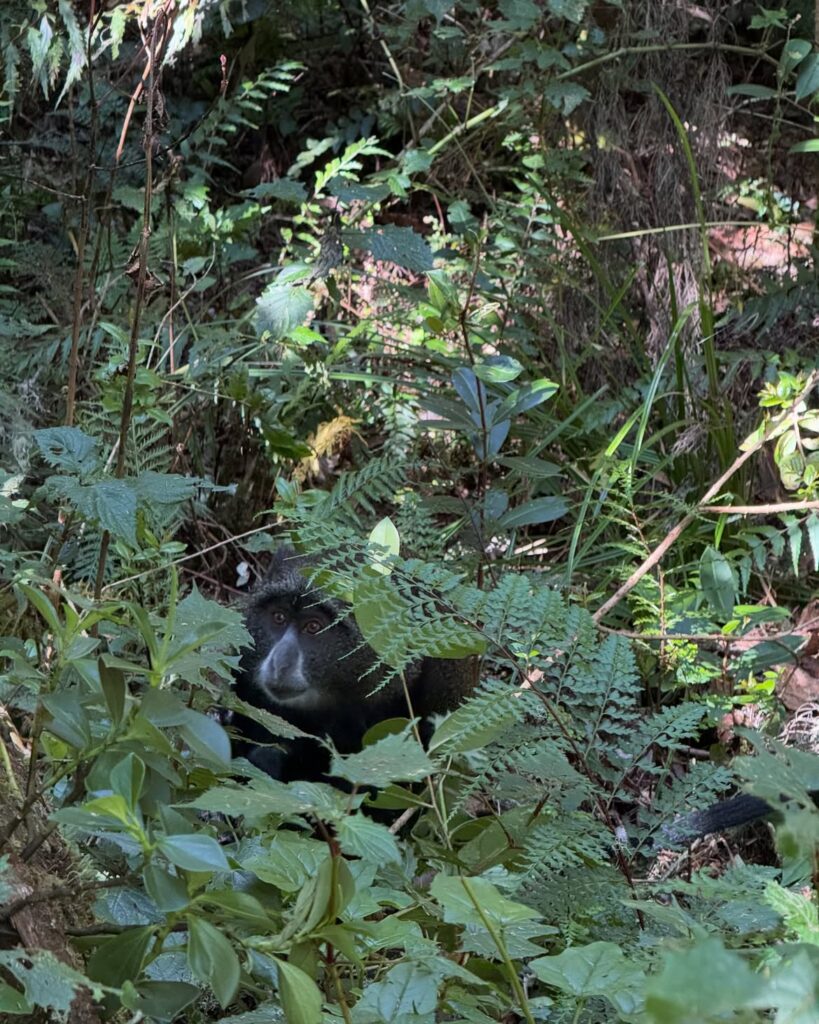
Mount Kenya sees roughly 10,000–15,000 climbers per year — about a quarter of Kilimanjaro’s volume. Trails are significantly quieter. Camps are smaller and less busy. Even on the most popular routes, you’re not sharing summit day with hundreds of others.
If solitude is a priority, Mount Kenya wins. If infrastructure and operator variety is a priority, Kilimanjaro wins (more operators, more packages, more options at every price point).
Weather and Best Season
Both mountains are near the equator, so they have dual dry seasons rather than a single summer.
Kilimanjaro: Best climbing windows are January–February and June–early October. Avoid mid-March through May (long rains) and November (short rains). Our best time to climb Kilimanjaro post covers seasonality in full.
Mount Kenya: Similar pattern. Best windows are January–February and July–September. The Chogoria side tends to be drier than the Sirimon or Naro Moru sides, which matters for route selection.
Both mountains have year-round summer-like temperatures at the base and winter-like cold on the summit. Equatorial position means limited seasonal variation in temperature; it’s the rainfall patterns that drive climbing-season choice.
Which to Climb First
Climb Kilimanjaro first if:
- You want the higher summit
- You’re willing to pay more for the more iconic experience
- You want 7+ days on a single mountain
- You have no technical climbing ambitions for the moment
- You want a clear, non-technical summit at 5,895m (19,340 ft)
Climb Mount Kenya first if:
- You want a shorter, cheaper trip
- You’re building toward technical climbing (Batian/Nelion as future objectives)
- You want Afro-alpine landscape variety in a short window
- You prefer quieter trails
- You’re already in Kenya and want a local mountain challenge
Do both if:
- You have time and budget for two trips
- You want the full East African climbing experience
- You’re an aspiring alpinist who wants to mix trekking and technical climbing
Many climbers end up doing both. A common sequence: Kilimanjaro first for the iconic altitude summit, Mount Kenya later (often combined with a Kenyan safari) as a quieter and more varied follow-up.
Can You Combine Them in One Trip?
Yes, and many climbers do. Nairobi, Kenya is 5 hours by road from Moshi, Tanzania. Kilimanjaro International Airport is accessible from Nairobi via short flights. A combined trip looks something like:
- Week 1: Fly to Nairobi. Acclimatize. Climb Mount Kenya (Point Lenana) via Chogoria-Sirimon traverse. 5 days.
- Travel day: Nairobi to Moshi. Rest.
- Week 2: Climb Kilimanjaro (Machame 7-day or Lemosho 8-day). Summit Uhuru. Descend.
- Optional Week 3: Safari (Serengeti, Ngorongoro) or Zanzibar.
Doing Mount Kenya before Kilimanjaro has an altitude acclimatization benefit — you arrive in Tanzania with recent exposure to 4,900m+, which helps your Kilimanjaro summit chances. This is a common sequencing for climbers who want both peaks in a single three-week trip.
If you’re considering this, get in touch. We regularly coordinate with Kenyan operators for combined-mountain itineraries and can help you plan transit and timing.
The Bottom Line
Kilimanjaro and Mount Kenya are very different climbs with overlapping audiences. Kilimanjaro is the iconic high-altitude trek — longer, higher, more expensive, more famous, a single non-technical summit. Mount Kenya is the technically varied volcanic massif — shorter, lower (for Point Lenana), cheaper, less crowded, with Batian and Nelion as optional technical objectives for climbers who want them.
Neither is objectively better. They fit different climbers.
If Kilimanjaro is where you’re leaning, the best next step is to look at the routes overview and compare itineraries. The Machame and Lemosho routes have the highest summit success rates, and the Northern Circuit has the best acclimatization profile. The packages page covers what’s included, and our safety page explains how we handle altitude on every climb.
If you’re leaning Mount Kenya instead, we can still help — we work with trusted Kenyan operators and can point you to the right people. Reach out via our contact page.