The sleeping bag question for Kilimanjaro is one where people frequently get it wrong — either because they trust the label too literally, or because they’ve been told “any cold-weather bag will do” by someone who either got lucky or doesn’t remember being cold.
Here’s the direct answer before the explanation: you need a sleeping bag with a comfort rating of -10°C (14°F) or lower for Kilimanjaro. Not lower limit. Not extreme rating. Comfort rating. That distinction matters, and we’ll explain why.
Why Temperature Ratings Are Misleading
All sleeping bags sold in Europe are now tested against the EN/ISO 23537 standard, which produces four temperature ratings:
- Upper limit: The warmest temperature at which a “standard man” can sleep without excessive sweating
- Comfort: The temperature at which a “standard woman” can sleep comfortably in a relaxed position
- Lower limit: The temperature at which a “standard man” can sleep for 8 hours in a curled position
- Extreme: The temperature at which a “standard woman” survives for 6 hours without hypothermia (this is a survival rating, not a comfort rating)
The number most commonly marketed on bags — and the one most consumers focus on — is the lower limit, because it’s the most dramatic number. A bag marketed as “-10°C” typically has an extreme rating of -10°C and a comfort rating of something like -3°C or -5°C.
What this means in practice: if you’re using that bag at an actual temperature of -10°C, you will probably be cold. Not dangerously cold — the extreme rating is a genuine survival floor — but uncomfortable, sleep-disrupting cold that leaves you exhausted on summit night.
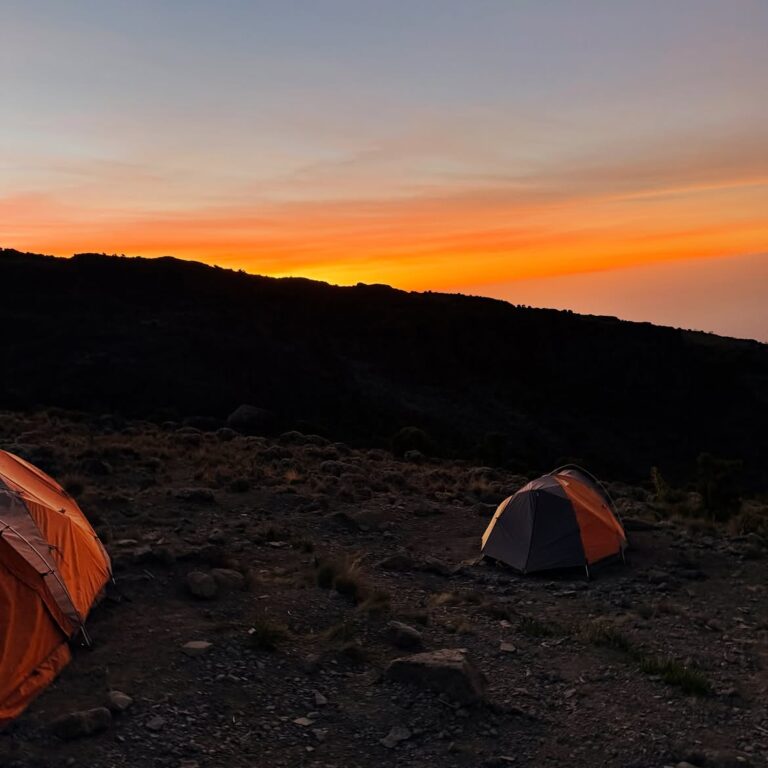
At Barafu Camp (4,673m), overnight temperatures typically run from -5°C to -15°C depending on season. On exposed ridges, wind chill pushes the felt temperature lower. The comfort rating of your sleeping bag needs to comfortably exceed the lowest expected temperature you’ll encounter.
The practical target: a sleeping bag with a comfort rating of -10°C or lower. In EN standard terms, that means the lower limit is probably -15°C to -20°C.
Down vs. Synthetic
This is worth understanding because the two materials behave differently in Kilimanjaro’s conditions.
Down sleeping bags are warmer for their weight, compressible to almost nothing, and last decades if properly maintained. The limitation: wet down loses most of its insulating value. A down bag soaked by a wet tent seam or condensation from a breath-heavy night is a cold bag.
Synthetic sleeping bags retain some insulating value even when damp. They’re heavier and bulkier than equivalent-warmth down bags. They degrade faster over many years of use.
For Kilimanjaro, quality down is generally the better choice if you’re buying — modern down bags often use hydrophobic treatment (DWR-treated down) which significantly improves wet-weather performance. The key is keeping the bag dry. Use a bag liner in the tent, store it in a dry sack, and make sure your tent is properly pitched.
If you’re renting, you’ll likely receive a synthetic bag. This is acceptable but requires checking that the rental bag’s comfort rating is genuinely adequate — ask the operator specifically about the comfort rating, not just the temperature stated on the label.
Renting vs. Buying
This question comes up constantly, and the honest answer depends on how often you travel to altitude.
The case for renting:
Kilimanjaro-quality sleeping bags are expensive (typically £250–£500 / $300–$600 for a good one). If this is your only high-altitude trip and you have no interest in mountaineering afterward, renting from your operator is a pragmatic choice. It removes the need to transport a bulky item internationally.
The case for buying:
Rental bags have an unknown history. You don’t know how many people have used them, how they were stored between climbs, or how their insulation has compressed over time. A bag that started at -10°C comfort rating may have degraded to -5°C after three years of regular use. You’re sleeping in it at 4,673m and you can’t inspect the loft before you arrive.
If you’re doing Kilimanjaro as part of a longer adventure travel phase, or if you do any winter camping at home, buying makes clear financial sense over two or three uses.
If renting from us: We can discuss current rental stock and condition. We’ll tell you the bag’s comfort rating honestly. But our general guidance is that clients who bring their own quality sleeping bag sleep better, which matters for performance on summit night.
What Temperature Rating to Target
Here’s the breakdown by camp:
| Camp | Altitude | Typical Night Temp | Comfort Rating Needed |
|---|---|---|---|
| Shira Camp / Barranco | 3,750–3,950m (12,303-12,959 ft) | -3°C to -8°C | -5°C minimum |
| Karanga Camp | 3,963m (13,001 ft) | -5°C to -10°C | -8°C minimum |
| Barafu Camp | 4,673m (15,331 ft) | -8°C to -15°C | -10°C minimum |
For most climbers, a -10°C comfort rating covers all nights with a thermal base layer as backup. In peak season (July–August, when temperatures are at their lowest), -15°C comfort rating provides more margin.
One frequently missed point: the bag’s performance depends on what you’re wearing inside it. A thermal base layer and wool socks add 2–5°C of effective warmth. Climbing into a -10°C bag in a t-shirt in the middle of winter is different from climbing in with a merino base layer. Your layering system and your bag work together.
Sleeping Bag Recommendations by Category
Note: this is general guidance — specific models change seasonally.
Best overall for Kilimanjaro (down, buy):
Look for bags from Western Mountaineering, Rab, Mountain Hardware, or Sea to Summit with a -10°C or lower comfort rating. The Western Mountaineering Versalite, Rab Neutrino 400, and Sea to Summit Spark range all perform well in this temperature zone. Expect to spend £250–£450.
Best synthetic for renting/borrowing category:
Rab Ignition or the Mountain Equipment Helium series in winter spec are reliably rated and hold up to regular use better than cheaper synthetics. If you’re renting from a non-operator source, look for these or equivalent-quality branded bags.
Budget option that doesn’t compromise on rating:
Mountain Hardware Phantom or Marmot Hydrogen — slightly heavier than premium down bags but significantly more affordable while still delivering genuine cold-weather performance.
What to avoid:
Camping bags with comfort ratings above -5°C, regardless of what the marketing says. “Three-season” bags and “expedition” bags that don’t specify EN comfort ratings. Ultralight bags designed for summer hiking — they are not suitable for Kilimanjaro high camps.
Sleeping Bag Liners
A liner adds meaningful warmth at low weight and bulk. A silk liner adds roughly 5–8°C of effective temperature; a fleece liner adds 10–15°C. For Kilimanjaro, a silk or lightweight wool liner combined with a -10°C comfort bag gives you solid margin into very cold conditions.
Liners also keep your sleeping bag cleaner — important if renting, but also valuable if you want your down bag to last decades rather than years.
How to Test Your Bag Before You Go
This sounds obvious and almost nobody does it. Spend a night in your sleeping bag outdoors, or in your coldest room, in conditions as close to Kilimanjaro’s as you can manufacture. An unheated room or garden on a winter night in the UK, with the window open, is a reasonable proxy for Barafu.
If you sleep comfortably, you’re prepared. If you’re pulling your knees to your chest and checking the clock at 3am, you need a warmer bag.
Finding this out at Barafu Camp is too late. Finding it out in your garden in November is fixable.
What Else Keeps You Warm at Night
Sleeping bag is the primary variable, but it’s not the only one:
Sleeping mat: Insulation from below is as important as insulation from above. The ground at altitude is cold. A mat with an R-value of at least 3.5 (for three-season camping) — better, R5+ at Barafu — prevents ground cold from pulling warmth from your sleeping bag. We provide sleeping mats on all our climbs; if you have a preferred mat you use, you can bring it.
Tent: Our tents are high-quality expedition-spec and pitched properly on a flat cleared surface. Air movement through a tent significantly affects felt temperature. Properly pitched, correctly zipped tents perform dramatically better than poorly pitched ones.
Hydration before bed: Being well-hydrated before sleep improves your body’s ability to thermoregulate. Eat dinner, drink water, avoid alcohol.
Wearing base layers to bed: Not your full clothing system — that compresses insulation and can trap moisture. But clean, dry thermal base layers worn inside the bag add meaningful warmth without the downsides of overdressing.
For the full kit list beyond sleeping bags, including what to bring on the mountain and what we provide, see our Kilimanjaro packing list. And if you’re still in the planning phase and weighing routes and timing, our route overview is a useful next read. For the complete clothing system for summit night specifically — including base layers, insulation, shell jacket, and gloves — see our summit night clothing guide. Questions about our packages and what’s included versus what to bring? Our packages page has the detail.