October is one of our team’s favourite months to guide on Kilimanjaro. The weather is still dry, the summit mornings are still clear, and the trail feels nothing like the July peak. On routes that are packed shoulder-to-shoulder in August, October gives you space — room at camp, fewer boots on the Barranco Wall, and the kind of quiet summit night that Kilimanjaro is famous for when it isn’t at capacity.
There’s a short list of things to know before you commit. October is the last reliable dry-season month before the short rains begin in early November, which puts late-October climbers in a specific planning conversation. Route and timing choices in October have real consequences.
Here’s a straight read on the month from our base in Moshi.
The Short Answer
October is an excellent month to climb Kilimanjaro. You get most of the benefits of the dry season — firm trails, good visibility, reliable summit mornings — without peak-season crowds. Success rates in October are essentially the same as in July or August on the major routes.
The main planning consideration is timing within the month. Early October is still comfortably inside dry-season conditions. Late October begins the transition toward the short rains, with increasing probability of afternoon showers on the lower mountain.
If October fits your schedule, it’s one of the smartest calendar windows available. Our month-by-month guide to the best time to climb Kilimanjaro places October alongside the other serious options.
What October Feels Like on the Mountain
Weather and temperatures
October daytime temperatures on the lower mountain are in the 18°C to 24°C range (65°F to 75°F) — almost identical to July. The difference is humidity. By October, the air has had four months of dry-season conditions to stabilise, and the forest zones feel drier and cooler in the mornings than they do in the early dry season.
Mid-mountain temperatures (moorland and alpine desert, 3,500–4,500 metres) run 5°C to 12°C during the day, dropping to -5°C to -10°C overnight. The summit zone is cold year-round: expect -10°C to -20°C with wind chill between Stella Point and Uhuru Peak. Full winter summit gear is standard.
Rainfall
Early to mid-October is typically dry. Rain is possible — this is the equator, not a guarantee — but extended wet spells are unusual until the final week or ten days of the month. The rainforest zone around Mandara, Big Tree Camp, and Londorossi Gate may see afternoon showers, but multi-day rain events are rare.
By the last week of October, the atmosphere is shifting. The short rains are not a single switch — they come in gradually. Late-October climbs sometimes catch one or two wet afternoons on the lower mountain, with the upper mountain generally staying dry.
If your climb is in the final ten days of October and you’re on a southern route (Machame, Lemosho, Umbwe), packing full rain gear — shell jacket, shell pants, a pack cover — is not optional. Those items are on the Kilimanjaro packing list regardless of month, but in late October you’ll likely use them.
Visibility and summit mornings
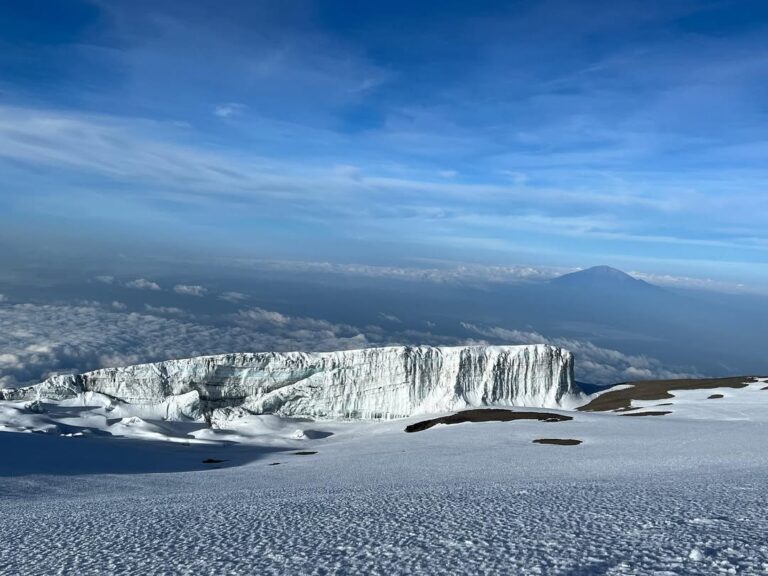
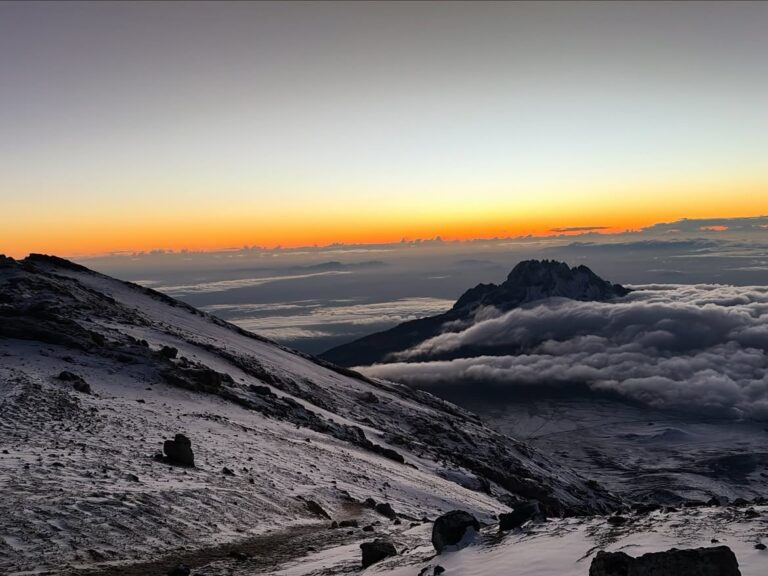
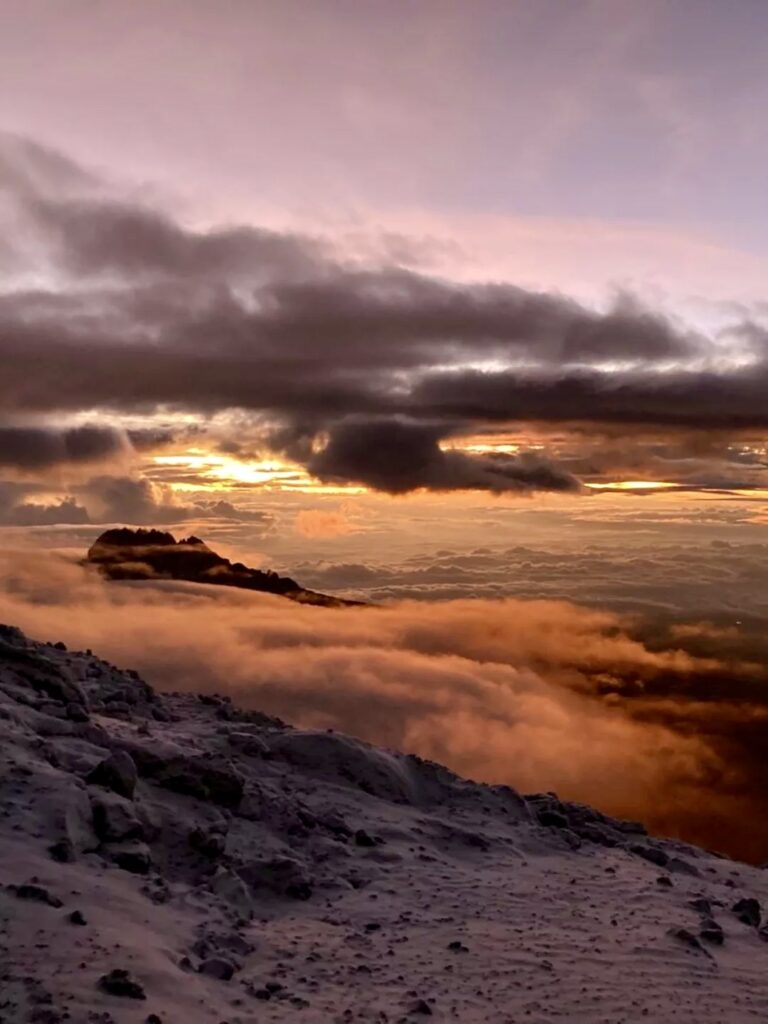
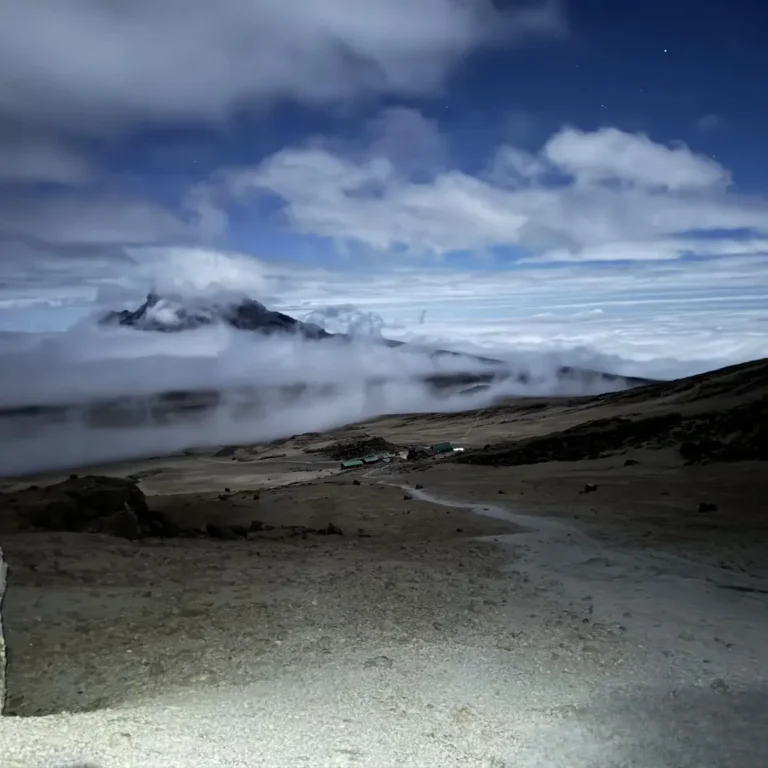
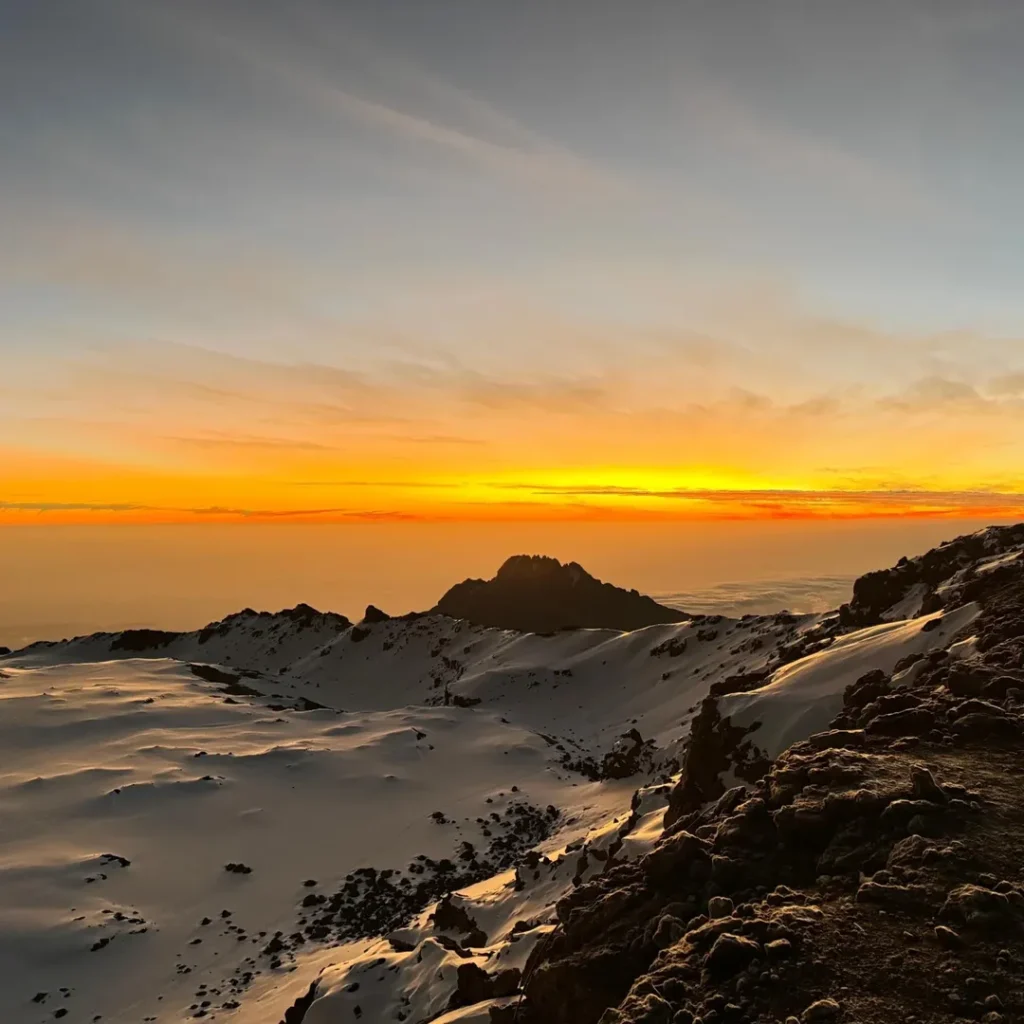
October summit mornings are among the most photogenic of the year. The dry-season air quality is at its best by month’s end, and the mountain often has its clearest long-range views. From Uhuru Peak in October you can commonly see Mount Meru rising from the plains to the west and the Chyulu Hills stretching into Kenya to the north.
This matters practically, not just aesthetically — clear summit mornings mean better navigation, more reliable guide decision-making on weather, and much more comfortable photography conditions for the moments you’ll want to remember.
The Crowd Picture in October
This is where October earns its status as one of the smartest months to climb.
What October traffic actually looks like
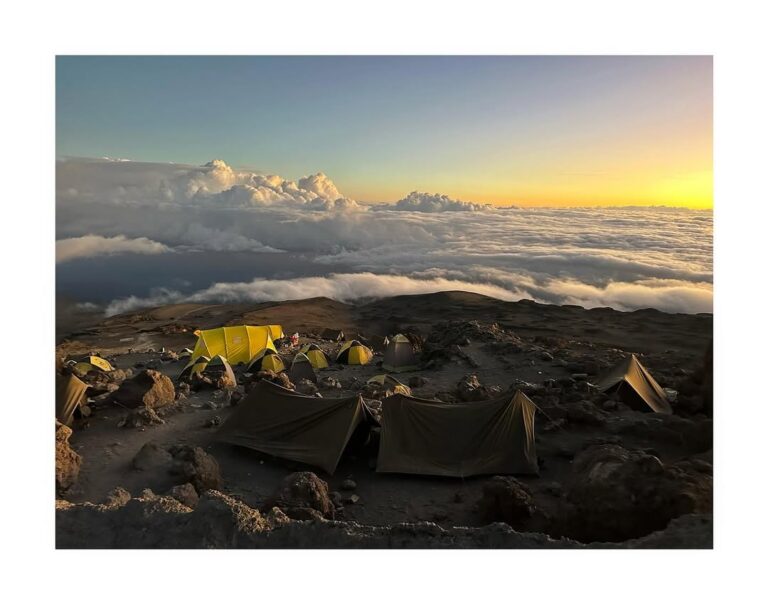
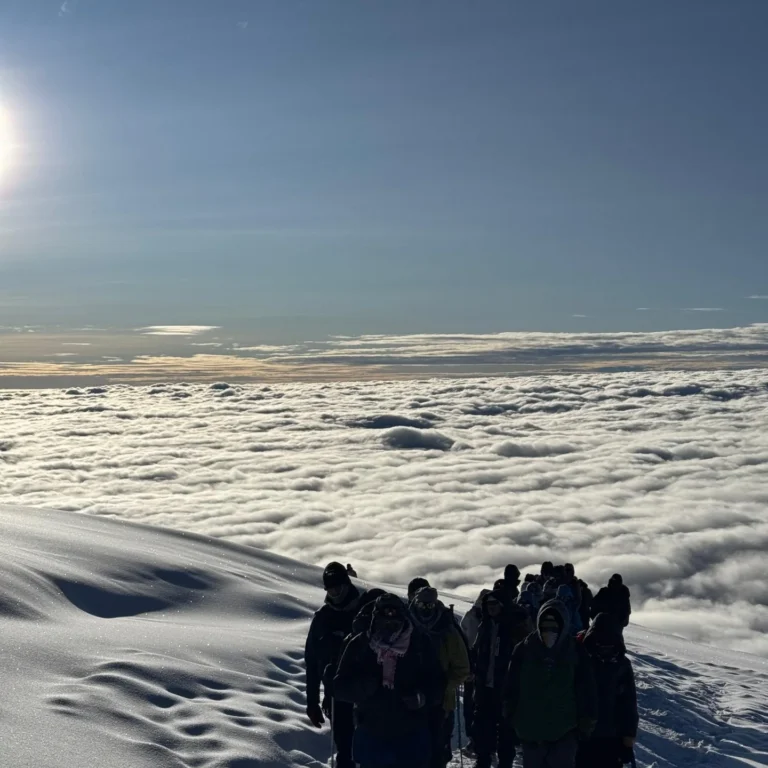
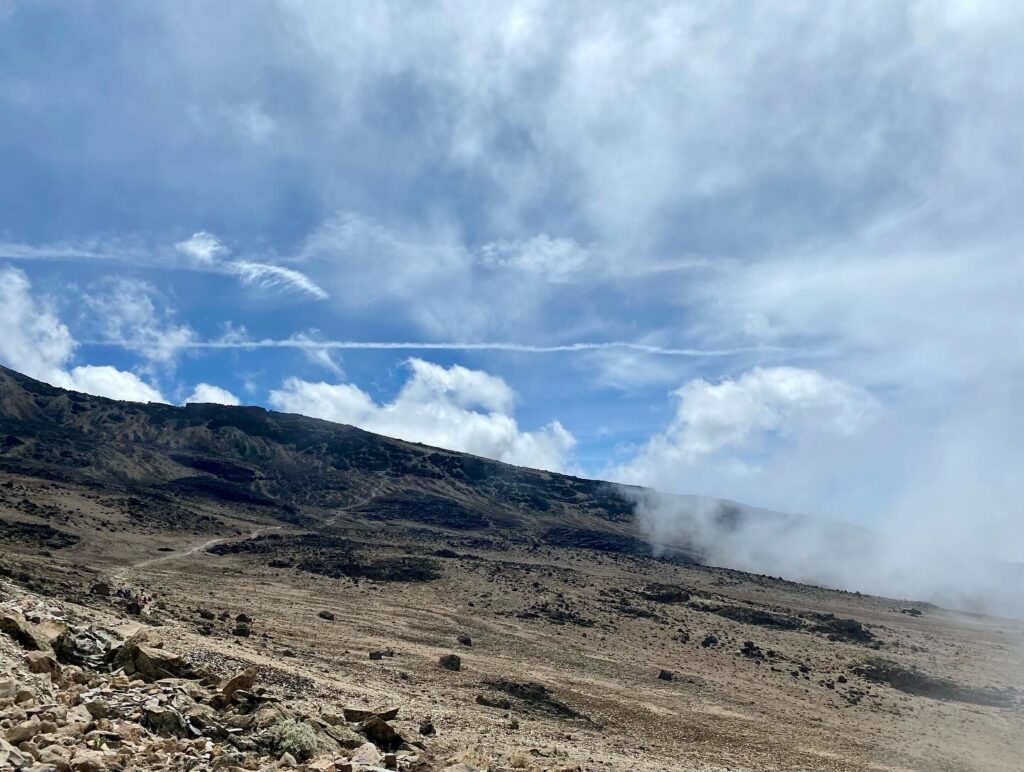
Popular camps on the Machame Route — Shira, Barranco, Karanga, Barafu — see roughly 40 to 60 percent of July’s foot traffic in October. On Lemosho, the reduction is similar. Summit night on the Machame Route in October usually sees 30 to 80 climbers leaving Barafu around midnight, compared to 100 to 200 in July and August.
On quieter routes — Rongai, Northern Circuit, Shira — October can feel close to empty. There are mornings on the Northern Circuit in October where our teams walk for three or four hours without seeing another group. That’s not the norm in July.
Why the drop happens
Most Kilimanjaro climbers are planning around summer holidays in their home countries (July/August for the Northern Hemisphere, December/January for school breaks) and around the “peak season” shorthand that major guidebooks use. October falls outside both patterns, which keeps it quiet despite conditions being largely comparable to August.
For climbers who can travel in October specifically to avoid peak-season traffic, this is the quiet-but-reliable month to target. For a broader look at when the mountain is most and least crowded, see our guide on whether Kilimanjaro is crowded.
Booking Windows and Pricing
Most reputable operators, including us, treat October as dry-season pricing rather than peak-season pricing. The savings versus July and August are meaningful — park fees remain constant (they’re fixed by TANAPA and make up the majority of any honest operator’s cost), but logistics and supply chains are more flexible in October, which translates to slightly better rates.
Lead time is more forgiving than in July. Three to five months out is usually sufficient for preferred dates. If you want to align your summit with a full moon for the extra trail light, our Kilimanjaro full moon dates guide covers the upcoming windows including October.
Two caveats on pricing: first, bottom-of-market operators often cut corners that matter more in transitional months. When the weather is more variable, operational quality shows up faster — in guide decisions, rain contingency plans, and crew capability. Our climbing Kilimanjaro on a budget guide covers where costs are legitimate and where they shouldn’t be cut.
Second, the final week of October and the first two weeks of November often see aggressively discounted pricing from operators trying to fill their final dry-season slots. Those discounts are sometimes legitimate — and sometimes they’re a warning sign that something’s being skipped.
Best Routes for October
Because October is still broadly dry-season, any route works. But the choice has nuance depending on where in the month you climb.
For early-to-mid October
Conditions are close to September. All routes are reasonable.
- Lemosho (8 days) — our most recommended October option. High success rate, excellent acclimatization, quieter approach on the opening days.
- Machame (7 days) — the extra day at Karanga makes a material difference to summit success, and October’s lower traffic makes the classic southern circuit more enjoyable than it is in July.
- Northern Circuit (9–10 days) — the quietest route on the mountain, and October amplifies the quiet.
For late October
Weigh route choice against the likelihood of short-rain afternoon showers on the southern routes.
- Rongai (6–7 days) — our top recommendation for late October. Rongai’s position in the mountain’s rain shadow means the short rains reach it later and less intensely than the southern routes. Trail conditions stay firm longer, and summit-morning weather is typically excellent.
- Lemosho (8 days) — still workable in late October; the western approach is slightly drier than Machame, and the longer itinerary absorbs a wet afternoon without derailing the climb.
Marangu in late October is possible but we usually steer climbers toward other routes — the hut system doesn’t help if the forest zone is wet, and Marangu’s shorter profile leaves less margin for weather delay.
Our full routes overview compares all options with October conditions in mind.
What to Pack Specifically for October
Standard Kilimanjaro packing applies. A few October-specific notes:
- Rain gear is not optional. This is true year-round, but in October it’s truer than in July. A proper shell jacket, shell pants, and a pack cover should be easily accessible in your daypack, not buried at the bottom.
- Gaiters. Useful on wet trail sections in the forest zone, especially late in the month. Worth bringing.
- Waterproof boot treatment. Re-treat your boots before the climb. October moisture plus rainforest trail mud plus four days of wear will test your boots’ water resistance.
- Warm layers for lower-mountain nights. October nights in the forest zone and moorland feel cooler than July — the dry air doesn’t hold heat. A proper fleece and insulated jacket at camp, not just on summit night, will make a difference.
- Category 4 sunglasses and high-SPF sunscreen. UV at altitude is extreme in every dry-season month. October is sunny.
Our Kilimanjaro packing list is the baseline.
Combining October with a Safari
October is an excellent month for safaris in northern Tanzania. The Great Migration is typically in the northern Serengeti and along the Mara River in October, with river crossings often still happening into the first half of the month. The Ngorongoro Crater is in its final weeks of the dry grassland period before the short rains soften the landscape.
Adding three to five days of safari before or after your Kilimanjaro climb in October gives you some of the best wildlife viewing of the year. Our packages page outlines combined options, and our About page explains how we handle the logistics.
Altitude and Acclimatization in October
October’s generally mild weather can hide the physiological reality of altitude. The acclimatization process is identical regardless of month — go up slowly, climb high and sleep low, hydrate aggressively, watch your SpO2.
Our guides run pulse oximetry checks morning, evening, and whenever they observe change. SpO2 readings below 75% or drops greater than 5% between checks trigger a reassessment and increased monitoring. Persistent cough, confusion, or breathlessness at rest means descent regardless of oxygen readings. More detail on how we handle altitude and our full evacuation protocol is in our safety page.
Our Honest Take
October is one of the best windows on the Kilimanjaro calendar, and it’s underused. For climbers who can travel outside peak-season school holidays, October gives you the weather of August without the crowds — and often at slightly lower pricing.
The one real caveat is late-October timing. If your climb window includes the final ten days of October, factor in the possibility of the short rains beginning early. The practical move is to choose Rongai or Lemosho, pack properly for rain, and build a 7- or 8-day itinerary rather than a 6-day rush.
Early to mid-October on Lemosho or Northern Circuit, with Kilimanjaro Sky’s standard small-group structure, is as close to an ideal Kilimanjaro climb as the calendar offers. That’s why it’s when our guides book their own climbs when they’re training new team members.
When you’re ready to talk through dates and routes, get in touch with our team in Moshi. We’ll give you an honest read on whether October — and which part of October — fits your situation.