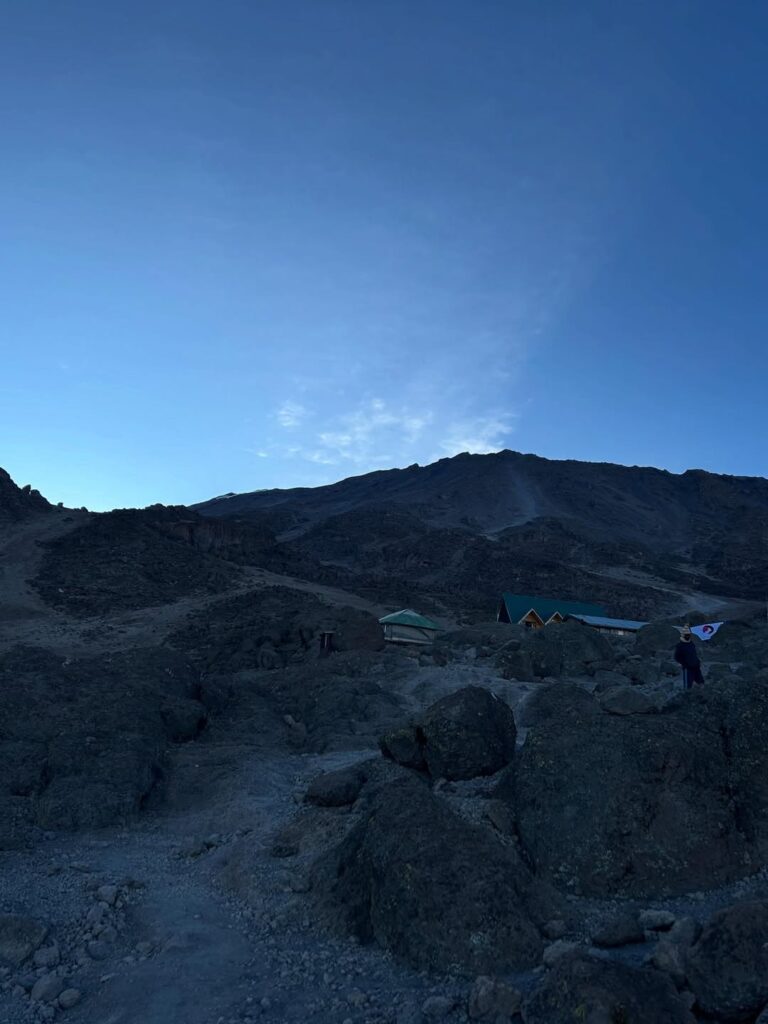
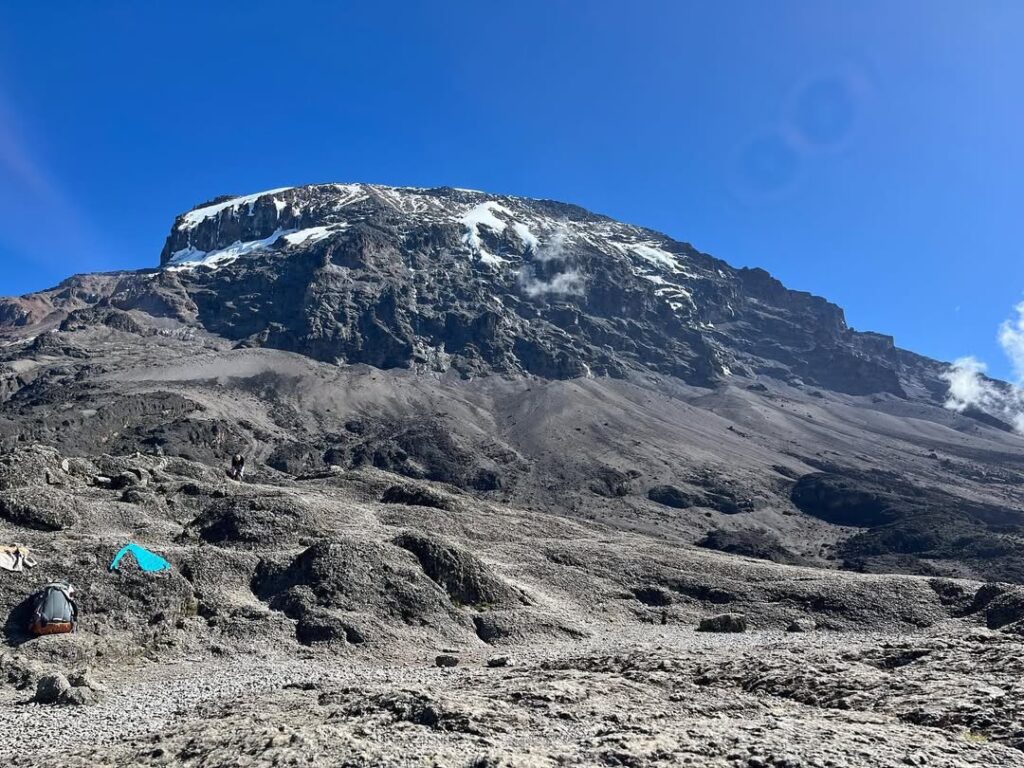
Karanga Camp sits at 3,995 metres (13,106 feet) on the southern flank of Kilimanjaro, tucked into a gentle shelf above the Karanga Valley. It’s the camp that separates a 7-day Machame climb from a 6-day Machame climb — the extra night between Barranco Camp and Barafu Camp that lets climbers arrive at the summit launch camp rested rather than exhausted.
If you’re comparing itineraries and wondering why the 7-day Machame costs a bit more and why guides consistently recommend it over the 6-day, the answer is mostly Karanga. This post covers what the camp is, what the day looks like on either side of it, and why an afternoon spent there makes a measurable difference to your summit attempt.
Where Karanga Sits on the Mountain
Kilimanjaro’s southern flank has a series of deep valleys running roughly north-south, cut by glacial melt water over thousands of years. Barranco Valley is the first of these valleys climbers on Machame and Lemosho cross. Karanga Valley is the next one east. Between the two lies the Barranco Wall — the rocky face climbers scramble after leaving Barranco Camp — and beyond the wall, a high-altitude moorland that eventually drops into the Karanga Valley itself.
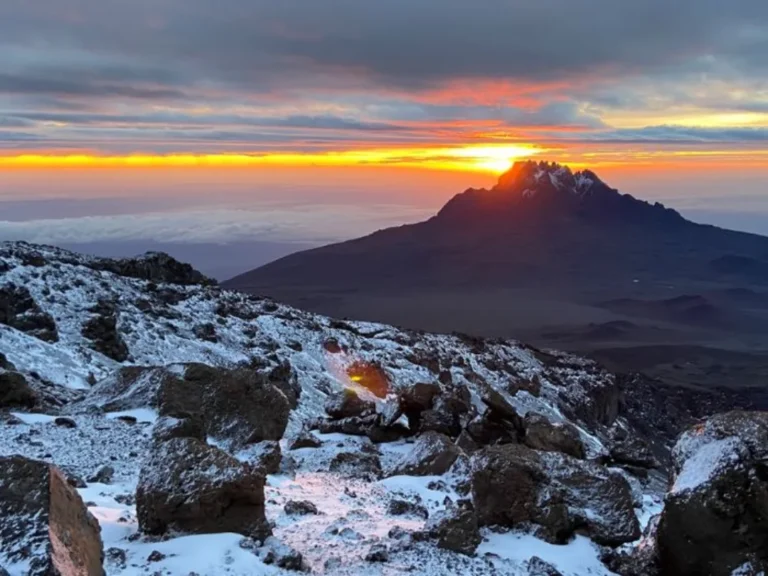
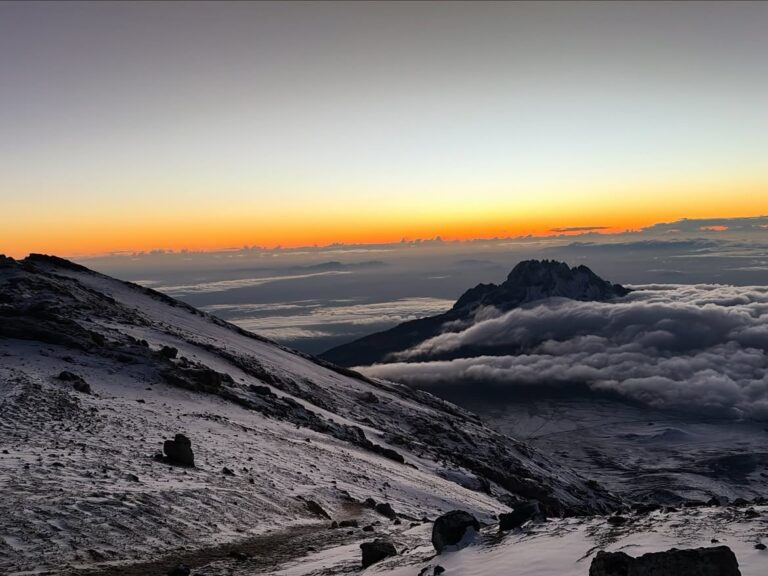
Karanga Camp is at the top of the far side of the valley, at 3,995m. The valley bottom, where climbers stop briefly to cross the stream, is at about 3,900m. From camp, looking west, you can see back across the valley to the Barranco Wall you climbed that morning. Looking east and north, the terrain opens up into the long approach to Barafu, still 700m above.
The word “karanga” has several meanings in Swahili. On Kilimanjaro, the name refers to the valley itself rather than any specific meaning — though “karanga” can also mean “peanut” in certain contexts, which occasionally causes confusion in travel literature. The valley is named locally for its character: a sheltered, relatively green notch in the otherwise stark upper-mountain terrain.
Which Routes Use Karanga
Karanga appears on the longer southern-approach itineraries:
- 7-day Machame Route — Day 4 night (after climbing the Barranco Wall in the morning).
- 8-day Lemosho Route — Equivalent day, after Barranco.
- Northern Circuit variations that split off the southern descent sometimes include Karanga.
The 6-day Machame itinerary skips Karanga entirely — climbers walk from Barranco directly to Barafu in a single long day. This compresses acclimatization and produces a tired arrival at the summit launch camp. It’s the main reason 7-day Machame has a higher success rate than 6-day.
The Marangu, Rongai, and Shira routes don’t pass through Karanga. They approach the summit from different sides of the mountain.
The Day: Barranco to Karanga
The walk from Barranco to Karanga is short and bracketed by two significant climbs.
Morning: Barranco Wall. The 257-metre (843 ft) scramble above camp that every Barranco climber knows about — the one that looks daunting from below and turns out to be manageable once you’re on it. The wall climb takes 1–2 hours. You top out on a shoulder with views back down to Barranco and up to the summit cone.
Midday: A descent into the Karanga Valley itself. The trail drops roughly 200m (656 ft) from the shoulder above Barranco to the valley floor, crosses a small stream, and then climbs back up the other side. The total distance from Barranco to Karanga Camp is only about 5 kilometres, but the up-down-up profile means you gain around 350 vertical metres (1148 ft) over three to five hours.
Afternoon: Arrival at camp. Most climbers walk into Karanga between 1pm and 3pm, depending on pace and how long the wall took. The short day is intentional. The point of Karanga is to arrive early, eat, rest, and give the body several hours at 3,995m (13,106 ft) without continuing up-mountain.
What Karanga Feels Like
Karanga is a quieter camp than most on the southern routes. Barranco is loud — climbers arriving in groups, porters working in clusters, the constant low thrum of multiple operators setting up dinner. Barafu is exposed and windswept with nervous energy about summit night. Karanga sits somewhere in between: a working camp, but one with a gentler tempo.
The terrain at camp is a mix of rocky ground and low scrub. Some giant groundsels still grow here at the edge of the valley, though they’re fewer and smaller than in Barranco. The air is noticeably thinner than at Barranco — at nearly 4,000m (1312 ft), most climbers feel the altitude again after Barranco’s 3,976m (13,044 ft) relief. Headaches may reappear in the late afternoon. Appetite can flag. None of this is unusual.
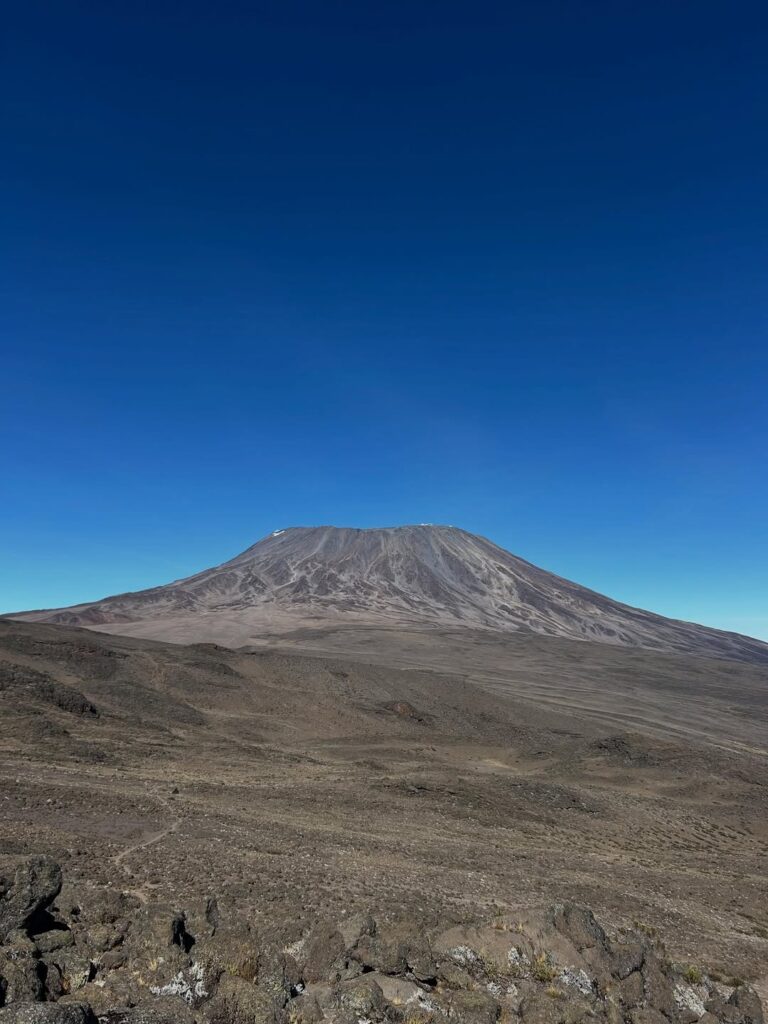
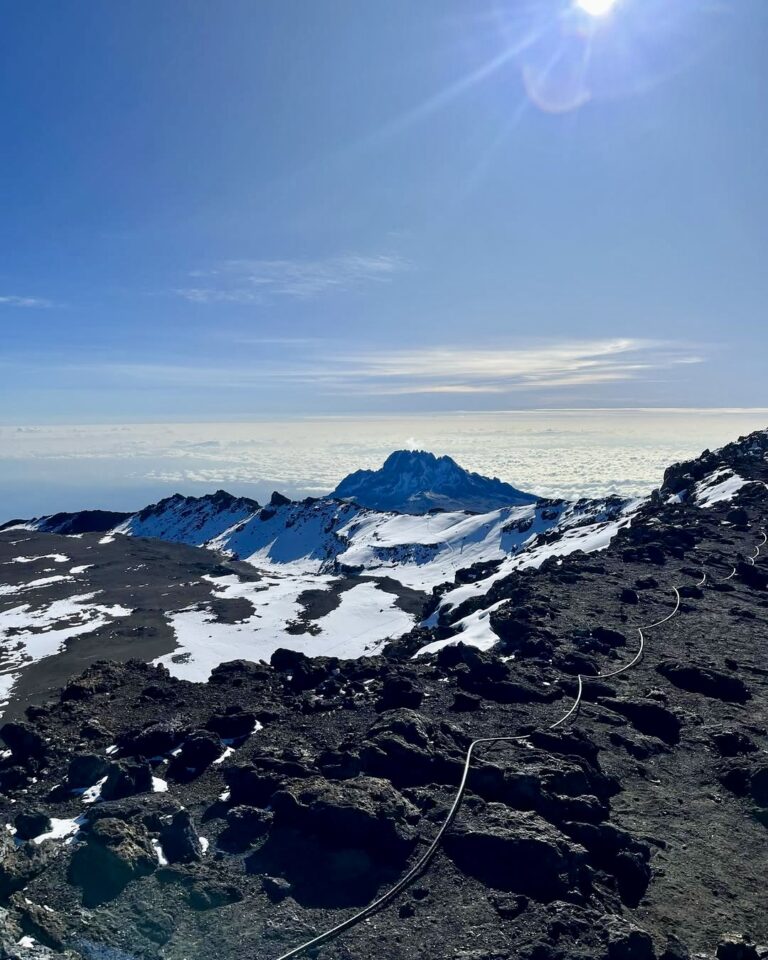
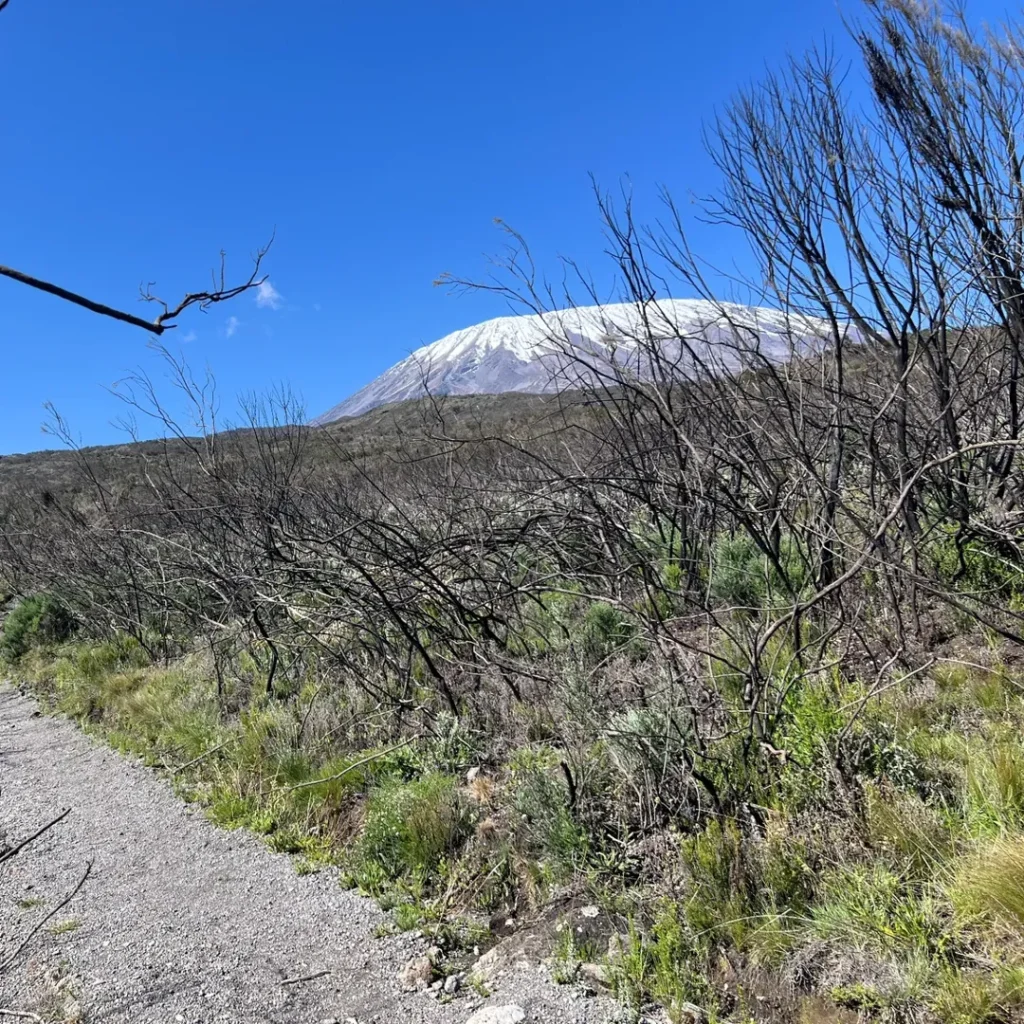
Karanga is also where the trek starts to feel serious in a different way. Barranco still had the green valleys, the groundsels, the sense of lushness. Karanga is higher, rockier, more exposed. You’re above the tree line for good. Looking up from camp, you can see the long scree slope climbing toward Barafu, and beyond it the summit cone of Kibo. The next time you walk up, you’ll be starting the final push.
Why Karanga Exists: The Acclimatization Case
The case for including Karanga in an itinerary is straightforward if you look at the numbers.
Route A: 6-day Machame. Climbers leave Barranco at 3,976m (13,044 ft) in the morning, climb the wall, descend into and back out of the Karanga Valley, continue up the long approach to Barafu Camp at 4,673m (15,331 ft). Arrival at Barafu: late afternoon, typically between 3pm and 5pm. The day gains 700m (2296 ft) of elevation over 7–9 hours. Climbers arrive tired. Summit night is the same night.
Route B: 7-day Machame. Climbers leave Barranco, climb the wall, descend into and back out of the Karanga Valley, and stop at Karanga Camp for the night. The next morning, rested, they climb 680m (2230 ft) to Barafu Camp over 3–4 hours. Arrival at Barafu: early afternoon, around 1pm. Summit night is the night after arrival.
The difference: on Route A, climbers arrive at the summit launch camp exhausted from a long day and have 6–8 hours before summit push starts. On Route B, they arrive rested, have 10–12 hours at Barafu before summit push, and have done a more gradual climb with an extra sleep at intermediate altitude.
In practice, this produces measurably higher summit success on the 7-day itinerary. The Kilimanjaro Sky safety approach is based on these kinds of numbers — acclimatization isn’t abstract, it’s specific, and the difference between enough time and not enough time at each altitude band shows up in summit statistics and in how climbers feel walking out of Barafu.
There’s a reason guides consistently recommend 7-day Machame over 6-day. Karanga is the reason.
What to Do With an Afternoon at Karanga
Unlike Barafu, where every hour is pre-summit nerves, Karanga is a genuine rest afternoon. A few ways climbers typically spend it:
Eat a proper lunch. Most itineraries serve a full lunch on arrival at Karanga — soup, a main course, tea. Eat it. Altitude blunts appetite, but you need fuel for the next two days.
Hydrate. Karanga is the last camp with a reliable water source before Barafu. Porters collect water here to carry up to summit camp. As a climber, you should be drinking steadily through the afternoon — 3–4 litres across the day is the target.
Walk short distances above camp. Your guide may suggest a short acclimatization walk to 4,100m (13451 ft) or so, then back to camp. “Climb a little high, sleep low” applies here as well. It’s optional — if you feel the altitude strongly, rest is the better choice.
Sleep if you can. A 60–90 minute afternoon nap at Karanga is more useful than at any other camp. Your body recovers. You’re going to need the reserves tomorrow.
Check your summit-night kit. Karanga is a good place to lay out what you’ll wear on summit night, check battery levels on headlamps, and pre-stage insulated water bottles. Don’t do this at Barafu — you’ll be more tired and the wind will be worse.
The Day After: Karanga to Barafu
The morning from Karanga to Barafu is short — about 4 kilometres with 680m (2230 ft) of elevation gain, typically 3–4 hours of walking. You climb steadily through high alpine desert. The vegetation thins. The Barafu ridge eventually comes into view above you and slowly gets closer.
This is a day where pace matters more than it looks like it should. You’re walking to a camp where you’ll try to sleep, wake at 11pm, and start summit push at midnight. The more efficient the walk from Karanga to Barafu, the more rested you’ll be for summit night.
Guides will slow you down. Pole pole. Listen to them.
Your arrival at Barafu in early afternoon, well-rested from Karanga, is the setup that gives a 7-day Machame or 8-day Lemosho climb its summit success rate. You can read more about what happens at Barafu in the Barafu Camp post and about the summit push itself in the Stella Point post.
Planning Around Karanga
If you’re deciding between itineraries, the Karanga night is usually worth the extra day. A few notes:
On 6-day Machame: Karanga is skipped. Budget climbers sometimes choose this option, but summit success is lower and the day from Barranco to Barafu is genuinely hard. If you’re fit, confident, and constrained on time, 6-day is possible. If either fitness or time is flexible, the 7-day version is the better choice.
On 7-day Machame and 8-day Lemosho: Karanga is included. These are the itineraries we most often recommend for first-time Kilimanjaro climbers because they produce the best balance of cost, time, and success.
On Northern Circuit (9–10 days): Karanga is less relevant because the route includes so much more acclimatization earlier in the climb.
The difference between the itineraries is covered in more depth on the routes overview page and the packages page. If you want to talk through which version fits your timeline, get in touch with our team in Moshi — we run small groups and can walk you through the trade-offs specifically.
Karanga isn’t the camp anyone remembers as dramatic. It’s the camp that makes everything after it possible.