The honest answer to “is Kilimanjaro safe?” is: it depends entirely on how it’s managed.
The mountain itself is not particularly technical — no ropes, no ice axes, no specialist climbing experience required. What Kilimanjaro does require is careful management of altitude, cold, and pace. When that management is done well, the mountain is very safe for a wide range of fitness levels. When it’s done poorly — with inadequate guide ratios, no pulse monitoring, guides who feel pressured to push clients regardless of symptoms — the risks become real.
Every year, a small number of people die on Kilimanjaro. The exact number is disputed and likely underreported, but estimates suggest 5–10 fatalities annually from roughly 35,000–50,000 climbers. The primary causes are altitude-related illness (HACE — high altitude cerebral edema, and HAPE — high altitude pulmonary edema) and cardiac events. The majority of serious incidents are preventable with proper monitoring and the willingness to descend when a descend is warranted.
This is not a page designed to frighten you. It’s designed to help you understand what “proper management” actually looks like in practice — and what to look for in an operator.
The Real Risks on Kilimanjaro
Altitude Sickness
This is the primary risk on Kilimanjaro, and it’s the one that requires the most ongoing attention. At 5,895m-(19,340ft) the summit has roughly half the atmospheric pressure of sea level, which means your body is receiving significantly less oxygen per breath than it’s accustomed to.
Acute mountain sickness (AMS) is common — mild symptoms (headache, fatigue, nausea, poor sleep) affect the majority of climbers at some point. The risk is when mild AMS progresses to more serious conditions: HACE (fluid on the brain) and HAPE (fluid in the lungs). Both are life-threatening if not treated promptly. Both are manageable if caught early and responded to correctly.
The key early warning signs of progression from AMS to HACE include confusion, loss of coordination, and persistent severe headache that doesn’t respond to ibuprofen. HAPE presents as breathlessness at rest, a persistent cough (sometimes producing frothy or blood-tinged sputum), and extreme fatigue. A guide who knows what they’re looking for catches these signs early — before a situation becomes critical.
Cardiac Events
High altitude places additional demand on the cardiovascular system. For climbers with undiagnosed heart conditions, this can be a trigger. Clients over 50, or those with any cardiovascular history, should get medical clearance before booking. A standard pre-climb check with a GP who understands altitude medicine takes twenty minutes and is worthwhile.
Hypothermia
Summit temperatures routinely fall below -10°C, and wind chill can push the felt temperature to -30°C or lower. Hypothermia risk is real, particularly on summit night, and is managed through proper gear, layering discipline, and a guide team that watches for the signs — confusion, slurred speech, poor coordination.
Falls and Injuries
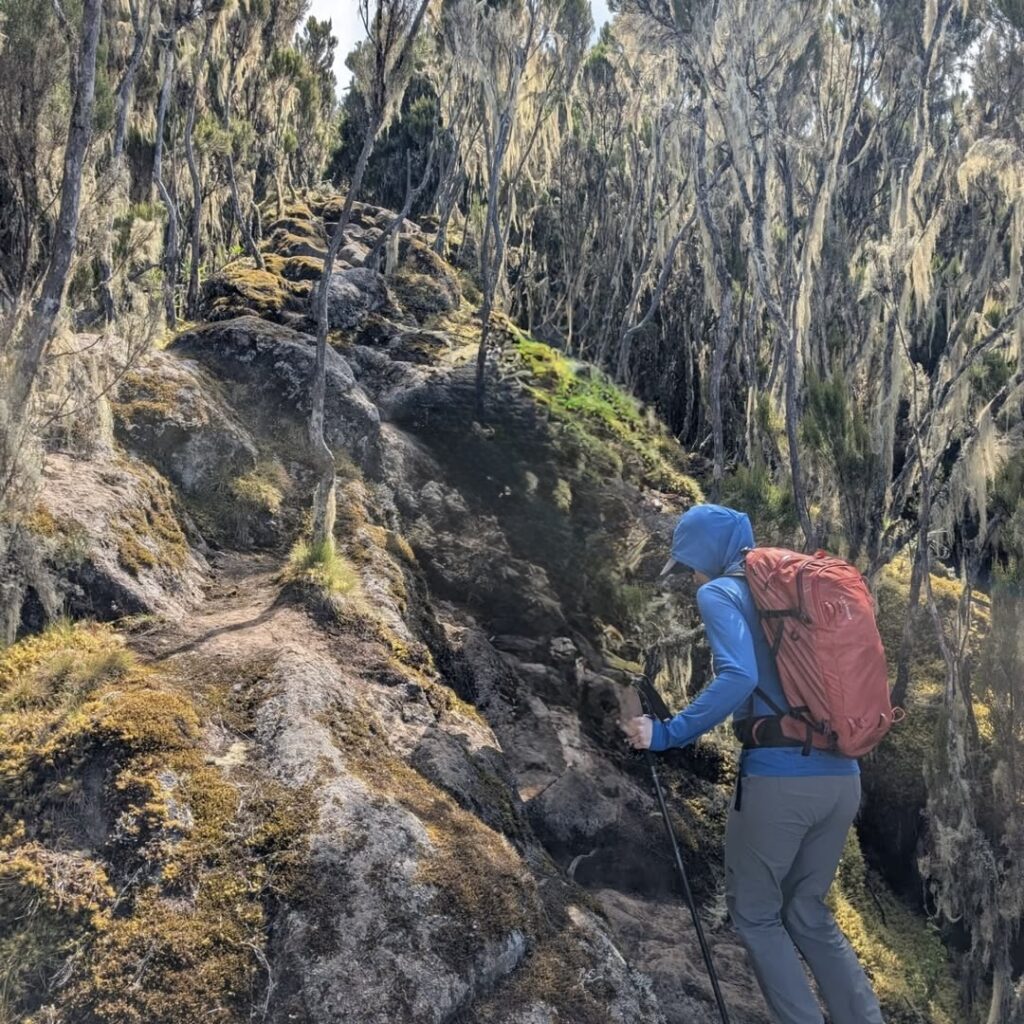
The scree slope on the descent below Barafu is the most common place for non-altitude-related injuries — twisted ankles, bruised hands from falls. The descents on routes like Machame are steep and loose. Trekking poles, decent boots, and paying attention to footwork rather than the view all help. Our assistant guides specifically manage the pace and footing on descent, where leg fatigue makes people less careful.
How Responsible Operators Manage These Risks
Pulse Oximetry Monitoring
Every morning, every evening, and any time a guide observes a change in a client’s condition, we take a pulse oximetry reading. The oximeter measures blood oxygen saturation (SpO2) and pulse rate — and the pattern of readings over the course of a climb tells your guide a great deal about how your body is responding to altitude.
Normal SpO2 at sea level runs 95–99%. At altitude, readings drop — a SpO2 of 85% at 4,000m-(13,120 ft) is unremarkable. What we’re watching for is readings below 75%, or drops greater than 5 percentage points from a client’s prior reading. These thresholds don’t trigger automatic descent — they trigger a careful conversation and increased monitoring. Combined with how the person is presenting clinically (are they confused? are they breathing normally at rest?), the guide makes a judgment call.
This monitoring system works because it’s continuous and because the guide knows each client’s individual baseline. A reading of 78% in someone who has been stable at 82% is different from a reading of 78% in someone who has been stable at 78%. The individual pattern matters.
Guide Certification and Training
All our lead guides hold Tanzania National Parks (TANAPA) licensing, which is mandatory to operate on the mountain. All hold Wilderness First Aid certification.
Several of our senior guides hold additional qualifications: Emergency Medical Assistant of Tanzania, Wilderness First Responder, and in some cases, a Bachelor’s degree in Wildlife Management with mountaineering specialization. This isn’t something we mention to impress — it’s context for what “experienced guide” actually means. A Wilderness First Responder is trained to manage trauma and medical emergencies in remote environments, including altitude-related illness. That’s a different level of capability from a guide who has climbed the mountain many times but has no medical training.
Guide Ratios
We run one lead guide plus one assistant guide per 2–3 clients. This ratio is fixed — not varied by season, not negotiated down for cost savings. On summit night in particular, the assistant guide’s role at the rear of the group is critical. They’re watching pace, watching breathing, watching who is falling behind, and watching for signs of deterioration that are easiest to see from behind.
The lead guide’s attention is divided between route-finding, setting pace, and monitoring the group. With more than 3 clients per guide, something gets missed. The ratio exists because it works.
Oxygen Cylinders and Medical Kits
Every departure carries oxygen cylinders — not emergency backup oxygen, but immediately available supplemental oxygen that can be administered in minutes if a client deteriorates. The oxygen is used to stabilize someone who needs to descend, buying time for the descent to happen in an orderly, assisted way rather than as an emergency scramble.
Medical kits contain medications for altitude sickness management, including dexamethasone (for HACE) and nifedipine (for HAPE). Guides are trained in their use. The kit also contains wound care materials, anti-nausea medications, analgesics, and communication devices.
Guide Authority to Call a Descent
This is the safety element that operators don’t talk about enough, but it’s arguably the most important.
Every operator’s safety page will tell you they have protocols. The question is whether the guide on the ground has the genuine authority — and the support — to tell a client they need to descend, even if that client has flown 10,000km-6200miles and paid significant money for this climb. The commercial pressure to let people push on is real and affects guides at operators where the performance metric is summit percentage.
At Kilimanjaro Sky, the lead guide’s decision is final. There is no radio call to an office for permission. There is no “let’s see how you feel in an hour” if the guide has assessed that the situation requires descending now. This isn’t a policy we invented — it’s the operational reality of running a safe climb. A guide who has doubt about whether they’ll be supported in a descent call is a less safe guide than one who knows the answer is yes.
The 4-Tier Evacuation Protocol
When a descent is warranted, here is exactly what happens:
Tier 1: Assessment, oxygen administration, and stabilization at altitude. The guide assesses the situation, administers supplemental oxygen if appropriate, and begins the assisted descent as quickly as safety allows.
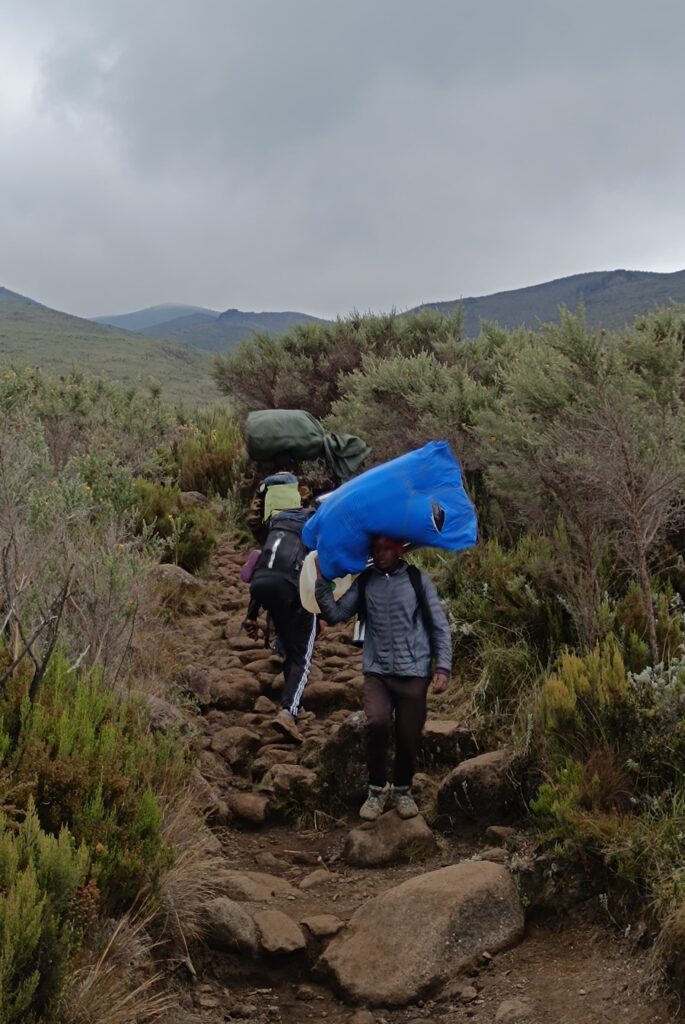
Tier 2: Assisted descent with stretcher capability. If the client cannot walk under their own power, our porter crew provides stretcher carry. Every guide team carries a portable rescue stretcher. This is not theoretical — it has been used.
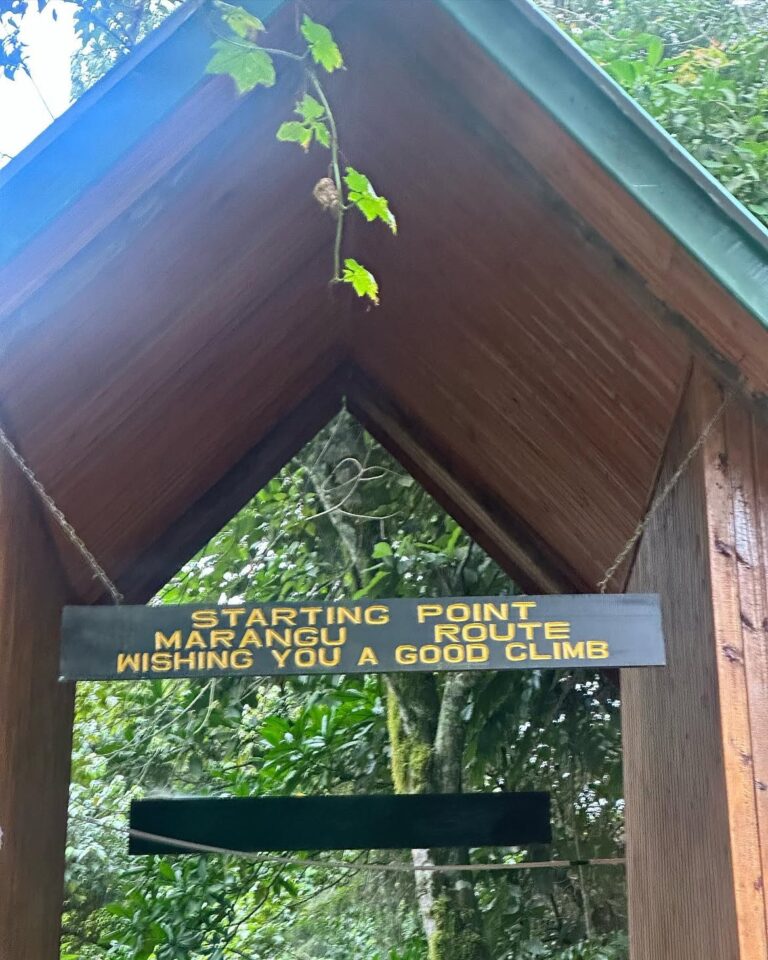
Tier 3: Vehicle evacuation. TANAPA coordinates vehicle evacuation from lower gates — Mweka Gate on Machame/Lemosho descents, Marangu Gate on the Marangu route. Kilimanjaro Christian Medical Centre (KCMC) in Moshi is a modern hospital with altitude medicine experience. For most medical situations that resolve with descent and oxygen, KCMC admission is either brief or unnecessary.
Tier 4: Helicopter evacuation. Available, has been used, and is the fastest option for a critical situation. It requires valid altitude rescue insurance (minimum 6,000m-19685 ft. coverage) or client-funded payment. This is one of the reasons we include altitude insurance guidance in every pre-departure communication. Helicopter costs without insurance are significant.
What Clients Should Do Before the Climb
Get a Medical Check
If you have any cardiovascular history, respiratory conditions, diabetes, or are over 50 with no recent cardiac assessment, a pre-climb GP visit is worth your time. Your GP should know you’re attempting an altitude of 5,895m. Blood pressure, resting oxygen levels, and a basic cardiovascular assessment take twenty minutes and provide useful baseline data.
If you want a more thorough pre-altitude assessment, UK-based travellers can access altitude medicine specialists through clinics in London and other major cities. It’s not required, but it’s available.
Understand Diamox
Acetazolamide (Diamox) is a medication that reduces altitude sickness symptoms for many people by stimulating faster, deeper breathing — which increases blood oxygen saturation. It’s used widely among Kilimanjaro climbers.
It works for most people. It doesn’t work for everyone. It has side effects (frequent urination, tingling in the hands and feet, occasionally blurred vision) that are manageable but worth knowing about. If you’re considering it, have the conversation with your GP before departure — not at Barafu Camp. Some people are allergic to sulfa drugs and cannot take Diamox.
Our guides are not in a position to prescribe or advise on medications. They can describe what they observe on the mountain; your GP and you make the medication decisions.
Take Acclimatization Seriously at Route Level
The single most effective thing you can do to improve your summit chances is choose a route with adequate acclimatization time. The Lemosho Route at 8 days is the route we recommend most strongly for clients who have any concern about altitude susceptibility — the extra time at altitude before the summit push makes a measurable difference. The Machame Route at 7 days is also well-regarded for its “climb high, sleep low” profile.
The Marangu Route at 5 days is the shortest option and carries the lowest success rate for this reason — not because the route is harder, but because 5 days doesn’t give most bodies enough time to adjust to altitude.
For a deeper dive into altitude sickness prevention and management, see our altitude sickness guide.
A Note on What We Can’t Control
Kilimanjaro cannot be made risk-free. High altitude is an inherently demanding environment, and even with excellent preparation and guiding, a small number of people will have serious reactions. Some people are genetically predisposed to poor altitude tolerance and won’t know it until they’re at 5,000m for the first time.
What responsible management does is reduce the risk substantially and create the conditions for fast, effective response when something does go wrong. The margin between a scary situation that resolves safely and a tragic outcome is often measured in minutes — the speed of recognition, the speed of descent, the quality of the response. That’s what the protocols are for.
Our safety page has the full operational detail. And if you want to talk through any of this before you book, we’re happy to have that conversation. A client who understands what we do and why we do it is a client who can work with their guide rather than against them.