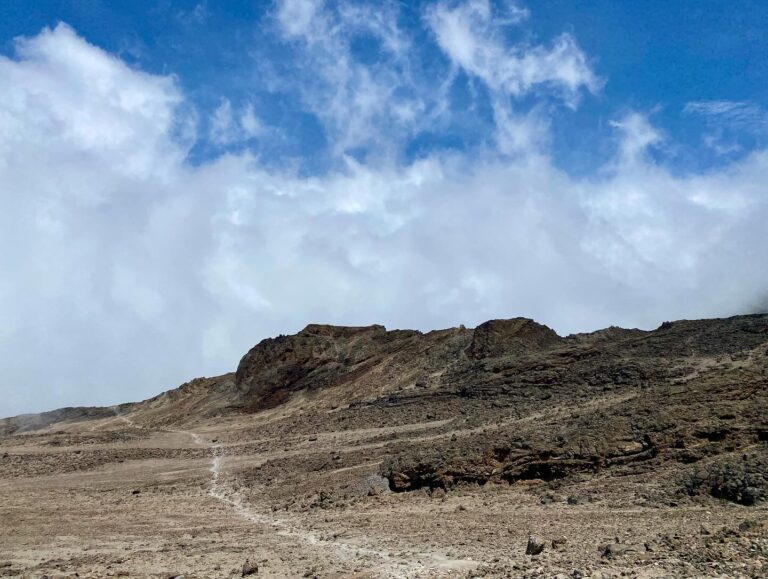
Barranco Camp sits at 3,976 metres (13,044 feet) in a broad, dramatic valley on Kilimanjaro’s southern slope. Above the camp rises the Barranco Wall — a 257-metre near-vertical rock face that every climber passing through Barranco has to scramble up the next morning. Around the camp stand giant groundsels (Dendrosenecio kilimanjari) — 5-metre-tall plants that look like cartoon cabbages on long trunks, found only on the upper slopes of Kilimanjaro and a handful of other East African high mountains.
For climbers on the Machame, Lemosho, and Umbwe routes, Barranco is the night after Lava Tower — the first “sleep low” night in the climb-high-sleep-low acclimatization rhythm that defines the southern approach. Most climbers feel meaningfully better at Barranco than they did at Lava Tower six hours earlier. It’s also one of the most visually striking camps on the mountain.
This post covers what Barranco is, what the valley and its vegetation are like, what the Barranco Wall climb actually involves, and why this camp is a turning point in most climbers’ experience of the mountain.
Where Barranco Sits on Kilimanjaro
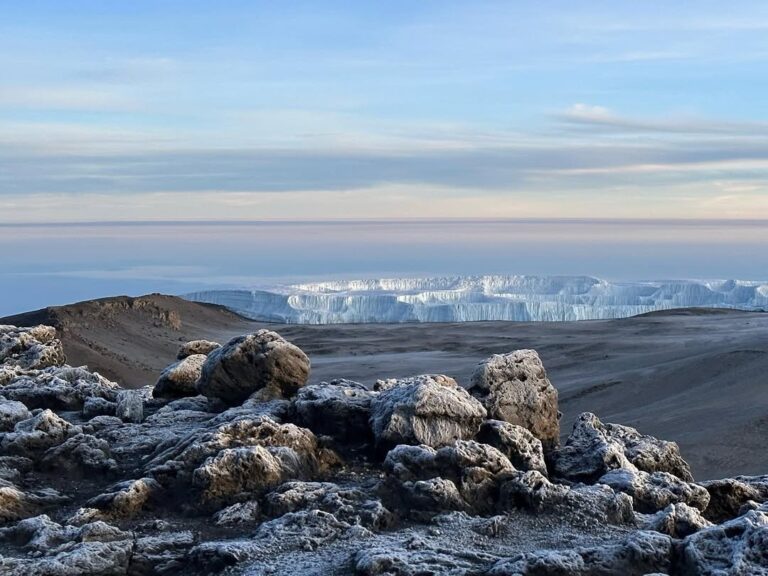
The Barranco Valley is a natural amphitheatre carved into the southern slopes of Kibo. It sits between the Heim and Kersten glaciers — both visible above the camp on clear days — and is sheltered enough from the upper-mountain winds to support a remarkable ecosystem of high-altitude plants found almost nowhere else.
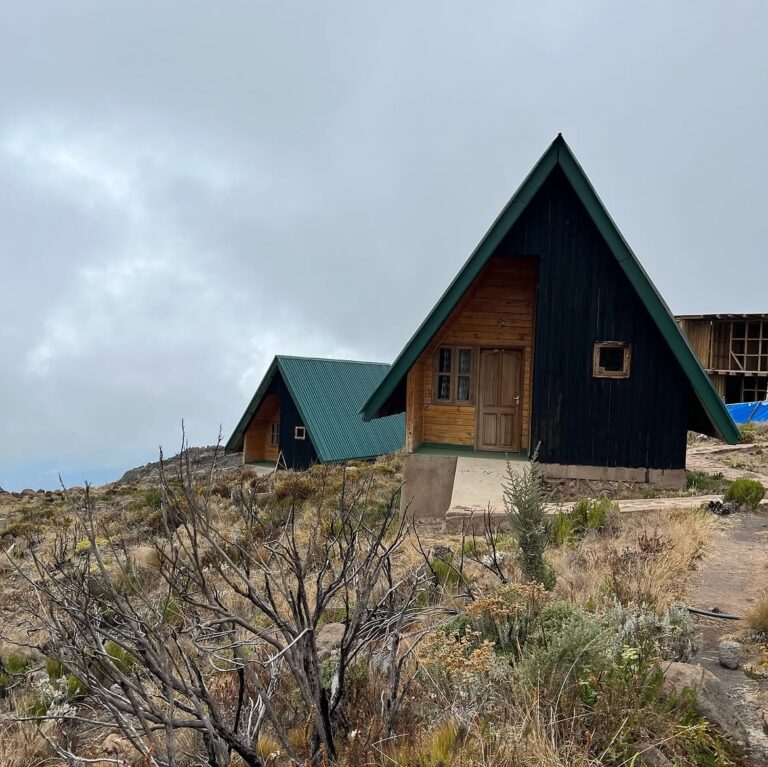
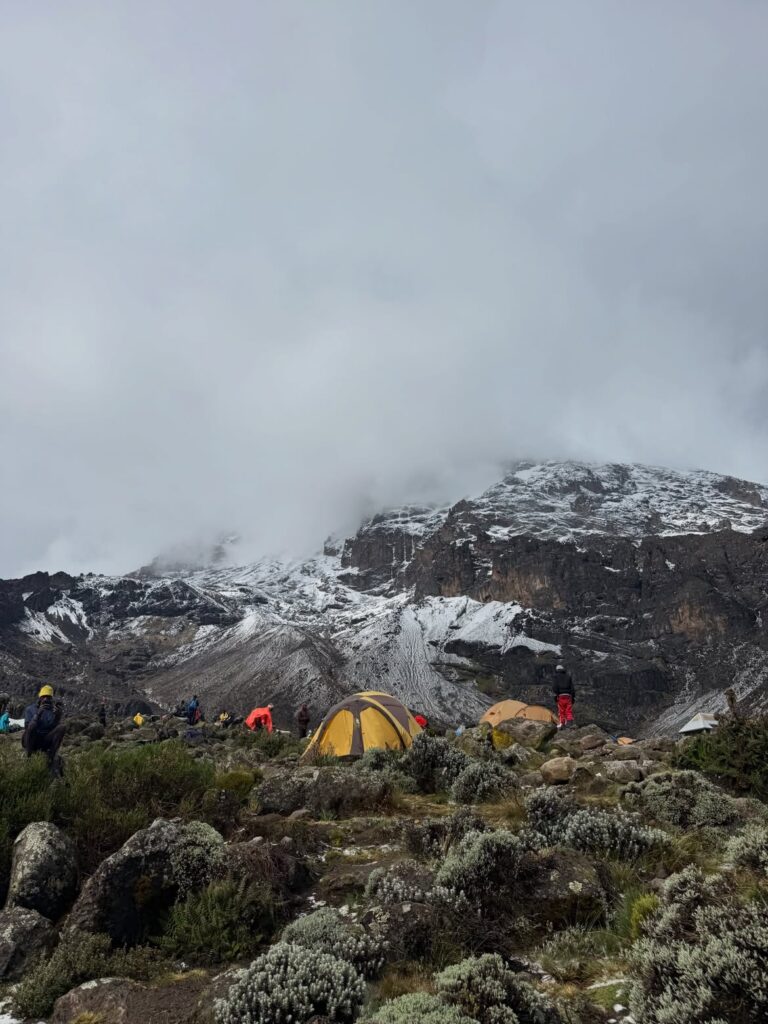
The camp itself is at the lower end of the valley, at a spot where the terrain flattens enough to pitch tents. Above the camp, the valley walls rise steeply on three sides. The Barranco Wall — the rocky face you’ll climb the next morning — dominates the view to the north.
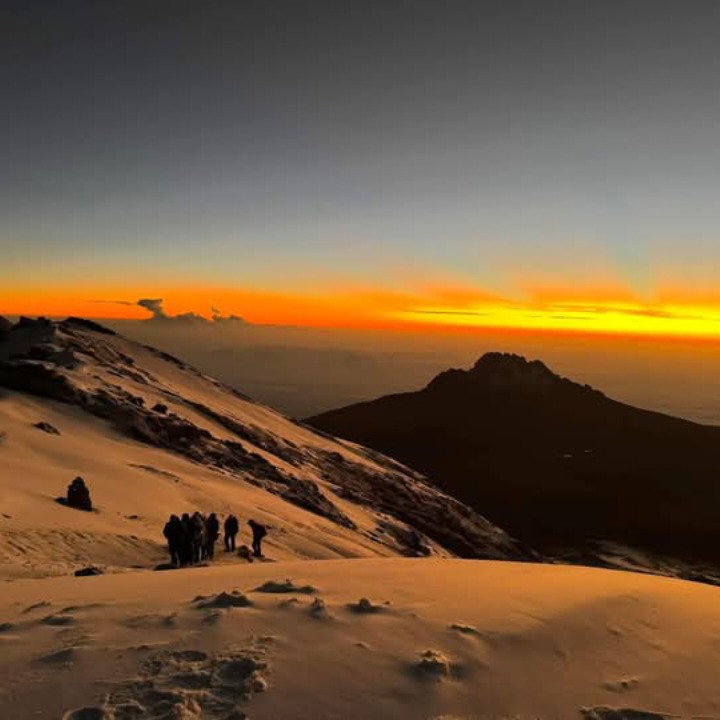
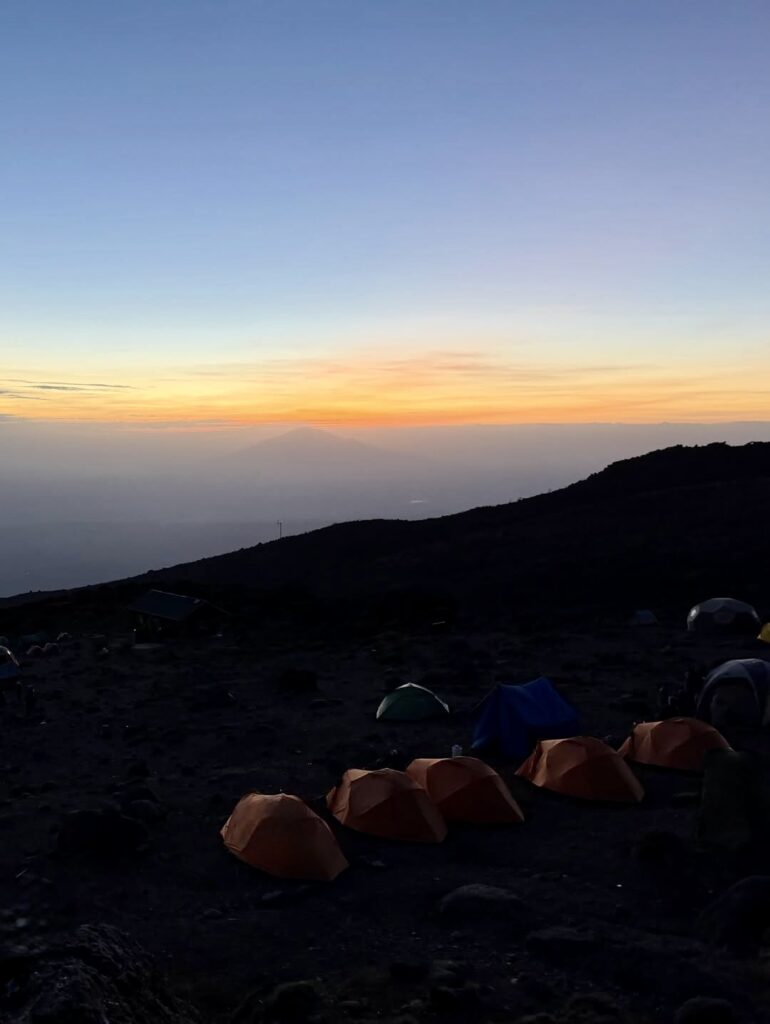
Looking south from camp, on a clear evening, you can see all the way down the mountain to the clouds covering the lower slopes, and sometimes beyond them to the plains of Tanzania and the lights of Moshi in the distance. Barranco sunset is one of the moments climbers describe most vividly years later. The clouds often sit just below camp, which means you’re above them, looking down at a glowing pink layer of weather as the sun drops.
Which Routes Use Barranco
Three of Kilimanjaro’s southern-approach routes converge at Barranco:
– Machame Route — All itineraries (6- and 7-day) pass through Barranco on day 4.
– Lemosho Route — All itineraries (7- and 8-day) pass through Barranco on day 5 or 6.
– Umbwe Route — A steeper, more direct climb, reaches Barranco earlier.
From Barranco, climbers head up the Barranco Wall and continue to either Karanga Camp (on 7-day+ Machame and 8-day Lemosho) or directly to Barafu Camp (on 6-day Machame).
The Shira Route joins this path around Lava Tower and typically uses Barranco as well. The Rongai, Marangu, and Northern Circuit routes approach the summit from other sides and don’t stay at Barranco.
The Arrival: Descending from Lava Tower
Most climbers reach Barranco in the mid-to-late afternoon after a morning climb to Lava Tower at 4,630m, lunch there, and a 650m descent into the valley. The descent takes 2–3 hours and is where many climbers feel their first major relief from altitude. The headache that built up at Lava Tower often fades before you reach camp. The nausea lifts. The heaviness in the legs starts to feel more like normal trail fatigue.
That shift is not accidental. It’s the physiological payoff of the climb-high-sleep-low strategy: your body has done several hours of work adjusting to 4,630m, and now it gets to recover overnight at 3,976m before continuing up the mountain.
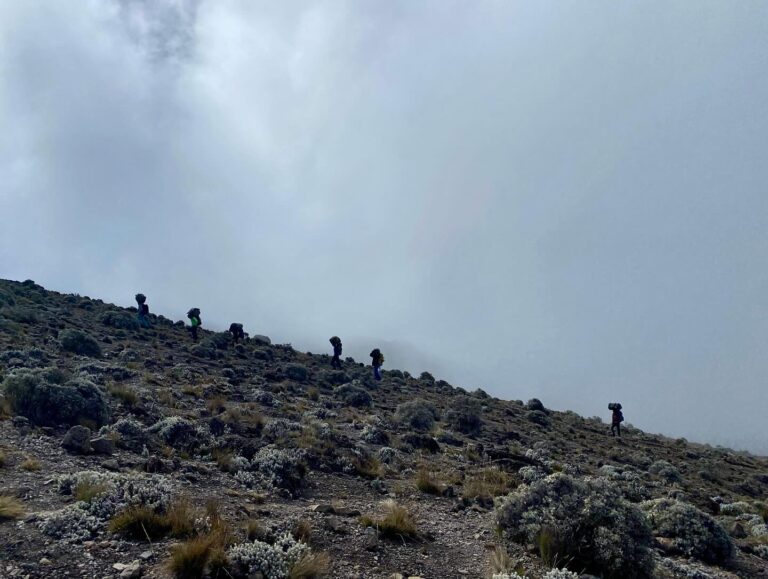
Walking into Barranco, you pass through stands of giant groundsels — the Dendrosenecio plants that make this valley unmistakable. These grow only in specific high-altitude bands on East African mountains (Kilimanjaro, Mount Kenya, the Rwenzoris). They can live for centuries. They look otherworldly, especially in late-afternoon light. Your guide will almost certainly point them out, because even after hundreds of climbs, they remain one of the most distinctive sights on the mountain.
What the Evening at Barranco Is Like
The rhythm at Barranco is gentler than at Barafu:
Afternoon arrival: Tea, biscuits, a guide check-in — pulse oximeter reading, visual assessment, questions about how you feel. Most climbers feel significantly better than they did at lunch.
Free time in the valley: Unlike Barafu, Barranco is a camp you can actually walk around comfortably. You can sit near the river, photograph the groundsels, look up at the wall you’ll climb the next morning.
Dinner: A proper meal — soup, a main course, sometimes a simple dessert. Appetite returns for most climbers at Barranco.
Summit wall briefing: Your guide walks through what the next morning looks like — the wall climb, how scrambling works in practice, where to place hands and feet, how pace will go. Any questions, now is the time.
Early to bed: Most climbers are asleep by 9pm. Sleep is noticeably better here than at Lava Tower or Barafu.
Dinner at Barranco is sometimes the best meal of the trek. Something about being lower, being fed properly, and being warmer than you were two hours ago makes food taste good in a way it hasn’t all day.
The Barranco Wall: What It Actually Is
The Barranco Wall is the feature that gives Barranco its reputation. A 257-metre rocky face that rises directly above camp, climbed first thing the next morning.
A few things to understand:
It’s a scramble, not a climb. No ropes, no harnesses, no technical gear. You use your hands on rock in places — plenty of places — but the route is a well-established path used by thousands of climbers every year. TANAPA-licensed guides walk it with their eyes closed.
It takes 1–2 hours. The ascent from camp to the top of the wall is not a long day. It’s a short, intense section that ends with you on the shoulder above Barranco, looking down at the camp you just left.
The “Kissing Rock” is real. Near the top of the wall there’s a narrow passage where the trail squeezes between two rocks. Most climbers end up pressed close to the rock face to get around it — hence the nickname. Guides will spot you through it.
Porters walk it carrying loads. The porters who support your climb walk this same path carrying packs weighted to 20 kilograms (the TANAPA-enforced maximum). Watching them move up the wall with that weight on their heads or shoulders is one of the moments that recalibrates what most climbers think they’re accomplishing on the mountain.
At Kilimanjaro Sky, porters are paid 10–12 USD per day directly after descent, weighed at every park gate to enforce the weight limit, and provided with sleeping bags, waterproof kitbags, and proper tents at every camp. Lead guides monitor porter health and wellbeing alongside client wellbeing. The economics of how porters are treated matters enormously on this mountain — the Kilimanjaro Sky specifics are documented on the about page.
Fear of heights is worth discussing with your guide. The wall has sections with real exposure — drops below you, open spaces above. If heights make you freeze, tell your guide the night before. They’ll position you between guides, spot you through the harder sections, and keep pace appropriate.
What You See from the Top of the Wall
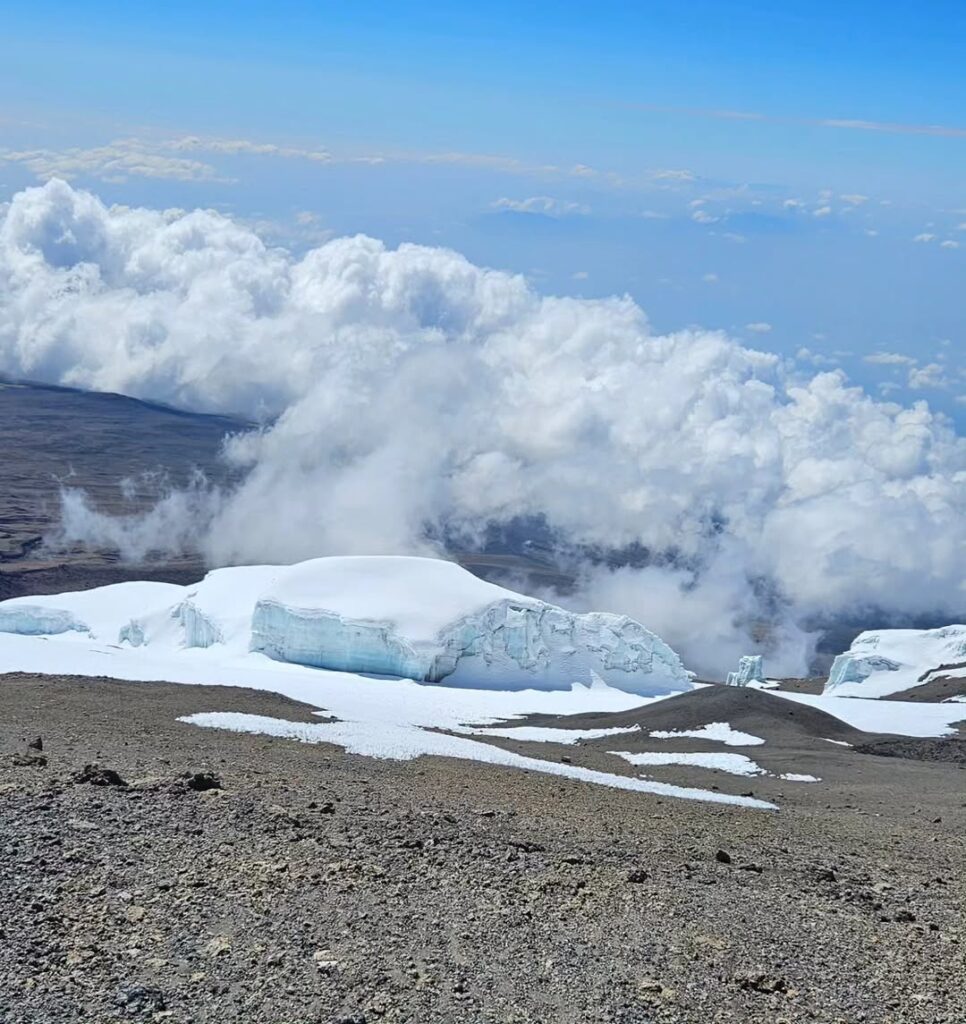
When you top out on the Barranco Wall, you’re on a small shoulder looking back down at the valley you slept in. The camp below looks impossibly small. The groundsels form a green carpet along the valley floor. Above you, the summit cone of Kibo is closer than it was, and you can see the glaciers on its flanks in clearer detail than you could from below.
This is one of the moments climbers remember. Not because the view is the most dramatic on the mountain — Stella Point and Uhuru will beat it — but because you just climbed a wall that looked impossible from camp the night before, and you did it in one breath-controlled hour at nearly 4,000m.
From the shoulder, the path continues up-mountain to Karanga Valley. If you’re on a 7-day Machame or 8-day Lemosho itinerary, you’ll stop at Karanga for the night. If you’re on a 6-day Machame, you’ll continue directly to Barafu.
Why Barranco Matters More Than It Looks
Barranco is structurally important in a way that isn’t obvious unless you’ve climbed the mountain. It’s the camp where three things happen at once:
1. Your acclimatization turns a corner. The climb-high-sleep-low rhythm starts paying off in real, measurable ways. Most climbers feel dramatically better at Barranco than they did 24 hours earlier.
2. You prove to yourself you can scramble. The Barranco Wall the next morning is mentally formidable if you’ve never done any scrambling before. Topping out tells your body and your nervous system that the rest of the mountain is within your capacity.
3. The character of the climb shifts. Below Barranco, the mountain feels green, lush, forested. Above the wall, the terrain turns rocky, thin, high-altitude. Barranco is the transition point — emotionally and literally.
Climbers who describe Barranco a year later often say some version of the same thing: “That’s where I started to believe I could actually summit.”
Planning Around Barranco
A few practical things for climbers thinking about this camp specifically:
Longer itineraries include Karanga after Barranco. On a 6-day Machame, you leave Barranco and walk all the way to Barafu in a single day — a long day with the wall climb front-loaded. On 7-day+ itineraries, you stop at Karanga for the night, which significantly improves summit-day fitness. If budget allows, the extra day matters. Our routes overview lays out the itinerary differences.
Bring hiking poles, but know when to stow them. Poles help on the descent from Lava Tower and the approach to the wall, but the wall itself requires hands free. Most climbers collapse their poles and strap them to their packs at the base of the wall, then redeploy them after topping out.
Photograph the groundsels at dawn. Late-afternoon light is good; early morning light is better. If you wake up 30 minutes before breakfast and walk the valley floor, you’ll have one of the mountain’s distinctive photographs to take home.
Don’t underestimate the psychological weight. The wall above camp is visible from dinner. Some climbers sleep poorly thinking about it. Others sleep fine. Either way, the climb itself is almost always easier than climbers anticipated — because the path is well-established, guides spot you through the harder sections, and the altitude effect on breathing forces a slow, deliberate pace that makes scrambling manageable.
If you want to walk through which route and itinerary gives you the right pacing through Barranco and beyond, get in touch with our Moshi team. We run small groups and can talk through the trade-offs specifically for your fitness and timeline.