The short answer: yes — for Moshi, and for the first day or two of trekking in the forest zone. No — for the majority of your time on the mountain, above 3,000 metres, where insect populations are essentially absent.
The longer answer involves understanding how insect populations change with altitude on Kilimanjaro, which insects actually pose health risks versus which are merely annoying, and what repellent actually works. Getting this right means you bring the right product in the right quantity — not a litre of DEET for a trip that doesn’t need it, and not nothing for the days when you do.
Insect Exposure by Altitude Zone on Kilimanjaro
Kilimanjaro passes through five distinct ecological zones as you ascend from the gate to the summit. Each zone has a different temperature, moisture, and insect profile.
Zone 1: Moshi and the Approach (900–1,800m)
Insect presence: High. This is the most significant insect exposure zone of your entire Kilimanjaro trip.
Moshi sits at around 900 metres in the lower slopes of Kilimanjaro, in a warm, humid agricultural and urban environment. Mosquitoes are active here, particularly at dusk and dawn. Anopheles mosquitoes — the species that transmit malaria — are present in this zone. Other insects include midges, flies, and general tropical lowland insects.
This is where your malaria prophylaxis and insect repellent are most directly relevant. See our malaria pills guide for the full story on prophylaxis. For repellent, the guidance here is the same as for any tropical lowland destination in East Africa.
What to use: DEET-containing repellent at 30–50% concentration, or picaridin at 20% concentration, applied to exposed skin in the evenings. Long sleeves and trousers after dusk. Bed nets in accommodation that doesn’t have screens or air conditioning.
Zone 2: Montane Forest (1,800–2,800m)
Insect presence: Moderate on lower days, declining with altitude.
The forest zone is humid, dense, and bio-rich. You’ll encounter mosquitoes in the lower sections of this zone, particularly on day one (for most routes, gate to first camp is in this range). Flies are common. You may also encounter tsetse flies in some sections of the forest — these bite through clothing and are not deterred by most repellents, though they’re not a significant clinical risk on Kilimanjaro compared to lowland safari areas.
Dengue-carrying Aedes mosquitoes can be present in this zone — more on dengue risk below.
What to use: Apply repellent on exposed skin for hiking days one and two, particularly in the evening when you reach camp. By the time you reach your second or third camp (around 2,800m+), insect activity will have dropped significantly.
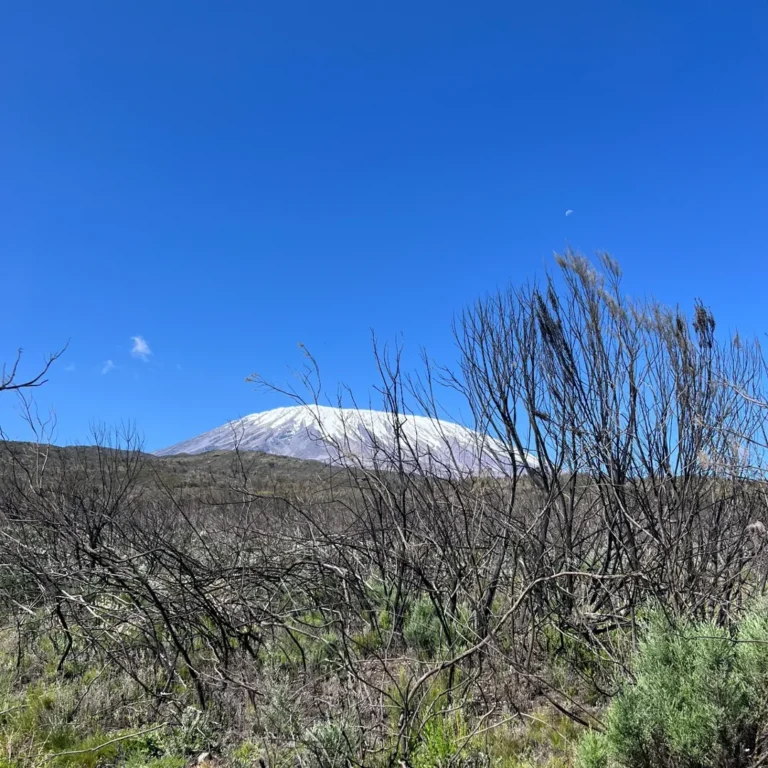
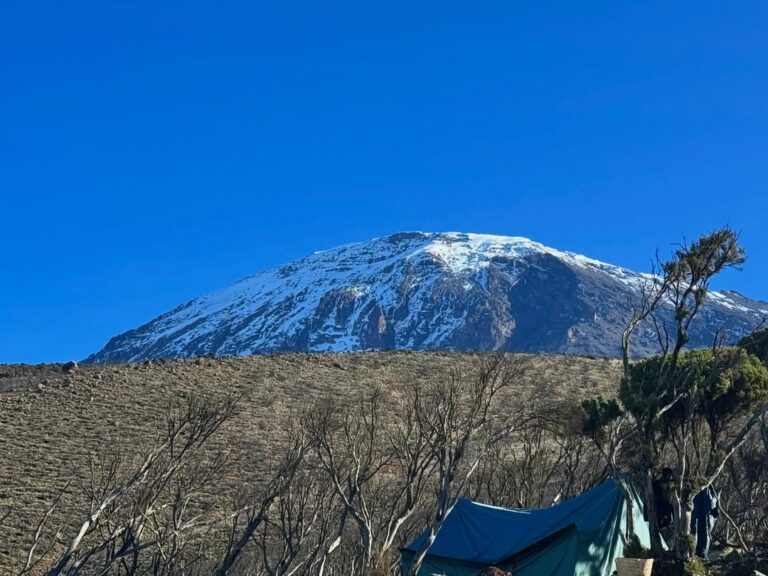
Zone 3: Heath and Moorland (2,800–4,000m)
Insect presence: Low. Occasional flies and gnats, no significant health risk.
Above 2,800 metres, temperatures drop, humidity decreases, and insect populations thin dramatically. You may encounter midges or small flies near water sources, but these are nuisance insects, not vectors for disease. Mosquitoes are not present at these altitudes.
What to use: Nothing mandatory. If you’re particularly bothered by occasional gnats, a light DEET-free repellent is fine. It’s not a health priority.
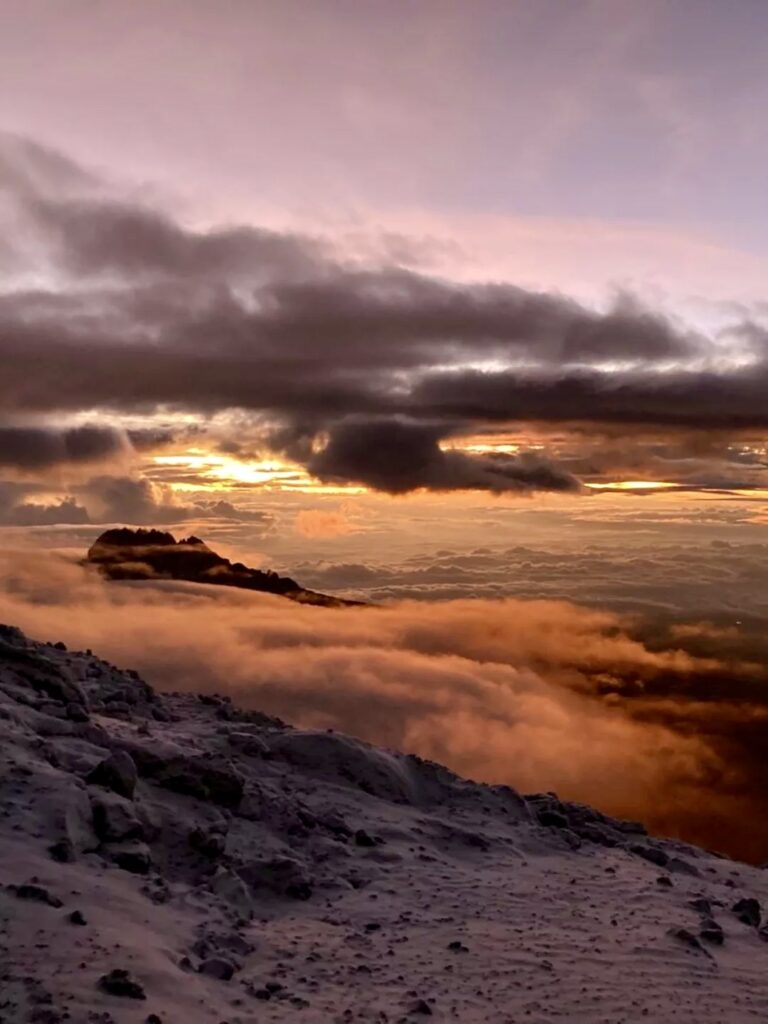
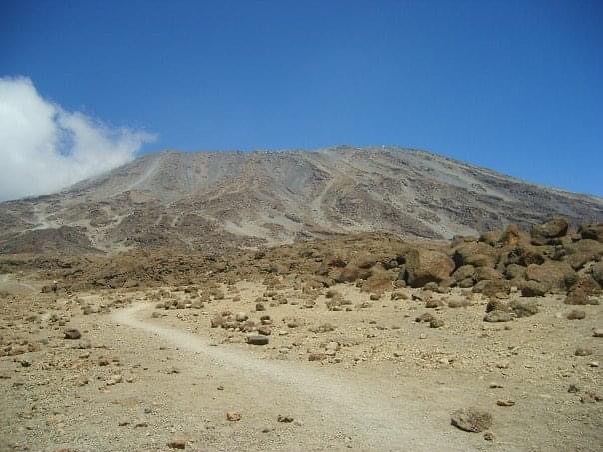
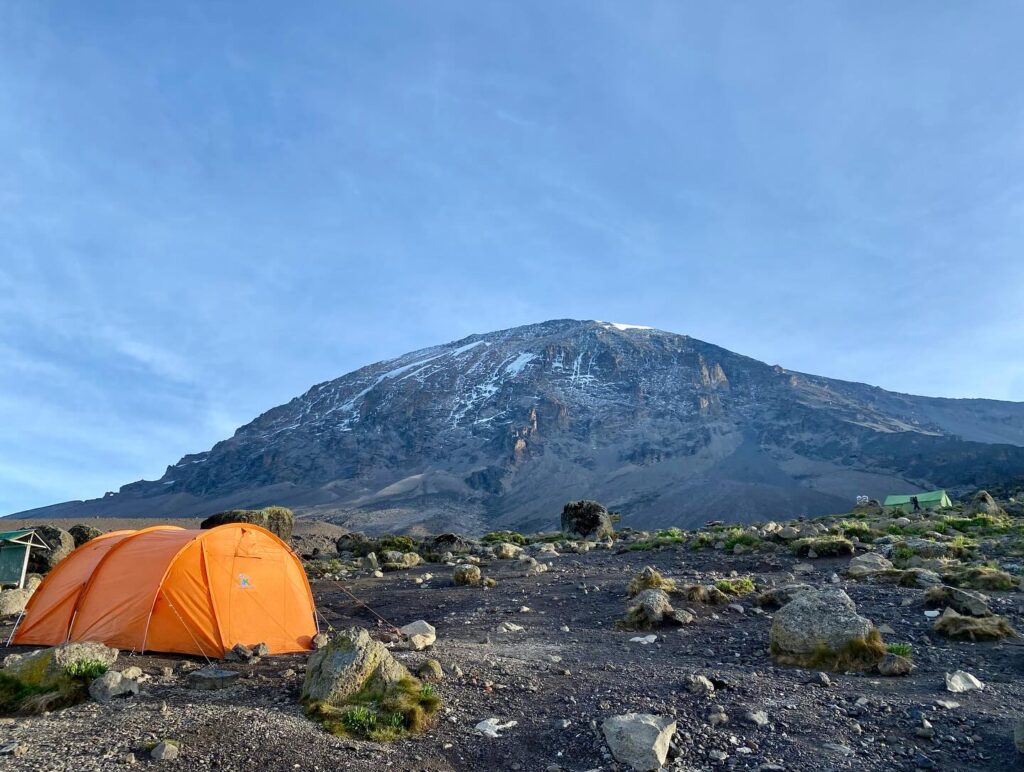
Zone 4: Alpine Desert (4,000–5,000m)
Insect presence: Minimal to none. The occasional fly near camp cooking areas, nothing more.
The alpine desert zone is cold, dry, and inhospitable to insect populations. Daytime temperatures above 4,000 metres rarely exceed 15°C even in summer, and nights are well below freezing. There are no insects of health significance here.
What to use: Nothing.
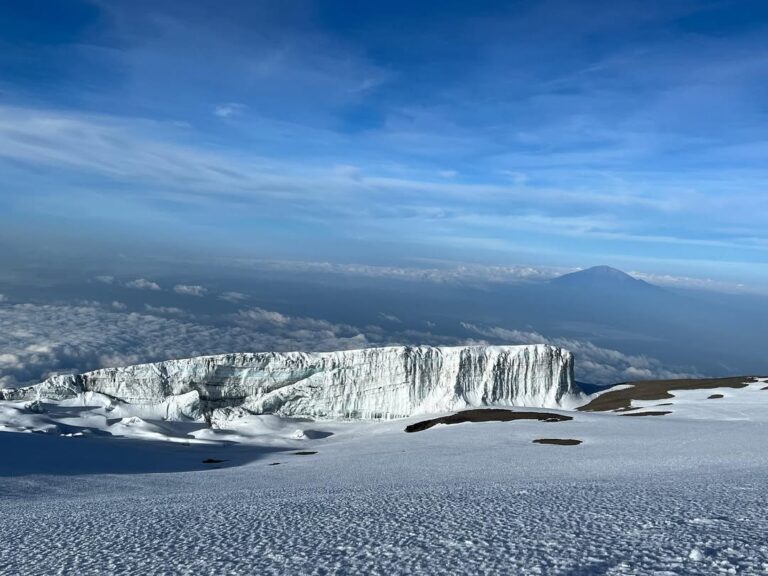
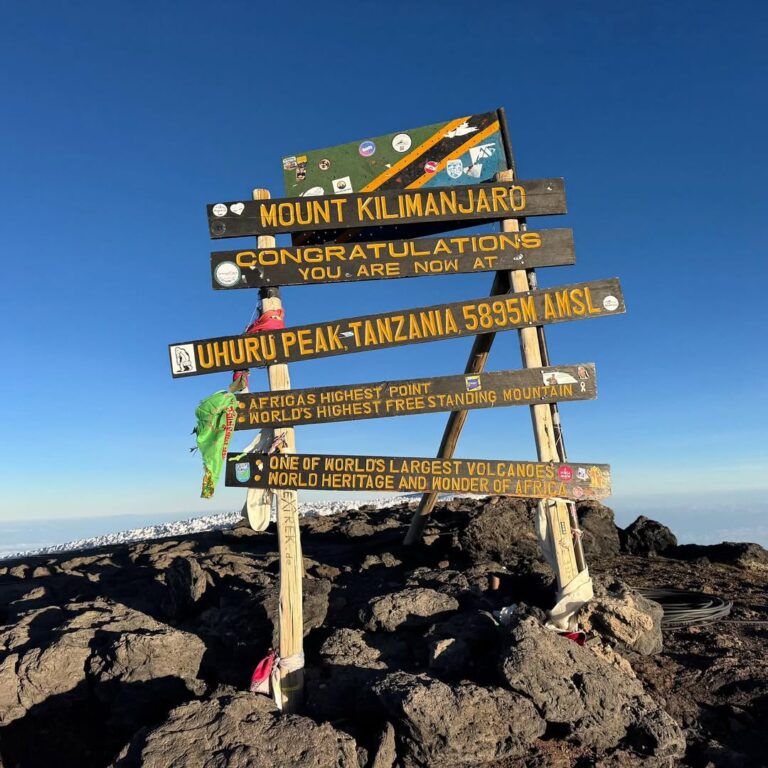
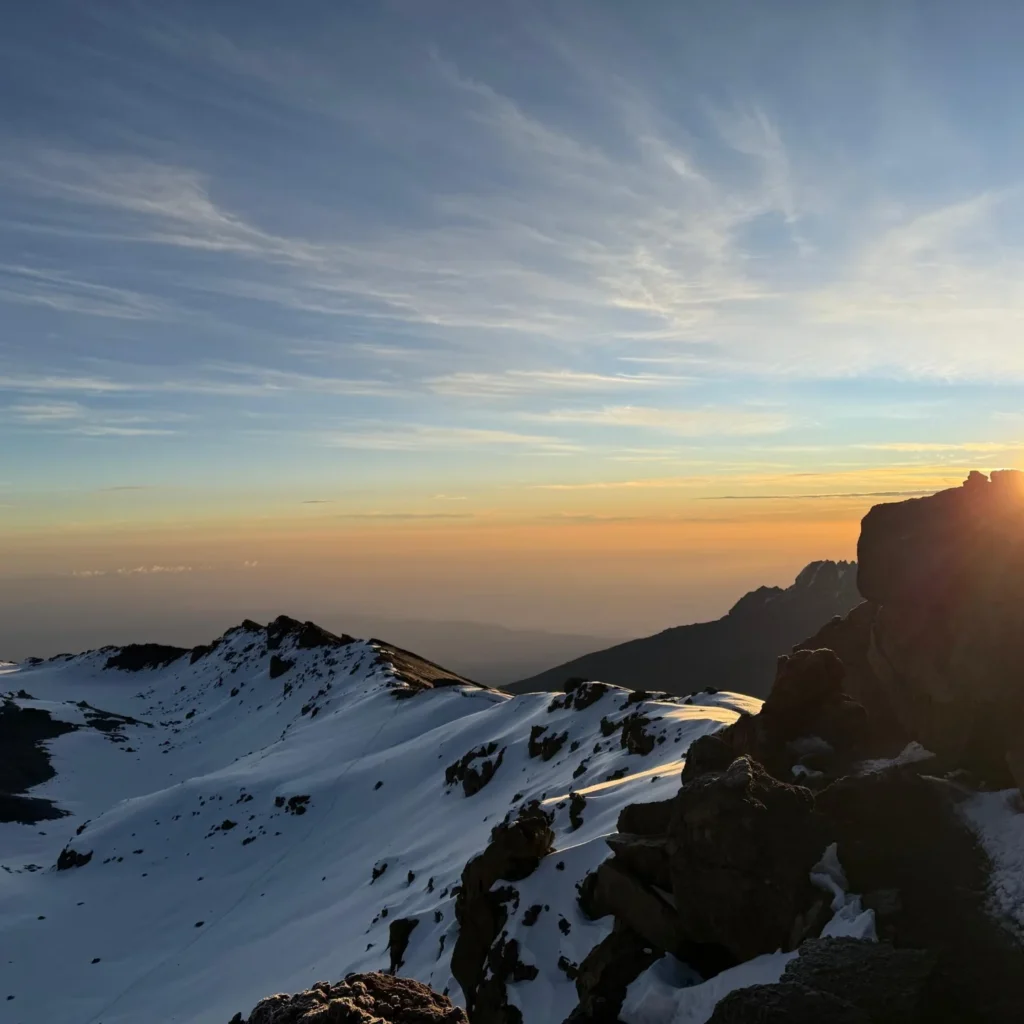
Zone 5: Arctic Summit Zone (5,000–5,895m)
Insect presence: None.
Above 5,000 metres, the environment is effectively arctic: permanently cold, extremely dry, and biologically spare. Summit night approaches -15°C with wind chill. Insects are not a factor at any stage of the summit push.
What to use: Nothing.
Dengue Risk: What Kilimanjaro Climbers Should Know
Dengue fever is a mosquito-borne viral illness transmitted by Aedes aegypti mosquitoes, which are present in Moshi and in the lower forest zones of Kilimanjaro. Unlike malaria, there is no preventive medication for dengue — repellent and physical barriers are your only tools.
Dengue has increased in prevalence across Tanzania in recent years, particularly in urban areas. Moshi is not a high-risk city for dengue compared to coastal areas like Dar es Salaam or Mombasa, but risk is not zero.
What this means for you: The DEET or picaridin repellent you’re using for malaria mosquito avoidance in Moshi also provides protection against Aedes mosquitoes. Aedes mosquitoes are daytime biters, which is a key distinction from malaria mosquitoes (dusk/dawn). Apply repellent in the mornings in Moshi, not just the evenings.
Dengue symptoms: high fever, severe headache (particularly behind the eyes), joint and muscle pain, skin rash, and fatigue, typically appearing 4–10 days after a bite. If you develop these symptoms after returning from Tanzania, mention your travel history to your doctor immediately.
DEET vs. DEET-Free: What Actually Works
DEET (N,N-Diethyl-meta-toluamide)
DEET is the gold-standard, most comprehensively studied, and most effective insect repellent available. For malaria prevention specifically, the evidence for DEET’s efficacy is clearer than for most alternatives. It works against mosquitoes, ticks, gnats, midges, and most other biting insects.
Concentration: 30–50% DEET is the CDC-recommended range for tropical disease protection. Higher concentrations (100%) don’t provide meaningfully better protection and increase skin irritation risk. Lower concentrations (10%) wear off faster.
Application: Apply to exposed skin after sunscreen (not before). Wash off before sleeping. Avoid eyes, mouth, and open cuts. DEET is compatible with sunscreen, but apply sunscreen first — DEET applied over sunscreen somewhat reduces sunscreen efficacy, and sunscreen applied over DEET reduces repellent duration.
DEET and fabric: DEET can damage synthetic fabrics, particularly nylon. Apply to skin only, not directly onto your clothing. For treating clothing, permethrin is the appropriate product (see below).
Picaridin (Icaridin)
Picaridin is a synthetic compound that matches DEET’s efficacy in most studies, with a better skin feel (no greasiness), no damage to synthetics, and lower irritation potential. At 20% concentration, it provides comparable protection to 30–40% DEET.
If you find DEET uncomfortable or you’re concerned about fabric damage to your trekking gear, 20% picaridin is a direct substitute with essentially equivalent protection.
Product examples: Sawyer Picaridin (US), Mosi-guard (UK), Bushman Plus (Australia, available online).
DEET-Free Plant-Based Repellents
The most common active ingredient in plant-based repellents is PMD (p-Menthane-3,8-diol), derived from eucalyptus oil. This is the only plant-based repellent that the CDC lists as effective against disease-carrying mosquitoes. Products like Repel Lemon Eucalyptus (US) and Incognito (UK) use PMD.
The honest assessment: PMD provides effective repellency against most mosquitoes but has a shorter protection window than DEET (typically 2–3 hours versus 4–8 hours for 30% DEET). In a high-risk environment, shorter reapplication intervals make this workable. For an East Africa destination where malaria is a genuine risk, DEET or picaridin are preferable. If you have a strong preference for plant-based products, PMD is the only plant-based option worth using.
Note: OLE (oil of lemon eucalyptus) and PMD are not the same thing. OLE is the raw essential oil, not the refined compound. Many essential-oil-based “natural” repellents contain OLE, citronella, lavender, or similar ingredients. These have negligible efficacy against disease-carrying mosquitoes compared to DEET, picaridin, or PMD. They are not appropriate for malaria prevention.
Permethrin for Clothing
Permethrin is not applied to skin — it’s applied to clothing and gear. It kills and repels insects on contact, providing lasting protection (6–7 washings) to treated fabric without DEET’s potential for synthetic fabric damage.
For Kilimanjaro, treating your hiking shirt and trousers with permethrin before departure is a low-effort, high-value addition to your insect protection approach. Particularly relevant for the forest zone hiking on days one and two. Products: Sawyer Permethrin Clothing Treatment, Permethrin Gear Spray.
What to Pack and How Much
Given the zone-by-zone picture above, here’s a practical packing guide:
For a 7–8 day Kilimanjaro climb including 2 nights in Moshi:
- 1 × 100ml bottle of 30–50% DEET or 20% picaridin repellent (this easily covers your Moshi time and forest zone hiking; a 100ml bottle is well within airline liquid limits)
- Optional but recommended: permethrin spray for your shirt and trousers before departure
- No need to carry bug spray above day 2 of the climb — leave it with gear you’re not taking up the mountain, or hand it to your guide to hold if you want it back for post-climb Moshi time
If you’re adding a Tanzania safari before or after the climb, adjust quantity accordingly — game parks and bush camps have more varied insect exposure throughout.
Post-Climb Moshi: Don’t Get Casual
One pattern worth flagging: climbers spend 7–8 days above 3,000 metres with essentially no insect exposure, then come down to Moshi tired, relieved, and celebrating. Mosquito precautions sometimes go out the window.
The risk in Moshi on your post-climb night is the same as it was on your arrival night. Your prophylaxis is still active if you’ve been taking it, which is your main protection. But physical precautions — bed net, long sleeves after dusk, repellent in the evening — are still worth maintaining.
Summary
Bug spray is necessary in Moshi and on the first one or two days of your climb in the forest zone. It becomes essentially irrelevant above 3,000 metres, where insect populations don’t exist at any health-significant level.
Bring 100ml of 30–50% DEET or 20% picaridin. Apply in the evenings in Moshi, and on exposed skin for the first two hiking days. Consider permethrin treatment for your hiking clothes before departure.
For the rest of the mountain — the moorland, the alpine desert, the arctic summit zone — your insect protection concerns are zero. Put that mental bandwidth toward staying warm, staying hydrated, and going pole pole.
For more on health preparation for Kilimanjaro, see our altitude sickness guide and our full packing list. For the complete picture on malaria prevention including prophylaxis options, see our malaria pills guide. Ready to start planning? Browse our packages or reach out — we’re happy to talk through your trip before you’ve committed to any decisions.