Short answer: no, you don’t shower on Kilimanjaro. Not a proper shower. Not on a 7-day Machame, an 8-day Lemosho, or anything else.
Longer answer: it doesn’t matter nearly as much as most people imagine before they go. There’s a practical system that keeps you comfortable, prevents the kind of hygiene problems that actually cause summit-day illness (skin irritation, infection, stomach bugs), and gets you to descent day in reasonable condition.
This is the honest version — not the airbrushed “mountain adventure” version that skips the part about wet wipes and unwashed hair.
What Hygiene Facilities Actually Exist on the Mountain
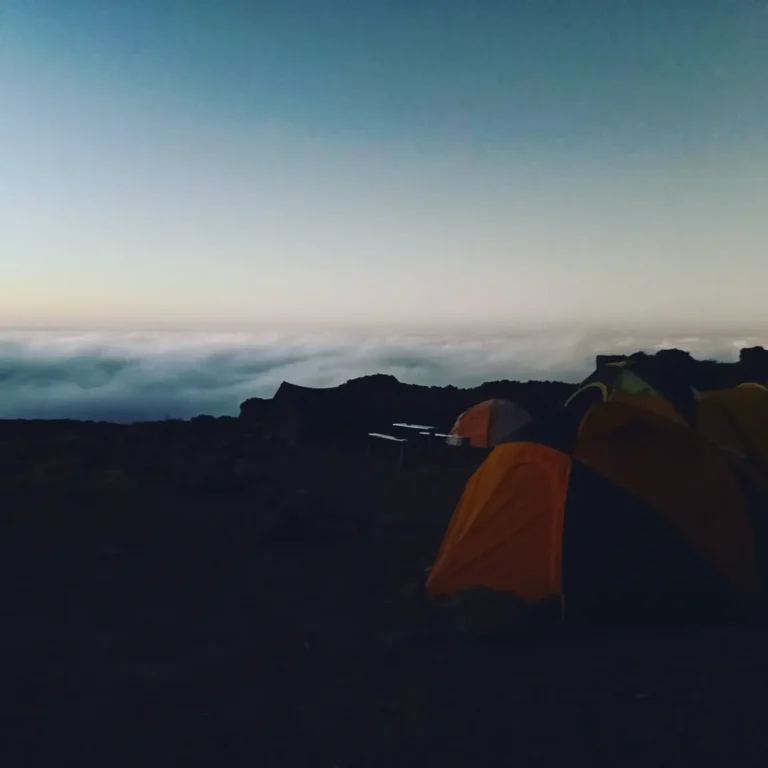
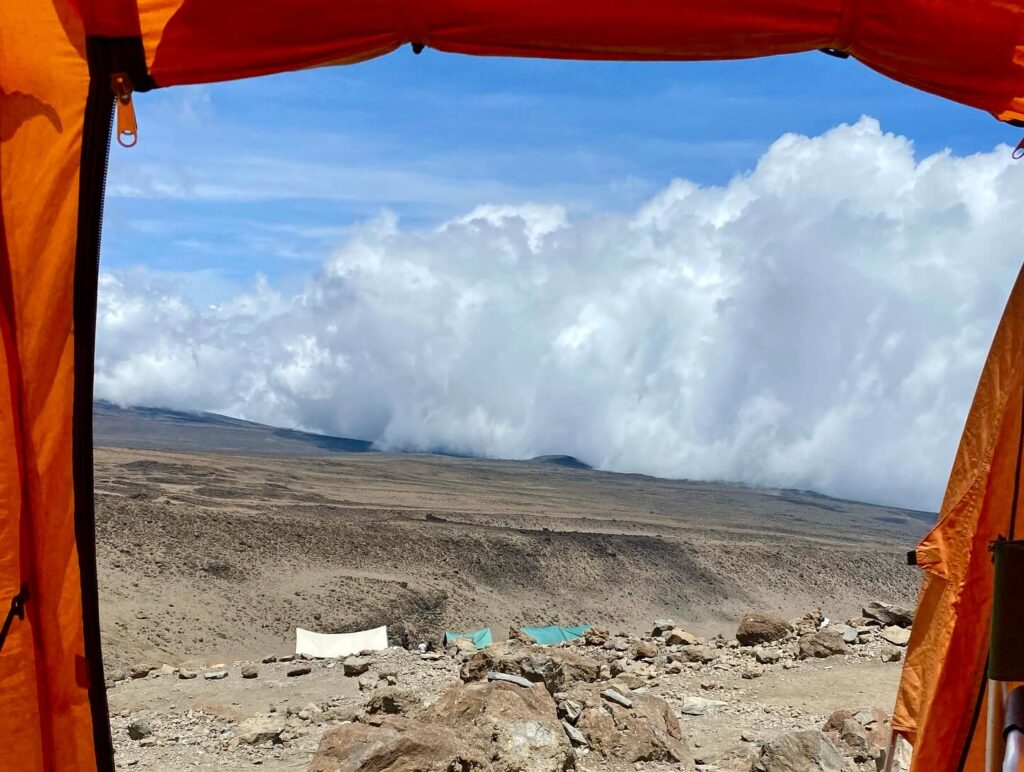
On a camping-based route — Machame, Lemosho, Rongai, or Northern Circuit — your accommodation is tents. Camp facilities include long-drop toilets at established campsites (TANAPA maintains these at major waypoints), and in most cases a basin of warm water provided by the camp cook crew in the morning and, on request, in the evening.
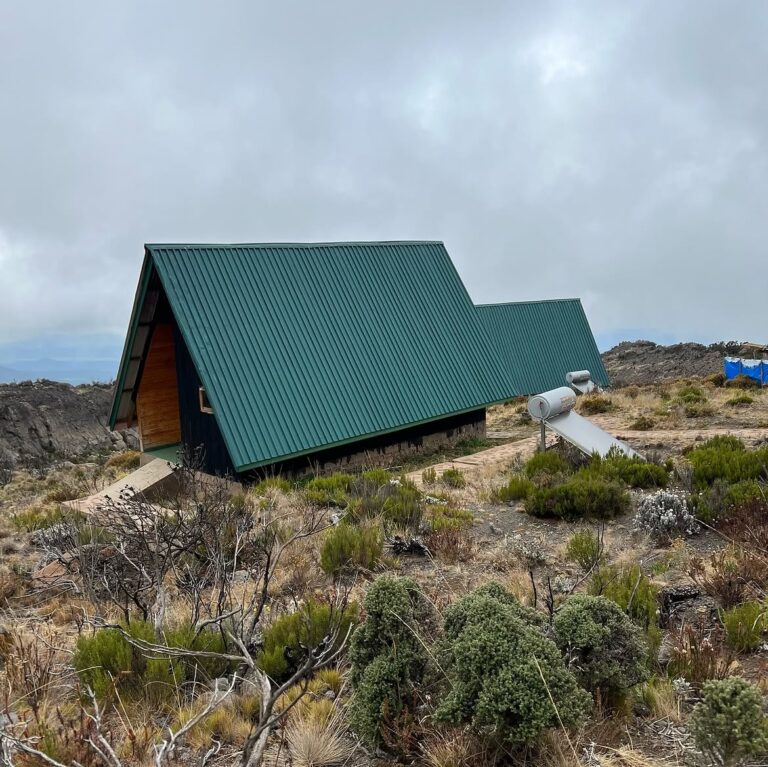
On the Marangu Route, accommodation is in mountain huts maintained by TANAPA. Basic washing facilities — cold water basins, shared — are available. Some hut complexes have outdoor cold-water showers. Calling them showers is generous; calling them useful in cold weather is a stretch.
The baseline reality across all routes: warm running water does not exist above the park gates. What exists is:
- Warm water in a basin, provided by your cook crew, once or twice a day
- Long-drop toilet facilities at established camps — see our toilets on Kilimanjaro guide for the full picture
- Whatever you’ve packed in your personal hygiene kit
The more you’ve prepared, the more comfortable you are. The underprepared climbers — the ones who brought one small bottle of hand sanitizer and three wet wipes — are the ones who spend days four through seven noticeably more miserable than necessary.
The Core Hygiene Kit
Wet wipes — more than you think you need
Wet wipes are the primary hygiene tool on a camping climb. Body wipe-downs replace showers. One full-body wipe-down with four to six wipes each evening removes most of the day’s sweat, sunscreen, and trail dust, and significantly improves sleep quality.
How many to bring: For a 7-day Machame or 8-day Lemosho, bring 80–100 wet wipes. This sounds like a lot. It isn’t. Our full recommendations are in the best body wipes for Kilimanjaro guide.
Type: Unscented biodegradable wipes. Scented wipes irritate sensitive skin after repeated use. Non-biodegradable wipes shouldn’t be used in a wilderness environment — and TANAPA is increasingly strict on this. Baby wipes or fragrance-free adult body wipes work well.
Cold wipes: At high camp, wet wipes are cold. This is unpleasant for about 20 seconds and then fine. Don’t let the idea of cold wipes on day five stop you from using them — dried sweat at altitude is more uncomfortable than cold wipes.
Priority areas: Face, armpits, groin, and feet — in that order. These are where bacterial buildup and irritation actually cause problems.
Hand sanitizer — the non-negotiable
Hand hygiene on Kilimanjaro has the most direct health consequences of any hygiene item. You’re eating food handled by cooks managing water and food in outdoor conditions. You’re using long-drop toilets shared by multiple climbers. You’re touching tent zips, poles, shared surfaces. Then you’re eating.
Gastrointestinal illness is the second most common reason for failed summit attempts, after altitude sickness. It’s largely preventable with consistent hand hygiene.
How much: Minimum 500ml for a 7-day climb. Better: 1 litre distributed across two bottles — one in your day pack, one in your tent bag.
When: Before eating (every time), after using toilets (every time), after blowing your nose, before touching your face. “Every time” is not paranoia. It’s the difference between reaching the summit and losing a day to acute stomach upset.
Cold note: Alcohol-based sanitizer is slightly less effective at altitude because of the cold. Use a generous amount.
Toothbrush, toothpaste, microfibre towel
Brush twice daily using a small amount of water from your bottle. You don’t need running water for this. Biodegradable toothpaste is preferable; standard is acceptable if you spit away from water sources.
One small microfibre travel towel for face and body drying. Not a full bath towel — it won’t dry in camp conditions.
The Daily Hygiene Routine That Works
Morning
Wake up. Put on base layers for the day. If there’s time before breakfast, a quick face wash from your water bottle — or from the warm-water basin your cook crew prepares on request. Brush teeth.
Apply sunscreen. UV at altitude is significantly more intense than at sea level — the thinner atmosphere filters less. SPF50+ on all exposed skin, every morning, reapplied at lunchtime. Lip balm with SPF is just as important. Sun-damaged lips at 4,000m hurt for the rest of the climb.
Hand sanitizer before breakfast.
During the Day
Sunscreen reapplication at lunchtime. Hand sanitizer before eating. Keep a hydration bladder tube tucked under a jacket layer at altitude — frozen tubes are the main failure mode above 4,000m.
Most climbers feel sweaty and dusty by the end of a day, but not dramatically so. The cool temperatures and controlled pace mean you’re not soaking through clothing. Base layers will be working hard by days five and six, but with rotation (below), smell stays manageable.
Evening at Camp
This is where the significant hygiene work happens.
Wet wipe body wash: Face to feet. Armpits and groin are the priority areas. Feet — particularly between toes — need real attention. Wet socks and continuous sock wearing create conditions for blisters and fungal issues.
Change base layers if due. Even if the dirty layers still feel acceptable, three days maximum before changing. Sealed dirty layers back into a dry bag.
Foot care. Powder if you use it, blister treatment if needed, toenail check. Small problems become large problems fast on a 7-day climb.
Hard bottle mouthpiece clean. Bacteria build up on mouthpieces faster than most people notice. A wet wipe around the valve daily prevents stomach issues later.
Brush teeth. Hand sanitizer before dinner.
Warm Water Basin Option
Your cook crew heats water every morning. If you ask your guide in advance, warm water for a more thorough wash is usually possible in the evening as well, particularly at established lower camps. A litre of warm water and your microfibre towel allows a better wash than wet wipes alone — useful for hair, feet, and faces particularly.
This is less practical at Barafu (summit night camp) where the crew is focused on meal prep and early-morning departure logistics. Summit night eve is not the night for thorough washing.
Hair on the Mountain
You won’t wash your hair properly on a 7-day camping climb. Accept this before you go.
Options:
- Dry shampoo for scalp freshness between days (particularly useful days 3–5).
- Hat discipline. By day four, most people have stopped noticing their hair and are focused on more pressing matters.
- Tie it back. Long hair wears better in a braid or bun than loose — less management in wind, compresses better under hats and balaclavas. Spare hair ties in the day pack.
Skincare at Altitude
Altitude dries skin more than most people expect. The combination of low humidity, intense UV, and wind dehydrates skin noticeably over a week.
Moisturiser: A small pot of thick face cream — not thin lotion — for daily use. Apply after your morning wipe-down.
Lip balm with SPF: Cracked lips at altitude are painful and slow to heal. Keep lip balm in an inner pocket at high camps — it will freeze in outer pockets.
Eye drops: Preservative-free lubricant drops. Dry air and wind irritate eyes badly by days four through eight. Small, light, genuinely useful.
Post-Descent Recovery
When you return to Moshi, you will take one of the best showers of your life. This is a widely reported phenomenon, not a cliché.
The contrast between a week of basic mountain hygiene and actual hot running water is genuinely satisfying. Plan accordingly. Don’t schedule onward travel for the same day as descent. An extra night in Moshi, a shower, a real meal, and an actual bed before flying or continuing to a safari is worth building into the itinerary. Our how to plan a Kilimanjaro trip guide covers the logistics.
A Final Practical Point
The hygiene side of Kilimanjaro is genuinely manageable. Many climbers — particularly those who haven’t done multi-day trekking before — build this up as a bigger barrier than it is. By day two, the routine feels natural. By day four, you’re focused on the mountain and your own mental state, not whether you’ve had a shower.
What matters is the basic prevention work: consistent hand hygiene, foot care, and staying dry in your base layers. The rest is comfort management.
If you’re working through what to bring, our Kilimanjaro packing list has the full hygiene section with specific brand recommendations. For route-specific questions about camp facilities, our team in Moshi can walk you through what to expect at specific camps on your route — contact us directly any time.