The question most people ask before booking, and the one that most deserves a straight answer: how hard is it, really?
The honest version: harder than a long hike, more achievable than a technical climb, and primarily challenging in ways that fitness doesn’t fully prepare you for. Kilimanjaro is described as a “walkable” mountain because it requires no ropes, no crampons, and no technical mountaineering skills on the standard routes. That’s accurate. It’s also incomplete.
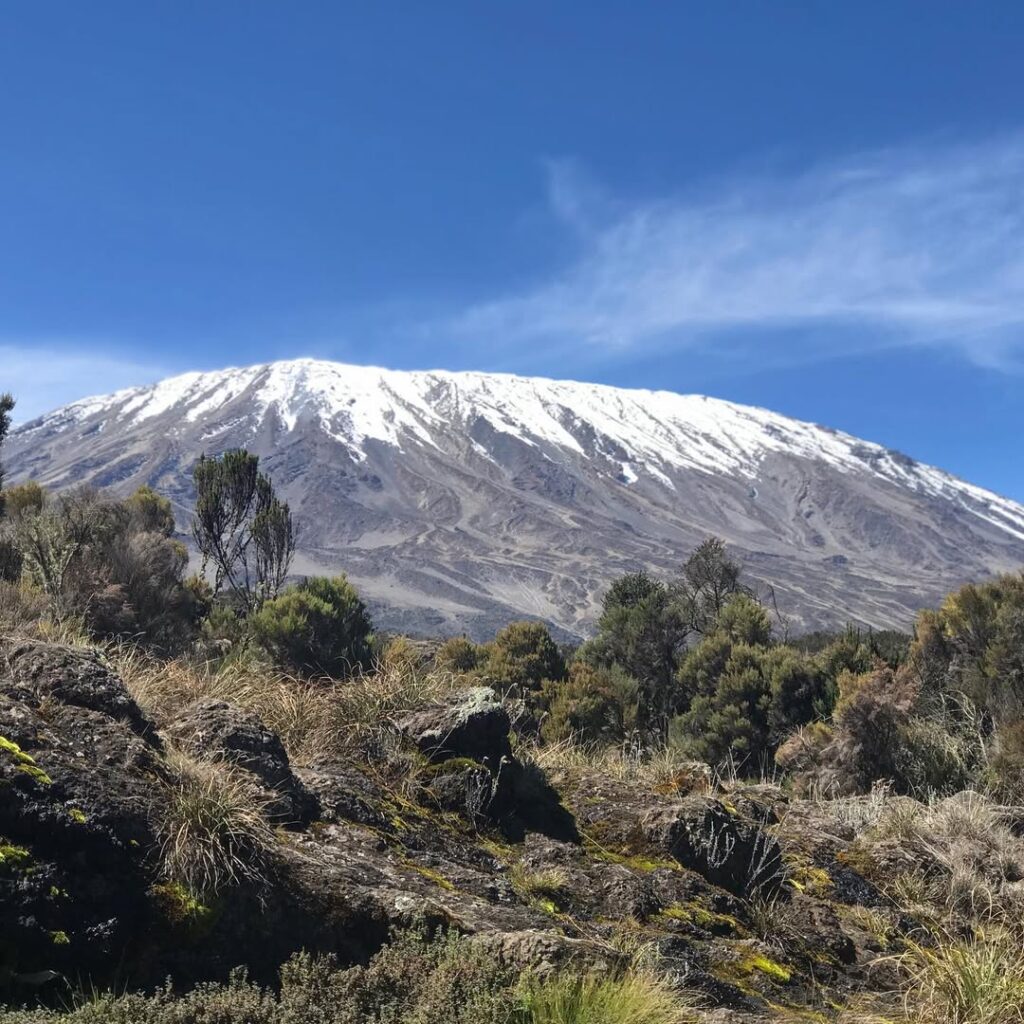
The mountain sits at 5,895 metres (19,340 ft) above sea level. At that altitude, your body is operating with roughly half the oxygen available at sea level. That physical reality changes what “hard” means in ways that are difficult to understand until you’re standing in it.
This guide gives you an honest, day-by-day picture of what the climb actually feels like — and what distinguishes people who reach Uhuru Peak from those who don’t.
What Each Part of the Climb Actually Feels Like
Days 1–2: Rainforest and Heath Zones (1,800–3,500m/5,905-11,482 ft)
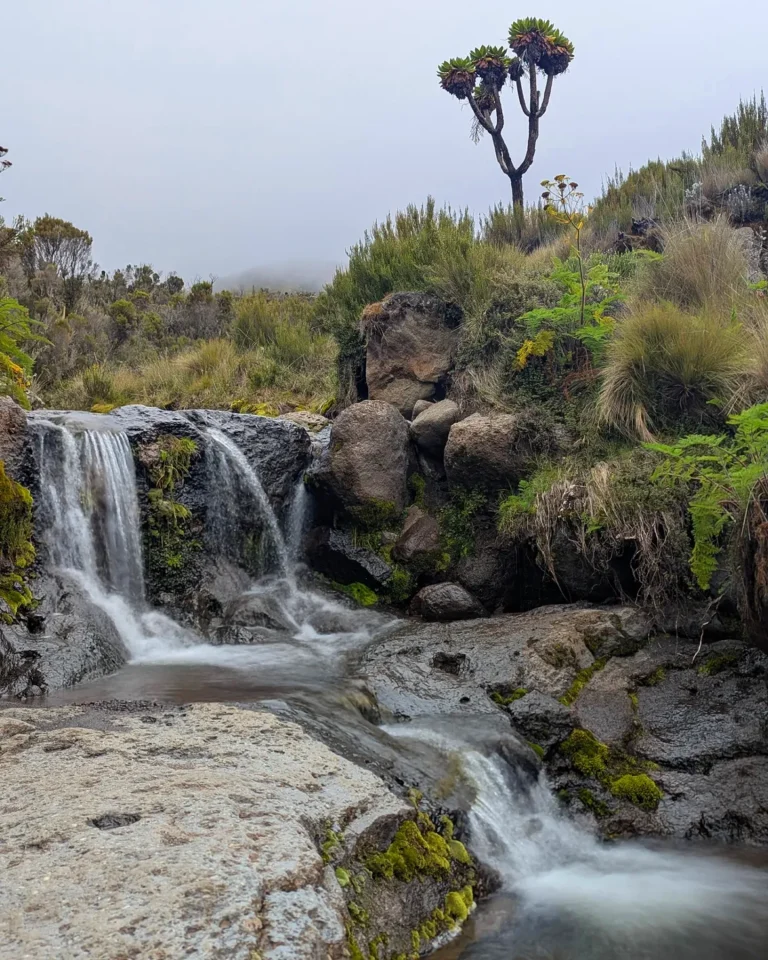
The first days of a Machame or Lemosho climb feel like a challenging forest hike. The trail is shaded, the air is warm and humid, and the ascent is steady but not brutal. There are muddy sections after rain and some steep pitches, but nothing technically demanding.
Most people feel strong here. There’s excitement, the forest is beautiful, and the altitude hasn’t registered yet.
This is the zone that creates false confidence. The way you feel on day one has almost no bearing on how you’ll feel above 4,500 metres (14.763 ft). The challenge hasn’t started yet.
Days 3–4: Moorland and Alpine Desert (3,500–4,500m/11,482-14,763 ft)
The vegetation thins, the landscape opens, and the altitude begins to make itself felt. Steps become more deliberate. You’ll notice that uphills require more conscious breathing. Headaches at the end of a long day are common — a normal altitude response, not necessarily AMS.
This is where the pace set by your guides matters most. The instinct is to move at your normal hiking pace, or even faster to stay warm as temperatures drop. The right instinct is the opposite: pole pole, slowly, more so than feels natural. A guide who sets the pace correctly here is doing the most important work of the climb.
On routes like Machame and Lemosho, you’ll pass through or near the Lava Tower at around 4,630 metres (15,190 ft) before descending to sleep at a lower camp. That ascent-and-descent pattern is deliberate — it’s one of the best acclimatisation tools on the mountain, and it’s one of the reasons these routes produce higher summit success rates than the faster alternatives.
Days 5–6: High Camps and Summit Approach (4,500–5,895m/14,763-19,340 ft)
The air feels noticeably thinner above 4,500 metres (14,763 ft) in a way that’s difficult to anticipate from the descriptions. Simple physical tasks — putting on your boots, adjusting your pack straps — require more deliberate effort than they do at lower altitude.
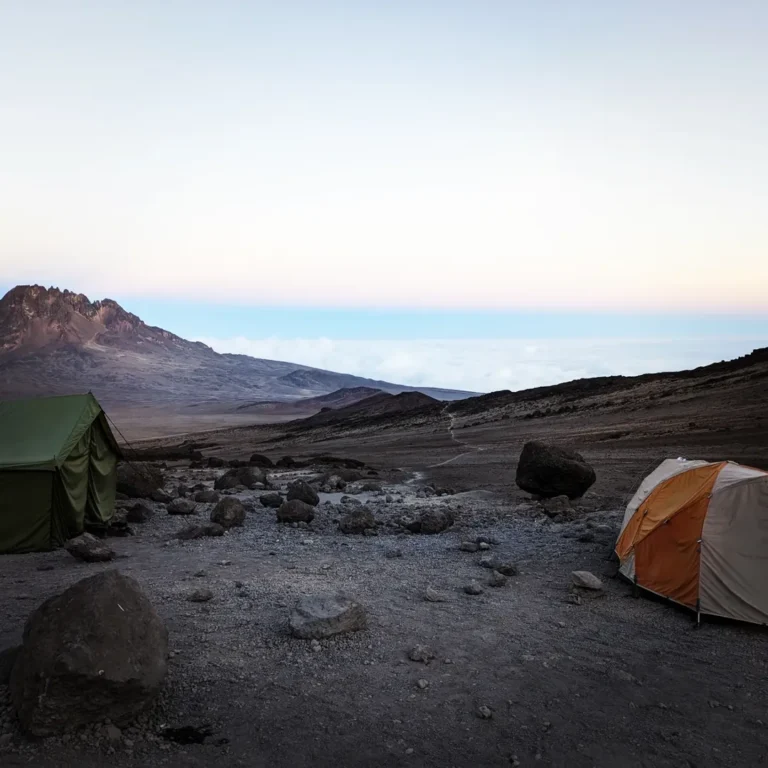
Your pace slows further. Your appetite may decrease. Sleep quality at Barafu Camp (4,673 metres/15,331 ft) is often poor, partly due to altitude and partly due to the 11pm–midnight wake-up call for the summit push. Most people don’t sleep well here and accept it as part of the process.
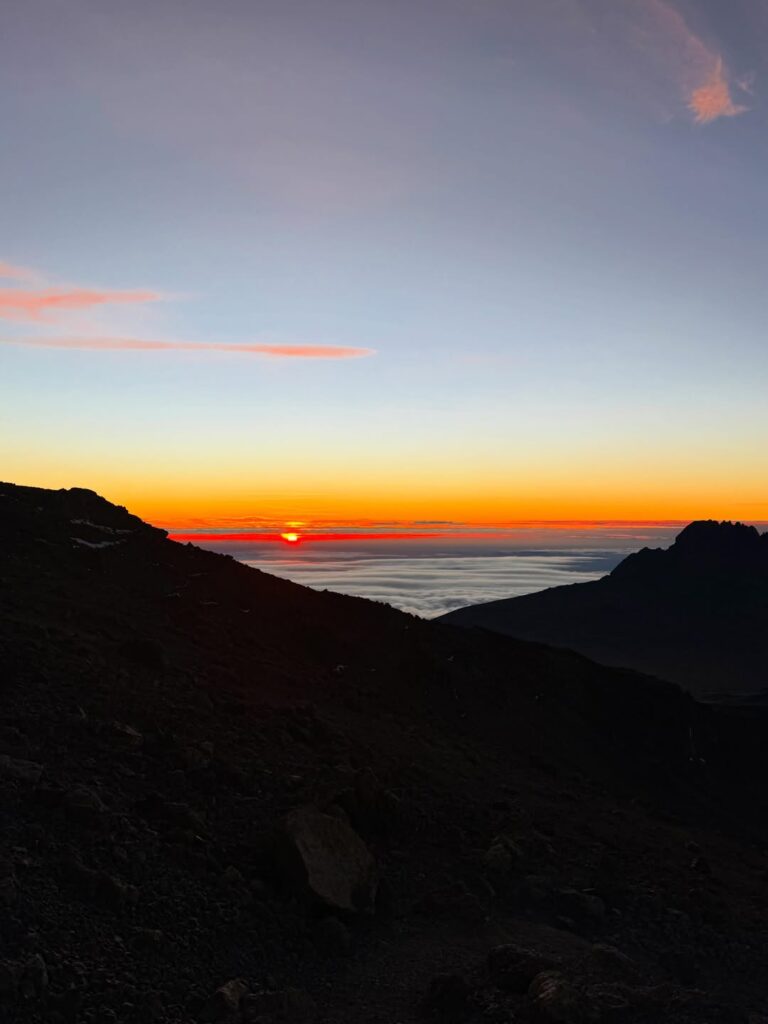
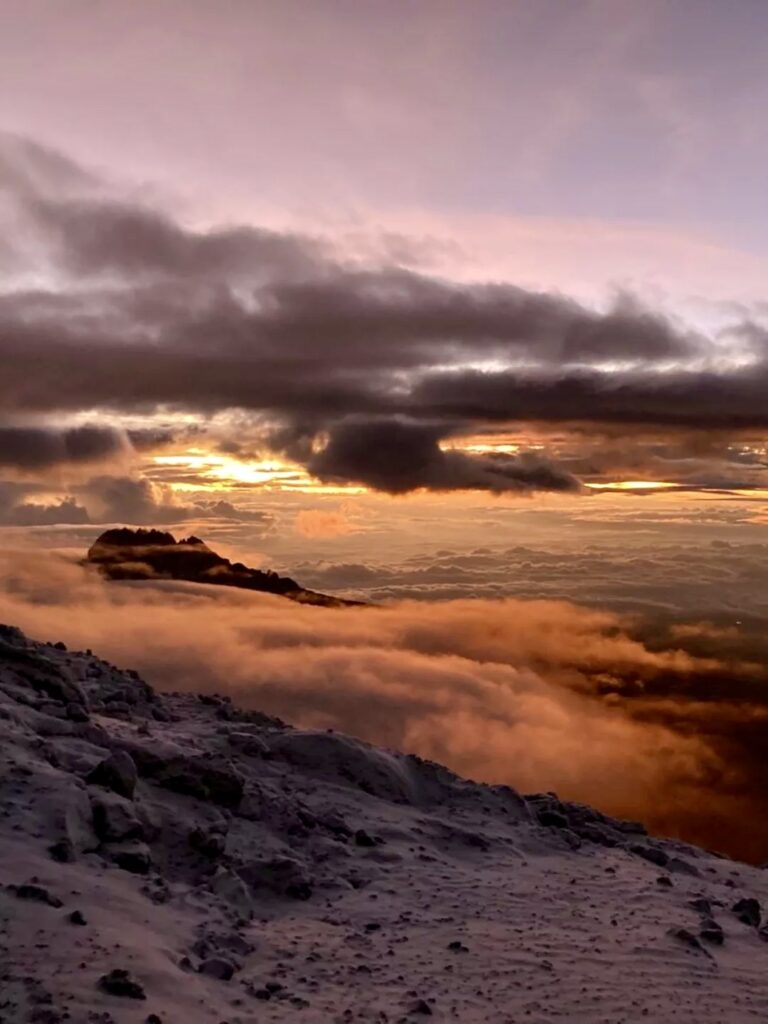
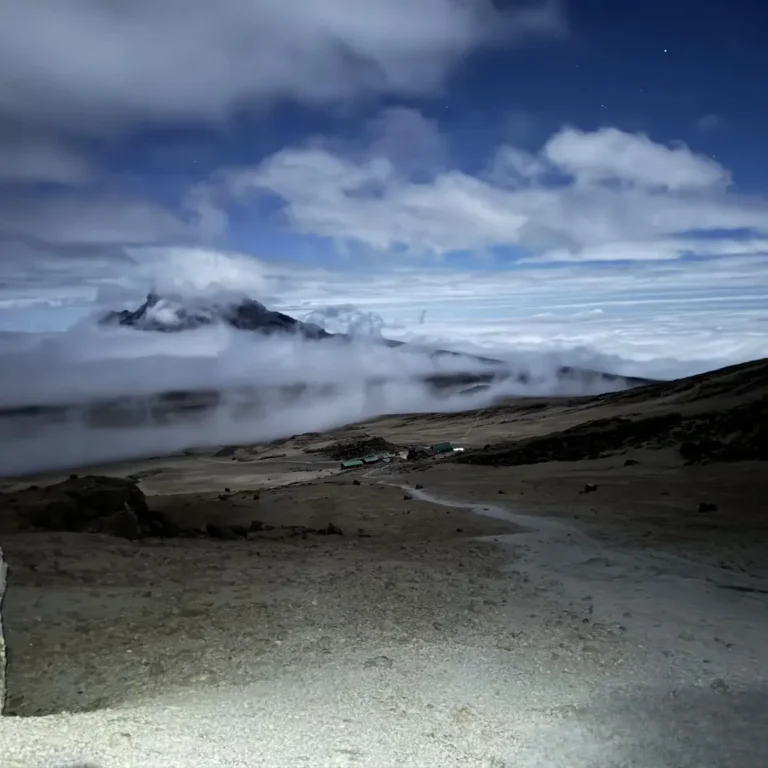
Summit night is the hardest section. Starting around midnight and gaining 1,200 vertical metres over four to six hours, it combines cold (-10°C to -20°C with wind chill), darkness, physical exhaustion accumulated over the prior days, and the cardiovascular challenge of very thin air. Even putting on your headlamp takes focus above 5,200 metres (17,060 ft). Moving at what feels like an absurdly slow pace — a few steps, breathe, a few more steps — is the correct technique and the only sustainable one.
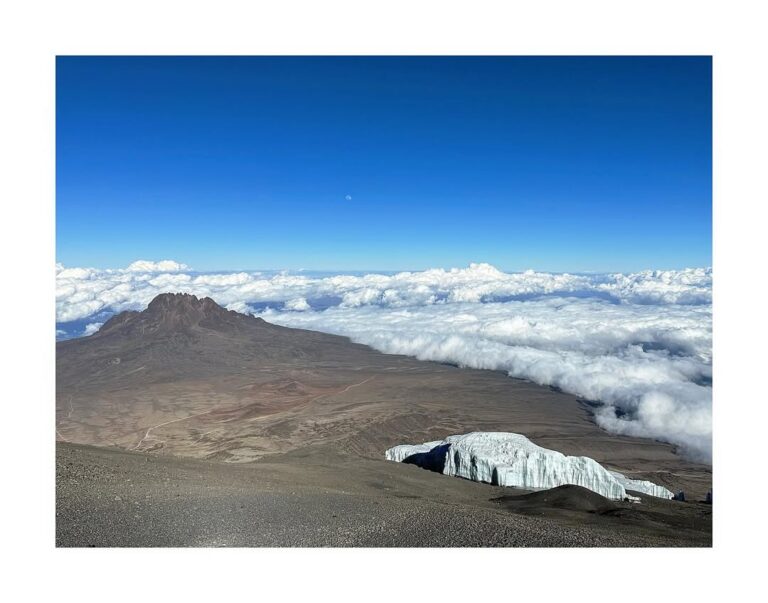
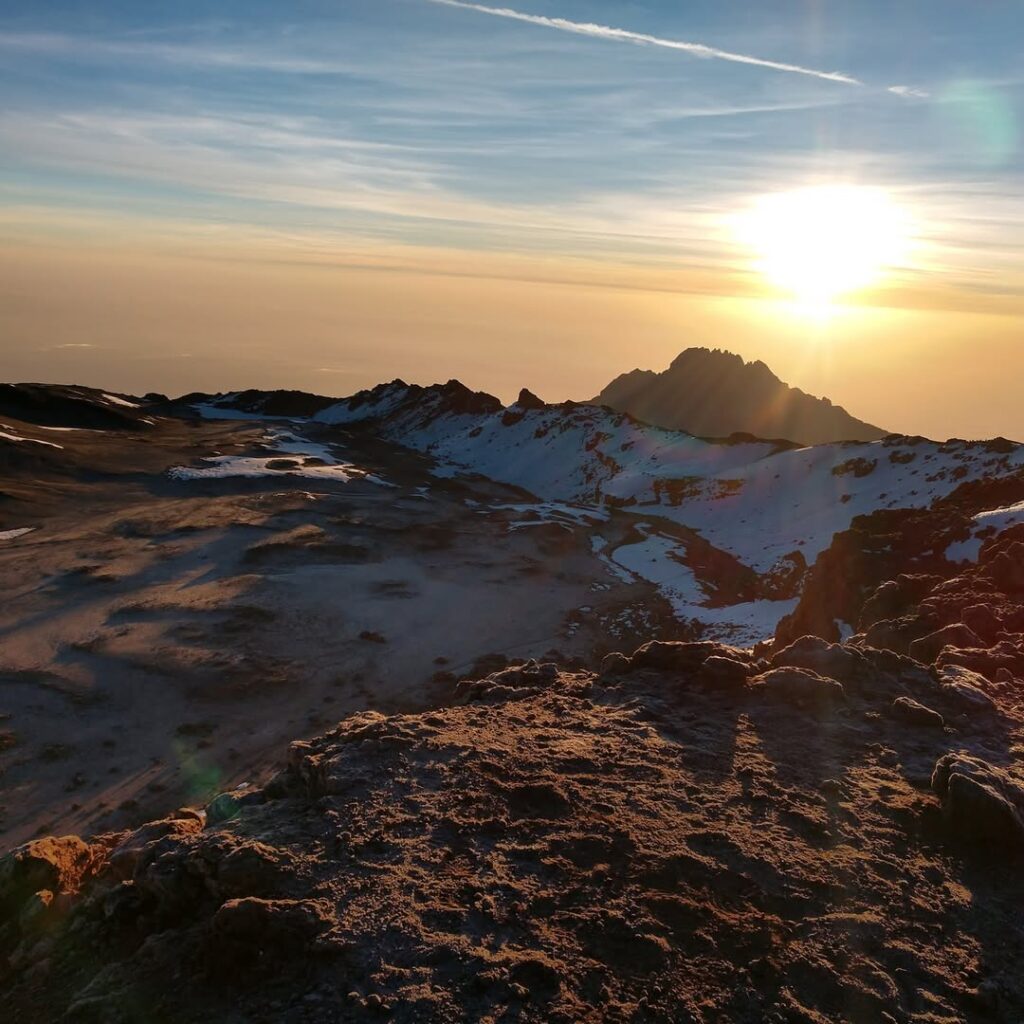
The final section from Stella Point (5,756m/18,884 ft) to Uhuru Peak (5,895m/19,340 ft) is a short ridge walk that most climbers describe as the longest 45 minutes of the climb. You can see the summit. You know how close you are. You’re also at your most depleted, in the coldest air, with the least oxygen. One foot in front of the other.
The Descent
The descent is underestimated by nearly everyone. After a summit push that has taken four to six hours, you descend the same slope on tired legs before continuing down to a lower camp for sleep, and then descend further the following day. On routes like Machame, the descent from the summit area to Mweka Gate can be ten to twelve hours total.
The descent on loose scree is hard on the knees. Trekking poles are not optional in any practical sense — they absorb a significant amount of the impact that would otherwise go through your knees on steep ground. Pack them. Use them going down.
Technical Difficulty: None in the Mountaineering Sense
There is no technical difficulty on the standard routes in the conventional mountaineering sense. No glacier crossings, no ropes, no crampons, no exposed traverses.
The Barranco Wall on the Machame Route — a 200-metre (656 ft) rocky scramble — is the closest thing to a technical section. It requires using your hands in places, but it’s accessible to anyone comfortable on rocky terrain. It’s not exposed in the way that should concern a fit, coordinated adult.
What makes Kilimanjaro hard is altitude, not technique. And this distinction has an important implication: no amount of climbing experience gives you an advantage over altitude sickness. A seasoned rock climber and someone who has never been on a mountain before are equally affected by how their individual physiology responds to thin air. Experience helps with everything except the variable that matters most.
The Fitness Benchmark
Kilimanjaro doesn’t require elite fitness. It requires durable, sustained aerobic capacity — the ability to work at moderate intensity for six to eight hours daily, over multiple days.
At Kilimanjaro Sky, the practical benchmark we use: if you can run 10 kilometres in under one hour, three times per week, your cardiovascular fitness is appropriate for a standard Kilimanjaro route. That level of aerobic conditioning gives your body the baseline it needs to manage the sustained effort at altitude without the physical exertion becoming the limiting factor.
If you’re not at that level, four to six months of consistent aerobic training will get you there. The most useful training is any sustained cardiovascular activity that builds your heart and lungs’ ability to work steadily for extended periods:
- Long hill walks (15–20km days with real elevation gain)
- Stair climbing with a loaded pack
- Cycling — road or stationary — for extended sessions
- Swimming for extended distance
- Running, building gradually in both duration and frequency
The goal is not peak fitness — it’s the capacity for sustained, moderate aerobic work over many consecutive days. That’s a different kind of fitness than speed or power.
Your fitness level affects the physical exertion of the trail. It doesn’t determine whether altitude sickness affects you, or how your body responds to the thin air above 5,000 metres (16,404 ft). Both a very fit climber and a moderately fit one will face the same altitude challenge; the fit climber just has more physiological reserves to bring to it.
Age and Who Can Do This
Kilimanjaro has been summited by children and by people in their eighties. Age is not the primary factor. The range Kilimanjaro Sky guides is typically 18–70, and within that range, preparation and attitude matter more than the number.
A well-prepared 65-year-old — consistent aerobic training, appropriate gear, realistic expectations, good altitude awareness — will generally have a better climb than an unfit 30-year-old who arrives at the gate having done nothing to prepare.
Anyone with cardiac conditions, significant respiratory conditions, or a history of blood clotting disorders should have a specific conversation with their doctor before committing to a high-altitude climb. Kilimanjaro puts real demands on cardiovascular function, and those conversations need to happen before you arrive in Moshi, not after.
What People Find Harder Than Expected
Summit night. Almost universally. The combination of cold, darkness, accumulated fatigue, and thin air is formidable in a way that descriptions don’t fully capture. People who have felt strong at Barafu Camp at sunset are sometimes surprised by how different they feel at 2am when the trail steepens above 5,400 metres (17,761 ft).
This isn’t weakness — it’s altitude and cold doing what altitude and cold do to a human body. The response is pace. Your guides will set a pace that is slower than you think you should walk. This is correct. The instinct to move faster to stay warm or to push harder to get it over with is the wrong instinct at altitude. Pole pole keeps your heart rate in a sustainable zone and prevents the oxygen debt that turns difficulty into failure.
The psychological dimension of summit night. You wake at 11pm, already tired from the prior days, pull on every layer you own in a very cold tent, and head into darkness for a four-to-six-hour push. That’s a significant psychological ask regardless of physical condition. The climbers who do best mentally are the ones who prepared for this specific experience — who knew it was coming, understood why the timing is what it is, and accepted that it would be hard.
The descent. As mentioned: ten to twelve hours of descending on tired legs, starting directly after a summit push, is hard. Many people are surprised by how physically demanding it is. Trekking poles. Use them.
What People Find Easier Than Expected
The terrain. Most people who arrive imagining a technical mountain are genuinely relieved by how accessible the trail is. There are no exposed ridges, no required technical moves, no sections that require more than normal coordination. The Machame and Lemosho routes in particular are well-maintained and clearly defined. The mountain’s difficulty is above 4,500 metres (14,763 ft) — the lower sections feel like a particularly scenic hike.
The support. When you climb with a guide team that knows your pace, monitors your SpO2, and adjusts your approach based on how you’re actually doing rather than a generic programme, the climb becomes collaborative rather than solitary. Most clients describe the relationship with their guide team as one of the most memorable parts of the experience — not just functional but genuinely personal. That kind of support changes the psychological experience of a hard stretch.
The moment at the top. People often underestimate how much it means — not just as an achievement, but as a physical experience. Sunrise at Uhuru Peak, standing at the highest point in Africa, after seven days of work and a midnight push through cold and thin air, is something most people describe as one of the best moments of their lives. That’s not marketing copy. It’s the consistent account of people who’ve done it.
Kilimanjaro vs. Everest Base Camp vs. Inca Trail
These three climbs come up together constantly in planning conversations, and the comparisons are usually superficial. Here’s an honest breakdown of how they differ in the one dimension that actually matters for a first-time high-altitude trekker: what it’s going to ask of you.
Kilimanjaro vs. Everest Base Camp Trek
Everest Base Camp (EBC) tops out at 5,364 metres — 531 metres (17,598 ft-1,742 ft) lower than Kilimanjaro’s summit at 5,895 metres (19,340 ft). But the comparison isn’t that simple.
The EBC trek is typically 12–16 days. That extended timeline with gradual daily altitude gain and multiple rest days means your body has significantly more time to acclimatise before the highest point. You’re also spending consecutive nights progressively higher — from 2,840m (9,317 ft) at Namche to 3,440m (11,286 ft) at Tengboche to 4,410m (14,468 ft) at Lobuche — which is one of the most effective acclimatisation structures available in high-altitude trekking. The result: most fit, well-paced trekkers reach EBC without the acute physiological stress that summit night on Kilimanjaro produces.
Kilimanjaro compresses the altitude gain into seven to eight days and demands a single summit push from 4,673 metres (15,331 ft) to 5,895 metres (19,340 ft) in one overnight effort. That summit push — cold, dark, physically depleted, altitude-stressed — is harder than anything EBC asks of you on a single day.
The terrain on EBC is also more technically varied. The Khumbu region involves sustained high-altitude hiking over mixed terrain with higher exposure and some scrambling sections. Kilimanjaro’s terrain is more accessible — the Barranco Wall aside, it’s well-maintained trail.
The honest comparison: EBC is longer, scenically spectacular, and high enough to demand real respect — but the summit push required on Kilimanjaro is a harder single day than EBC’s hardest day. If you’re choosing between them on difficulty grounds, they’re comparable at the overall level — different kinds of difficult. Kilimanjaro is shorter and more intense. EBC is longer and more progressive.
Kilimanjaro vs. Inca Trail
The Inca Trail is a four-day trek to Machu Picchu with a high point of 4,215 metres (13,828 ft) at Dead Woman’s Pass. The altitude is meaningfully lower than Kilimanjaro — you’re nearly 1,700 metres (5,571 ft) below Uhuru Peak — and the acclimatisation requirements are less severe. Most trekkers spend time in Cusco (3,400m/11,154 ft) before the trail begins, which provides passive acclimatisation.
The Inca Trail is harder than its reputation suggests on pure terrain. The trail is steep, often slippery, and involves sustained ascents and descents on ancient stone paths. The distance is modest (43km over four days) but the physical effort per kilometre is high.
The honest comparison: Kilimanjaro is harder in every altitude-related dimension. The Inca Trail is a demanding and extraordinary walk, but it doesn’t ask anything like what summit night at 5,895 metres (194,340 ft) asks. If you’ve done the Inca Trail and are wondering whether Kilimanjaro is a natural next step — fitness-wise, yes. But the altitude is a genuinely different category.
What This Means for Your Preparation
If you’ve done EBC without significant altitude issues, Kilimanjaro is achievable — though the summit night intensity is a different experience. If you’ve done the Inca Trail, Kilimanjaro is a significant step up in altitude and difficulty, and you should plan accordingly.
In all three cases, the principles that matter most are the same: choose a route with adequate duration, arrive fit enough that the physical effort isn’t the limiting factor, and listen to your guides.
The Summary
Kilimanjaro is achievable for any fit, prepared, well-guided adult. It is not easy. Summit night is genuinely demanding. Altitude affects people unpredictably. The climb requires multiple days of sustained effort in cold, thin air.
It is also one of the most significant physical experiences most people who attempt it will ever have. The challenge is real; so is what’s on the other side of it.
For a view into what affects your specific odds — beyond fitness — see our altitude sickness guide, which covers the acclimatisation process in detail and why route and duration are the most consequential variables you control before the climb begins.
If you want to talk through whether Kilimanjaro is the right next step for you, we’re in Moshi and easy to reach.
Further reading: Beginner’s guide to climbing Kilimanjaro · Kilimanjaro altitude sickness: what to know · Kilimanjaro packing list
External sources: Wilderness Medical Society altitude illness clinical guidelines · CDC high altitude travel guidance