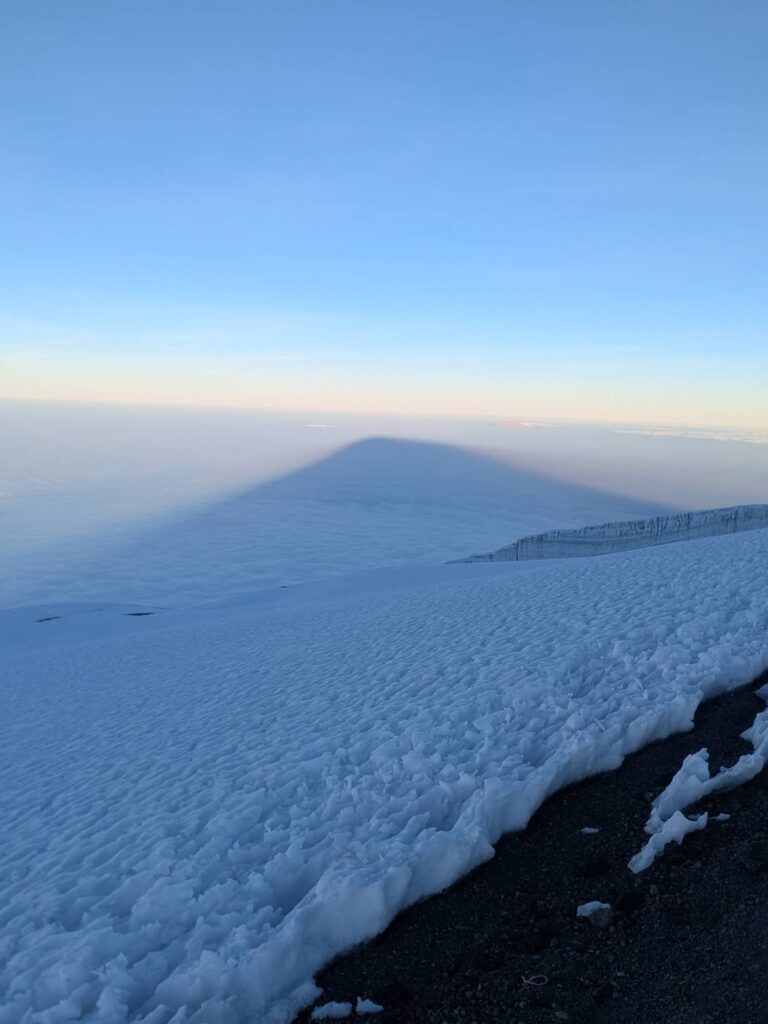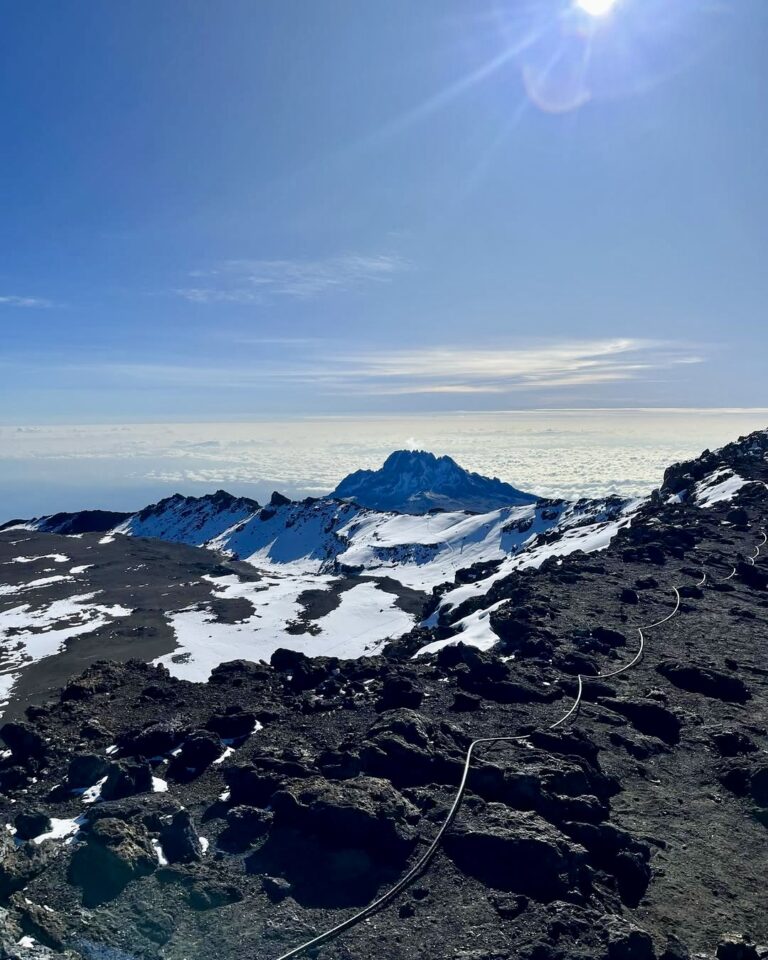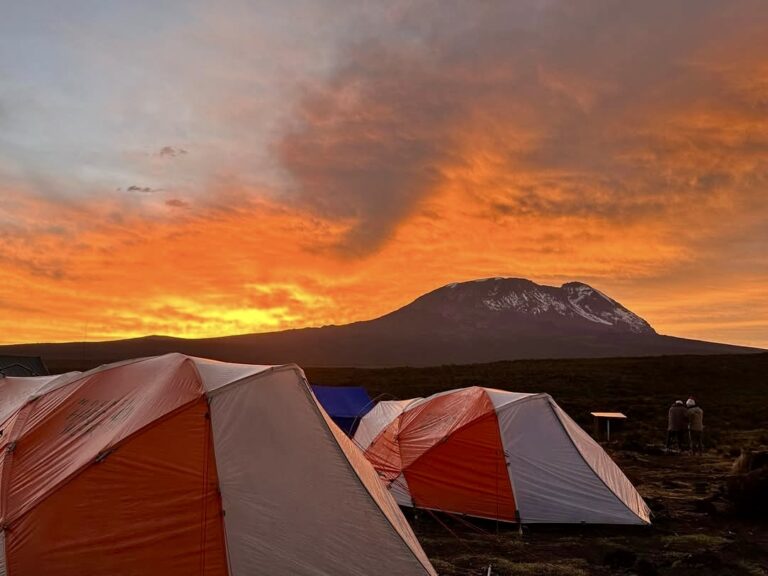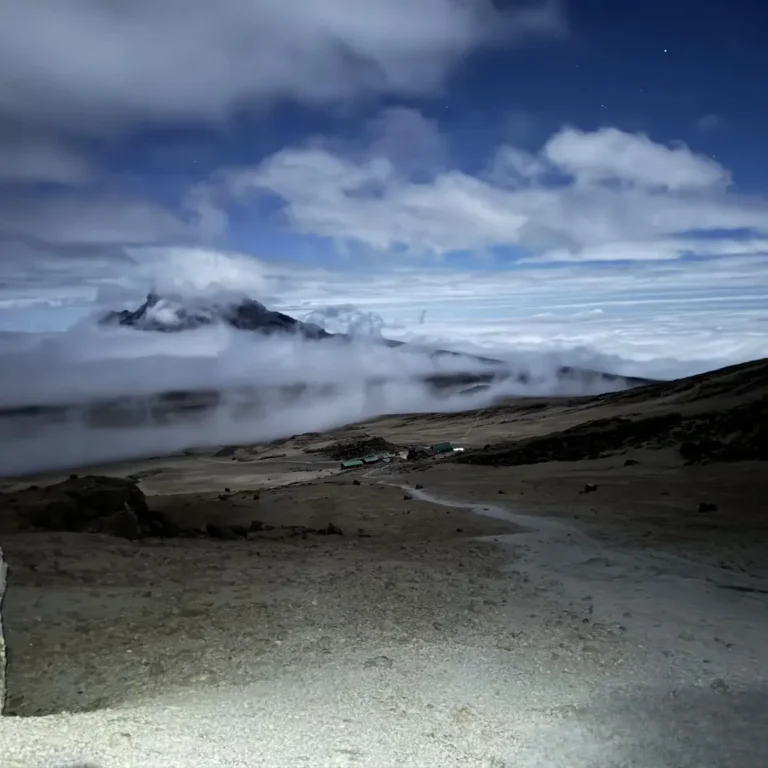
Crater Camp sits at 5,730 metres (18,800 feet) inside the volcanic caldera on the summit of Kilimanjaro — roughly 165 vertical metres below Uhuru Peak itself. To put that number in context: Crater Camp is higher than Everest Base Camp (5,364m/17,599 ft), higher than the summit of Mont Blanc (4,808m/15,774 ft), and higher than almost any other place on the planet where humans routinely sleep for a night.
For climbers on a standard Kilimanjaro itinerary, summit day is a push from Barafu at 4,673m to Uhuru Peak at 5,895m (19,340 ft) and back down again — typically 12 to 16 hours of continuous movement. Crater Camp is the opposite approach. Instead of going up and coming straight down, you summit, descend briefly into the crater, sleep one night at the edge of the ash pit and the Furtwängler Glacier, and then continue down the next morning.
It’s a remarkable thing to do. It’s also harder on your body than most climbers realise before they commit. This post covers what Crater Camp actually is, which operators offer it, the physical realities of sleeping at that altitude, and how to think about whether it’s right for you.
Where Crater Camp Sits
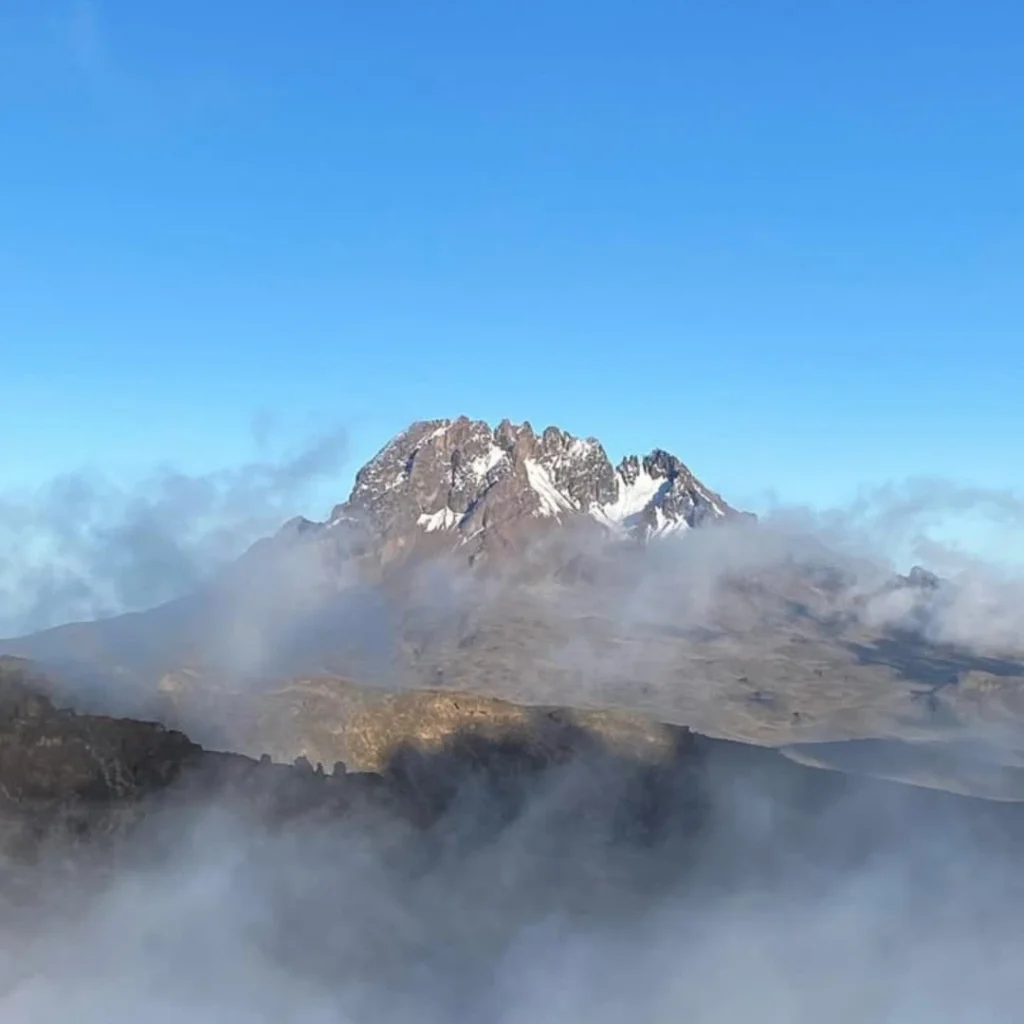
Kilimanjaro’s summit is a volcanic caldera — a roughly circular rim enclosing a wide, shallow depression with a secondary cone in the middle known as the Reusch Crater, and inside that a smaller ash pit that is still geologically active (you can smell sulphur on calm days). The rim of the outer crater is what climbers walk along to reach Uhuru Peak on the southwestern edge.
Crater Camp is inside that outer rim, on the crater floor, near the Furtwängler Glacier on the western side. From camp you can:
- Walk up to Uhuru Peak in about 45 minutes for sunrise or sunset.
- Walk to the edge of the Furtwängler Glacier in about 10 minutes — a rapidly-retreating slab of ice that has lost more than 85% of its 1912 surface area and is expected to disappear entirely within decades.
- Look down into the steaming ash pit of the inner Reusch Crater — one of the few places on Kilimanjaro where the mountain’s volcanic character is visible and audible.
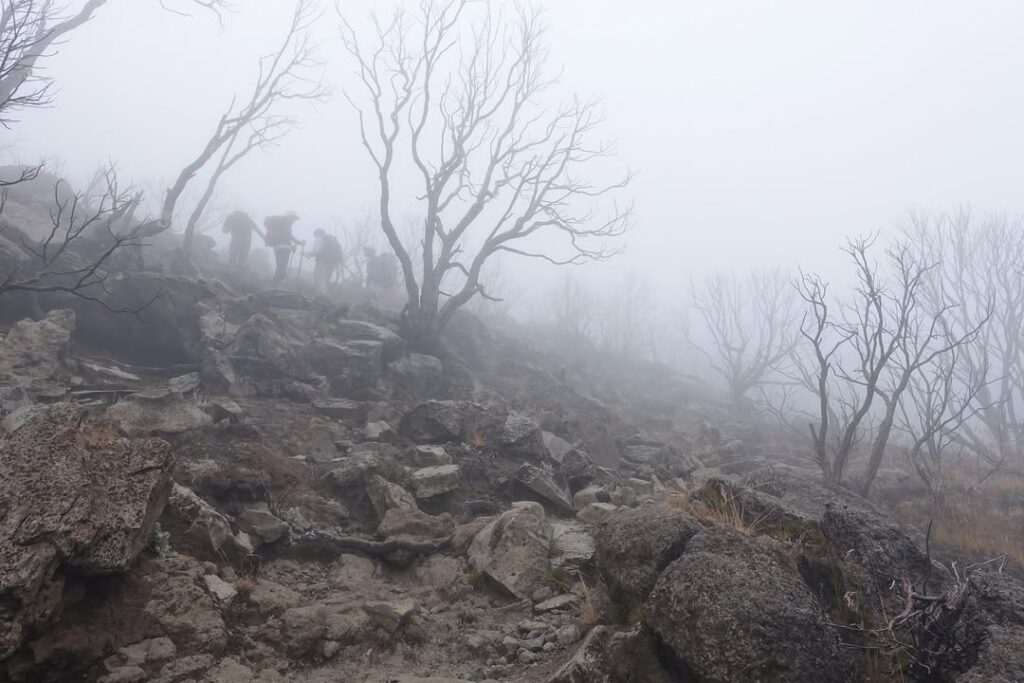
The terrain is loose volcanic rock, ice, and gravel. There is no vegetation. There is no shelter from wind other than what your tent provides. The air has roughly half the oxygen of sea level.
Which Routes Allow Crater Camp
Crater Camp is only offered on longer itineraries that approach from the west or north — typically the Lemosho Route and the Northern Circuit Route, and occasionally the Shira Route or the Umbwe Route for experienced trekkers. On most itineraries that include Crater Camp, the structure looks like this:
- Days 1–5 or 6: standard route approach, following the normal camp sequence.
- Day 6 or 7: ascend from the high camp (Barafu or School Hut) early morning, summit Uhuru Peak in the mid-morning, then descend into the crater and camp at ~5,730m.
- Day 7 or 8: descend from Crater Camp all the way down to Mweka Camp or Millennium Camp on the southern side of the mountain.
- Day 8 or 9: final descent to Mweka Gate.
A Crater Camp itinerary adds one day to a standard climb and moves the summit push to a daylight schedule rather than midnight. That’s a significant advantage in some ways — you see the crater in daylight, you climb without the cold and fatigue of 11pm to 6am summit night — but it demands a body that can sleep above 5,700m, which is not a guarantee.
Who Actually Offers Crater Camp
Not many operators offer Crater Camp, and not every operator who advertises it actually runs it regularly. A few filters to apply before booking:
Guide experience at altitude. Crater Camp is not a marketing package. It’s an alpine-style overnight at an altitude where bad decisions compound fast. Operators running Crater Camp should have guides with repeat experience at and above 5,700m, not guides doing it for the first time on your climb.
Safety infrastructure. At Crater Camp, you are 8 to 12 hours of assisted descent from the nearest vehicle-accessible point. Evacuation from the crater is serious, slow, and weather-dependent. Your operator should have a clear protocol for what happens if a climber’s condition deteriorates overnight. Read the operator’s safety page carefully. If there’s no mention of oxygen, evacuation protocols, or altitude-specific monitoring, that’s a flag.
Honesty about the downsides. An operator who sells Crater Camp as “the ultimate Kilimanjaro experience” without mentioning the physiological costs is optimising for your booking, not your health. You want an operator who will tell you who shouldn’t do it.
Kilimanjaro Sky runs Crater Camp on request as an add-on to the Lemosho and Northern Circuit itineraries. We will tell you honestly whether we think you should do it based on how the first six days of your climb go. If your acclimatization profile looks borderline at Barafu, we’ll recommend descending on standard summit night rather than pushing for Crater Camp. The additional day is not worth the risk if your body isn’t handling altitude well.
What It Feels Like to Sleep at 5,730m (18,800 ft)
Crater Camp is not a comfortable night’s sleep. This is worth being direct about, because it’s the single thing climbers tend to underestimate.
Sleep is poor. Your body is under hypoxic stress. Most climbers experience shallow, broken sleep — often with Cheyne-Stokes breathing patterns, where your breath cycles through deeper and shallower rhythms that can feel alarming. You may wake with a gasp. You may wake every 30 minutes. Some climbers don’t sleep at all.
Headache is common. Most climbers arrive at Crater Camp already mildly hypoxic after summiting. By evening, some develop a throbbing headache that doesn’t fully respond to paracetamol or ibuprofen. The headache usually improves once you begin descending the next morning.
Appetite is gone. You will not feel hungry. You need to eat anyway. Your body burned through a lot of fuel on summit day and has more descent to do tomorrow. Your guides will encourage (not force) food. Simple carbs — biscuits, soup, rice — are easiest to keep down.
Cold is absolute. Night-time temperatures at Crater Camp run -10°C to -20°C. Wind can make it feel 10 degrees colder. Your water bottle will freeze solid if not insulated and kept close to your body inside your sleeping bag. The difference between a -15°C rated sleeping bag and a -20°C rated sleeping bag is meaningful here.
Nausea and mild confusion are possible. Mild Acute Mountain Sickness symptoms are expected. Severe symptoms — persistent vomiting, ataxia (unsteady walking), confusion about where you are or what day it is — are signs of High-Altitude Cerebral Edema (HACE) and require immediate descent. Your guides monitor for these specifically. If you feel meaningfully worse than expected, say so.
Most climbers who spend the night at Crater Camp describe the experience afterwards as extraordinary — the silence, the star-field, the sense of being inside the mountain rather than on it, the Furtwängler Glacier shining blue-white in moonlight 200 metres away. They also describe it as one of the hardest nights of their lives. Both are true.
Who Should Not Do Crater Camp
Crater Camp is not a beginner option. A few categories of climber should generally skip it:
- First-time high-altitude trekkers. If Kilimanjaro is your first climb above 4,000m, do not add Crater Camp. You don’t yet know how your body responds to sustained altitude, and the crater is not the place to find out.
- Anyone with cardiovascular conditions, uncontrolled hypertension, or recent illness. The physiological stress of sleeping above 5,700m (18,800 ft) exceeds what most medical professionals would clear for anyone with these profiles. Consult your doctor.
- Climbers who struggled at Barafu. If you felt significantly hypoxic or symptomatic at your high camp, descending is the right call. Crater Camp will amplify, not resolve, those symptoms.
- Climbers on short itineraries. A 6-day Machame does not acclimatize you well enough to sleep at 5,730m. The mathematics of acclimatization are real. A Crater Camp attempt requires an 8+ day itinerary minimum.
If you’ve done other high-altitude trekking — Everest Base Camp, Aconcagua, Denali approach camps, significant Himalayan trekking — and your body has shown it can handle sustained altitude above 5,000m, Crater Camp becomes a reasonable option. If you haven’t, wait until you have.
The Case For Crater Camp
For climbers who are physically ready and emotionally committed to it, Crater Camp offers things no other Kilimanjaro itinerary can:
Daylight summit push. Standard summit day is a midnight departure so you arrive at the crater rim at sunrise. A Crater Camp itinerary can move summit to a morning start, which means climbing in daylight — easier navigation, better views, less cold.
Extended time on the summit. Most climbers on standard routes are on Uhuru Peak for 10 to 20 minutes before descending. Crater Camp climbers can return to Uhuru for sunset, spend time at the Furtwängler Glacier, stand at the edge of the ash pit, and see the mountain’s volcanic anatomy up close.
The crater itself. The inner landscape of Kilimanjaro — crater floor, glacier margins, sulphur-tinged rocks near the Reusch Crater — is something fewer than 1 in 100 Kilimanjaro climbers ever see.
Photography. Sunrise and sunset from inside the crater, with the Furtwängler Glacier, are dramatically different from summit shots on standard routes. This matters to some climbers. It should not be the primary reason to add the night.
Cost and Logistics
Crater Camp adds one day to your itinerary and one extra park fee (park fees on Kilimanjaro are charged per day; at the time of writing, high-camp fees run roughly $80+ per climber per day on top of regular fees). You’ll also be paying for an extra day of guide, porter, and crew wages, plus additional food and oxygen carried higher than standard. Budget an incremental cost of several hundred USD depending on group size.
For detailed package and pricing information on our Lemosho and Northern Circuit itineraries with Crater Camp, get in touch. We’ll quote specifically based on group size, season, and how many nights you want.
A Note on the Furtwängler Glacier
If you sleep at Crater Camp, you are sleeping beside one of the world’s most visibly retreating glaciers. The Furtwängler Glacier was a continuous ice body across much of the summit crater when Hans Meyer first summited Kilimanjaro in 1889. It has been measured, photographed, and documented for over a century, and the record is consistent: it has lost more than 85% of its surface area since the early 1900s, with accelerating loss in the past three decades.
There is a reasonable chance the glacier will not exist when your children try to climb Kilimanjaro. This is one of the small, private reasons some climbers choose Crater Camp now — not as “bucket list” tourism, but as witness to something that is ending.
How to Decide
The honest way to think about Crater Camp is this: it’s not the “upgrade” version of a Kilimanjaro climb. It’s a different kind of climb — one that requires more time, more physical resilience, and more acclimatization. The climbers who do it best tend to be ones who’ve already been above 5,000m (16,404 ft) before, who’ve had the conversation with their doctor, and who aren’t adding it because it sounds impressive.
If you’re considering Crater Camp, the best starting point is a conversation. We’ll ask about your trekking history, your acclimatization profile on previous climbs, any medical factors, and what you actually want out of your Kilimanjaro experience. If Crater Camp is right for you, we’ll build the itinerary around it. If it isn’t, we’ll say so, and we’ll help you design a standard summit itinerary that delivers what you’re actually looking for.
You can reach us through our contact page or start with the routes overview to compare itineraries. The FAQs cover the questions climbers ask most often.