“Kilimanjaro” and “snow” have been linked in the popular imagination since Hemingway published The Snows of Kilimanjaro in 1936. The image is iconic — Africa’s highest peak crowned with glacial ice, a jarring contrast to the rainforest below. That image is still partly true, but it’s changing fast. The glaciers are shrinking. Snow cover on the summit crater is unpredictable, often absent for weeks at a time. And yet climbers consistently ask whether they need ice axes, crampons, or rope skills to climb the mountain.
Short answer: No. Kilimanjaro is not a snow climb in any technical sense. It is a trekking peak. You walk to the summit.
Longer answer: Snow and ice do exist on the mountain, you will likely encounter some of it, and a few practical realities shape how you should prepare. This post covers what snow you’ll actually see, what the glaciers look like today, whether you need crampons, and how the mountain compares to climbs that genuinely do require snow skills.
Is There Snow on Kilimanjaro?
Yes — but less than most people imagine, and mostly in specific places.
Seasonal snow falls on the summit area periodically during both rainy seasons (March–May and November). A snow storm at the summit can leave 10–30cm of fresh snow across the crater and upper scree slopes, sometimes more. This snow typically melts or sublimates within a few days to a week under equatorial sun, though some high-altitude snow persists longer in shadowed areas.
Permanent glaciers exist on Kibo, the summit cone. These are the remnants of a much larger ice cap that covered the summit region when Kilimanjaro was first climbed in 1889. The main surviving glacial bodies are:
- Furtwängler Glacier — inside the summit caldera, close to where climbers on a Crater Camp itinerary sleep. Rapidly retreating.
- Northern Ice Field — the largest remaining glacier, on the northern slopes.
- Southern Ice Field — including the Decken and Kersten glaciers on the southern slopes of the summit cone. These are the ice walls visible from the Stella Point approach.
- Eastern Ice Fields — smaller remnants on the eastern flanks.
All of these glaciers are shrinking. The Furtwängler has lost more than 85% of its 1912 surface area. Peer-reviewed projections suggest the remaining Kilimanjaro glaciers will largely disappear within the next 20–30 years if current trends continue.
What You’ll Actually Encounter on a Climb
Here’s what snow and ice conditions realistically look like for a climber on a standard route in a standard season.
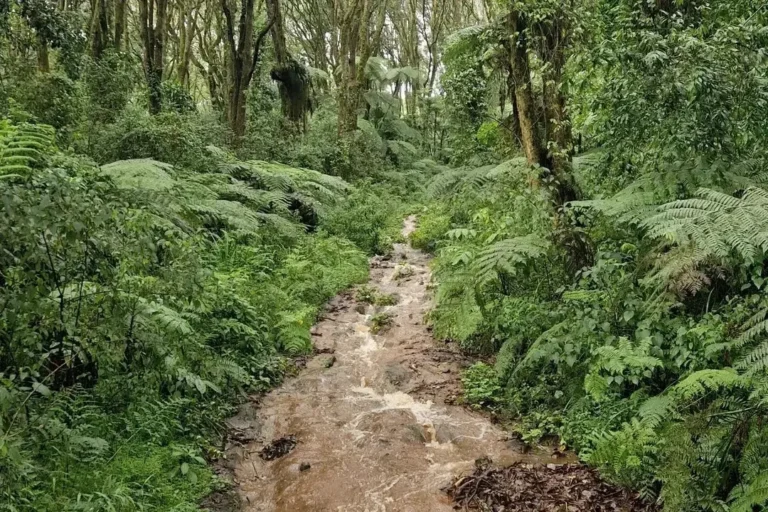
Days 1 through 4 (rainforest, moorland, alpine desert): Zero snow. Temperatures are mild. You’re walking through vegetation. The only water you’ll see is streams and occasional rain or mist.
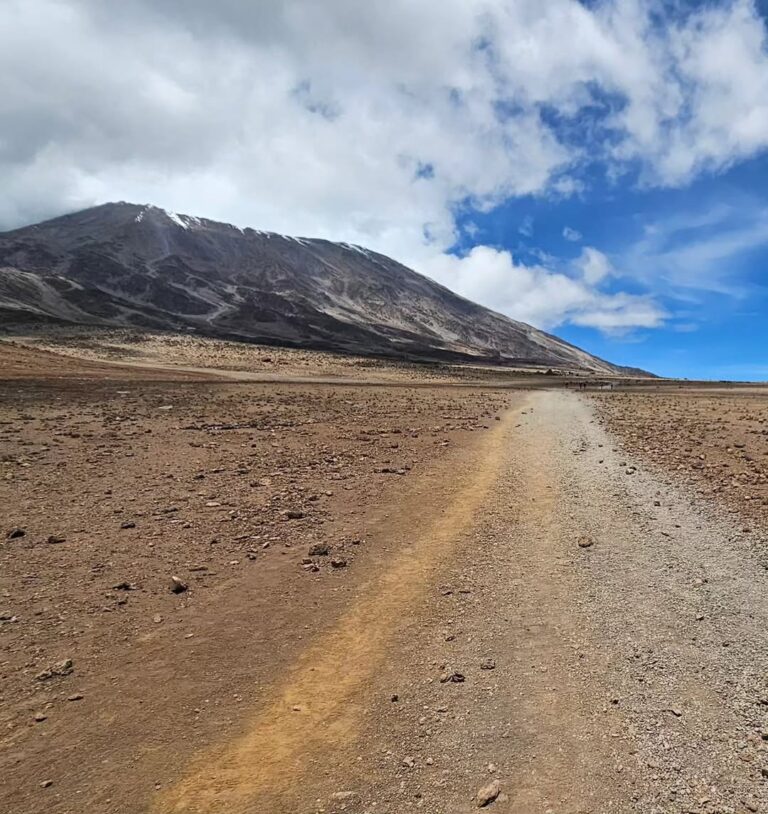
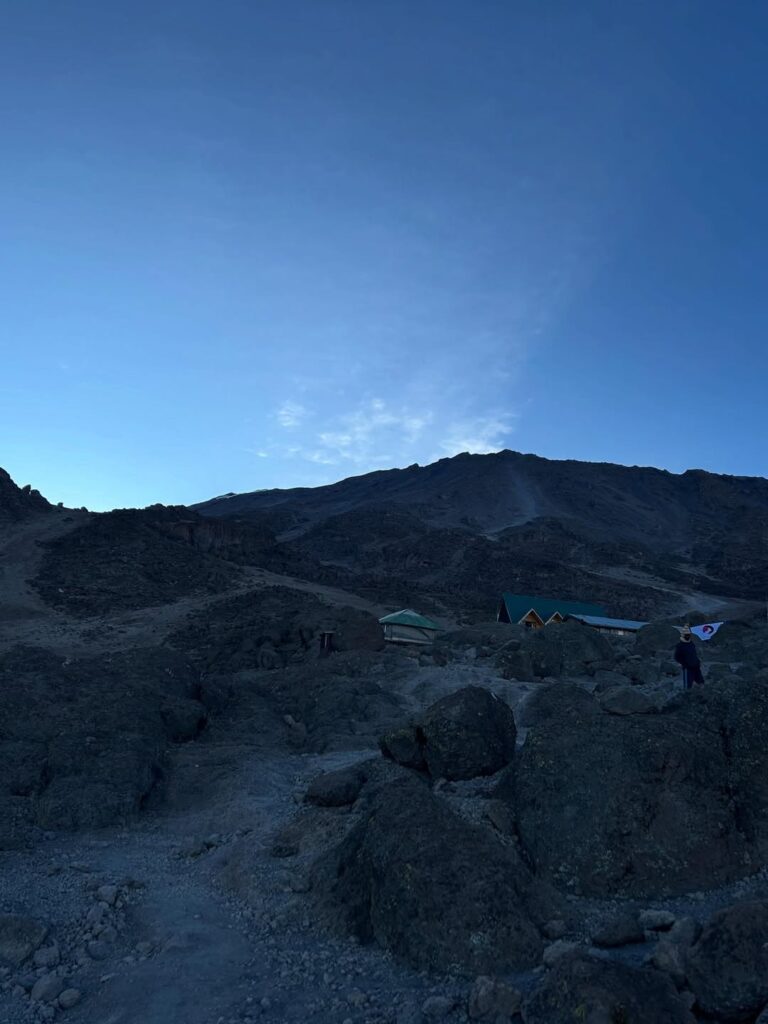
Day 5 (high alpine, approach to Barafu Camp): Still typically no snow on the trail. You’ll see glaciers in the distance — the Southern Ice Field visible on the upper slopes of Kibo as you approach Barafu. These look close but are 1,000m+ above you.
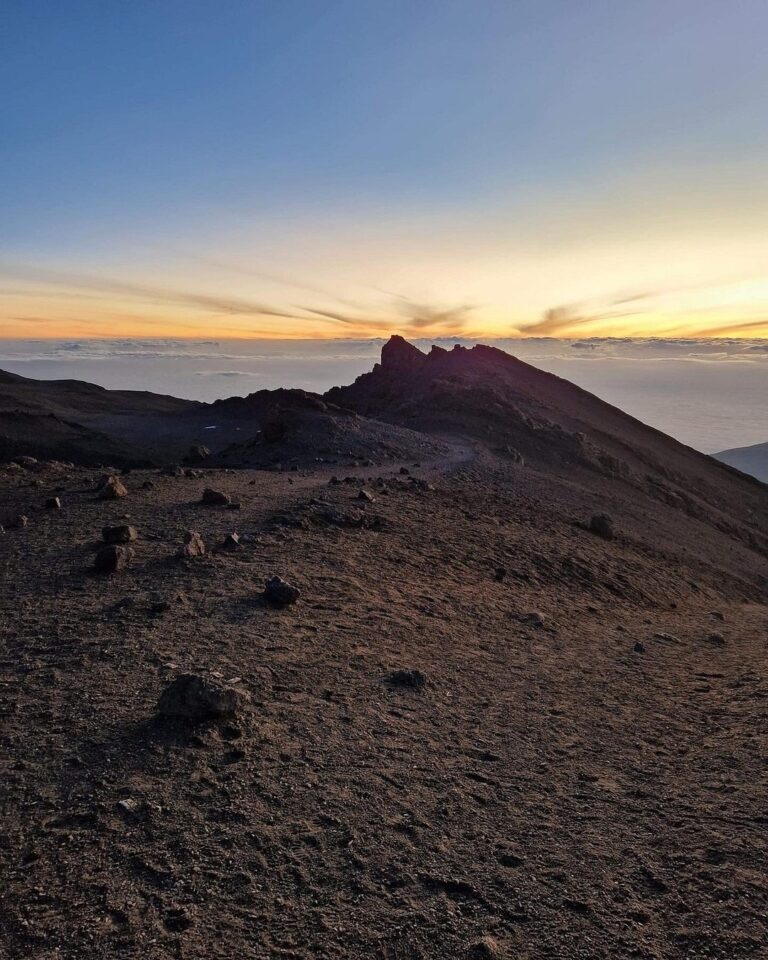
Summit night (Barafu to Uhuru): This is where snow exposure becomes a possibility, but it’s still often minimal:
- Dry conditions (most days in high season): Trail is entirely volcanic scree and gravel. No snow on the path. Glaciers visible but not crossed. Summit plateau (between Stella Point and Uhuru) sometimes has patches of frozen ground or thin snow, but the path itself is usually clear.
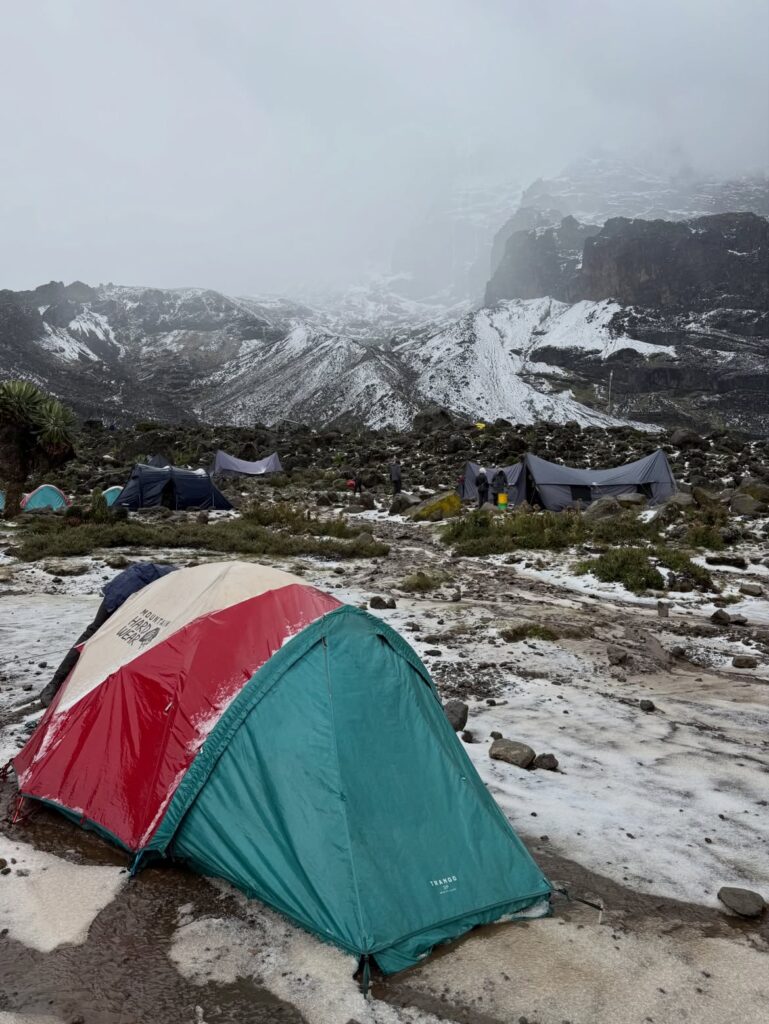
- Post-snowfall conditions: After a storm, the upper trail may have 5–20cm of fresh snow. This is the most snow you’re likely to see. It’s walkable in sturdy boots. Guides will know how much is there and whether anything on the route changes.
- Wet or shoulder season conditions: Rain below freezing level, snow above it. Possible verglas (thin ice) on rocks near the summit. More challenging underfoot but still walkable.
At the summit: The Uhuru Peak sign and the crater rim near it are usually on exposed rock. Snow patches in surrounding areas are common but not continuous. The glaciers below the rim can be close enough to touch from the path near Stella Point — you’re walking parallel to ice walls 10–60m high — but you don’t cross onto them on a standard route.
Inside the crater (Crater Camp only): If you’re on a Crater Camp itinerary, you’ll spend a night on the crater floor. Patches of glacier ice are close, snow cover is variable, temperatures are -10°C to -20°C overnight. Still no technical snow travel — you walk on rock and gravel between ice patches.
Do You Need Crampons?
In 99% of conditions on the standard Kilimanjaro trekking routes: no.
Crampons are for walking on ice and hard snow. On Kilimanjaro’s summit approach, the terrain is volcanic scree, gravel, and occasional patches of consolidated snow — not the firm, continuous ice that crampons are designed for. Using crampons on scree would be actively dangerous (they’d catch on rocks and trip you).
The one situation where crampons might be useful: after a significant recent snowfall, if fresh snow has consolidated and frozen overnight before your summit push, short sections of the upper trail may be ice-glazed. Most guides handle this with careful foot placement and tempo. On the rare occasions where conditions are genuinely icy, our guides will brief you specifically.
If you’re coming prepared, microspikes (small traction devices that slip over hiking boots) are a better call than full crampons. Microspikes weigh 300–400g and pack small. They’re useful in wet shoulder seasons or after unexpected snow. Kilimanjaro Sky carries supplementary traction devices on every climb as part of the crew gear — you don’t need to bring your own in most cases.
Full crampons are not required on any standard Kilimanjaro trekking route. If an operator tells you that you need crampons, ask which route and under what conditions. The answer should be specific and rare.
Do You Need an Ice Axe?
No.
An ice axe is used for self-arrest (stopping a slide on steep snow or ice) and for moderate technical climbing. Neither is relevant on Kilimanjaro’s standard routes. The steepest sections — the summit-night scree slope, the Barranco Wall, the summit crater rim — are not ice-arrest terrain.
Ice axes are relevant on Mont Blanc, on Batian/Nelion on Mount Kenya, on Aconcagua’s higher routes, and on any glaciated peak where you’re walking on actual snow and ice with consequence. On Kilimanjaro, an ice axe is extra weight with no use case.
What Gear You Actually Need
The gear that matters for Kilimanjaro’s snow and cold exposure is clothing and footwear. Specifically:
Footwear:
- Sturdy mid- to high-cut hiking boots, broken in before the climb. Waterproof (Gore-Tex or equivalent).
- Gaiters — knee-high, waterproof. Keep scree and snow out of boots on the summit descent.
- Warm wool or synthetic socks. Bring multiple pairs.
Clothing for summit night:
- Base layer (merino or synthetic)
- Mid layer (fleece or synthetic insulation)
- Insulated jacket (down or synthetic, rated for -20°C or colder)
- Hardshell jacket (waterproof, windproof)
- Insulated trousers or hardshell over base+mid
- Balaclava or buff, warm beanie
- Liner gloves + insulated outer gloves or mittens. Two pairs in case one gets wet.
Hydration:
- Insulated bottles or thermos for the summit night. A hydration bladder tube will freeze in the first hour.
Sun protection (for glacier reflection at altitude):
- Category 3 or 4 sunglasses (high UV, glacier-rated). Kilimanjaro’s summit reflects intense UV even when not fully snow-covered.
- Sunscreen, high SPF. The equatorial sun at 5,895m (19,340 ft) is punishing.
Our full Kilimanjaro packing list goes through everything in more detail. Our what to wear for summit night on Kilimanjaro post covers the layering specifically.
Snow Days on Kilimanjaro: Weather Variability
Snow on Kilimanjaro is weather-dependent and unpredictable. Some seasons see almost no summit snow for weeks. Others see significant snowfall that changes trail conditions for days.
The dry seasons (January–February and June–October) generally see less precipitation and more consistent dry summit conditions. The rainy seasons (mid-March to May, November) see more snow at altitude — potentially fresh snow on multiple summit days in a row.
If you’re climbing in high season (June–October) and want to see some snow on the summit, you may not. The mountain is often dry and rocky for extended stretches. Photos of Kilimanjaro’s summit with blue sky and no snow are accurate depictions of what many climbers actually experience.
If you want to see more dramatic snow and ice, shoulder seasons (March–early April, late October–November) have higher probability of fresh snow but also higher probability of poor weather affecting the climb itself. This is a genuine trade-off. Our best time to climb Kilimanjaro post covers seasonality in full.
The Glaciers You’ll See
If you climb Kilimanjaro via the Machame or Lemosho routes, you’ll pass close to the Southern Ice Field — specifically the Rebmann and Decken glaciers — on the upper scree slope as you approach Stella Point. On summit morning, these glaciers catch sunrise light and turn pink-orange for a few minutes. The scale is often the surprise: ice walls up to 60m high, only metres from the walking trail.
From the crater rim, you can see the Northern Ice Field and (from certain angles) the Furtwängler Glacier inside the caldera. If you’re on a Crater Camp itinerary, you’ll camp within 10 minutes’ walk of the Furtwängler.
These glaciers are a visible, measurable record of climate change. Historical photographs from the early 1900s show ice coverage that is unrecognisable today. Many experienced Kilimanjaro guides can point to rocks that were under ice when they started guiding. Our own head guides have watched the Furtwängler split into two separate bodies within the past decade.
If the glaciers matter to you, climb sooner rather than later. The window for seeing significant ice on Kilimanjaro is narrowing.
“Snow Climbing” Routes That Aren’t
Some specialised “ice route” itineraries have been proposed on Kilimanjaro — climbing a glacier wall rather than taking the standard scree route to the summit. The Western Breach Route is the closest thing Kilimanjaro has to a non-standard approach, going up a steep scree and occasional rock section directly to the crater floor. It is not a snow climb. It does involve significant loose rock and rockfall risk, which is why most operators (including Kilimanjaro Sky) no longer run it on a commercial basis after a series of fatal incidents.
Technical glacier climbing on Kilimanjaro’s ice bodies is possible in theory but uncommon in practice. The glaciers are shrinking, unstable, and not supported by established climbing infrastructure. We don’t offer technical ice climbing on Kilimanjaro, and we’d discourage anyone from attempting it with operators who do.
Comparisons: Where Snow Climbing Actually Matters
If you’re comparing Kilimanjaro to other climbs where snow and ice are genuine factors:
- Mont Blanc — Genuinely a snow climb. Crampons, ice axe, glacier travel, rope. See our Mont Blanc vs Kilimanjaro comparison for more.
- Aconcagua — Mixed. Standard routes are mostly scree with some snow. Crampons often useful, ice axe less so.
- Denali — Extensive glacier travel, full technical gear required.
- Himalayan 6,000m+/19685 ft+ peaks (Island Peak, Mera Peak) — Require full snow and ice climbing skills.
- Kilimanjaro — Walking. Cold, high, long — but not technical.
If your goal is to develop snow and ice skills, Kilimanjaro is not the mountain for it. Go to the Alps or take a course on a glaciated peak. If your goal is a high-altitude summit that doesn’t require those skills, Kilimanjaro is almost uniquely positioned as an accessible trekking peak at this elevation.
The Bottom Line
Is there snow on Kilimanjaro? Yes, sometimes — on the summit region, as seasonal cover, and as permanent (but shrinking) glacier ice.
Is Kilimanjaro a “snow climb” in any technical sense? No. It is a trekking peak. You walk up. The only ice-related gear decisions are whether to bring microspikes (usually unnecessary, but light insurance) and what warmth to pack for summit night (important — don’t under-insulate).
If you’re preparing for a climb and want a clear gear brief, the packing list and summit night clothing guide cover the essentials. The routes overview walks through which route puts you closest to the glaciers (Machame and Lemosho both pass the Southern Ice Field), and the Crater Camp post goes into depth on what it’s like to spend a night at the edge of the Furtwängler.
If you’re planning a climb and want a straight read on conditions in your target window, get in touch. We run climbs year-round and know current conditions better than any weather forecast can show.