Most people who climb Kilimanjaro arrive with little idea of what lives there. The common assumption is that a 5,895m volcano isn’t much of a wildlife destination — and compared to the Serengeti or Ngorongoro Crater, that’s fair. You aren’t going to see lions from your tent.
But the mountain is more biologically interesting than its reputation suggests. It rises through five distinct ecological zones, and each one hosts its own animal community. Some of what you’ll see is familiar — colobus monkeys, small antelope, the ubiquitous ravens of the high camps. Some is rare — tree hyrax calling in the forest at night, leopards whose tracks occasionally appear at surprising altitudes. And much of it is only visible if you know what to look for.
This is a working field guide to the animals you may encounter across a Kilimanjaro climb, organised by zone, with honest notes on how likely you are to actually see each one.
How Wildlife Distributes Across Kilimanjaro
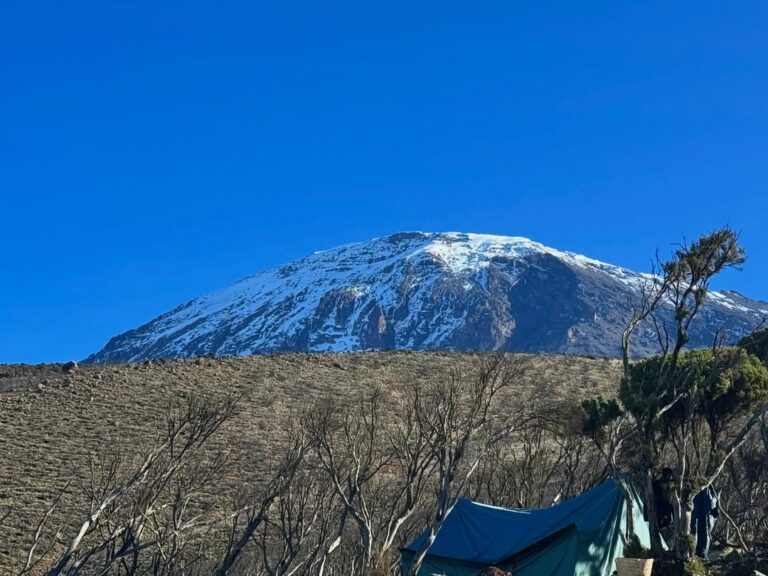
The mountain’s ecological zones shape where animals can live. Temperature, vegetation, rainfall, and oxygen availability all change with altitude, and the wildlife changes with them. A rough summary:
- Cultivated zone (800–1,800m/2,624-5,905 ft): Farmland. Mostly domestic animals and birds adapted to human settlement.
- Montane forest (1,800–2,800m/5,905 ft-9,786 ft): The richest wildlife zone on the mountain. Primates, small antelope, birds, tree hyrax.
- Heath and moorland (2,800–4,000m/9,786-13,123 ft): Sparser wildlife. Specialist species — some rodents, birds, occasionally larger mammals passing through.
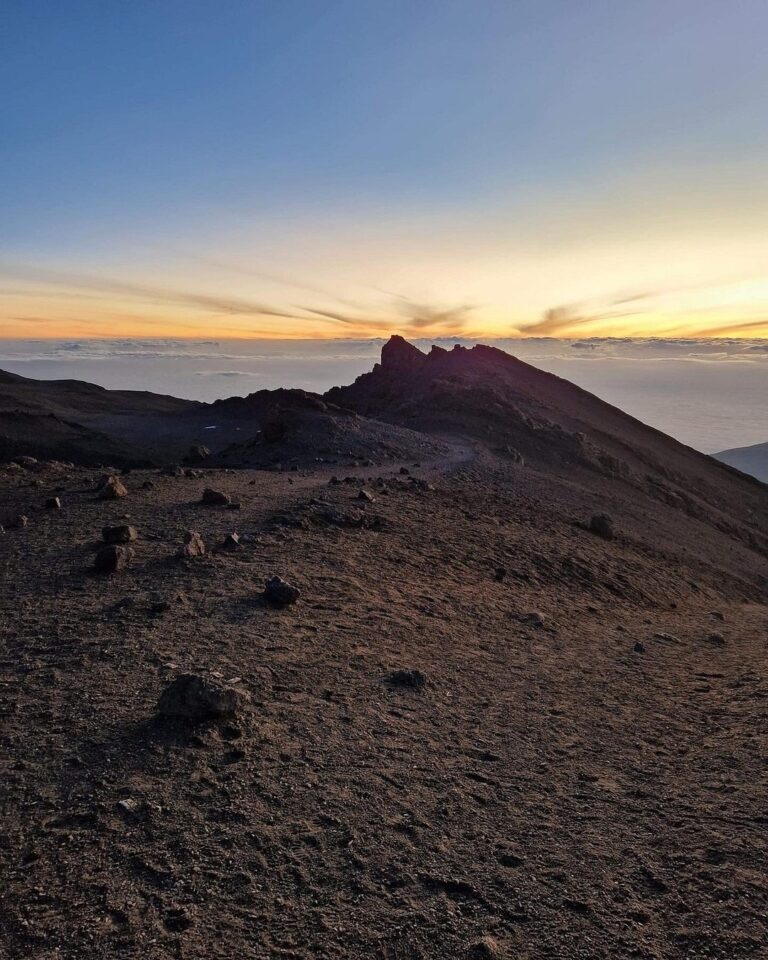
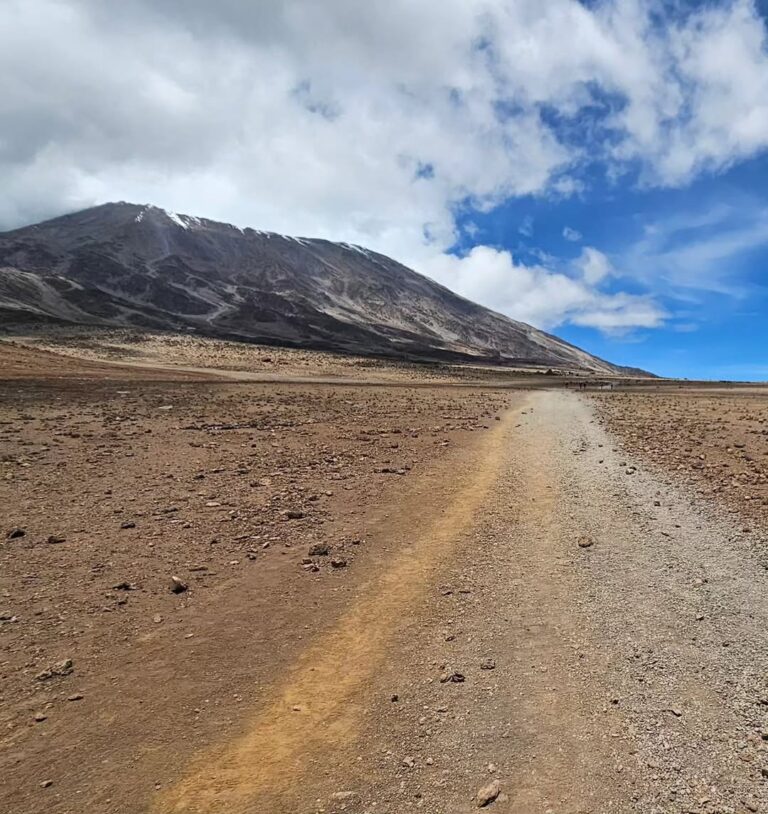
- Alpine desert (4,000–5,000m/13,123-16,404 ft): Very limited wildlife. Insects, a few birds, and signs (but rarely sight) of predators that occasionally range this high.
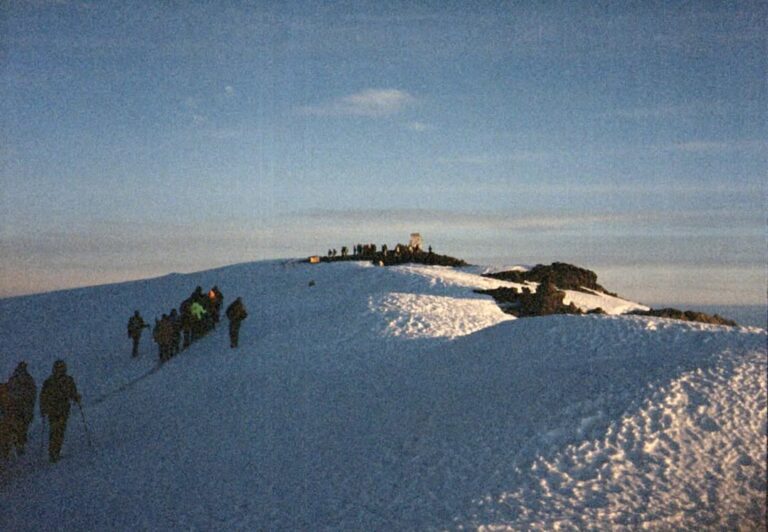
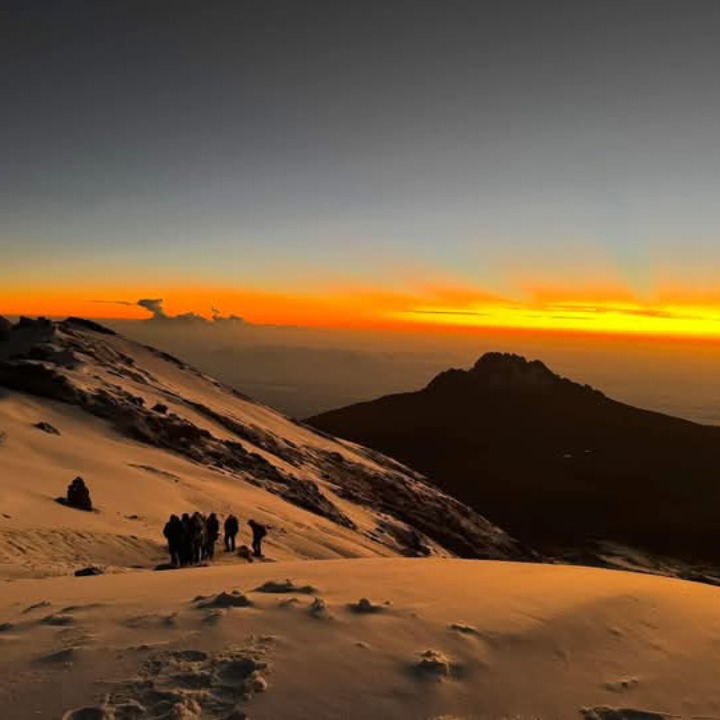
- Summit zone (5,000m+/16,4040 ft+): Practically no resident wildlife. Occasional birds, very rarely a dead leopard (yes, this has happened — more on that below).
The animal density drops dramatically above the forest zone. If you want to see wildlife on Kilimanjaro, the first two days of your climb — through the montane forest — are the prime window.
For detail on why the zones shift so dramatically with altitude, the Kilimanjaro weather guide by altitude zone gives the fuller picture.
The Montane Forest: Where the Real Wildlife Is
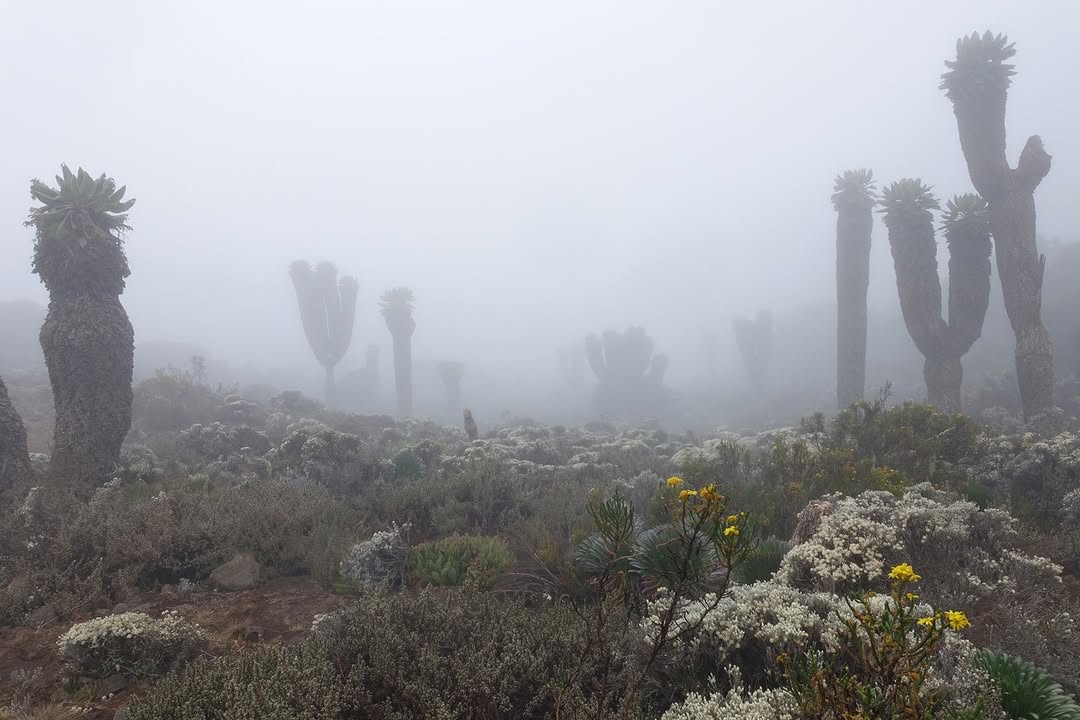
The rainforest belt of Kilimanjaro is one of the best-preserved tropical montane forests in East Africa. If you want animal encounters, slow down on the first day. Let the group walk ahead. Stop. Listen. Look up.
Colobus Monkeys
The black-and-white colobus (Colobus guereza caudatus) is Kilimanjaro’s most charismatic forest resident. They’re unmistakable — large, long-tailed, with distinctive white mantle and face markings against a black body, and a long white tail tuft that they trail behind them as they leap between trees.
You’ll often hear them before you see them — a deep, throaty roar that carries through the forest, used to mark territory. They live in troops of around 5 to 15 individuals, moving through the canopy on daily feeding routes.
The best places to see colobus are on the forest sections of the Machame, Lemosho, and Marangu routes. Early morning is most active. If your guide is paying attention — and any good guide is — they’ll spot the troops long before you do.
Blue Monkeys
The blue monkey (Cercopithecus mitis) is more common than the colobus but less noticeable. They’re smaller, grey-blue, and live in medium-sized troops through the same forest belt. They’re more cautious of humans and often move away from trail traffic rather than calling attention to themselves.
Listen for branch movement and soft vocalisations. Blue monkeys often travel with colobus groups in mixed-species associations.
Bush Pig
Less commonly seen but widespread in the forest zone. Bush pigs (Potamochoerus larvatus) are nocturnal, so most trekkers only see sign — rooting marks, tracks, or hear them crashing through undergrowth at night near the lower camps. Large, hairy, shy.
Duiker and Suni
Two small forest antelope are relatively common in Kilimanjaro’s forest belt:
Abbott’s duiker (Cephalophus spadix) is the larger of the two, reddish-brown, and reaches about 65–70cm at the shoulder. It’s endemic to East African montane forests and is relatively rare overall, but Kilimanjaro is one of its strongholds. Shy and crepuscular — you may see one crossing the trail at dawn or dusk, then nothing.
Suni (Neotragus moschatus) is much smaller, reddish-grey, about 35cm at the shoulder. One of the smaller African antelope species. Hard to spot unless you happen to flush one from cover.
Tree Hyrax
The tree hyrax (Dendrohyrax arboreus) is one of the more unusual animals on the mountain, and you’re more likely to hear one than see one. They’re small, rabbit-sized herbivores that live in tree hollows. At night, particularly in the lower forest camps, they produce a remarkable call — starting as a series of croaks and building to what sounds like a small child screaming in the forest. Once heard, not forgotten.
Tree hyrax are most active at night. Their closest living relatives, bizarrely, are elephants and manatees. A fun thing to mention over dinner.
Birds of the Forest
The montane forest supports a dense bird community. Some of what you may see or hear:
- Hartlaub’s turaco — large, green, with a red crown and flashing red wing patches in flight
- Silvery-cheeked hornbill — big, black-and-white, loud wingbeats
- Various sunbirds — small, iridescent, nectar-feeding
- African olive pigeon — often heard calling
- White-necked raven — follows trekkers throughout the mountain, from forest to summit
- Trogons, barbets, woodpeckers, warblers — a long list for the birders
If you’re interested in the birds specifically, bringing a compact pair of binoculars is one of the smartest small additions to your kit. The Kilimanjaro packing list covers the essentials; binoculars are an optional extra worth considering.
Heath and Moorland Zone: Where It Gets Quiet
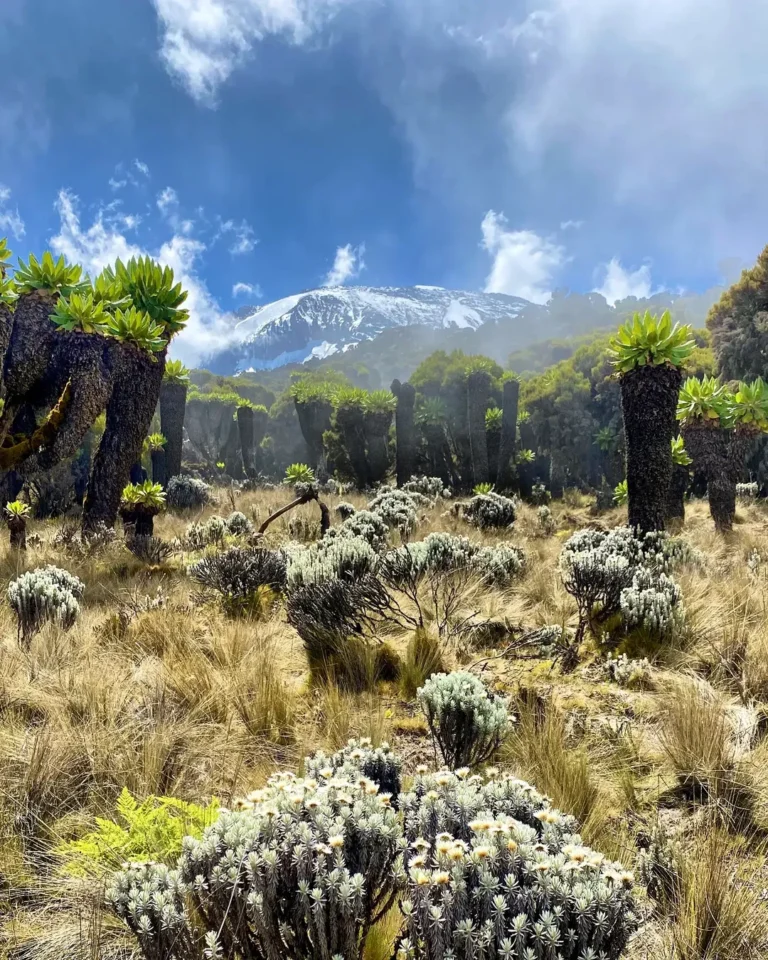
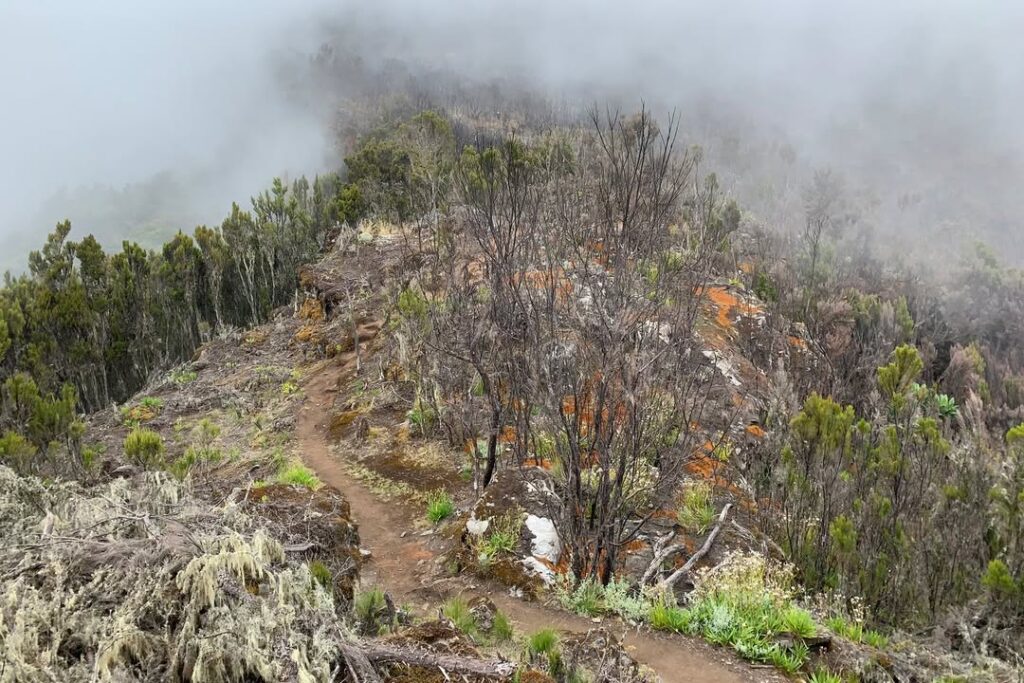
Above the forest, wildlife becomes much less visible. The landscape opens up, the vegetation shifts to heather, groundsel, and tussock grass, and most of the mammals that use this zone use it as a corridor rather than a home.
Eland and Elephant — Signs Only
Two of the largest animals that occasionally range into the moorland zone:
Eland (Taurotragus oryx) — Africa’s largest antelope. There’s a small population that uses the upper forest and lower moorland areas, particularly on the northern and eastern sides of the mountain (Rongai area). You’re unlikely to see one, but your guide may point out tracks.
Elephants — Yes, really. Small numbers of elephants range up to around 3,000m on the quieter slopes of the mountain, particularly on the Shira and Rongai sides. Encounters are rare and almost always from a distance. Elephant trails and dung are occasionally visible on trek routes.
Rock Hyrax
The rock hyrax (Procavia capensis) replaces the tree hyrax at higher altitudes. You may see small groups near rocky outcrops in the moorland and even up into the alpine desert. They’re day-active, so relatively easy to spot sunning themselves on boulders.
White-Necked Raven
Above the forest, one bird becomes the near-constant companion: the white-necked raven (Corvus albicollis). Large, glossy black with a white collar, clever, and opportunistic. They patrol the higher camps watching for unattended snacks. They’ll rip through unsecured bags. They’ll steal what they can. Respect them and keep your food packed.
Ravens are probably the animal you’ll see most clearly during your climb. At Shira Camp, Barranco Camp, and the various high camps on every route, they’re a constant presence.
Four-Striped Grass Mouse and Other Rodents
The high-altitude rodent fauna is understudied but present. If you see a small mammal scurrying through the tussock grass in the moorland, it’s probably the four-striped grass mouse (Rhabdomys pumilio) or one of several other small rodent species. Nothing to worry about.
Alpine Desert and Summit Zone: Life at the Margins
Above 4,000m, the mountain gets hostile fast. Temperatures swing wildly, air is thin, water is scarce, and vegetation is reduced to hardy tussocks and lichens. Wildlife reflects this.
The High-Altitude Leopard
Here’s a fact that surprises almost everyone: leopards occasionally range into Kilimanjaro’s alpine desert and even higher. The most famous evidence of this is the frozen leopard carcass discovered near the crater rim in 1926 — the inspiration for Hemingway’s The Snows of Kilimanjaro. More recent sightings of leopard tracks at high altitude confirm that leopards still use the mountain, though encounters are extraordinarily rare.
You will almost certainly not see a leopard on your climb. But there’s a chance — a small, real chance — that one has walked past the place you’re camped while you were asleep. The mountain is theirs first.
High-Altitude Insects
The alpine desert supports a surprising insect community adapted to the extreme environment. Certain grasshoppers, flies, and spiders live at altitudes up to and above 5,000m. They’re small and easy to miss, but they’re there. Research from the 2010s documented insects active at the summit crater itself.
Summit Zone: Almost Nothing
At the true summit, above 5,500m, the landscape is effectively sterile of vertebrate life. The only animals you’ll regularly see that high are ravens (following human activity) and, on a clear summit morning, perhaps a soaring lammergeier (bearded vulture) — an extraordinary sight if you catch one.
The Animals Kilimanjaro Isn’t
A few things worth clarifying about what Kilimanjaro wildlife is not:
Not dangerous. The mountain is, by African standards, remarkably safe from dangerous wildlife. Encounters with large predators are extraordinarily rare. The dangerous animals on Kilimanjaro guide goes into detail about what to actually worry about (hint: not much).
Not a safari. If wildlife viewing is a major goal of your Tanzania trip, pair your climb with a proper safari. The Kilimanjaro Sky packages can combine a climb with 1–5 days in the Serengeti, Ngorongoro Crater, Tarangire, or Lake Manyara — which is where the big game lives.
Not the Big Five. You won’t see lions, rhinos, or hippos on Kilimanjaro. Elephants and buffalo exist on the lower slopes but are rarely encountered by trekkers. Leopards exist but are almost never seen.
Wildlife Viewing Tips on the Trail
A few practical notes if animal encounters are a priority for you:
Walk quietly on day one. The forest day is prime viewing. Stay at the back of the group if the group is loud. Take breaks.
Look up, not just ahead. Colobus, birds, and hornbills are canopy animals. Trekkers looking at their feet miss most of them.
Dawn and dusk are best. Most forest animals are crepuscular. The hour or two around sunrise and sunset is when activity peaks. Camps are often in ecotone areas with good wildlife potential.
Listen, don’t just look. Tree hyrax calls, colobus roars, hornbill wingbeats, raven croaks — most animal encounters on Kilimanjaro begin with sound.
Ask your guide. Chagga guides have grown up on this mountain. Many of them know the forest ecology in ways that a short field guide can’t capture. If you’re interested, ask. They’ll often point out things you’d otherwise miss entirely. (For more on who your guides actually are, the Chagga people of Kilimanjaro gives the backstory.)
Bring binoculars if you care about birds. Compact 8x25s or 10x25s fit in a jacket pocket and will multiply your forest day substantially.
A Closing Thought
Kilimanjaro’s wildlife won’t be why you remember the climb. The summit, the ice, the exhaustion, the moment at Uhuru — those will be. But the wildlife is part of what makes this mountain feel like a place rather than just a challenge. A colobus troop moving through the canopy at breakfast, a hyrax screaming in the dark at 2am, the ravens that will be there at every camp you reach, the tracks in the dust that suggest something passed through before dawn.
Pay attention to this. A lot of climbers don’t, and they miss half of what the mountain is.
If you’re combining your climb with a safari, the routes offered include Tanzania’s northern parks — which is where the real wildlife story lives. The mountain gives you the forest, the moorland, and the high zones. The parks give you the plains and the savanna. Together, they’re a much fuller picture of this part of East Africa than either on its own.