When you book a Kilimanjaro climb, most of the checklist is negotiable — the route, the duration, the tent type. Travel insurance is not. And not just any travel insurance: cover that explicitly includes high-altitude trekking above 6,000 metres (19,685 ft) and helicopter evacuation. Without it, you are not just taking a personal risk. You are potentially placing yourself in a situation where a medical decision — come down now — is complicated by the cost of getting you down.
This guide covers exactly what your policy must include, why the altitude threshold matters, what a helicopter evacuation actually costs, and how to evaluate policies before you book.
Why Standard Travel Insurance Fails on Kilimanjaro
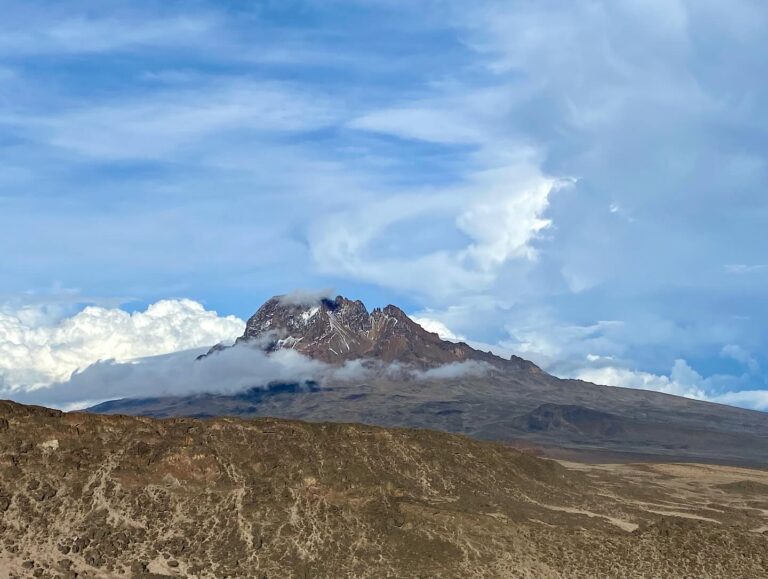
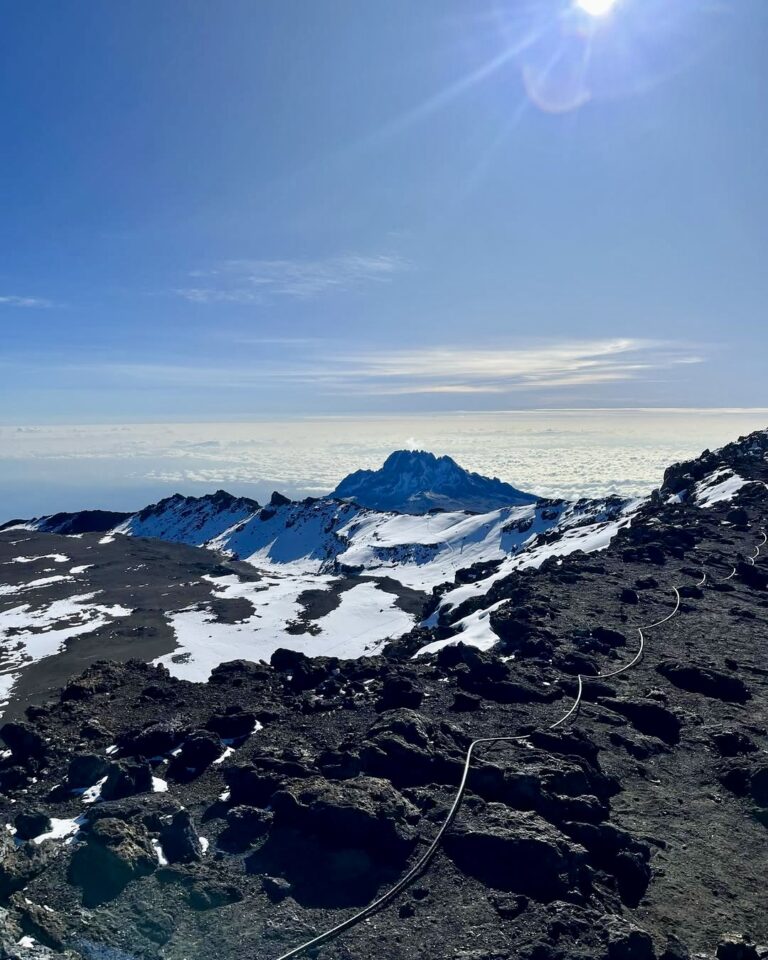
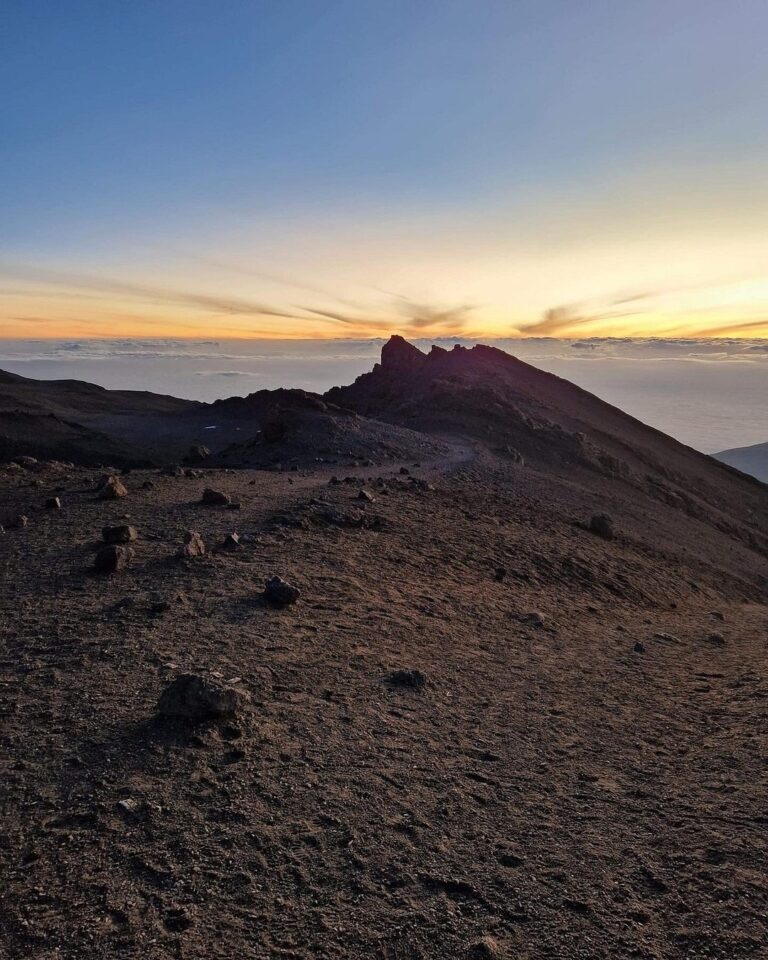
Most travel insurance policies include emergency medical cover. Most of them also include a trekking altitude limit — often 3,000 metres (9,842 ft) or 4,500 metres (14,763 ft). Kilimanjaro’s summit, Uhuru Peak, sits at 5,895 metres (19,340 ft). The crater camp is at 5,730 metres (18,800). The summit ridge that most climbers cross during summit night sits above 5,500 metres (18,044 ft) for several hours.
If your policy caps at 4,500 metres (14,763 ft) and you need a helicopter evacuation from above the crater, you are paying for that out of pocket. Helicopter evacuations from Kilimanjaro cost between $5,000 and $15,000 or more depending on conditions, time, and where the aircraft needs to fly from.
This is not a rare scenario. Altitude-related illness — acute mountain sickness, high-altitude pulmonary oedema (HAPE), high-altitude cerebral oedema (HACE) — can develop quickly and without warning. Our guides monitor your oxygen saturation morning and evening, and on demand whenever something changes. SpO2 readings below 75%, or a drop greater than 5% from your prior reading, prompt reassessment. Symptoms including confusion, persistent cough, or breathlessness at rest trigger mandatory descent. These protocols work because decisions are made early, on facts, not optimism.
But once the decision to descend is made, the question becomes: how fast, and via what means?
What Your Kilimanjaro Insurance Policy Must Cover
There are four non-negotiable requirements. Check each one by reading the policy wording, not the marketing summary.
1. High-altitude cover to at least 6,000 metres (19,685 ft)
You need explicit cover for trekking or hiking to at least 6,000 metres (19,685 ft). Some policies say “Kilimanjaro” by name. Others specify altitude bands. The exact wording matters — “mountaineering” and “trekking” are often treated differently, with mountaineering requiring technical climbing equipment. Kilimanjaro does not require crampons, ropes, or technical gear on the standard routes. Make sure your policy categorises it correctly.
2. Emergency helicopter evacuation
Helicopter evacuation from Kilimanjaro needs to be explicitly covered. Check that the limit is sufficient — $10,000 minimum, $15,000 or more to be comfortable. Some policies cover emergency medical evacuation but define it so narrowly that helicopter retrieval from altitude doesn’t qualify. Read the exclusions section carefully.
3. Emergency medical treatment
Cover for hospital treatment in Tanzania, including KCMC Hospital in Moshi, which handles most Kilimanjaro medical evacuations. Make sure your policy has no geographic exclusion for Tanzania or sub-Saharan Africa.
4. Medical repatriation
Cover for being flown home if you need treatment beyond what’s available in Tanzania. This is separate from helicopter evacuation — it refers to a commercial or charter flight home with medical supervision.
Secondary considerations worth checking: trip cancellation and curtailment (if you need to cut the climb short), baggage and equipment cover, personal liability, and 24-hour emergency assistance contact.
The Altitude Number That Changes Everything
The 6,000-metre (19,685 ft) threshold is the key number, not because you’ll necessarily reach 6,000 metres (19,685 ft) — Uhuru Peak is 5,895 metres (19,340 ft) — but because policies use this threshold to define “high-altitude” cover. A policy capped at 5,000 metres (16,404 ft) or 5,500 metres (18,044 ft) still leaves you exposed on summit night. A policy that says “up to 6,000 metres” covers the entirety of Kilimanjaro.
Some policies, particularly those marketed specifically to Kilimanjaro and Himalayan trekkers, explicitly list Kilimanjaro as a covered destination and specify that no technical equipment is required. This is the clearest and easiest policy to verify.
If your current insurer doesn’t offer altitude cover or you can’t find it in the policy wording, do not assume it’s included. Call them, ask the specific question — “Does my policy cover emergency helicopter evacuation above 5,000 metres on Kilimanjaro, Tanzania?” — and get the answer in writing.
What Happens Without Insurance
The scenario is straightforward and worth understanding before you dismiss this as boilerplate advice.
You develop symptoms of high-altitude pulmonary oedema above 4,600 metres (15,091 ft) (Barafu Camp on Machame or Lemosho, for example). Our guides correctly assess the situation and call for helicopter evacuation. The helicopter arrives within a few hours — AMREF Flying Doctors operates out of Nairobi and can cover much of Tanzania, though weather and logistics affect timing. The flight, landing crew, hospital transfer, and initial treatment cost $8,000.
If you have appropriate insurance: your insurer is contacted, pre-authorisation is obtained, and the bill is handled between them and the provider. You focus on getting better.
If you don’t: that bill is yours, payable before or immediately after treatment in most cases. The hospital’s ability to treat you is not affected, but the financial stress on top of a medical emergency is real and avoidable.
We require proof of valid travel insurance before departure. This is not fine print — if you cannot provide it, your climb does not begin. This is a condition of booking with us, and it exists because we’ve seen what happens when it isn’t in place.
How to Choose a Policy
There are several insurers who regularly cover Kilimanjaro climbers. Names that appear consistently in this space include World Nomads, True Traveller (UK-based), and several specialist adventure travel insurers. This is not an endorsement — policies change, and you should verify current terms directly with the insurer.
When comparing policies, use this checklist:
- Altitude cover: Explicitly 6,000 metres (19,685 ft) or above, or Kilimanjaro named as covered
- Activity category: Trekking, not mountaineering (no technical gear required)
- Helicopter evacuation limit: Minimum $10,000 USD, ideally $15,000+
- Emergency medical treatment limit: Minimum $100,000 USD
- Repatriation: Included
- Pre-existing conditions: Disclose any relevant conditions; check whether they’re excluded
- 24-hour emergency line: Confirmed active and working in Tanzania
If you’re booking well in advance — which most Kilimanjaro climbers do — check the policy’s cancellation window. Some policies allow cancellation cover from the date of purchase, which matters if something changes between booking and departure.
A Note on Pre-Existing Conditions
Altitude illness doesn’t discriminate based on fitness or medical history, but pre-existing heart and lung conditions require more careful consideration. If you have a condition that affects your cardiovascular or pulmonary function, speak to a doctor before booking, and disclose it fully to your insurer.
Some insurers will cover pre-existing conditions with a surcharge. Others will exclude them entirely. The worst outcome is discovering an exclusion when you need the cover — not before.
Our guides are not in a position to give medical clearance advice. What they can do — and do, consistently — is monitor you closely throughout the climb. But monitoring is not a substitute for pre-trip medical assessment and appropriate insurance.
Before You Book Your Climb
If you’re in the early stages of planning, sort the insurance question before you lock in flights and dates. Policies are easier to arrange before deposit payments are made, and cancellation cover from the date of purchase only works if you’ve already purchased the policy.
For a full picture of what to expect on the mountain — including how our safety protocols work, what the route options look like, and how to choose the right package for your fitness and timeline — we’re happy to talk through any of it.
You can also read more about how we handle medical emergencies on the mountain in our helicopter rescue guide, and our post on altitude sickness covers the symptoms, prevention, and treatment in detail.
Insurance is the least exciting part of planning a Kilimanjaro climb. It’s also the one thing that, if you get it wrong, can turn a difficult situation into a genuinely catastrophic one. Get it right, then forget about it.
Summary: The Non-Negotiables
Your Kilimanjaro travel insurance must include:
- High-altitude cover to at least 6,000 metres (19,685 ft)
- Helicopter evacuation, minimum $10,000 USD
- Emergency medical treatment in Tanzania
- Medical repatriation
Read the policy wording. Call the insurer if you’re unsure. Get it in writing. Bring proof.
That’s it. Everything else about this mountain is about the climb. This one’s about making sure you can handle whatever the mountain decides to throw at you.