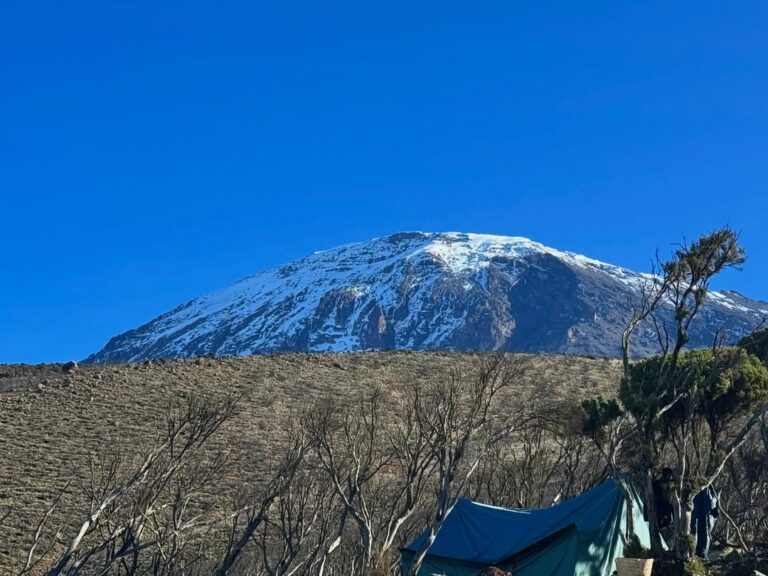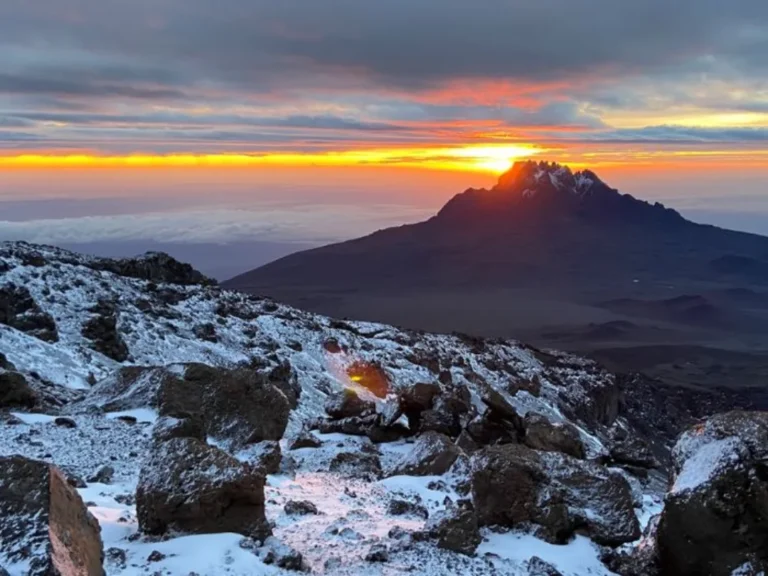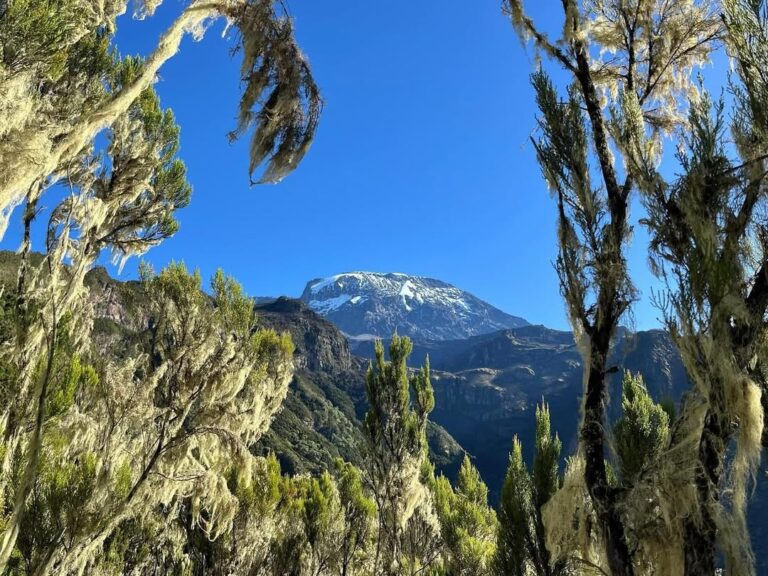
Kilimanjaro climbs are quoted across a surprisingly wide range — from around $1,500 to upwards of $5,000 per person depending on operator, route, duration, and what’s included. That spread confuses a lot of people, and reasonably so. Are the expensive operators just charging for a name? Are the cheap ones genuinely the same climb for less money?
The honest answer: no, and usually no.
This guide breaks down exactly what drives the cost of a Kilimanjaro climb — the fixed components every operator pays, the variable components where quality decisions appear, a route-by-route price comparison, and a full trip budget worked example from the US and UK including flights, gear, insurance, and tips.
The Fixed Floor: What Every Operator Must Pay
Before any profit margin, before any comfort upgrades, before any guide qualifications, there’s a cost floor set by Tanzania National Parks (TANAPA). These fees are non-negotiable. No operator — premium or budget — pays less than this.
Park entry and camping fees are charged per climber per night. For a seven-day Machame or Lemosho climb, TANAPA fees run over $800 USD per person. This is a government-set figure that changes periodically. It’s a large portion of any quote and isn’t negotiable by the operator.
A mandatory rescue fee is charged per climber per climb, on top of entry and camping fees.
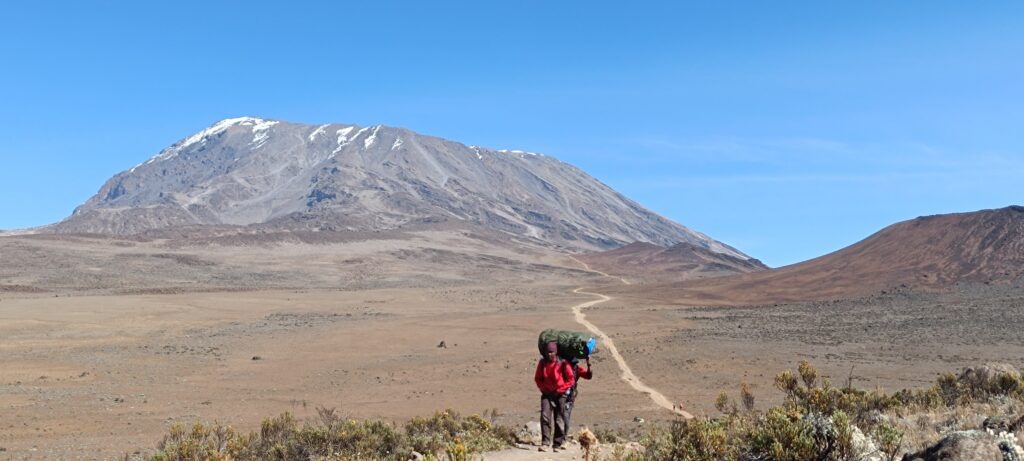
Guide and porter wages. A responsibly operated Kilimanjaro climb requires one lead guide, one assistant guide, and three to four porters per client. That’s four to five people working for six to ten days — who all need to be paid. At a fair wage — $10–12 USD per day for porters, meaningfully more for guides — the crew cost for a seven-day climb with a typical group is substantial.
At Kilimanjaro Sky, porter wages are paid directly to each porter by name, in cash, immediately after descent. Not pooled. Not routed through a supervisor. Every porter counts their money in front of the team. This matters not just ethically, but practically: the crew carrying your gear for seven days is more dependable, more energetic, and more invested in your summit when they know they’re being treated fairly. How an operator pays its crew reflects how it operates everything else.
Crew meals, accommodation, and welfare. Three meals a day for a crew of five or more, proper sleeping tents, sleeping bags. Operators who cut here produce crews who are cold, hungry, and running on empty by day four.
Equipment. Tents, sleeping bags for crew, cooking equipment, oxygen cylinders, pulse oximeters, medical kits, communication devices. Quality equipment across a full season of climbs is a real cost line.
Transport. Transfer from Moshi to the gate, pickup after descent.
When you add TANAPA fees, a properly staffed and paid crew, quality equipment, and transport, the minimum cost floor for a responsibly run seven-day Kilimanjaro climb is approximately $1,800–$2,000 per person before any operator margin. Longer routes and higher crew standards push it higher.
The Five Budget Tiers: What Each Price Point Means
Under $1,500
At this price point, the math doesn’t work for a responsible operation. TANAPA fees alone are $800+ per person. After that, a full crew for seven days at fair wages costs more than the remaining $700 allows — before meals, equipment, or transport. Something significant is missing.
Common cuts at this tier: porters and assistant guides paid below-minimum wages, reduced porter welfare (no sleeping bags, inadequate meals), very short route durations (five-day Marangu), minimal safety equipment, no supplemental oxygen carried. The climb may still happen. But the human cost is invisible to the client, and the safety margin is thin.
If you encounter a sub-$1,500 quote and the operator can’t tell you specifically what daily wage each porter receives, how the wage is paid, and what safety equipment the guide carries — you have your answer.
$1,500–$2,000
This is where most budget operators sit. The TANAPA fees are covered. Something else is being compressed: usually porter wages (kept at or below TANAPA’s published minimum, often paid late or inconsistently), thin guide ratios (one guide per group regardless of group size), or very short route choices.
Climbs in this range can work out fine, particularly on short routes with experienced, fit climbers who aren’t relying heavily on guide support. But the ethical trade-offs are real, and the safety margin is lower than it needs to be.
$2,000–$2,500
This is the entry point for operators maintaining reasonable porter welfare and guide ratios. TANAPA fees are covered, wages are at or above minimum, and the guide team is credible. Success rates on this tier depend heavily on which operator — ask specific questions about guide qualifications and crew ratios before assuming the same standard.
For budget-conscious climbers on a shorter route (Marangu six days, Rongai six days), this tier can deliver a solid climb with the right operator. The caveat: “right operator” requires asking the verification questions, not assuming.
$2,250–$3,000 — Kilimanjaro Sky Tier
This is where responsible operations with verified guide qualifications, fair crew pay, and comprehensive safety equipment sit. At Kilimanjaro Sky, shared group departures start at $2,250 for the six-day Marangu, $2,350 for the six-day Rongai, $2,450 for the seven-day Machame or Lemosho, $2,650 for the eight-day Lemosho, and $2,900 for the nine-day Northern Circuit.
Every departure at every price point includes: full TANAPA park, camping, and rescue fees; one lead guide and one assistant guide per two to three clients; four porters per client; all meals on the mountain; camping equipment; oxygen cylinders and oximeters; and airport transfers. Nothing that affects safety or summit odds changes between route price points — the team and protocols are identical. What changes is route duration, and therefore acclimatisation time.
$3,000–$5,000+ — Private Departures and Luxury Additions
Above the shared-group price range, costs climb through a combination of:
Private departures. A solo climber or a couple booking outside the published group schedule pays a private-departure premium — the fixed crew cost is spread across fewer people, significantly raising the per-person figure. Kilimanjaro Sky private departures are arranged on request.
Luxury comfort upgrades. Upgraded tent quality, a more varied meal programme, private portable toilet facilities at camp. These improve the experience without improving safety or summit odds — the guide team and protocols are identical.
Bespoke route extensions. Custom itineraries beyond the published durations add TANAPA fees and crew costs per additional night. A two-day extension on the Northern Circuit alone adds $150–$250 in park fees per person.
Christmas and New Year departures. Kilimanjaro Sky charges a $200 per person supplement on the Dec 31 and early January departures, reflecting demand and crew welfare at peak season.
Brand premium. Operators with heavy international marketing often price above operational cost. You’re partly paying for the marketing budget.
A $4,500 private climb is not automatically better than a $2,900 shared-group climb. But a $1,500 climb is almost certainly making compromises you can identify if you ask.
Route-by-Route Cost Comparison
EAll prices are per person for shared group departures and include all TANAPA park fees, rescue fees, crew, meals, camping equipment, safety gear, and airport transfers. Christmas and New Year departures carry a $200 per person supplement. Private departures and custom itineraries are priced on request. Prices do not include tips, insurance, flights, gear, or Moshi hotel accommodation.*
These prices sit below the industry average for operators at this standard — particularly on Lemosho (8d at $2,650 compared to the typical $2,800–$3,800 range at comparable operators) and the Northern Circuit (9d at $2,900 compared to the typical $3,500–$5,000). The reason is Kilimanjaro Sky’s shared-group model, which keeps per-person costs lower without compromising crew ratios or safety equipment.
The most meaningful cost-per-outcome ratio in the entire table is the eight-day Lemosho at $2,650. The additional days over a five-day Marangu produce better acclimatisation and materially higher summit success rates. Paying $400 more for a longer route is almost always a better investment than saving money on a shorter one and not summiting.
For a full route comparison including acclimatisation profiles and difficulty, see our Kilimanjaro routes guide and for group dates and prices click here:
Kilimanjaro Sky
The Real Cost of Going Cheap
The gap between a $2,000 and a $3,200 Kilimanjaro climb is real money — around $1,200. But run the full calculation.
You’re likely flying from the US or UK: $800–$1,500 in flights alone. You’ve taken a week or more off work. You’ve trained for months. The total investment of time, money, and anticipation before the operator charges a cent is significant.
Now consider what the $1,200 actually buys. A well-supported seven-day Machame with daily SpO2 monitoring, experienced certified guides, and a crew that’s been paid properly and is operating at full energy has materially better summit odds than a compressed, under-resourced climb. If you don’t summit because your guide team wasn’t equipped or experienced enough to support you through the hard section above 5,400 metres, the money you saved on the operator becomes the most expensive decision of the trip.
There’s also a direct ethics dimension. When operators undercut on cost, the people absorbing the cut are almost always Tanzanian porters and junior guides — whose wages, welfare, and working conditions are invisible to most clients. Paying a fair price means the people who carry your gear and keep you safe are paid properly for seven days of demanding work. That’s not a peripheral consideration.
What’s Included — and What’s Not
- All TANAPA park entry fees, camping or hut fees, rescue fees, and conservation charges
- Certified English-speaking lead guide and assistant guide — one lead and one assistant per two to three clients
- Porter crew (four porters per client) at fair wages, paid directly and in person after descent
- Three fresh meals daily: hot breakfast, packed or cooked lunch, warm dinner — with dietary options (vegetarian, vegan, gluten-free) available
- Treated drinking water throughout the climb
- Camping equipment: high-quality mountain tents, sleeping mats, dining tent, full camp setup. Marangu Route uses huts.
- Two hotel nights in Moshi (one before, one after the climb)
- Safety equipment: pulse oximeter, emergency oxygen, first aid kits, daily health checks
- Round-trip airport transfers (JRO, Moshi, or Arusha) and gate transfers
Not included in Kilimanjaro Sky packages:
- International flights to Kilimanjaro International Airport (JRO)
- Tanzania visa (approximately $50–100 depending on nationality)
- Travel insurance — required, and must cover high-altitude trekking and helicopter evacuation to at least 6,000m
- Yellow Fever vaccination (required for some nationalities)
- Personal gear — sleeping bags, trekking poles, boots, down jackets. Rental is available locally in Moshi.
- Tips for guides, porters, and cook (see below)
- Alcohol and soft drinks — water, tea, and coffee are included; everything else is at your own cost
- Optional extensions: safari, Zanzibar beach stay, Ekanubi Underground cultural visit, Moshi coffee tour
- Personal expenses: souvenirs, laundry, snacks, SIM cards
If any of the “always included” items appear as add-ons in a competitor’s quote — oxygen cylinder as extra, guide ratio unstated, meals not covered — the base package is cutting something that matters.
Tipping: The Cost Most People Under-Budget
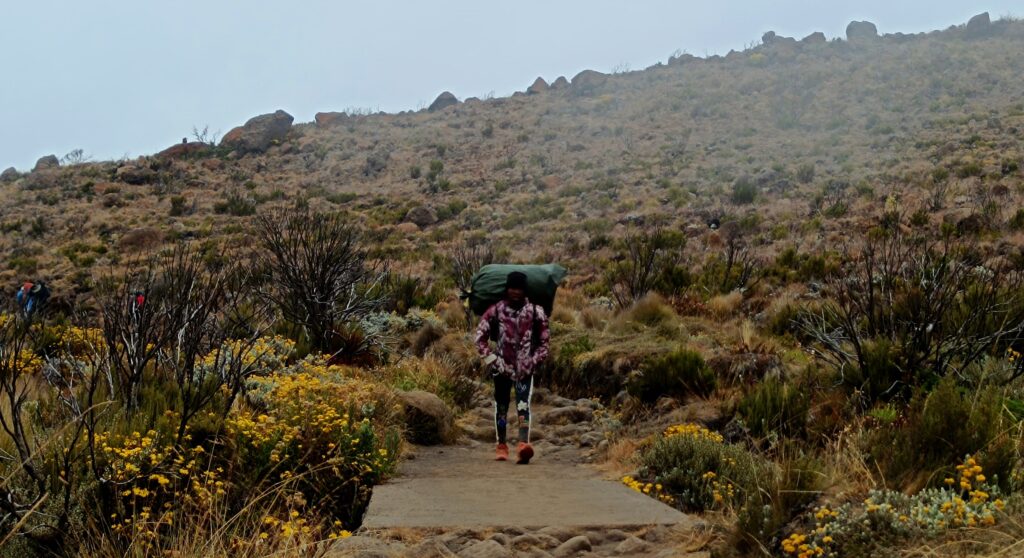
Tips are universal on Kilimanjaro, expected by every crew, and not included in any package price. They’re a genuine part of crew income and should be budgeted before you leave home. Arriving at the tip ceremony without enough cash is uncomfortable and unfair.
Kilimanjaro Sky’s published guidance for tipping — what they tell clients to budget before departure — is $250–350 per person for a standard shared-group climb. This covers guides, porters, and the cook collectively.
For context on how that breaks down by role, here are the standard per-day rates across the industry:
- Lead guide | $20–25
- Assistant guide | $15–20
- Porter | $10–15
- Cook | $10–15
On a shared group climb (typically four to six clients), the collective tips from all clients are distributed to the full crew. The $250–350 per-person figure reflects this shared distribution. On a private departure with one or two clients covering the full crew cost, you would tip proportionally more.
Tips are distributed at a ceremony after the descent. At Kilimanjaro Sky, the crew gathers and tips are distributed openly by name — not handed to a team leader to distribute later. Bring cash in USD before you leave home; ATM access on the mountain is obviously non-existent and in Moshi it’s not always reliable.
Budget $300 as your working planning figure for a standard shared-group climb. Bring $350 so you have room to acknowledge the crew that made your summit possible.
Full Trip Budget: US and UK Travellers
We’ll be honest with you about one thing: we can manage your climb, but we can’t manage your preparation. What you do in the months before you arrive shapes your summit chances significantly.
A useful fitness benchmark: if you can run 10km in an hour, three times a week, you have the aerobic base for this mountain. If that feels far away, there’s time to build it. If you’re not sure whether you’re ready, tell us where you are and we’ll give you an honest answer.
The mountain rewards people who respect it. We’ll help you show up ready.
Most people budget for the operator package but forget everything else. Here’s a realistic all-in trip cost for a seven-day Machame climb:
From the US (Kilimanjaro Sky 7-day Machame, Shared Group)
| Item | Budget Range |
|---|---|
| Return flights (US to Kilimanjaro/JRO) | $900–$1,400 |
| Tanzania e-visa | $50 |
| Kilimanjaro Sky package (7-day Machame, shared group) | $2,450 |
| Travel insurance (altitude cover to 6,000m + helicopter evac) | $100–$200 |
| Moshi accommodation (2 nights pre/post — often bookable separately) | $100–$200 |
| Gear (if purchasing — down jacket, boots, poles, sleeping bag) | $400–$800 |
| Tips for crew | $300–$350 |
| Personal spending in Moshi | $100–$200 |
| Total | $4,400–$5,650 |
From the UK (Kilimanjaro Sky 7-day Machame, Shared Group)
| Item | Budget Range |
|---|---|
| Return flights (UK to JRO) | £600–£1,000 |
| Tanzania e-visa | £45 |
| Kilimanjaro Sky package (7-day Machame, shared group) | ~£1,950 |
| Travel insurance | £80–£150 |
| Moshi accommodation (2 nights) | £80–£160 |
| Gear (if purchasing) | £300–£600 |
| Tips | £240–£280 |
| Personal spending | £80–£150 |
| Total | £3,375–£4,335 |
Kilimanjaro Sky package includes 2 hotel nights in Moshi. If taking the hotel nights that are included in the package, remove the separate accommodation line.
If you already own good trekking gear — particularly a serious down jacket rated to -10°C or below and broken-in waterproof boots — remove the gear line. It’s the most variable item in the budget and the one most people either skip (if already equipped) or underestimate.
To upgrade to the eight-day Lemosho, add $200 to the operator line ($2,650 vs $2,450). To the nine-day Northern Circuit, add $450 ($2,900). Both upgrades are worth the additional cost in acclimatisation time and summit odds.
Seasonal Pricing: Does the Time of Year Affect Cost?
Some operators adjust pricing by season; others hold flat rates year-round. The pattern, where variable pricing exists:
Peak season (July–August): Some operators charge a small premium of 5–15% on the most popular departure dates, reflecting high demand on the Machame and Lemosho routes. Popular July dates can be fully booked months ahead.
Low season (April–May long rains, November short rains): Many operators offer reduced rates — sometimes 10–20% lower — reflecting lower demand. Conditions are less predictable, but for climbers with flexible schedules and a tolerance for wetter lower slopes, these windows can represent genuine value.
January–March and September–October: Shoulder season. Pricing typically reflects standard rates with good availability.
At Kilimanjaro Sky, we maintain consistent pricing across the calendar year. What changes is availability — peak-season departure dates fill faster.
Questions That Reveal an Operator’s Quality
- What is the daily wage for your porters? The answer should be a specific number. “Competitive” or “above minimum” is not an answer.
- How and when are porters paid? Direct payment to each porter after descent is the standard for responsible operators. Pooled payment through a supervisor is a red flag.
- What is your guide-to-client ratio? One lead guide and one assistant guide per two to three clients is the standard. “One guide per group of ten” is not the same thing.
- What certifications do your guides hold beyond TANAPA licensing? Wilderness First Aid (WFA) is the baseline for responsible operators. Emergency Medical Assistant of Tanzania (EMAT) and Wilderness First Responder (WFR) are meaningful additional qualifications.
- What is your SpO2 threshold for intervention? A specific answer (below 75%, or a drop greater than 5% from prior reading) indicates proper monitoring protocols. A vague answer about “monitoring altitude” does not.
An operator who answers all five with specifics is showing you something. An operator who deflects or gives marketing-language answers is also showing you something.
For the full framework on evaluating operators, see our Kilimanjaro tour operator selection guide.
What Kilimanjaro Sky’s Pricing Actually Covers
Kilimanjaro Sky operates year-round shared group departures at prices ranging from $2,250 (Marangu 6 days) to $2,900 (Northern Circuit 9 days). Private departures and custom itineraries are available on request.
What every package covers regardless of route: TANAPA park fees in full, porter wages of $10–12 USD per day paid directly in cash to each porter by name after descent, guide certifications beyond the TANAPA baseline, quality camping equipment including two hotel nights in Moshi, oxygen cylinders and pulse oximeters on every climb, and the four-tier evacuation protocol coordinated with Tanzania National Parks.
The difference between the lowest and highest route price ($650 — Marangu to Northern Circuit) is entirely explained by additional TANAPA fees for more nights in the park and crew costs for the longer duration. The guide team, safety protocols, and porter welfare standards are identical across the range.
It also funds something beyond the summit: 20% of annual profit goes to school fees for children from underserved communities in Moshi. That’s not a charity add-on. It’s the way the company was built to operate.
For a specific quote for your dates, route, and group size — including availability across the 2026–2027 published departures — reach out directly. You’ll get exact figures, a complete inclusions list, and direct answers to any questions about where costs go.
Further reading: · Kilimanjaro routes compared · Beginner’s guide to climbing Kilimanjaro