Most articles on this topic read like travel brochures — vague claims about personal growth and life-changing experiences. That’s not useful. The real benefits of climbing Kilimanjaro are more specific and more interesting than the generic version, and they don’t all fit on a motivational poster.
After guiding hundreds of clients up this mountain from Moshi, here’s the honest list of what people actually take home. Not what we wish they took home. What they do.
Physical Benefits
A Training Plan You’ll Actually Follow
Most adults know they should exercise more. Almost no one does, consistently, without a target. Booking Kilimanjaro gives you something specific to train for — a date on the calendar, a benchmark (we use running 10km in under 60 minutes three times a week), a real consequence if you don’t show up prepared.
Clients typically train for 4–6 months before their climb. In most cases, that represents the longest consistent exercise block they’ve had since their twenties. Many of them find that the fitness gained during training becomes a baseline they maintain afterward — the habit outlasts the climb.
Our fitness guide lays out the specific training plan and benchmark.
Demonstrated Capacity
Most people don’t know what their body can do. They’ve never tested it. An eight-day trek to 5,895 metres is a test that writes itself into memory.
The specific physiological claim is modest — a week of sustained cardiovascular work at altitude isn’t going to transform your health outcomes permanently. But the psychological effect is significant: when something hard happens later (a medical scare, a demanding physical task, a challenging period at work), you know your body can handle sustained difficulty. You have a reference point.
Meaningful Cardiovascular Challenge
Eight days of 5–8 hours of walking per day, at altitude, is substantial exercise. Your cardiovascular system works harder than it usually does. Your legs do more than they usually do. For the week of the climb and several weeks after, you’ll feel the aftereffects — mostly positive if you trained properly.
Mental Benefits
Forced Disconnection
Most of Kilimanjaro is out of mobile coverage. No emails, no notifications, no feeds. For most adults, this is the first week in years without a phone in their pocket.
The effect is bigger than people expect. Clients describe returning to their phones on the descent day and feeling a kind of reluctance they hadn’t anticipated. Several have reported sustaining changes to their phone habits for months afterward — fewer notifications, lower daily screen time, a different relationship with being “available.”
The mountain doesn’t do this on purpose. It’s a side effect of being somewhere that doesn’t have service. But it’s one of the most consistent feedback points we get.
Clarifying Simplicity
Life on the mountain is simple. You wake up, you eat, you walk, you eat again, you sleep. Nothing else is available as a distraction. Nothing else is expected of you.
After three or four days of this, many clients describe a mental clarity that’s unusual in modern life. Things they were worrying about at home look smaller from 4,000m. Decisions they were avoiding look clearer. This is not mystical — it’s the predictable effect of a week spent with limited inputs and a single physical goal.
The effect does fade when you return home. But it tends to leave a residue. A week of genuine clarity is useful even if it doesn’t last forever.
A Reset Against Modern Overload
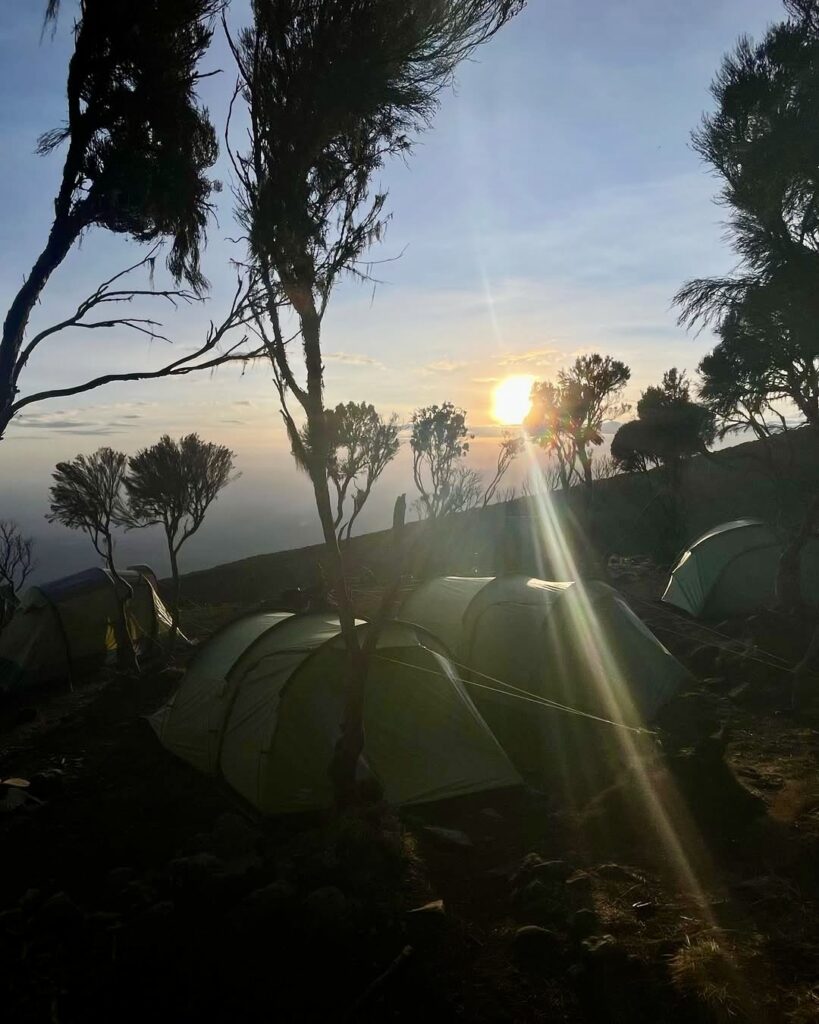
Modern life optimises for information density. Every hour is busy with something — even leisure time is usually busy. The week on Kilimanjaro is the opposite. Walking pole pole, eating simple food, watching the light change at camp in the evening.
This is closer to a monk’s retreat than to most vacations. The benefit is cumulative and hard to describe — it’s not any single moment, it’s the absence of the usual pressure for a week.
Sleep Changes
Sleep at altitude is not easy. You sleep worse on Kilimanjaro than at home. But the pattern of early-to-bed (it’s dark by 7pm at camps and cold outside your sleeping bag), physical tiredness, and natural light exposure reshapes many clients’ sleep habits on return. Several have told us they permanently shifted bedtimes 90 minutes earlier after coming back.
Emotional and Personal Benefits
Doing Something You Said You Would Do
Adults carry a quiet weight of things they said they’d do and haven’t done. The languages they’d learn, the books they’d write, the trips they’d take, the changes they’d make. Kilimanjaro is often one of these items.
Completing it does something specific to the rest of the list. The mountain is proof that you can actually finish a multi-year aspiration when you commit. Several clients have told us the climb was a catalyst for other delayed projects — starting businesses, having difficult conversations, committing to new chapters of life.
Milestone Timing
Around 40% of our clients come with a milestone attached. A 40th or 50th birthday. A retirement. A recovery from illness. A wedding anniversary. The climb serves as a marker for the transition.
The benefit is structural: milestone events that are just birthdays often feel thin. Milestone events that are physically hard and memorable stick in a way that a dinner doesn’t. Five years later, clients still describe their 50th-birthday Kilimanjaro climb with unusual precision.
Unusual Kinds of Friendship
Small-group trekking (our groups are capped at 4–10 clients) creates relationships that are different from most travel friendships. You see each other cold, tired, frustrated, and at 5am on summit night. You share vulnerability that most adult friendships don’t include.
Many clients maintain contact with their climbing group for years afterward. Some end up booking repeat trips together. The bond is out of proportion to the week you spend together.
Country and Cultural Benefits
Seeing Tanzania Properly
Most tourists in Tanzania see Serengeti, Ngorongoro, and Zanzibar. These are exceptional but heavily curated. A Kilimanjaro trip adds Moshi — a working Tanzanian town at the foot of the mountain — and the trekking team: Tanzanian guides, porters, and cooks who make the trip possible.
You return with a more complete picture of the country than most safari-only visitors get. You know a town, not just a national park.
Engaging With People You Wouldn’t Otherwise Meet
Our guides come from Moshi and the surrounding region. Our porters come from villages in the Kilimanjaro area. For most US and UK clients, this is the first extended time spent in conversation with Tanzanians.
What clients take home is harder to quantify: a different sense of what Tanzania actually is, what its people are like, how they live. This is not a benefit in the traditional “travel for self-improvement” sense. It’s a widening of your mental map.
Supporting Local Economies Directly
A Kilimanjaro climb with a reputable operator puts significant money directly into Tanzanian hands. Our porters are paid 10–12 USD per day, directly after descent, at a 20kg-per-person weight limit enforced by TANAPA. Guides and cooks are paid fair wages. A portion of guest spend on cultural experiences flows directly to local communities.
We also pledge 20% of annual profit to school fees for children in Moshi from underserved communities. That’s a commitment we made when we founded the company, not a marketing angle. The benefit to you is modest — knowing your trip contributed — but the benefit on the other end is real.
Specific Benefits That Surprise Clients
Appetite Changes
After a week of physical work and simple food, clients often return with shifted food preferences. Less appetite for ultra-processed food, more preference for whole foods. This effect does not last forever, but the reset is real for several weeks.
Pain Tolerance
A week of mild-to-moderate continuous discomfort (tired legs, cold, altitude headaches) seems to shift pain tolerance for everyday aches afterward. Clients describe minor physical complaints — a stiff neck at a desk, a sore knee on a jog — feeling smaller after the climb.
Gratitude for Basic Things
After a week without showers, without proper beds, without variety in food, a hot shower and a restaurant meal on the descent day feel unreasonably good. That reset against everyday comforts is one of the things we hear about most in post-trip feedback.
What Doesn’t Transfer
For honesty’s sake, here’s what doesn’t transfer home:
- Permanent fitness — unless you maintain the training habits, the cardiovascular gains fade within a few months.
- Permanent mental clarity — the mountain reset fades, though usually more slowly.
- Permanent habit change — without post-trip structure, old patterns return.
The benefits that do last are the memory, the reference point, the demonstrated capacity, and the relationships formed on the climb. The fitness fades. The summit doesn’t.
Who Actually Gets the Most Out of It
Benefits are not evenly distributed. Clients who get the most from Kilimanjaro tend to share a few traits:
- They trained properly (4–6 months of consistent work).
- They came with specific intention — a milestone, a goal, a meaningful reason.
- They picked a longer route for better acclimatization (usually Lemosho or Northern Circuit).
- They treated the guides and porters as people, not staff.
- They didn’t over-schedule the week after — they gave themselves time to absorb the experience.
Our piece on whether climbing Kilimanjaro is worth it goes deeper into the cost-benefit question. Our routes overview is a good starting point for choosing the climb that fits your goals.
The Short Version
Climbing Kilimanjaro gives you a real physical achievement, a week of forced disconnection, a different sense of what your body can handle, a deeper experience of Tanzania than safari-only travel offers, and usually a few friendships that last longer than they should.
It doesn’t give you a permanent personality transformation, and anyone selling it that way is selling something else.
For the right person, at the right time, those benefits are genuinely significant. That’s why we built this operation — to make them accessible to more people, responsibly, and in a way that treats both our clients and our crew properly. When you’re ready to plan it, we’re in Moshi.