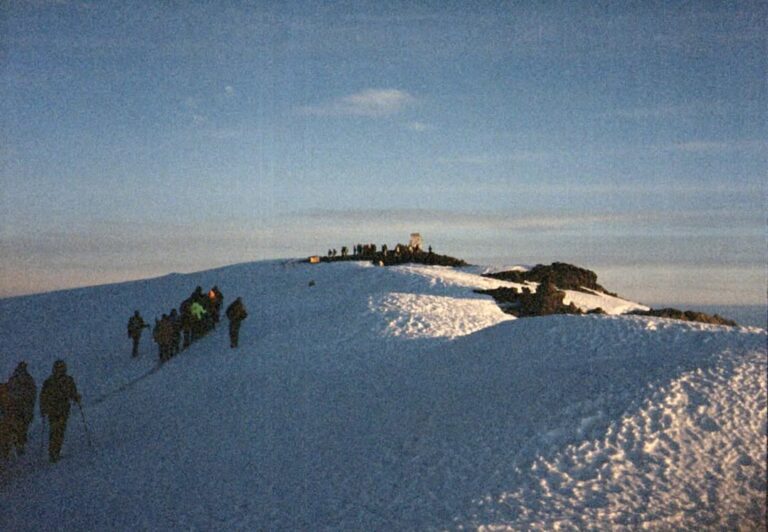
Can you mountain bike up Kilimanjaro? The short answer is: partly, yes, and more than most climbers realise. There’s one official cycling route on the mountain itself — the Kilema Route — plus a remarkable network of trails in the foothills that collectively make the Kilimanjaro region one of East Africa’s more rewarding places to ride.
This guide is for climbers who are either considering a mountain bike ascent instead of (or alongside) a trek, or who want to spend a few days on two wheels around Moshi before or after their climb. It covers the Kilema Route, the foothills options, logistics, difficulty, and the realistic picture of what riding Kilimanjaro actually looks like.
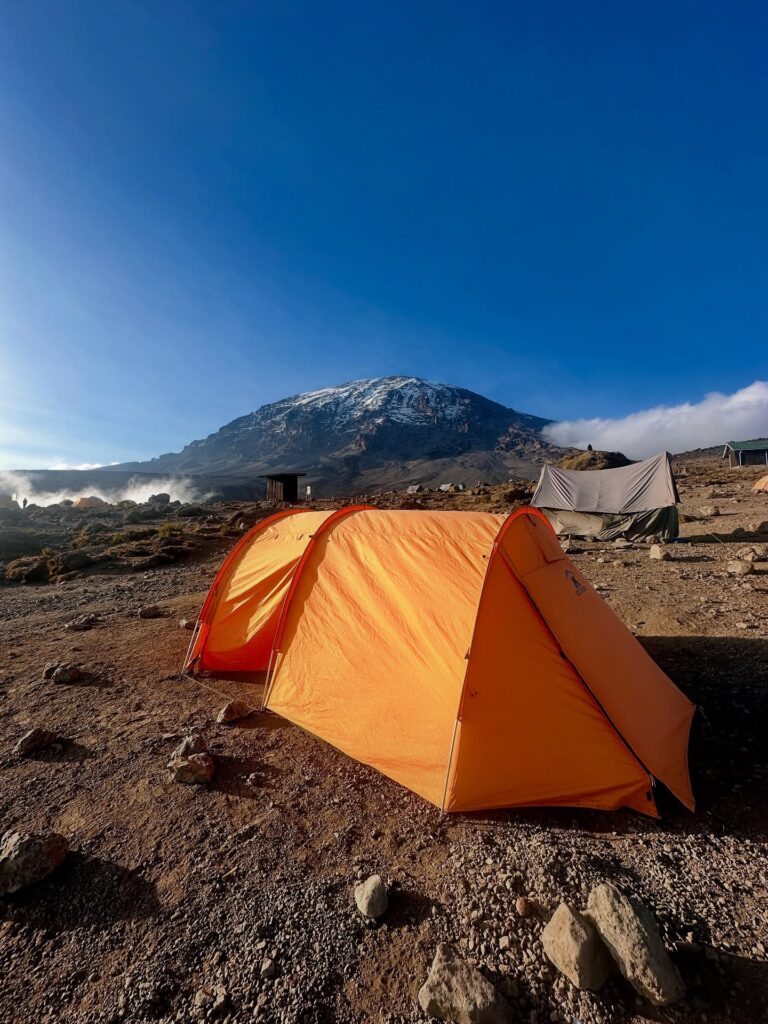
The Short Version
- You can cycle to Uhuru Peak — but only via the Kilema Route, the mountain’s only designated biking route.
- Cycling Kilimanjaro is hard — probably harder than trekking the same route, because of altitude, terrain, and carrying/pushing sections.
- Most people don’t summit by bike. Even among those who attempt it, a significant percentage end up walking the upper sections.
- Foothills biking is excellent — with or without the summit attempt. Chagga farm tracks, coffee country, and forest trails make for world-class riding.
If you’re a confident mountain biker and the climb itself is the point, the Kilema biking option is real and appealing. If you want to experience the mountain and the area by bike without the full summit commitment, the foothills route is easier to book and just as rewarding.
The Kilema Route: The Only Cycling Route on Kilimanjaro
Kilema Route is Kilimanjaro’s only officially sanctioned cycling route. Tanzania National Parks Authority (TANAPA) designated Kilema as the designated mountain bike ascent path in the early 2000s, and it remains the only route where bikes are permitted within the national park.
Route overview
- Start: Kilema Gate, on the southeastern side of the mountain.
- End: Uhuru Peak (5,895m/19.340 ft), via the Gilman’s Point/Stella Point ridge.
- Duration: Typically 5 to 7 days round-trip.
- Distance: Approximately 35 km one-way to the summit, plus the descent.
- Surface: Dirt road and track for the lower sections; rocky singletrack and scree for the upper sections.
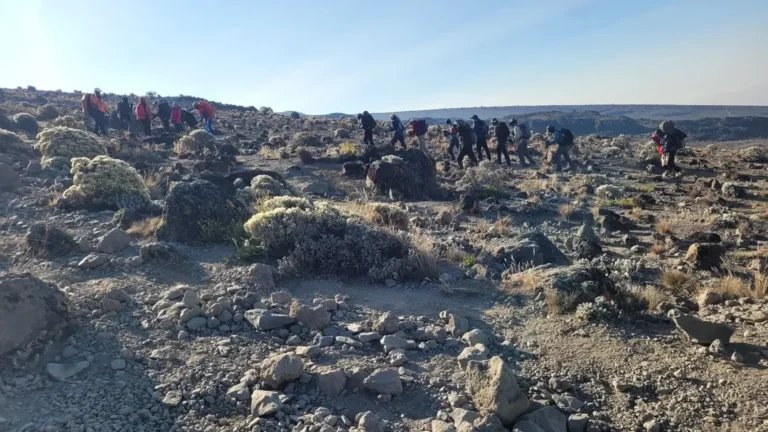
The Kilema Route is structured like a hybrid of cycling and trekking. The lower and middle sections — through the rainforest and moorland — are actually rideable, with sustained climbing on loose gravel and dirt roads. The upper sections above about 4,500m (14,763 ft) become increasingly unrideable: loose scree, steep grades, thin air, and difficult technical terrain. Most cyclists push or carry their bikes from Horombo Hut area upward, especially on summit push day.
On descent, much more of the route is rideable. You can often bike the majority of the descent from the summit back to Horombo Hut, then all the way to Kilema Gate the following day.
What the climb actually feels like
A Kilema ascent is typically organized into these days:
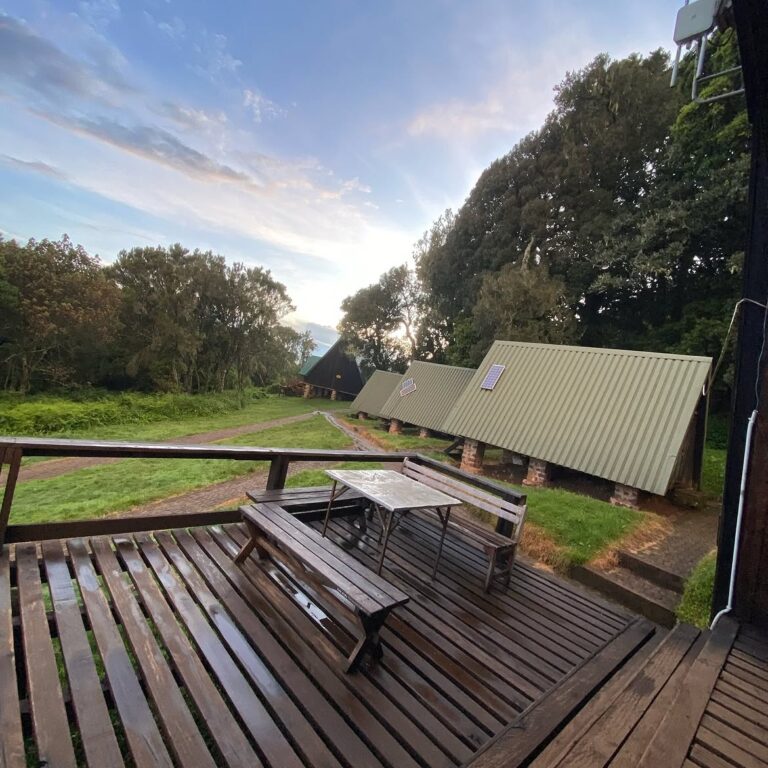
Day 1: Kilema Gate (1,800m/5,905 ft) to Kilema Camp (approximately 2,800m). Predominantly rideable climb through the farming zone and montane forest. Mostly dirt road surface. Long climb but technically manageable.
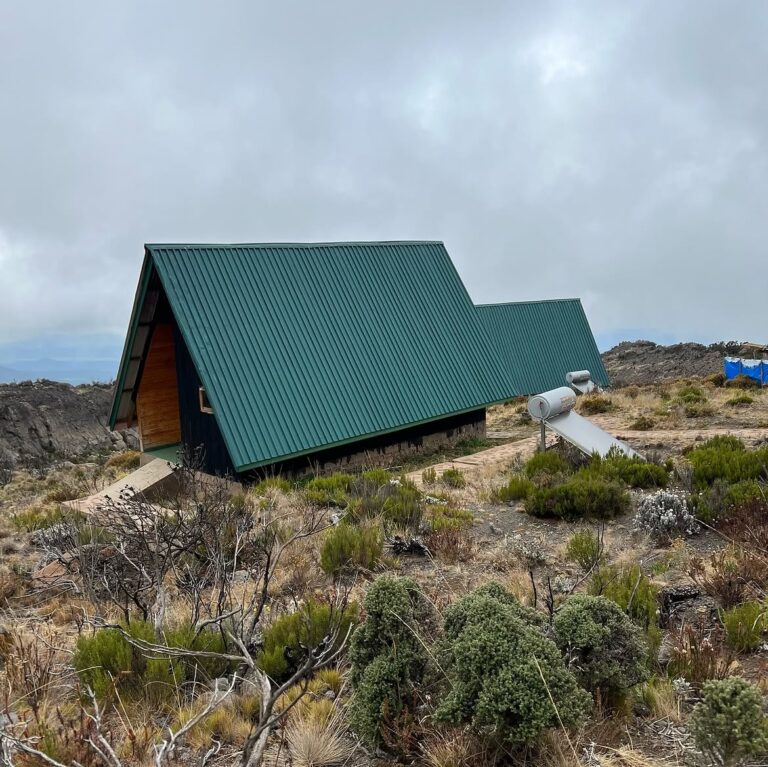
Day 2: Kilema Camp to Horombo Hut (3,720m/12,204 ft). Partially rideable, but sustained climbs at altitude start biting here. Expect to push substantial sections. Heather and moorland environment.
Day 3: Acclimatisation day at Horombo. Some operators build in this rest day. Optional day-hike to Mawenzi Tarn.
Day 4: Horombo to Kibo Hut (4,700m). Crosses the Saddle. Mix of pushing and riding. Sparse alpine desert terrain.
Day 5: Summit day. Midnight departure. From Kibo, most cyclists carry or push their bike up to Gilman’s Point and along to Uhuru. Descent is where the bike becomes an asset — you can ride portions of the descent back to Kibo and then further down to Horombo.
Day 6: Horombo to Kilema Gate. Mostly rideable descent. Long but generally satisfying.
How hard is it compared to trekking?
Harder, in real terms. Here’s why:
- Altitude affects cycling more than walking. Sustained pedalling at altitude hits your cardiovascular system harder than walking, and you’re pushing harder against the ground.
- You have to manage the bike. Hauling, pushing, lifting a bike on technical terrain at altitude is exhausting in ways pure hiking isn’t.
- The upper route isn’t rideable. The payoff of “cycling to the summit” is somewhat conceptual — most summiters push or carry above 4,500m (14,763 ft).
- Equipment problems at altitude are problems. Mechanical issues are harder to fix in thin air with cold hands.
Summit success rates for Kilema cyclists are lower than for standard trekkers on routes like Machame or Lemosho. The Kilimanjaro routes overview covers the trekking comparison in detail.
Who should consider Kilema by bike:
- Experienced mountain bikers with strong endurance base.
- Climbers who have completed at least one previous high-altitude expedition.
- Cyclists who are genuinely interested in the challenge, not just the novelty.
- People who are comfortable pushing/carrying a bike for hours if necessary.
Who probably shouldn’t:
- First-time high-altitude climbers.
- Cyclists without significant off-road mountain biking experience.
- Anyone looking for the easiest or fastest summit (the Machame or Marangu routes are both easier and faster).
- Riders uncomfortable with technical, high-altitude terrain.
Logistics of a Kilema cycling climb
The Kilema cycling experience requires:
- A guide team — lead guide, assistant guides, porters (yes, there are still porters, because you need food, tents, and support).
- Specialised bike-supporting porters on key sections.
- Cycling equipment (bike, helmet, spares, tools, specific clothing).
- Bike transport logistics to Kilema Gate.
- Medical kit including bike-trauma considerations (more scrapes and bruises than on foot).
Most cyclists bring their own bike and ship it to Tanzania. Some specialist operators rent bikes in Moshi for Kilema ascents. Check before you book — bike rentals can be hit-or-miss in quality.
Kilimanjaro Sky does not currently offer Kilema cycling climbs — we focus on the trekking routes. If you’re interested in Kilema specifically, you’ll need to go through a specialist cycling operator. We can provide some referrals to trusted partners if this is the experience you want.
Foothills Mountain Biking: The Underrated Option
If the Kilema ascent sounds too demanding — or if you want to mountain bike in the Kilimanjaro region without committing to a full summit expedition — there’s a better-kept secret: the foothills and lower slopes of Kilimanjaro are excellent mountain biking territory.
A handful of local operators run half-day and full-day bike trips, and some offer multi-day bikepacking expeditions that circumnavigate or explore sections of the mountain’s lower flanks.
Terrain in the foothills
The Kilimanjaro foothills are:
- Altitudinally varied: rides can cover 500–1,000m (1,640-3,280 ft) of elevation change.
- Culturally rich: routes pass through Chagga farming villages, banana groves, coffee plantations, and forest edge.
- Mixed surface: dirt tracks, single-track through forest, farm paths, occasional tarmac sections.
- Scenic: views of Kilimanjaro and Mount Meru are frequent, especially in the dry season.
Typical foothills ride options:
Moshi to Machame village loop. A half-day ride from Moshi up toward the Machame trailhead, passing coffee plantations and local farms. Moderate difficulty, excellent introduction to the terrain.
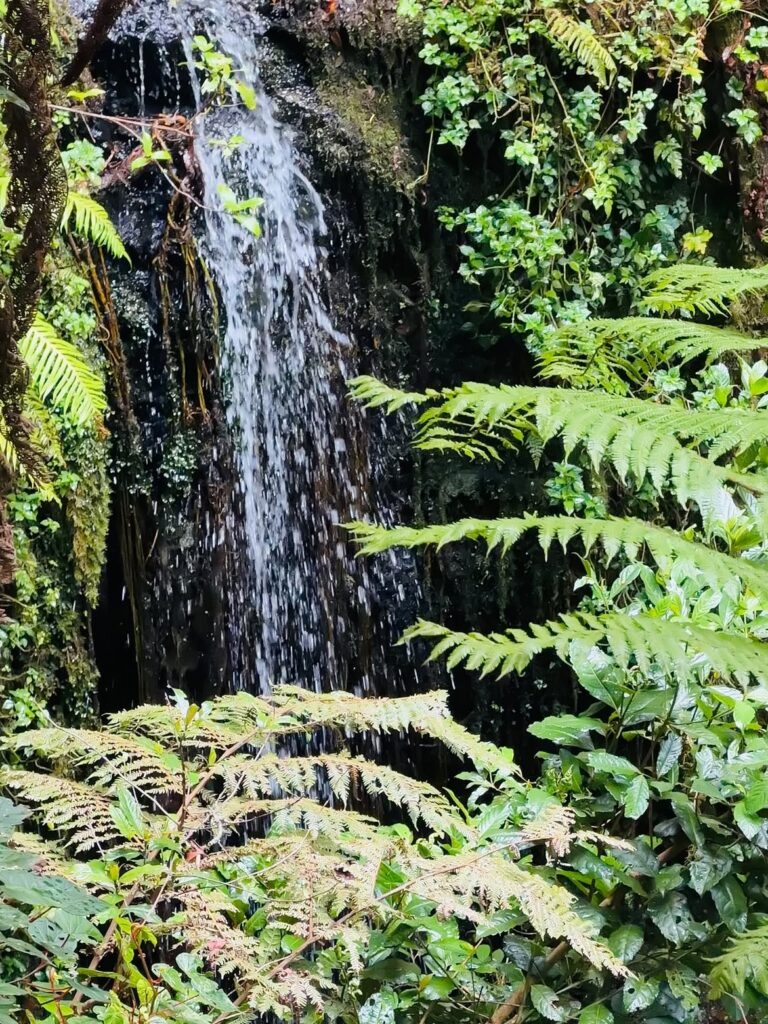
Materuni and surrounding trails. Rides connecting Materuni village, the waterfalls, and nearby Chagga villages. Can combine biking with the waterfall visit and optional coffee tour.
Rombo and eastern slopes. Less developed tourist infrastructure; more off-the-beaten-path feel. The eastern slopes of Kilimanjaro have extensive farm track networks.
Kilimanjaro foothills traverse. Multi-day (3–5 day) bikepacking trips that loop sections of the mountain’s lower flanks. Operators organise lodge or camping accommodation en route. A proper adventure trip.
Difficulty
Foothills biking is much more accessible than the Kilema ascent. A reasonably fit cyclist with some mountain bike experience can handle most day rides comfortably. You’re at altitudes of 1,500–2,500m — high enough to feel it if you’re unconditioned, but nothing like the summit push.
Multi-day trips require stronger endurance and the usual bikepacking skills (pacing, hydration, navigation), but they’re not inherently high-altitude.
When to go
The foothills are ridable year-round, with two main considerations:
Dry seasons (June-October, January-February): Firm trails, clear views, reliable weather. Best overall conditions.
Rainy seasons (March-May, November-mid-December): Trails get muddy and slippery. Some sections become hike-a-bike. Views are more limited. Rides still possible but tougher.
The Kilimanjaro weather guide covers broader seasonal patterns. Biking conditions generally track the trekking best-times guidance.
Pairing Biking With a Kilimanjaro Trek
A practical option some climbers enjoy: trek Kilimanjaro on one of the standard routes, then do a day or two of foothills biking before or after the climb. This gives you the mountain summit experience on foot (on a higher-success-rate route) while also seeing the area from the saddle.
A sample itinerary:
- Days 1–2: Arrive Moshi, rest, gear check.
- Days 3–9: Trek the Lemosho Route or another 7–8 day trek.
- Day 10: Rest in Moshi post-descent.
- Days 11–12: Two-day foothills bike tour — Moshi area, Materuni, coffee farms.
- Day 13: Fly out (or extend to Zanzibar or safari).
This is a more varied trip than pure trekking or pure biking, and it’s relatively easy to arrange. Many of the post-climb activities are compatible with a day or two of biking built in.
Bike Rental and Equipment in Moshi
If you’re not bringing your own bike:
Quality bike rental in Moshi is limited. A few operators have reasonable fleets, but they can be booked out during peak season. If you’re planning anything technical or multi-day, book the bike well in advance.
For a Kilema ascent, bring your own bike. The expedition is too demanding for rental gear, and the fit matters.
For foothills day rides, local operators have appropriate bikes — usually hardtail mountain bikes with knobby tyres. Quality varies. Ask specifically about what brand/model the operator uses and when the bike was last serviced.
Helmets are non-negotiable. Ask your operator about spare parts, tool kits, and what mechanical support is provided on longer rides.
Gear considerations. Mountain biking gear — shorts, gloves, sunglasses, lightweight rain shell — all sensible. A windbreaker for higher-altitude afternoon cloud. Sun protection is essential; the equatorial sun at altitude is intense.
Safety and Practical Considerations
A few notes on biking safely in the Kilimanjaro region:
Traffic. Main roads between Moshi and the foothills have busy vehicle traffic, including trucks and matatus. Stay visible, ride predictably, and avoid main roads when possible.
Trail surfaces. Foothills trails have loose dirt, rocky sections, stream crossings, and some technical descents. Not extreme, but respect-worthy.
Altitude. Even foothills riding takes you to 2,000–2,500m (6,501-8,202 ft). Pace yourself. Hydrate aggressively. This isn’t high-altitude territory but it’s not sea level either.
Wildlife. Very low risk in the cultivated and lower forest zones. See the dangerous animals on Kilimanjaro guide for context.
Mechanicals. Be prepared for mechanical problems. Bring or make sure the operator has spare tubes, patch kits, multi-tools, and basic parts. Phone signal in the foothills is generally good, but mechanical delays can turn a 4-hour ride into a 7-hour ride.
Guide or no guide? For the Kilema ascent, a guide is mandatory (TANAPA requirement). For foothills rides, a guide is strongly recommended — navigation in Chagga farm country is non-trivial, and a local guide enriches the experience substantially (Chagga farm visits, coffee farm stops, lunch arrangements, language).
Honest Assessment
Who should mountain bike Kilimanjaro?
If you’re an experienced mountain biker already thinking about this: The Kilema Route is a legitimately interesting expedition if you approach it with realistic expectations about the amount of pushing and carrying. Success rates are lower than trekking. But the experience is unique and some riders find it more rewarding than walking the same ground.
If you’re a keen cyclist but haven’t done high-altitude mountain biking: Do the foothills instead. You’ll have a great time, the altitude is manageable, and you can still summit Kilimanjaro on foot via a standard route.
If you’re a climber thinking “maybe biking would be more fun than walking”: Probably not, if “fun” is the goal. Cycling Kilimanjaro is demanding in ways trekking isn’t. The Machame or Marangu routes are meaningfully easier to summit by foot than Kilema is by bike.
If you just want to experience the Kilimanjaro region on two wheels: The foothills are one of the best mountain biking locations in East Africa and an underrated part of a Tanzania trip.
A Note on Operators
If you’re serious about the Kilema cycling ascent, work with a specialist operator who runs this route regularly. Ask for:
- Recent client testimonials from completed Kilema cycling ascents (not trekking).
- Summit success rate for cyclists specifically.
- Guide team experience with cycling ascents (not just trekking).
- Bike support arrangements (mechanical, spares, transport).
- Safety protocols specific to cycling (different injury patterns than trekking).
For general foothills day-riding, most Moshi operators with mountain bike capabilities can arrange quality rides. Ask for local referrals. Your Kilimanjaro Sky team knows the local operators well and can suggest trustworthy partners.
The Closing Thought
Mountain biking on Kilimanjaro is one of those things that gets romanticised more than it gets done. Most people who look into Kilema seriously end up choosing a standard trekking route — it’s easier, more reliable, and more rewarding for most climbers.
But the foothills are a different story. If you love riding, spending a day or two on the lower slopes of Kilimanjaro — through Chagga coffee country, past banana groves, with the mountain looming above — is an experience that doesn’t show up in many traveller’s itineraries. And because it’s not oversold, it stays genuine.
Whether you ride up the Kilema Route to Uhuru, spend a day in the foothills, or do both before pairing with a post-climb Zanzibar or safari extension, the mountain has more to offer on two wheels than most visitors know.