Food on a high-altitude climb is not just fuel management — it’s one of the more significant variables in how your body handles altitude. You need more calories than usual. Your appetite will actively resist eating them. And the difference between a well-run kitchen operation and a poor one becomes obvious by day three.
Here’s what a week of eating on Kilimanjaro actually looks like, why your calorie intake matters as much as your fitness, and how we handle dietary requirements on the mountain.
The Basic Structure of Meals
On a Kilimanjaro climb with Kilimanjaro Sky, you eat three full meals per day, with hot drinks available at multiple points throughout the day. The meal structure is consistent across all routes and both our standard and luxury packages — what changes in the luxury tier is the diversity and presentation, not the nutritional substance.
Breakfast is served before you depart camp each morning, typically between 6:30am and 7:30am depending on the day’s schedule and altitude. On summit night, timing is different — there’s a pre-departure snack and usually a full meal once you’ve returned to high camp.
Lunch is a packed lunch carried in a day bag, eaten at a rest stop on the trail or at a lunch camp on routes where there’s a midday pause. It typically includes sandwiches or wraps, fruit, nuts, chocolate, crackers, and an energy or protein snack.
Dinner is the main meal and the most important one nutritionally. It’s served in the dining tent each evening after camp setup and before sunset on the lower days, and after dark on higher-elevation camps where temperatures drop early. Dinner is three courses: soup, main, and dessert or fruit.
Between meals: Hot tea, coffee, and hot chocolate are available at breakfast and dinner and can usually be requested at camp. Many clients carry their own trail snacks — energy bars, nuts, dried fruit — which we encourage. Supplementary snacking throughout the day helps maintain blood sugar and calorie intake.
What You’ll Actually Eat: Day by Day
The specifics vary by cook and by route length, but this gives an accurate picture of the meal quality and variety.
Breakfast options across the week: Porridge with brown sugar and dried fruit; scrambled eggs and toast; pancakes with honey; muesli with long-life milk; fried eggs; grilled tomatoes; beans. Hot tea, instant coffee, and hot chocolate served at every breakfast. Freshly cut fruit where available — typically bananas, papaya, or watermelon in the lower days.
Typical lunches: Sandwiches or wraps with egg, cheese, or tinned fish; boiled eggs; fruit; nuts and chocolate; crackers with peanut butter or cheese spread; energy bars.
Dinner through the week: Carrot or tomato soup to start, then rotating mains across the days — rice and vegetable stew, spaghetti bolognese with local beef mince, ugali (Tanzanian maize meal — the staple food of the region, deeply comforting at altitude), chapati with lentil dal, fried chicken or fish at lower elevations, pasta with tomato sauce, vegetable curry. Dessert is typically canned fruit, custard, or a sweet cake or banana bread baked at base camp and carried up.
By the upper camps — Barafu (4,600m) or Karanga (4,050m) — meals become simpler and more carbohydrate-forward. Your cook knows this. The mountain diet above 4,000 metres is deliberately less complex, easier to eat, and heavier on the starches and sugars your body needs for energy output.
Calorie Demands at Altitude
Most people are surprised by how much energy a Kilimanjaro climb burns. The combination of sustained aerobic output (walking 5–8 hours per day), cold temperatures (your body burns more calories to maintain core temperature), altitude physiological stress, and the weight of a day pack means that daily calorie expenditure is significantly higher than a normal active day.
An average adult walking at a moderate pace for 6 hours burns roughly 1,500–2,000 calories in that activity alone. Add basal metabolic needs and cold-weather compensation, and a full climbing day at altitude can require 3,500–4,500 calories. The mountain kitchen is designed around this — portions are generous, and seconds are always available at dinner.
The challenge is that your appetite often doesn’t match your calorie needs. At altitude, appetite suppression is common and well-documented. Some climbers describe feeling mildly queasy by day 4. Others simply don’t feel hungry. The mental trick is to eat to a schedule, not to appetite. Your body needs the fuel whether it’s asking for it or not.
Our guides remind you of this regularly, especially after the halfway point of the climb. “Eat. Even if you’re not hungry. Eat.” It’s not a suggestion — it’s part of how you stay functional.
Altitude and Appetite Suppression
Altitude suppresses appetite through several mechanisms. The reduced oxygen environment slows digestion. Leptin — the hormone that signals satiety — increases at altitude, meaning your brain thinks you’re full when you haven’t eaten much. Nausea associated with acute mountain sickness compounds this.
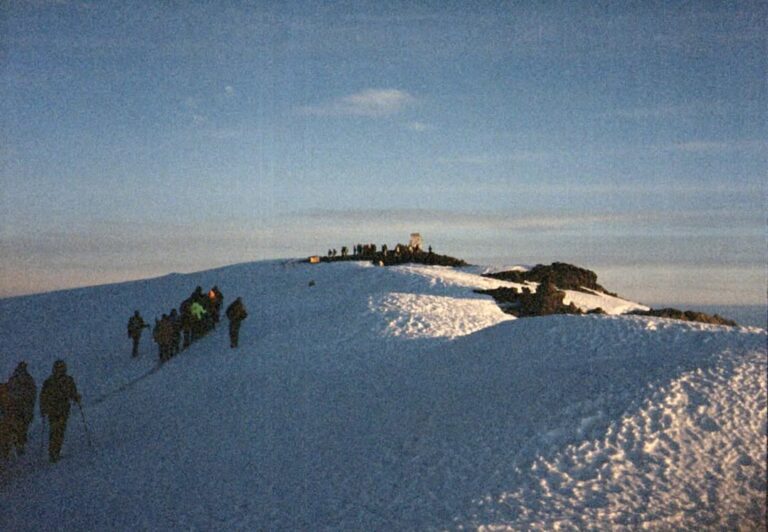
The practical consequence: the days when you least feel like eating are often the days with the highest calorie demands. Summit night, the approach from Barafu or Karanga to Stella Point and Uhuru Peak, is the single most physically demanding stretch of the climb. You may not want breakfast at midnight. You should eat it anyway.
Simple foods work best at high altitude. Complex dishes with heavy sauces become unappealing. Plain carbohydrates — rice, porridge, bread, ugali — are often better tolerated than protein-heavy meals. Your cook adjusts for this as the altitude increases.
Hydration also affects appetite. Dehydration is common above 4,000 metres and suppresses hunger further. The two reinforce each other in a negative feedback loop. Drink your 3–4 litres per day, eat when the schedule says eat, and your body will find a way to manage.
Dietary Requirements
If you have specific dietary requirements — vegetarian, vegan, coeliac, religious dietary restrictions, or specific food allergies — notify us at the time of booking. Do not wait until the pre-climb briefing.
We accommodate vegetarian and vegan climbers regularly. The core mountain diet is largely plant-based (rice, lentils, beans, vegetables, ugali), and removing meat proteins doesn’t fundamentally compromise the meal quality. Vegans should note that some camp staples — porridge, pancakes, certain desserts — are made with long-life dairy milk, and we’ll adjust those preparation methods when notified.
Gluten sensitivity and coeliac disease require more careful management. Many camp staples (pasta, bread, chapati, pancakes) contain gluten. If you have coeliac disease, tell us well in advance. We can work with a gluten-free framework, but this requires planning, separate preparation of some items, and care around cross-contamination.
Severe food allergies, particularly nut allergies, need explicit discussion before the climb. We carry nuts in the packed lunches — mixed nuts are a standard energy-dense trail food. If you have a severe nut allergy, we need to know, and we need to know the severity (intolerance vs. anaphylaxis), whether you carry an EpiPen, and what the food-safe protocol should be.
We can handle almost every dietary requirement on the mountain. What we cannot do is improvise it — the cook shops for the entire climb before departure, and the food comes up with the porters. There’s no resupply from day two onward.
The Cook’s Job at Altitude
A Kilimanjaro mountain cook works in conditions that would challenge a professional kitchen in entirely different ways. At 4,600 metres, water boils at around 85°C — lower than at sea level — which affects cooking times and methods. Stoves at altitude lose some efficiency. The temperature inside the kitchen tent is cold, and on rough weather days, very cold.
Despite all of this, the cook produces hot meals, on schedule, every day of the climb. A good mountain cook is one of the most underappreciated people in the industry. The tipping guide covers what they’re worth — don’t leave the mountain without acknowledging it. Our full tipping breakdown has the specific numbers by role.
Eating Well as Part of the Safety Picture
Nutrition connects to altitude safety in ways that aren’t always obvious. Caloric deficit at altitude compromises your immune function, your cognitive clarity, and your physical performance. Guides monitoring your health are also monitoring whether you’re eating and drinking. It’s part of the overall picture, not a separate consideration.
The connection between good nutrition and altitude acclimatisation is another reason why the quality of the kitchen operation matters when choosing an operator. Hot food, adequate portions, dietary requirement management, and a cook who knows how to adapt to altitude are not luxuries — they’re part of the safety framework that gets you up and down in good shape.
For more on how we approach the mountain, see the beginners guide to climbing Kilimanjaro and our altitude sickness guide. And for the packing side of food — what to bring as personal supplements or trail snacks — the Kilimanjaro packing list covers it.
The Short Version
You’ll eat more on Kilimanjaro than you might expect — breakfast, packed lunch, and a three-course dinner every day, with hot drinks throughout. Altitude will fight your appetite by the upper half of the climb. Eat anyway. Tell us your dietary requirements early. The cook is doing something remarkable in a tent at 4,600 metres — and what they do matters more than most people realise.