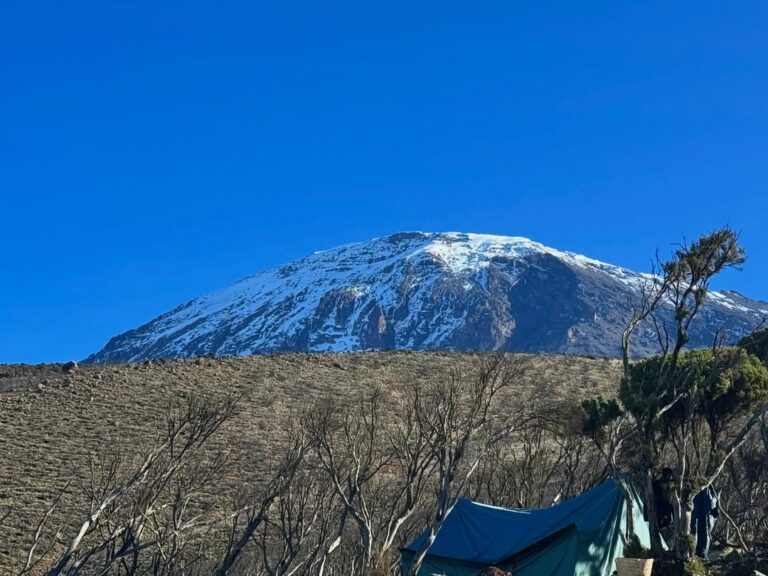
Mandara Hut sits at 2,700 metres (8,858 feet) in Kilimanjaro’s montane rainforest, on the eastern approach to the mountain. It’s the first overnight camp on the Marangu Route — the only Kilimanjaro route where climbers sleep in built A-frame huts instead of tents. For many climbers choosing Marangu specifically because they don’t want to camp, Mandara is the first real taste of what hut-based climbing looks like on this mountain.
This post covers what Mandara is, what the huts and the surrounding rainforest are like, what the short side-trip to Maundi Crater involves, and how the first day on Marangu sets up the rest of the climb.
Where Mandara Sits on Kilimanjaro
The Marangu Route starts at Marangu Gate (1,860m/6,102 ft) on the southeastern side of the mountain, at the edge of the rainforest belt. The trail climbs from the gate through dense rainforest for 8.3 kilometres, gaining about 840 metres (2,755 ft) of elevation. After 4–5 hours of walking, you reach Mandara Hut at 2,700m/8,858 ft — still firmly in the rainforest zone.
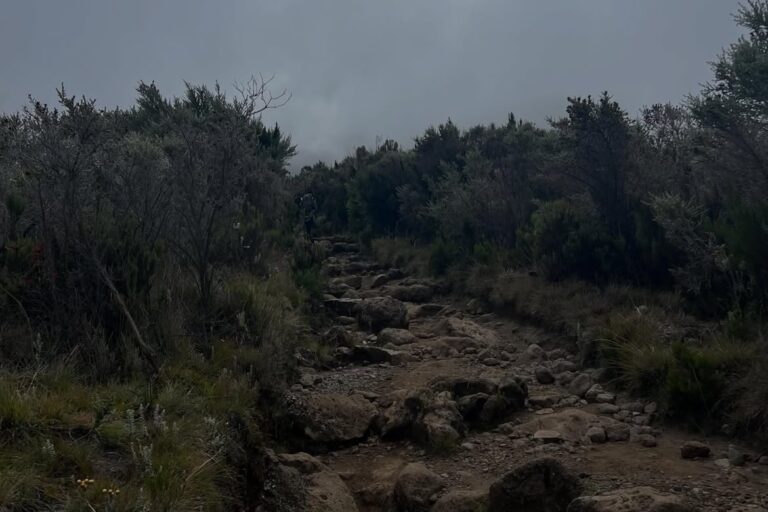
The camp is in a small clearing cut into the forest. Around it, the Kilimanjaro montane rainforest closes in on all sides: towering trees hung with mosses and lichens, ferns growing on the forest floor, the constant damp smell of active ecosystem. This is one of Kilimanjaro’s five ecological zones — the second from the bottom — and Mandara is positioned to give climbers a full night inside it before continuing up to drier, higher terrain.
The name “Mandara” references a local Chagga chief from the 19th century who was known for his leadership on the southern slopes. The Chagga people are the indigenous group whose ancestral lands surround Kilimanjaro’s base — and whose culture, agriculture, and history are deeply tied to the mountain. If you extend your trip with a coffee tour or an Ekanubi Underground cultural experience, you’re engaging with Chagga heritage directly.
The A-Frame Huts
Mandara’s accommodation is its distinguishing feature. The camp consists of a cluster of wooden A-frame huts, each one sleeping 6–8 people in bunk beds. The huts are simple:
- Wooden walls and floor
- Corrugated metal roof with an A-frame peak
- Mattresses on bunk frames (you bring your own sleeping bag)
- Small windows for light
- No electricity inside the sleeping huts
There is a separate, larger dining hut where meals are served. Toilets — a combination of flush toilets (where water supply allows) and pit toilets — are in a separate building.
The total capacity at Mandara is around 60 climbers across multiple huts. During peak season (July–August), the camp fills up. In quieter months, climbers often have huts to themselves or share only with their own climbing group.
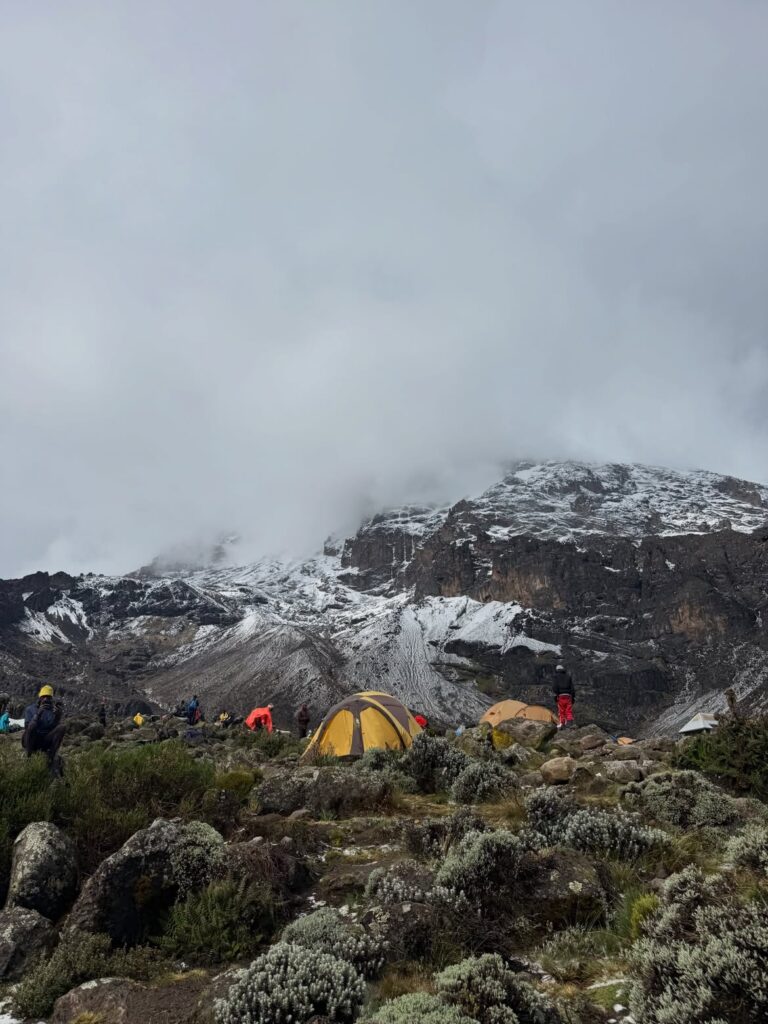
This is the only route on Kilimanjaro with permanent shelter at overnight stops. On Marangu specifically, the huts continue up the mountain: after Mandara, climbers stay at Horombo Huts at 3,720m (12,204 ft) and finally at Kibo Hut at 4,700m (15,419 ft) before the summit push.
For climbers who prefer tents, every other Kilimanjaro route — Machame, Lemosho, Rongai, Shira, Northern Circuit, Umbwe — uses tented camping. Each has its own merits. The routes overview compares them.
The Rainforest at Mandara
The rainforest around Mandara is worth looking at properly, not just walking through. A few things climbers often miss on the way up:
Colobus monkeys. Black-and-white colobus monkeys live in the forest canopy throughout this altitude band. You’ll often hear them before you see them — a deep rolling call from overhead. Look up. They move in troops and can be watched for long stretches if you stand still.
Blue monkeys. Smaller, less dramatic, but also present. They’re more often seen than heard.
Turacos and hornbills. The Hartlaub’s turaco — a bright green bird with red underwings — is one of the more striking forest residents. Hornbills pass through in smaller numbers.
Chameleons. If you walk slowly and look at branch-level vegetation, Kilimanjaro’s Usambara three-horned chameleon is occasionally visible. They’re slow, well-camouflaged, and worth the attention.
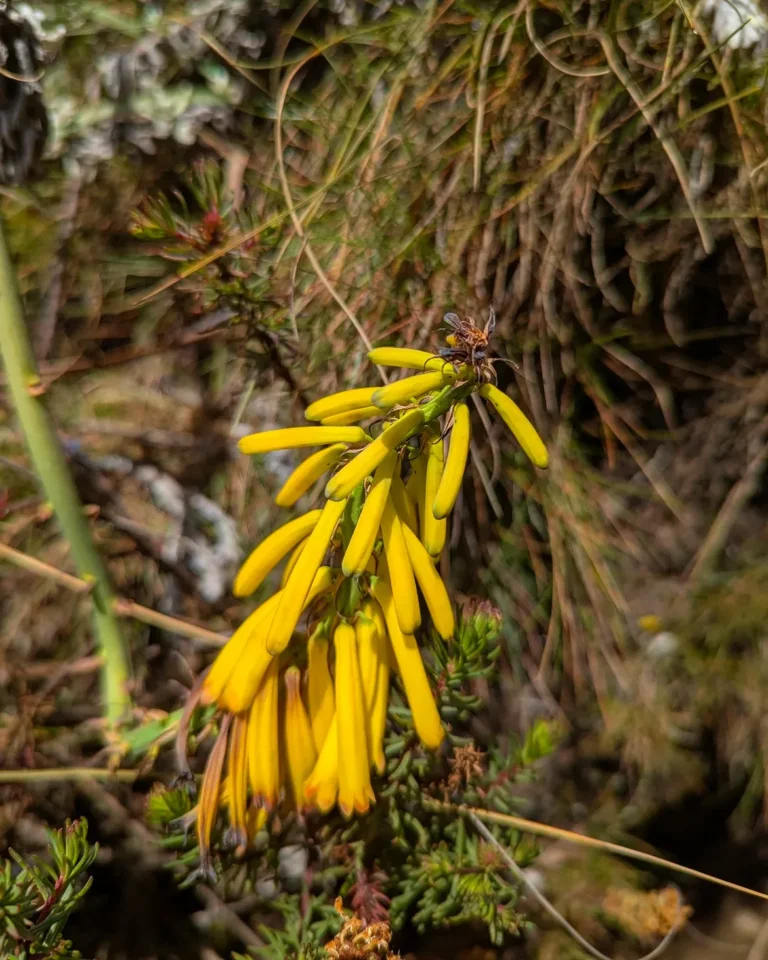
Tree ferns and ancient moss. The trees at this altitude are draped in old man’s beard moss — a slow-growing lichen that indicates clean, humid air. Tree ferns that look prehistoric grow in the understory.
The rainforest will be something most climbers pass through quickly on the way up. On an overnight at Mandara, you actually get to stand inside it for an evening. That’s the difference.
Maundi Crater: The Optional Side Trip
A short walk — about 10 minutes — from Mandara leads to Maundi Crater. It’s a small, grass-covered volcanic crater with a rim that reaches about 2,780m (9,120 ft). The view from the rim, on a clear day, shows Mawenzi Peak to the north and — on very clear days — you can see down into the crater bowl and across the valleys below.
On many Marangu itineraries, guides offer a short post-arrival walk to Maundi in the afternoon before dinner. It’s worth doing if you have the energy. The elevation gain is minimal, the walk is easy, and it adds a small but real amount of acclimatization to the day — the climb-high-sleep-low principle in miniature.
If you’re tired from the walk up from the gate, skipping Maundi is fine. But most climbers who do it are glad they did.
What the Evening Feels Like
Compared to the tented camps higher up the mountain, the evening at Mandara is comfortable. You’re at a moderate altitude (2,700m is barely high enough for altitude effects to begin), you’re in shelter that blocks wind and rain, and you’re still in a zone where the temperature doesn’t drop drastically at night.
A typical evening at Mandara:
Late afternoon arrival: Tea, biscuits, a chance to unpack in the hut. Guides do a first check-in, though altitude concerns at 2,700m (8,858 ft) are usually minimal.
Optional walk to Maundi Crater: As above.
Dinner: Served in the dining hut. A proper meal — soup, a main course, tea. Most climbers eat well at Mandara. Appetite is not yet affected by altitude.
Conversation time: The dining hut is a shared space, so you often meet other groups on the route. This is a social camp in a way that higher camps aren’t.
Early to bed: Most climbers are in their bunks by 9pm. Sleep at Mandara is usually easy — the altitude is manageable, the shelter is solid, and the day’s walk from the gate has earned you rest.
The Marangu Characteristic: Comfort at a Cost
Climbers who choose Marangu usually do so for one of three reasons:
- They don’t want to camp.
- They want the shortest possible itinerary (5-day Marangu is the shortest viable Kilimanjaro climb).
- They’re working with a tight budget (Marangu tends to be slightly cheaper than southern-approach routes).
All three are valid. But it’s worth being clear-eyed about the trade-offs.
Marangu’s summit success rate is lower than Machame and Lemosho. This is well-documented. It’s mostly a function of the shorter itinerary (5 days versus 7 or 8), which compresses acclimatization. On a 6-day Marangu — with an extra acclimatization day at Horombo — success rates improve, though they still don’t match the best southern routes.
The scenery is more uniform. Marangu goes up and down the same trail. You see the eastern side of the mountain thoroughly. Machame and Lemosho, by contrast, cross multiple ecological zones from different angles and are visually more varied.
The hut accommodation is basic. If you’re picturing a chalet, adjust expectations. The huts are dry, windproof, and have bunk beds. That’s it. Most climbers who want real comfort combine a tented route with the luxury package tier — upgraded tents, better meals, private portable toilets — rather than choosing Marangu for comfort reasons.
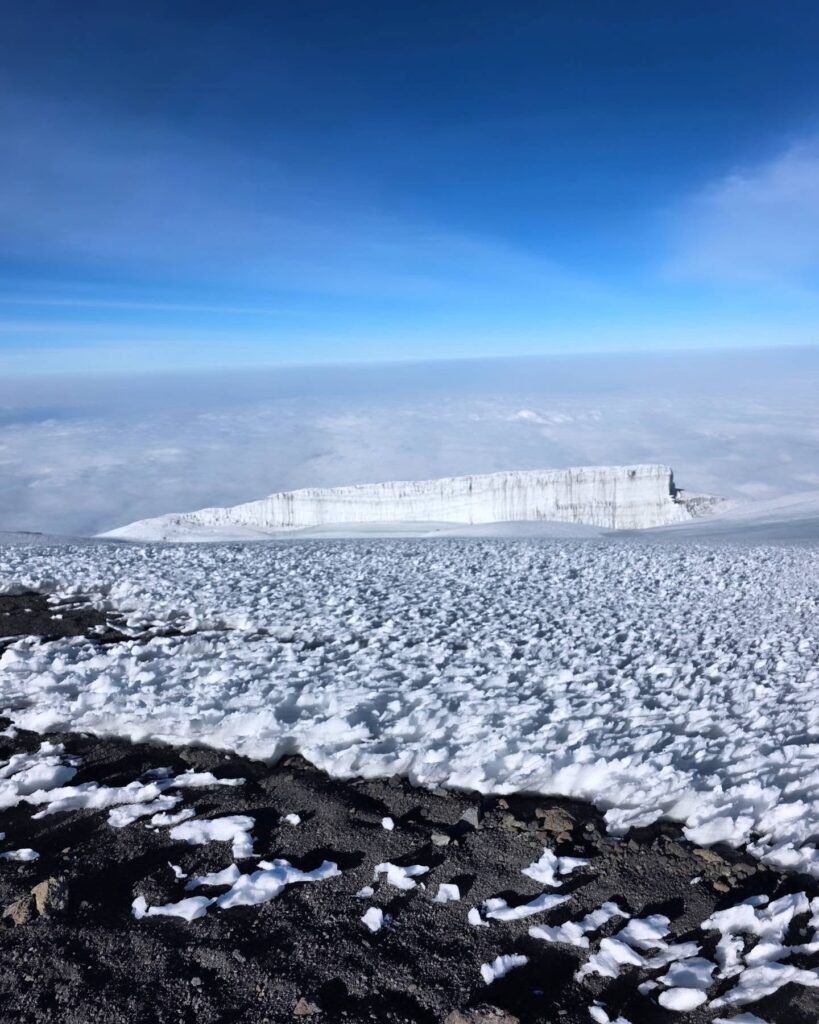
The summit night is harder. Marangu summits via Gilman’s Point on the eastern crater rim. From Gilman’s, Uhuru Peak is 1.5–2 hours of additional rim walking above 5,685m — a longer and harder final push than the equivalent push from Stella Point on the southern routes.
None of this means Marangu is a bad choice. It means the choice is a real trade-off, and Mandara is the first camp where you start to see it clearly.
A Few Practical Notes About Mandara
You still need a sleeping bag. Huts have mattresses but no bedding. A -5°C to -10°C rated bag is enough for Mandara; you’ll want something warmer for Kibo Hut higher up.
Electricity is minimal. The dining hut sometimes has lighting in the evening. Your sleeping hut doesn’t. Charge electronics before the climb, bring a power bank, and don’t count on hut-based charging.
Bathrooms are communal and basic. Compared to tented camps where you use a portable or shared toilet tent, Mandara’s facilities are structurally better — but they’re shared across the camp and cleanliness varies.
Rain is possible. You’re in the rainforest. Rain is not weather here — it’s the ecosystem. Your waterproof jacket and pack cover need to be ready to use on the day you walk in from the gate.
Porters and guides don’t stay in the climber huts. They have separate facilities. Kilimanjaro Sky’s approach to porter welfare — proper sleeping tents, sleeping bags provided, direct payment of wages after descent, weight limits enforced — applies on Marangu the same as on every other route.
Mandara in the Arc of a Marangu Climb
Mandara is the gentle beginning. It’s the easiest night on the route, at the lowest altitude, in the most comfortable shelter. The mountain gets harder from here. The next day’s walk to Horombo is longer, the altitude is higher, and the real acclimatization work starts.
For climbers doing their first hut-accommodation climb, Mandara is the setting that tells you whether hut-based climbing is going to work for you. Most find it works fine. A minority realize they’d rather have been in a tent — the privacy of a personal tent over a shared hut is a real thing, and if you’re light-sleeping, it matters. That’s useful information for planning any future climbs you might do.
If you’re weighing Marangu against other routes, or want to talk through which itinerary fits your timeline and preferences, get in touch with our Moshi team. We’ll walk you through the options honestly. You can also read the Marangu Route page and the FAQs for more detail on what the full climb looks like.