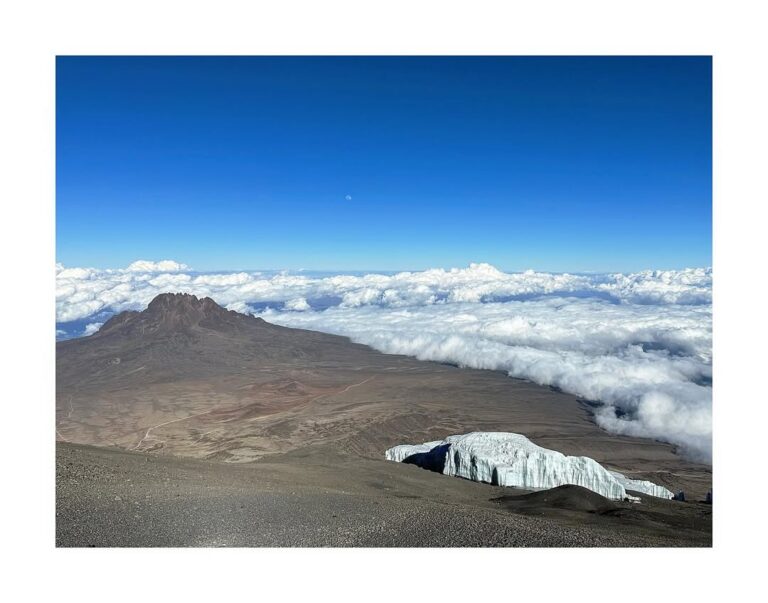
A full moon summit on Kilimanjaro is one of the most memorable experiences the mountain offers. The trail from Barafu to Stella Point is lit up almost like daylight, the headlamps of groups ahead of you trail up the scree slope, and the crater rim appears under moonlight an hour before sunrise. It’s a different kind of summit morning, and for climbers who specifically want this, the calendar matters.
Here’s the practical information you need to plan a full moon climb — dates, how to time your start, which routes work best, and the trade-offs worth knowing.
Full Moon Dates for 2026
All dates in East Africa Time (UTC+3), the Tanzania timezone. Full moon times are the peak moon illumination; practical “full moon nights” extend one night before and one night after peak.
- January: January 4, 2026
- February: February 2, 2026
- March: March 3, 2026
- April: April 2, 2026
- May: May 1, 2026
- June: June 1, 2026
- July: June 30, 2026 (technically June)
- July: July 29, 2026
- August: August 28, 2026
- September: September 26, 2026
- October: October 26, 2026
- November: November 24, 2026
- December: December 24, 2026
Note: Lunar months are roughly 29.5 days, so some calendar months contain two full moons and others contain none. Always verify against an astronomical calendar for your departure year — the dates above are based on published lunar data.
Full Moon Dates for 2027
- January: January 22, 2027
- February: February 21, 2027
- March: March 22, 2027
- April: April 20, 2027
- May: May 20, 2027
- June: June 19, 2027
- July: July 18, 2027
- August: August 17, 2027
- September: September 15, 2027
- October: October 15, 2027
- November: November 14, 2027
- December: December 13, 2027
Which Full Moons Align with the Best Climbing Months
Not every full moon sits in a good weather window. If you want both a full moon summit and reliable dry-season conditions, these are the windows to target:
Best full moon windows in 2026
- January 4, 2026 — strong dry-season window. Quieter than July.
- February 2, 2026 — one of our team’s favourite months. Clear conditions, low crowds, strong moon.
- July 29, 2026 — peak dry season, peak crowds. Our recommendation: book early.
- August 28, 2026 — still in dry season, slightly quieter than July.
- September 26, 2026 — excellent conditions, meaningfully fewer climbers than August.
- October 26, 2026 — transitional; early-to-mid October is drier.
- December 24, 2026 — Christmas full moon. Holiday crowd window.
Best full moon windows in 2027
- January 22, 2027 — strong short-dry-season window.
- February 21, 2027 — excellent.
- July 18, 2027 — peak summer window.
- August 17, 2027 — still peak dry season.
- September 15, 2027 — underrated and excellent.
- October 15, 2027 — before the short rains arrive.
For a deeper read on which months work year-round, see our best time to climb Kilimanjaro guide.
How to Time Your Departure for a Full Moon Summit
Most Kilimanjaro climbers start their summit push from Barafu Camp (or Kosovo Camp, Arrow Glacier, or Kibo Hut depending on route) around midnight and reach Uhuru Peak between 5:30 and 7:30 a.m. — sunrise in Tanzania.
To summit on a full moon night, count backwards from your target summit date by the length of your route:
- 6-day Machame: start day 1 six days before full moon. Example: for a July 29, 2026 summit, start July 24.
- 7-day Machame: start seven days before. Example: July 22 for a July 29 summit.
- 8-day Lemosho: start eight days before. Example: July 21 for a July 29 summit.
- 6-day Rongai: start six days before.
- 7-day Rongai: start seven days before.
- 9-day Northern Circuit: start nine days before. Example: July 20 for a July 29 summit.
The practical reality is that you have a three-night window around every full moon — the night before peak illumination, peak itself, and the night after. Moonlight during those three nights is functionally identical. This gives your operator some flexibility if weather or acclimatization recommends adjusting by a day.
Why Climbers Want a Full Moon Summit
Visibility on the summit push
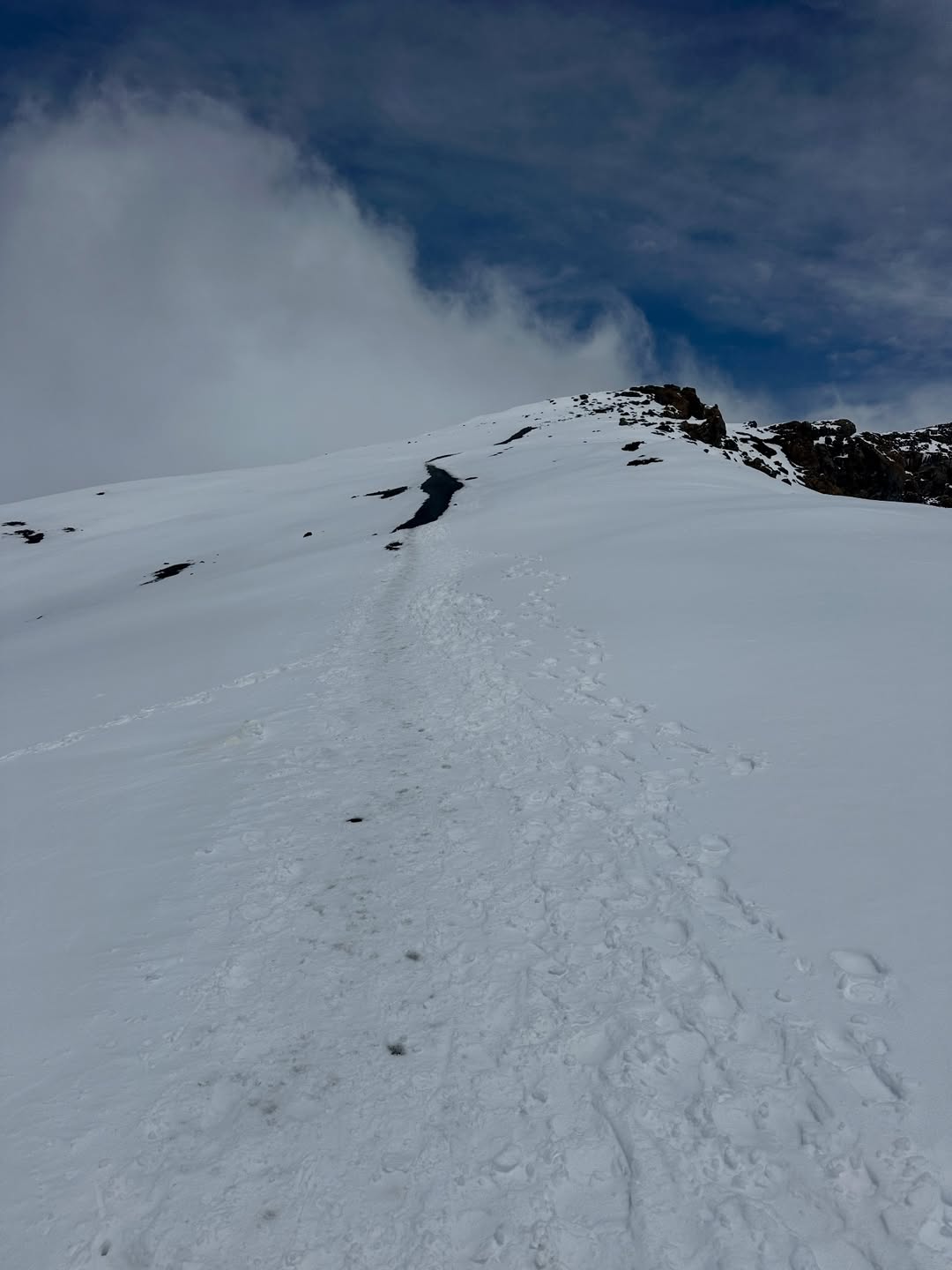
From Barafu to Stella Point is roughly a six-hour climb in the dark, on steep scree at altitude. On a full moon night, the entire trail is illuminated. The snow patches and glacier fragments reflect moonlight. The scree slopes look silver rather than grey. Even with headlamps off, most climbers can see their footing clearly.
This matters practically — a brighter trail is easier to navigate, less fatiguing mentally, and more enjoyable to walk. It also matters emotionally. A moonlit summit push is one of the most cinematic experiences on the mountain.
Photography
The main reason photographers target full moon summits. The mountain landscape under moonlight, with Mount Meru visible on the horizon and the summit glaciers faintly glowing, produces images you can’t get on a dark night.
The trade-off is that stargazing is diminished. On a new moon summit night, the Milky Way is visible from Barafu with a clarity most people in cities will never see. On a full moon night, most stars wash out. If astrophotography is your priority, plan the opposite of a full moon climb.
A sense of occasion
Many climbers book Kilimanjaro for a milestone — a 40th birthday, a post-illness return to fitness, a fundraising goal. A full moon summit adds a sense of occasion that a random midweek summit doesn’t. It’s the kind of detail that features in the story you tell afterward.
The Trade-offs Worth Knowing
Crowding concentrates around full moon dates
This is the biggest practical trade-off. Peak-season full moon nights — especially July and August — see a concentration of climbers all targeting the same three-night window. Camps at Barafu can hit capacity. Summit night traffic on the trail is at its heaviest.
If avoiding crowds matters more than the moonlight itself, two options: shift your dates off the full moon by a week, or climb in a quieter dry-season month (January, February, September, October) where full moon crowds are far lighter. Our guide on whether Kilimanjaro is crowded covers this in depth.
Book earlier for full moon windows
Any popular full moon summit window fills earliest. Peak-season full moon dates in July and August book out 9–12 months in advance for reputable operators. Plan accordingly.
Weather doesn’t care about the moon
A full moon summit is a lighting benefit, not a weather benefit. If your full moon falls in the long rains (April) or the short rains (November), you can still have cloud cover that wipes out the moonlight entirely.
Which Routes Work Best for a Full Moon Summit
Route choice for a full moon climb is mostly standard Kilimanjaro route choice — the same acclimatization and success-rate considerations apply. But a few route-specific notes:
Lemosho Route (8 days)
Our most-recommended full moon route. The long itinerary gives you multiple nights at camps below the summit where the moon rises over the Shira Plateau or the Barranco Wall — practical moonlight even before summit night. Summit from Barafu or Kosovo Camp under a full moon is one of the mountain’s signature experiences.
Machame Route (7 days)
Classic and reliable. The summit approach from Barafu is the most-photographed full moon ascent on the mountain.
Northern Circuit (9–10 days)
For climbers who want a full moon summit without the summit-night traffic of Machame or Lemosho. The Northern Circuit hits Barafu via School Hut or directly from the northern side, with meaningfully fewer climbers in the summit window.
Rongai Route (6–7 days)
Rongai climbers summit via Gilman’s Point on the crater rim, approaching from Kibo Hut. The summit push on Rongai is different from the southern routes — you can’t see a trail of headlamps stretching below you the way you can on Machame or Lemosho. For some climbers this is better (quieter, more personal); for others the southern-route drama of a full moon trail of climbers is part of the appeal.
Our full routes overview compares all options side by side.
Gear Note for Full Moon Climbs
Standard Kilimanjaro gear applies. One note specifically: even on a full moon night, you still need a proper headlamp with fresh batteries (and spares). The moon helps, but you’re still moving on technical terrain at altitude in freezing temperatures, and personal lighting is essential for the hardest sections — the scree between Barafu and Stella Point, where your focus is on foot placement rather than the view.
Our Kilimanjaro packing list covers the baseline.
Our Honest Take
A full moon summit is a meaningful upgrade to an already meaningful climb. If your schedule has any flexibility, aligning your departure with a full moon in a good weather month is one of the simplest ways to deepen the experience.
The catch is crowds — peak-season full moons are the single most-booked window on the mountain. Our practical recommendation: target a full moon in January, February, September, or October. You get the moonlight, you get solid weather, and you skip the July/August density.
If you’re working within a specific calendar window already — a work sabbatical, a birthday milestone, a group commitment — tell us your dates and we’ll find the closest full moon that fits, or explain why a non-full-moon date in your window would actually work better for you. Get in touch with our team in Moshi and we’ll walk you through the options.