If you’ve started researching Kilimanjaro, you’ve probably encountered a mix of encouraging statistics and alarming anecdotes. The mountain is simultaneously described as something any fit person can do, and something with meaningful failure rates and serious altitude risks.
Both are partially true. This guide is designed to give you the full, honest picture — so you can make a genuinely informed decision and, if you choose to climb, prepare for the things that actually matter.
What Kilimanjaro Actually Is
Kilimanjaro is a free-standing volcanic massif in northern Tanzania, approximately 90 kilometres from the Kenyan border. Moshi, the closest city and the base for most climbing operators, sits at the mountain’s foot and is the staging point for every route.
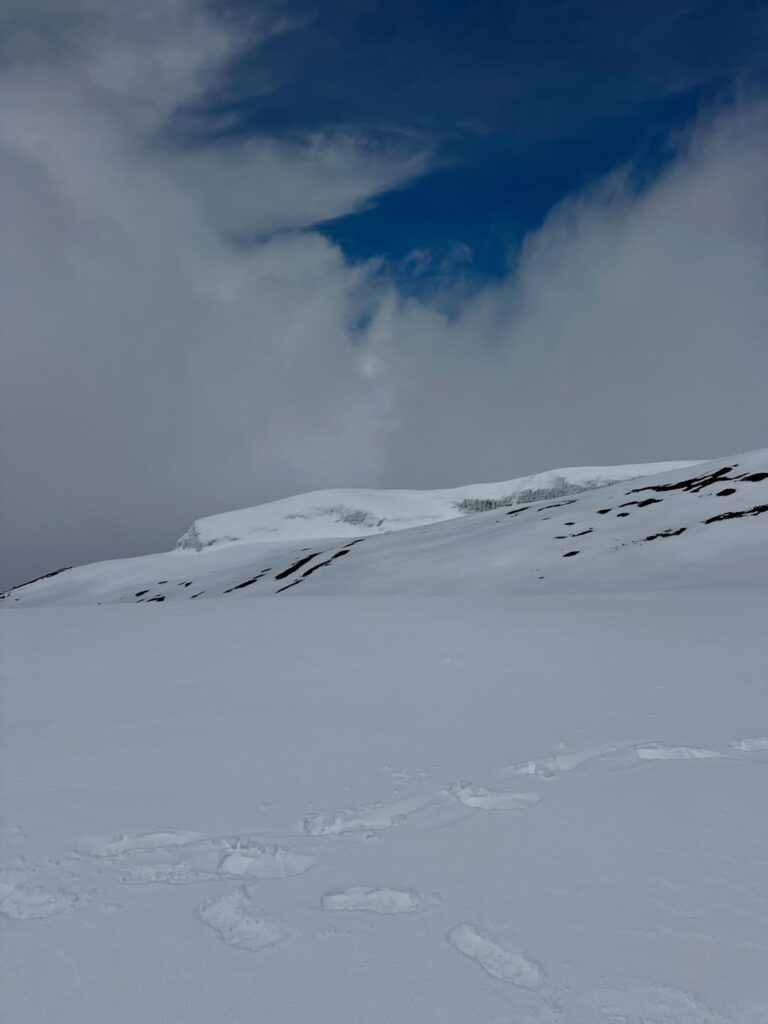
At 5,895 metres, Uhuru Peak is the highest point in Africa and the highest walkable mountain in the world — meaning it requires no ropes, crampons, or technical mountaineering skills on the established routes. Seven routes lead to the summit, ranging from five to ten days. The mountain is managed by Tanzania National Parks (TANAPA), which regulates licensing for guides, porters, and operators, and sets the park fees every climber pays.
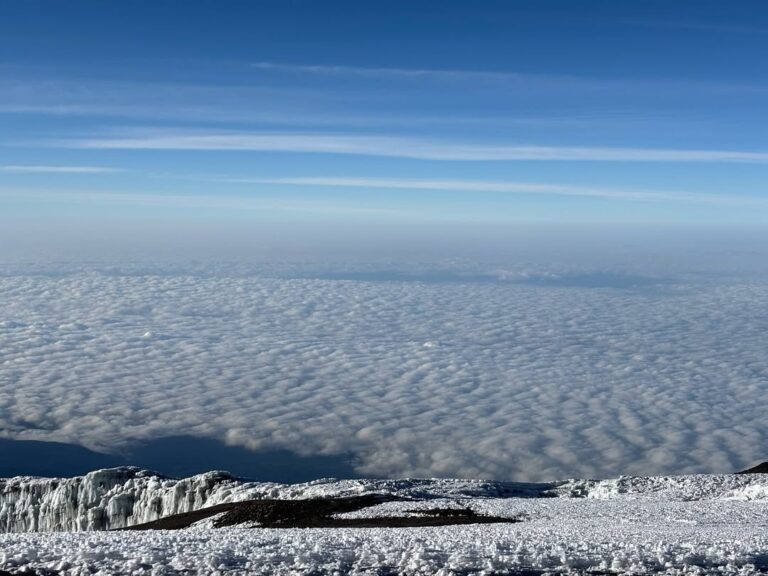
What makes Kilimanjaro challenging isn’t the terrain — it’s altitude. At nearly 5,900 metres, atmospheric pressure is roughly half what it is at sea level. Each breath delivers fewer oxygen molecules. Your body’s ability to adapt to that reduced oxygen, over the time available, is the primary variable between reaching the summit and turning back before it.
Everything else in this guide flows from that fact.
The Single Most Important Decision: Route and Duration
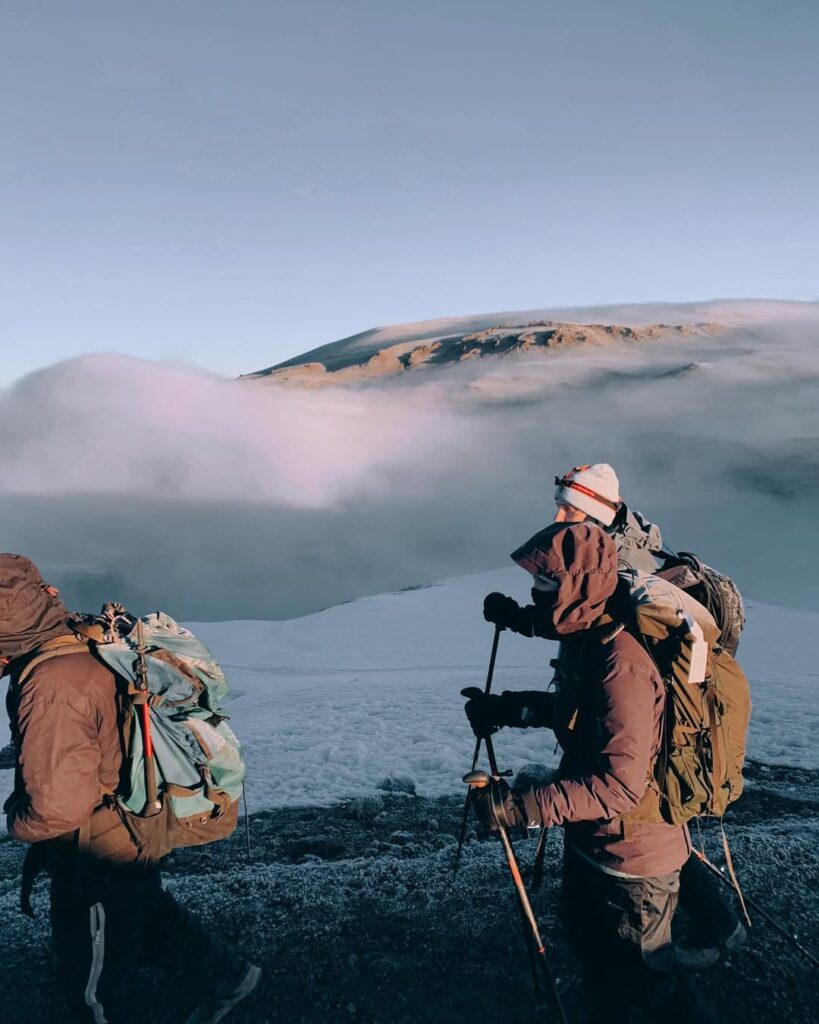
For a first-time climber, route selection is the decision that most determines your experience and your summit odds. The most important variable isn’t the route’s terrain or scenery — it’s how many days the route gives your body to acclimatise to altitude.
Here’s how the main options break down for beginners:
Kilimanjaro Sky
At vero eos et accusamus et iusto odio dignissimos ducimus qui blanditiis praesentium voluptatum deleniti atque corrupti quos dolores et quas molestias excepturi sint occaecati cupiditate non provident, similique sunt in culpa qui officia deserunt mollitia animi, id est laborum et dolorum fuga.
Machame Route — 7 days (recommended over 6)
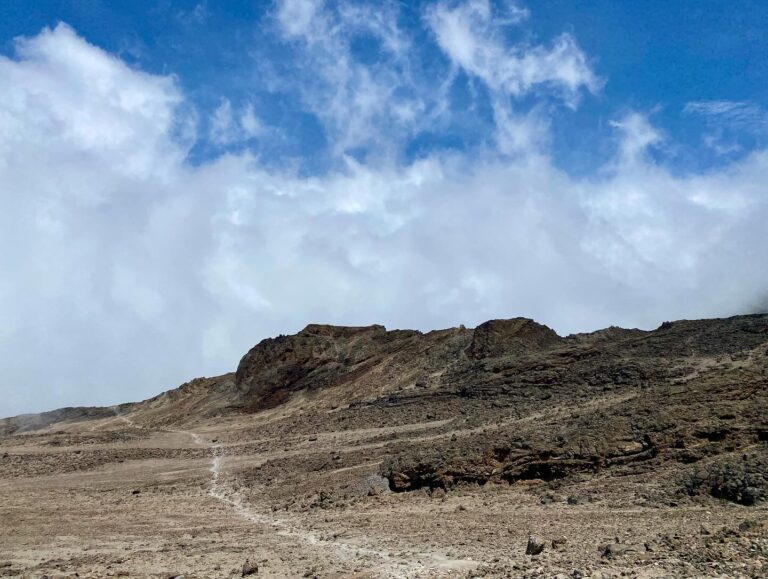
The Machame Route is Kilimanjaro’s most popular trail and earns its status. The “climb high, sleep low” acclimatisation profile — gaining altitude during the day and descending slightly to camp — is genuinely effective at accelerating your body’s adaptation. The terrain is varied, passing through rainforest, heath, moorland, and alpine desert before the summit zone.
Seven days is meaningfully better than six on Machame. The extra day adds an acclimatisation camp that gives your body 24 additional hours of altitude adaptation before the summit push. If your schedule allows the choice, take seven days.
Lemosho Route — 8 days (our most-recommended for first-timers)
Lemosho starts from the west in dense rainforest — an approach you often share with colobus monkeys before the mountain opens up — and delivers the best acclimatisation profile of the popular routes. Eight days of progressive altitude gain gives your cardiovascular system genuine time to adapt, and this is reflected in consistently higher summit success rates.
For first-time climbers who have schedule flexibility, Lemosho is the route Kilimanjaro Sky recommends most often. If summit success is your primary objective and you can build eight days into your trip, this is where we’d direct most people.
Marangu Route — 6 days (the hut option)
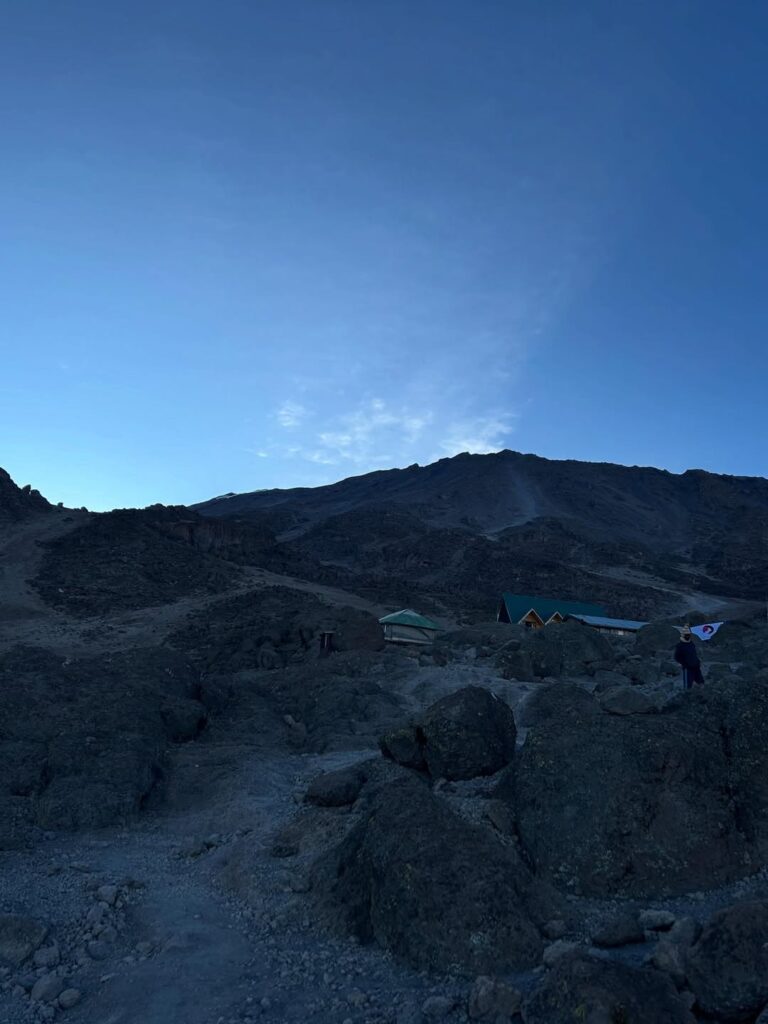
Marangu is the only route with permanent hut accommodation throughout — bunk beds and dining facilities rather than camping. If you have specific reasons to prefer sleeping under a roof, Marangu is your route.
The honest caveat: six days on Marangu is a fast ascent with a compressed acclimatisation profile, and this route carries the lowest summit success rate of the options we offer. The shorter duration means less adaptation time before the summit push. If you choose Marangu, the six-day version is significantly better than five.
For most first-time climbers: Machame 7 days or Lemosho 8 days. Both give your body the acclimatisation time it needs; the choice between them comes down to how many days you have available.
See our full Kilimanjaro route comparison for detailed profiles on all seven routes.
Fitness: What You Actually Need
Kilimanjaro doesn’t require elite fitness. It requires durable, sustained aerobic capacity — the kind that lets your body work at moderate intensity for six to eight hours a day, for multiple consecutive days.
The practical benchmark Kilimanjaro Sky uses: if you can run 10 kilometres in under one hour, three times per week, your cardiovascular fitness is at an appropriate level.
If you’re not at that level, four to six months of consistent aerobic training will get you there. The most effective preparation is sustained aerobic work with elevation gain — long hill walks of 15–20km, stair climbing with a loaded pack, cycling, swimming. The goal is building your heart and lungs’ ability to work steadily for hours, not peak speed or power.
Altitude will affect you regardless of fitness level. The best-prepared climber still faces the physiological reality of thin air at 5,900 metres. But fitness ensures that the physical effort of the trail itself isn’t the limiting factor — and that your body has the physiological reserves to cope with altitude stress on top of physical demand.
For a more detailed breakdown of what the difficulty feels like day by day, see our guide: How hard is it to climb Kilimanjaro?
Altitude Sickness: What to Understand Before You Go
Acute Mountain Sickness (AMS) is the primary reason climbers don’t reach the summit. It presents as headache, nausea, fatigue, dizziness, and disturbed sleep. Above 4,000 metres, almost every climber experiences some of these symptoms as a normal acclimatisation response. The key distinction — which your guide team makes, not you alone — is between normal altitude fatigue and AMS that requires a response.
At Kilimanjaro Sky, pulse oximetry checks happen at minimum morning and evening on every climb day. SpO2 readings below 75%, or drops of more than 5% from a prior reading, trigger immediate reassessment. AMS symptoms — confusion, persistent cough, breathlessness at rest — trigger mandatory descent regardless of what the oximeter reads. Guides have full authority to enforce this.
Altitude sickness is not correlated with fitness, age, or experience. There’s no reliable way to know in advance how your body will respond. Prior high-altitude experience is the most useful predictor; if you’ve been above 4,000 metres before without difficulty, that’s meaningful. If you haven’t, there’s genuine uncertainty — which is one reason why guide qualifications and monitoring protocols matter as much as they do.
Our detailed altitude sickness guide covers how acclimatisation works, what the monitoring thresholds mean, and the full evacuation protocol in detail.
Gear: What First-Timers Get Wrong
The full gear system is covered in our Kilimanjaro packing list. For a first-time climber, three items cause the most problems when under-prepared:
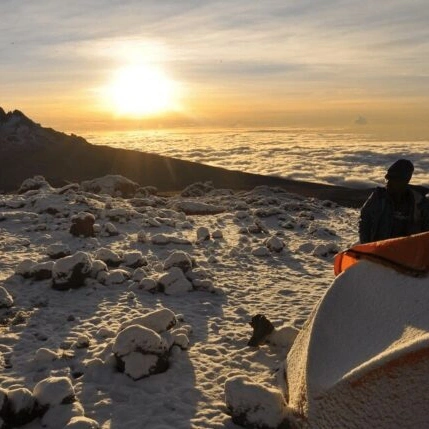
A serious down jacket. Not a light insulating layer — a genuine down jacket rated to at least -10°C. Summit night temperatures at Barafu Camp and above range from -10°C to -20°C with wind chill. The most common gear failure on Kilimanjaro is arriving underdressed for the summit push. This is the one item where quality and warmth rating matter more than cost.
Broken-in trekking boots. Waterproof, ankle-supporting boots that have been worn for at least 10–15 hours before you arrive in Moshi. New boots on day one of a seven-day climb produce blisters that worsen every day. Buy good boots, wear them in advance, and arrive in Moshi with boots that know your feet.
Trekking poles. Both of them. They reduce knee strain on the descent — which can be ten to twelve hours from the summit zone to the gate — and provide stability on scree and uneven terrain. Most people who don’t bring them wish they had by day three.
Kilimanjaro Sky provides sleeping mats at every camp. Sleeping bags are your responsibility — rental is available in Moshi, but confirm the temperature rating before relying on a rental bag for high-altitude camps.
Choosing an Operator: What Actually Matters
The operator you choose shapes everything from summit odds to how porters are treated. A few questions to ask any operator before booking:
What is the guide-to-client ratio? The answer should be specific. At Kilimanjaro Sky: one lead guide and one assistant guide for every two to three clients — a ratio that enables close monitoring and genuine one-on-one support on the hard sections.
What qualifications do your guides hold? TANAPA licensing is the government minimum. Responsible operators go beyond this: Wilderness First Aid certification is the standard at Kilimanjaro Sky for all guides; some hold Emergency Medical Assistant of Tanzania and Wilderness First Responder certifications.
How are porters paid? Ask for the daily wage and how payment is made. At Kilimanjaro Sky: $10–12 USD per day, paid directly to each porter by name, in cash, immediately after descent. No pooling, no routing through a supervisor.
What does your evacuation protocol look like? The answer should trace a clear sequence: assessment and oxygen at altitude, assisted descent with stretcher capability, vehicle evacuation from lower camps to KCMC Hospital in Moshi, helicopter evacuation available for critical cases. If an operator’s answer is vague, that’s a significant signal.
See our full guide on how to choose a Kilimanjaro tour operator for the complete list of questions and what answers indicate a genuinely responsible operation.
Cost: What to Budget
A responsibly operated Kilimanjaro climb typically costs between $2,500 and $4,500 per person for the standard routes, depending on route duration, package tier, and operator. Tanzania National Parks fees alone — park entry, camping, and rescue — account for over $800 of that for a seven-day climb.
Prices significantly below this range mean something is being cut. The most common cuts are porter wages, guide qualifications, and safety equipment. On a climb where those things determine your experience and your safety, the savings aren’t worth the trade-off. See our full cost breakdown for a complete picture of what each price range reflects.
Tipping is separate and expected. Budget approximately $300–$450 per climber for the guide and porter crew tip for a seven-day climb. This is a meaningful part of the crew’s income and is separate from the operator package price.
Travel insurance is required — specifically, coverage that includes altitude to at least 6,000 metres and helicopter evacuation. This is not optional at Kilimanjaro Sky; it’s a pre-condition for climbing.
The Timeline: Planning Your Kilimanjaro Trip
Booking lead time: For July–August (peak season), book four to six months ahead. For other windows, two to three months is typically sufficient, though flexibility helps.
Fitness preparation: Start building aerobic fitness at least four to six months before your climb. If you’re not currently at the 10km/1 hour, 3x/week benchmark, give yourself time to get there.
Gear acquisition: Buy your boots at least six to eight weeks before departure to allow proper break-in time. Other major items can be acquired closer to travel dates; boots cannot wait.
Pre-departure medical consultation: Discuss your health history with a travel medicine doctor. If you have any cardiac or respiratory conditions, get clearance. If Diamox (acetazolamide) is something you’re considering, this conversation needs to happen in advance — it requires a prescription.
Season: For the best conditions and moderate crowds, the January–March and September–October windows are excellent. July and August are peak season with reliable conditions but higher trail traffic. See our guide to the best time to climb Kilimanjaro for a full month-by-month breakdown.
What to Expect When You Arrive in Moshi
Kilimanjaro International Airport (JRO) is the nearest airport, with connections via Nairobi, Doha, Addis Ababa, and other regional hubs. Kilimanjaro Sky arranges airport transfers.
The evening before your climb begins, your lead guide meets you for a pre-climb briefing: reviewing your gear, confirming the schedule, answering any remaining questions, and taking your first SpO2 baseline reading. It’s a calm, practical meeting — the beginning of a working relationship that will matter a great deal over the next week.
Arriving at least one day before your climb begins is strongly recommended — to adjust to the timezone and the heat, sort any final gear needs, and settle in to Moshi. The Kilimanjaro Sky team can point you to what you need.
Moshi itself is worth arriving for. The city sits at the mountain’s base, with Kilimanjaro visible above it on clear mornings, surrounded by coffee farms and the cultural depth of the Chagga people who have lived on the mountain’s slopes for centuries. An early arrival gives you time to experience it, not just pass through.
The Final Word
Kilimanjaro is achievable for any fit, properly prepared adult. It is not easy — summit night is genuinely demanding, altitude affects people in ways fitness doesn’t predict, and the climb requires multiple days of sustained effort in cold, thin air.
It is also one of the most significant physical experiences most people who attempt it will ever have. The accounts from people who’ve stood at Uhuru Peak after seven days of work and a midnight push are remarkably consistent: it’s one of the best moments of their lives. That’s not a promotional claim. It’s what people say.
The work is preparation. The right route, the right operator, the right gear, and the right understanding of what altitude is going to ask of you — that’s the preparation that actually moves the needle. Everything else takes care of itself on the mountain.
If you’re ready to talk through your specific situation — timeline, fitness level, altitude history, what you’re hoping the climb will be — reach out to us in Moshi. We’d rather have that conversation before you book than after.
Further reading: Kilimanjaro routes compared· What does Kilimanjaro cost?·